This is England ’86 (2010)

by EMMA SUTTON

Writers: Shane Meadows, Jack Thorne; Directors: Tom Harper, Shane Meadows

See also: This is England ’88

After a prolific decade working in the realms of British cinema, Shane Meadows’s current retreat from feature filmmaking has seen the production of a much-hyped four-part televised sequel to the BAFTA-winning This is England (2006). Commissioned by Meadows’ long time affiliates, Channel Four, and co-written with Jack Thorne (Shameless/Skins/The Scouting Book for Boys), Meadows shared directorial duties on This is England ’86 with Tom Harper, best known for his work on Misfits and The Scouting Book for Boys. Like his earlier feature, the series presents the working-class youth of 1986 with a portrayal of regional life in Thatcher’s Britain that is at once romantic yet sinister. Picking up 3 years after This is England left off, the series combines typically carnivalesque humour with violent and disturbing scenes that echo the style of Alan Clarke. Despite the collaborative nature of the project, establishing shots of local authority housing and social dereliction visually set the series in the tradition of Meadows’ oeuvre.

Sherlock: A Study in Pink (2010) and Holmes on TV

by DAVID ROLINSON

Writer: Steven Moffat; Director: Paul McGuigan
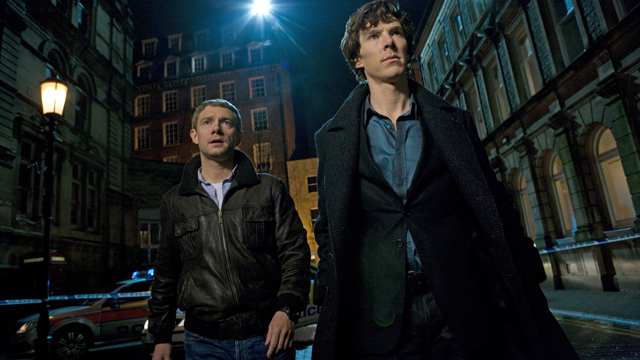
The most impressive thing about A Study in Pink, the brilliant first episode of new series Sherlock, is that, for all the modern-day rebooting and visual invention, its spirit and detail are so faithful to the source work by Sir Arthur Conan Doyle. As in his Doctor Who work, writer Steven Moffat brings a fan’s eye to the strengths and weaknesses of his beloved source material, developing the series format with fellow executive producers Sue Vertue and fellow Holmes and Who expert (and writer of episode 3) Mark Gatiss. A Study in Pink captures the essence of Holmes’s 19th century debut – reworking A Study in Scarlet (1887) and elements of Holmes’s second story, The Sign of Four (1890) – in a package that, with the impressive pace and technique of director Paul McGuigan, makes for one of the 21st century’s sharpest 90 minutes of popular drama to date.

Doctor Who: The Eleventh Hour (2010)

by DAVID ROLINSON

Writer: Steven Moffat; Director: Adam Smith

For me, Doctor Who literally is a fairy tale. It’s not really science fiction. It’s not set in space, it’s set under your bed. – Steven Moffat1

If you look at the stories I’ve written so far I suppose I might be slightly more at the fairy-tale and Tim Burton end of Doctor Who, whereas Russell is probably more at the blockbuster and Superman end of the show. – Steven Moffat2

Here are a few thoughts on the ideas at work in The Eleventh Hour, the first episode of the 2010 season of Doctor Who. It’s not a straight ‘review’, because there are enough of those on the internet already. But it’s also not the type of researched essay you expect from this site, because I’m interested in the episode’s ambiguities and the thoughts circulating in my head after seeing it, and don’t want to re-watch the episode to death or wait until the end of the season when some of those ideas will have been resolved. This piece will discuss the ideas relating to the ‘storybook quality’ that new lead writer Steven Moffat has talked about3, think about how style and imagery support characterisation and theme, and work out why my mind has made associations with the classic Michael Powell and Emeric Pressburger film A Matter of Life and Death (1946). This piece contains spoilers, and, unlike other essays on this site, you will need to have seen the episode to know what I’m talking about.


  1. Steven Moffat, quoted in Gareth McLean, ‘The man with a monster of a job’, The Guardian, Media Guardian, 22 March 2010, p. 5. 

  2. Steven Moffat, quoted in BBC press release, available at http://www.bbc.co.uk/pressoffice/pressreleases/stories/2010/03_march/19/doctor_who2.shtml. 

  3. McLean, ‘The man with a monster of a job’, p. 5.