<h4>Contributors to date (14):</h4>
<p>Matthew Bailey [1]<br>Frank Collins [1]<br>Simon Coward [1]<br>Ian Greaves [3]<br>Cat McKiernan [1]<br>Tom May [3]<br><a href="http://www.britishtelevisiondrama.org.uk/?page_id=4789">David Rolinson</a> [35]<br>Nigel Sarrassa-Dyer [1]<br>Neil Sinyard [2]<br>Emma Sutton [2]<br>Oliver Wake [29]<br>John Wheatcroft [8]<br>John Williams [2]<br>&#8216;Mr Wolf&#8217; [1]<br>James Zborowski [1]</p>

<h3>Books by our contributors</h3>

<p>David Rolinson wrote a book about the <em>Doctor Who</em> docudrama <em>An Adventure in Space and Time</em>, which was be published by Obverse in April 2026. This book studies <em>An Adventure in Space and Time</em> as a docudrama, including its inevitable alterations and omissions, its disclaimer about rewriting history, and how its re-enacted <em>Doctor Who</em> scenes parallel the Doctor with Hartnell’s situation. To chart the docudrama’s insights and references, this book ranges across <em>Doctor Who</em>, including how history teachers travel in time, when a police box is just a police box, how <em>Doctor Who</em> interacts with paratexts such as BBC idents, and the many returns of Hartnell’s Doctor. The book covers paratextuality, promotional screen cultures, school teaching of history, historiography/counterfactuals, and docudrama studies methods and debates, including the role of disclaimers. The book celebrates the Hartnell Doctor and the series’ ambitious early years. A list of David&#8217;s work can be found <a href="http://www.britishtelevisiondrama.org.uk/?page_id=4789" target="_self">here</a>.</p>
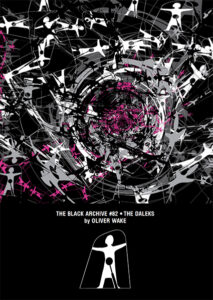
<p><img loading="lazy" decoding="async" src="http://www.britishtelevisiondrama.org.uk/wp-content/uploads/2026/04/Wake_Daleks-213x300.jpg" alt="" width="213" height="300" class="alignright size-medium wp-image-8382" srcset="http://www.britishtelevisiondrama.org.uk/wp-content/uploads/2026/04/Wake_Daleks-213x300.jpg 213w, http://www.britishtelevisiondrama.org.uk/wp-content/uploads/2026/04/Wake_Daleks.jpg 425w" sizes="auto, (max-width: 213px) 100vw, 213px" />Oliver Wake wrote a book about the <em>Doctor Who</em> serial <a href="https://obversebooks.co.uk/product/82-the-daleks/" target="_self"><em>The Daleks</em></a>, which was published by Obverse in April 2026. This book studies the series&#8217; second-ever serial, which &#8220;establishes the principle that the Doctor fights alien monsters&#8221;. It studies the &#8220;influences&#8221; of the serial, &#8220;from HG Wells’ <em>The Time Machine</em> through Nazi eugenics to the movies of the atomic era&#8221; and &#8220;how Terry Nation’s script was translated through sound and visual design into perhaps the most important <em>Doctor Who</em> story of all&#8221;.</p>
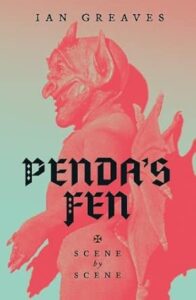
<p><img loading="lazy" decoding="async" src="http://www.britishtelevisiondrama.org.uk/wp-content/uploads/2026/04/Greaves_Pendas-Fen-196x300.jpg" alt="" width="196" height="300" class="alignleft size-medium wp-image-8383" srcset="http://www.britishtelevisiondrama.org.uk/wp-content/uploads/2026/04/Greaves_Pendas-Fen-196x300.jpg 196w, http://www.britishtelevisiondrama.org.uk/wp-content/uploads/2026/04/Greaves_Pendas-Fen.jpg 290w" sizes="auto, (max-width: 196px) 100vw, 196px" />Ian Greaves wrote <a href="https://tenacrefilms.bigcartel.com/product/pendas-fen-scene-by-scene" target="_self"><em>Penda&#8217;s Fen: Scene by Scene</em></a>, which was published by Ten Acre Books in 2025. The book provides an exhaustive account of the production of this <em>Play for Today</em> and an insightful study of its themes and influences. The book examines &#8220;how this masterpiece came to be, drawing upon every surviving draft of the script, a wealth of production papers, revealing correspondence, evocative on-location photography from the summer of 1973, and extensive interviews with cast and crew&#8221;. The book has been acclaimed by reviewers and by the writer of <em>Penda&#8217;s Fen</em>, David Rudkin, who called it &#8220;Astonishing. I enjoyed a deeper working involvement in the making of the film than most authors are granted — but even so, there was so much going on that I didn’t know. Thank you for teaching me.&#8221;</a>
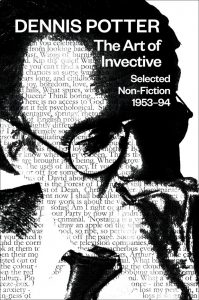
<p><img loading="lazy" decoding="async" src="http://www.britishtelevisiondrama.org.uk/wp-content/uploads/2019/10/BTVD_Invective-cover-199x300.jpg" alt="" width="199" height="300" class="alignleft size-medium wp-image-7523" srcset="http://www.britishtelevisiondrama.org.uk/wp-content/uploads/2019/10/BTVD_Invective-cover-199x300.jpg 199w, http://www.britishtelevisiondrama.org.uk/wp-content/uploads/2019/10/BTVD_Invective-cover-72x108.jpg 72w, http://www.britishtelevisiondrama.org.uk/wp-content/uploads/2019/10/BTVD_Invective-cover.jpg 575w" sizes="auto, (max-width: 199px) 100vw, 199px" />Ian Greaves, David Rolinson and John Williams edited a collection of Dennis Potter&#8217;s non-fiction writing, <a href="https://www.bloomsbury.com/uk/art-of-invective-9781783192038/" target="_self" rel="noopener noreferrer">Dennis Potter, <em>The Art of Invective: Selected Non-Fiction 1953-1994</em></a>, which was published by Oberon Books in 2015. This book &#8220;includes his merciless television columns, penetrating literary criticism and angry writings on class and politics, as well as his sketches for Sixties satire shows including <em>That Was the Week That Was</em>. From Frost-Nixon to <em>Coronation Street</em>, David Hare to <em>Doctor Who</em>, Orwell to Emu, this collection shows Potter’s distinctive voice at its entertaining, thought-provoking and uncompromising best.&#8221; The editors provide introductions to three sections covering periods of his work and provide explanatory endnotes. Reviewing <em>The Art of Invective</em> for <em>Literary Review</em>, Jonathan Meades wrote: &#8220;Every page of this book is constellated with sentences and phrases of, variously, humour, cleverness, warmth, indignation and savagery. It is one of the very finest collections of ‘occasional’ (but far from ephemeral) writing I have read: what counts is not the medium, not the genre, but the mind. The scholarship of the editors is impeccable.&#8221;</p>
<p><img loading="lazy" decoding="async" src="http://www.britishtelevisiondrama.org.uk/wp-content/uploads/2019/10/BTVD_Miller-One-Thing-205x300.jpg" alt="" width="205" height="300" class="alignright size-medium wp-image-7531" srcset="http://www.britishtelevisiondrama.org.uk/wp-content/uploads/2019/10/BTVD_Miller-One-Thing-205x300.jpg 205w, http://www.britishtelevisiondrama.org.uk/wp-content/uploads/2019/10/BTVD_Miller-One-Thing-74x108.jpg 74w, http://www.britishtelevisiondrama.org.uk/wp-content/uploads/2019/10/BTVD_Miller-One-Thing.jpg 554w" sizes="auto, (max-width: 205px) 100vw, 205px" />Ian Greaves edited a collection of writing by Jonathan Miller, <a href="https://www.bloomsbury.com/uk/one-thing-and-another-9781783197453/" target="_self">One Thing and Another: Selected Writings 1954-2016</a>, which was published by Oberon Books in 2017. In collaboration with Justin Lewis, Ian Greaves wrote <a href="https://www.tvbrain.info/shop/books/prime-minister-you-wanted-to-see-me" target="_self" rel="noopener noreferrer"><em>Prime Minister, You Wanted To See Me? A History of Week Ending</em></a>, which was published by Kaleidoscope. Ian co-curated an NF Simpson tribute at the Royal Court in May 2012 and edited collections of Simpson&#8217;s work. Ian also contributed a chapter to the book <em>No Known Cure: The Comedy of Chris Morris</em> (BFI/Palgrave, 2013), contributed research to numerous books by other authors, and has researched documentaries for BBC Radio 4.</p>
<p></p>
<p><img loading="lazy" decoding="async" src="http://www.britishtelevisiondramae.org.uk/wp-content/uploads/2019/10/BTVD_Stevens-210x300.jpg" alt="" width="210" height="300" class="alignleft size-medium wp-image-7529" srcset="http://www.britishtelevisiondrama.org.uk/wp-content/uploads/2019/10/BTVD_Stevens-210x300.jpg 210w, http://www.britishtelevisiondrama.org.uk/wp-content/uploads/2019/10/BTVD_Stevens-76x108.jpg 76w, http://www.britishtelevisiondrama.org.uk/wp-content/uploads/2019/10/BTVD_Stevens.jpg 350w" sizes="auto, (max-width: 210px) 100vw, 210px" />Neil Sinyard is the author of 25 books on film, including studies of directors such as William Wyler, Fred Zinnemann, Billy Wilder, Alfred Hitchcock and Steven Spielberg. His most recent books include <a href="https://mcfarlandbooks.com/product/fred-zinnemann/" target="_self"><em>Fred Zinnemann: Films of Character and Conscience</em></a> and <em>Graham Greene: A Literary Life</em>, which were published in 2003 by McFarland and Palgrave Macmillan respectively, <em>A Wonderful Heart: The Films of William Wyler</em>, which was published by McFarland in 2013, and <a href="https://mcfarlandbooks.com/product/george-stevens/" target="_self"><em>George Stevens: The Films of a Hollywood Giant</em></a>, which was published by McFarland in 2019. He has contributed to many DVD and blu-ray releases of classic films for companies such as Criterion, Hammer and Indicator. Some of Neil Sinyard&#8217;s writing on film and other topics can be found on <a href="http://neilsinyard.britishtelevisiondrama.org.uk/" target="_self" rel="noopener noreferrer">this website, a sister site of ours</a>.</p>
<p></p>
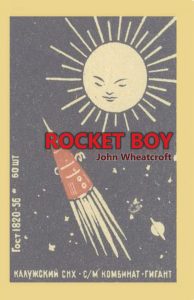
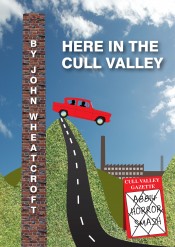
<p><img loading="lazy" decoding="async" class="alignright size-full wp-image-3524" src="http://www.britishtelevisiondrama.org.uk/wp-content/uploads/2013/02/cull-valley-cover-e1361534037656.jpg" alt="cull-valley-cover" width="175" height="247"><br>In 2016, Stairwell Books published John Wheatcroft&#8217;s novel <em>Here in the Cull Valley</em>, a genre-defying “why-dunnit” novel which proves that a unique literary format can sit side-by-side with a gripping story. The novel unfolds largely through newspaper stories but it plays by the rules of character and narrative. It’s a story told, according to one newspaper reviewer, “with powerful humour, invention, perception and poignancy”. <span style="font-style: inherit; font-weight: inherit;">Andrew Martin, author of the Jim Stringer murder mysteries, described <em>Here in the Cull Valley</em> as “a completely plausible psychological mystery. It is doom-laden, but laced with humour as elegantly dry as a good Chablis”. (It was previously available as an ebook.) <em>Here in the Cull Valley</em> is available from Stairwell Books <a href="http://www.stairwellbooks.co.uk/product/here-in-the-cull-valley/" target="_self" rel="noopener noreferrer">here</a>. <p><img loading="lazy" decoding="async" class="alignleft size-medium wp-image-7520" src="http://www.britishtelevisiondrama.org.uk/wp-content/uploads/2019/10/Rocket-pic-194x300.jpg" alt="" width="194" height="300" srcset="http://www.britishtelevisiondrama.org.uk/wp-content/uploads/2019/10/Rocket-pic-194x300.jpg 194w, http://www.britishtelevisiondrama.org.uk/wp-content/uploads/2019/10/Rocket-pic-768x1188.jpg 768w, http://www.britishtelevisiondrama.org.uk/wp-content/uploads/2019/10/Rocket-pic-662x1024.jpg 662w, http://www.britishtelevisiondrama.org.uk/wp-content/uploads/2019/10/Rocket-pic-863x1335.jpg 863w, http://www.britishtelevisiondrama.org.uk/wp-content/uploads/2019/10/Rocket-pic-70x108.jpg 70w, http://www.britishtelevisiondrama.org.uk/wp-content/uploads/2019/10/Rocket-pic.jpg 1694w" sizes="auto, (max-width: 194px) 100vw, 194px" />In 2019, Stairwell Books published&nbsp;<em>Rocket Boy</em>, John Wheatcroft’s second novel. It’s a tragi-comic love story, with an ultimately upbeat ending, about a man rueing missed romantic opportunities. <em>Rocket Boy</em> is available <a href="http://www.stairwellbooks.co.uk/product/rocket-boy/" target="_self" rel="noopener noreferrer">here</a>.</p>
<p></p>
<p>James Zborowski wrote <a href="https://manchesteruniversitypress.co.uk/9780719083341/" target=_self"><em>Classical Hollywood Cinema: Point of View and Communication</em></a>, which was published by Manchester University Press in 2015.</p>
<p><img loading="lazy" decoding="async" src="http://www.britishtelevisiondrama.org.uk/wp-content/uploads/2019/10/BTVD_Pandorica-e1571737624344-209x300.jpg" alt="" width="209" height="300" class="alignright size-medium wp-image-7527" srcset="http://www.britishtelevisiondrama.org.uk/wp-content/uploads/2019/10/BTVD_Pandorica-e1571737624344-209x300.jpg 209w, http://www.britishtelevisiondrama.org.uk/wp-content/uploads/2019/10/BTVD_Pandorica-e1571737624344-75x108.jpg 75w, http://www.britishtelevisiondrama.org.uk/wp-content/uploads/2019/10/BTVD_Pandorica-e1571737624344.jpg 335w" sizes="auto, (max-width: 209px) 100vw, 209px" /><br>In 2010, Frank Collins published <em>The Pandorica Opens</em> (Classic TV Press), an accessible yet scholarly analysis of the 2010 season of <em>Doctor Who</em> which has received excellent reviews. It is also now available for the Kindle.<br><a href="http://www.classictvpress.co.uk/pandoricaopens.htm" target="_self" rel="noopener noreferrer">More information here from the Classic TV Press site</a>. Frank Collins has also written two book-length studies of <em>Doctor Who</em> stories &#8216;Warriors&#8217; Gate&#8217; and &#8216;Kinda&#8217;, which were published by Obverse in 2019 and 2022 respectively and are available <a href="https://obversebooks.co.uk/product/31-wg/" target="_self" rel="noopener noreferrer">here</a> and <a href="https://obversebooks.co.uk/product/62-kinda/" target="_self">here</a>.

<h3>TV-related pieces by our contributors for other websites</h3>
<p><a href="http://www.nottingham.ac.uk/scope/documents/2014/february/fradley.pdf" target="_self" rel="noopener noreferrer"> &#8216; &#8220;Disappointingly thin and flaccid&#8221;: Gender, Authorship and Authenticity in Shane Meadows&#8217; <em>Once Upon a Time in the Midlands</em> (2002) (Emma Sutton, co-authored with Martin Fradley) </a>, <em>Scope: An Online Journal of Film Studies</em>, issue 26, February 2014.<br><a href="http://www.scope.nottingham.ac.uk/confreport.php?issue=18&amp;id=1238" target="_self" rel="noopener noreferrer">Conference review: Straight Outta Uttoxeter: Studying Shane Meadows, University of East Anglia conference (Emma Sutton)</a><br><em>List does not include pieces subsequently revised for this website. See also our content lists for the many pieces that several of our contributors have written for the Screenonline website</em></p>

</p>
<p><!-- Start of StatCounter Code --><br><script type="text/javascript">// <![CDATA[
var sc_project=5750652;
var sc_invisible=1;
var sc_partition=68;
var sc_click_stat=1;
var sc_security="6dd1aa39";
// ]]&gt;</script></p>
<p><script src="http://www.statcounter.com/counter/counter.js" type="text/javascript"></script><noscript><br>
</noscript></p>
<div class="statcounter"><a title="wordpress stats " href="http://www.statcounter.com/wordpress.org/" target="_blank" rel="noopener noreferrer"><img decoding="async" class="statcounter" src="http://c.statcounter.com/5750652/0/6dd1aa39/1/" alt="wordpress stats "></a></div>
<p><!-- End of StatCounter Code --></p>


<p class="wp-block-paragraph"></p>
{"id":1948,"date":"2011-09-09T19:35:28","date_gmt":"2011-09-09T18:35:28","guid":{"rendered":"http:\/\/www.britishtelevisiondrama.org.uk\/?page_id=1948"},"modified":"2026-05-31T14:52:55","modified_gmt":"2026-05-31T13:52:55","slug":"list-of-our-contributors-works","status":"publish","type":"page","link":"http:\/\/www.britishtelevisiondrama.org.uk\/?page_id=1948","title":{"rendered":"List of our contributors and works"},"content":{"rendered":"<h4>Contributors to date (14):<\/h4>\r\n<p>Matthew Bailey [1]<br>Frank Collins [1]<br>Simon Coward [1]<br>Ian Greaves [3]<br>Cat McKiernan [1]<br>Tom May [3]<br><a href=\"http:\/\/www.britishtelevisiondrama.org.uk\/?page_id=4789\">David Rolinson<\/a> [35]<br>Nigel Sarrassa-Dyer [1]<br>Neil Sinyard [2]<br>Emma Sutton [2]<br>Oliver Wake [29]<br>John Wheatcroft [8]<br>John Williams [2]<br>&#8216;Mr Wolf&#8217; [1]<br>James Zborowski [1]<\/p>\r\n\r\n<h3>Books by our contributors<\/h3>\r\n\r\n<p>David Rolinson wrote a book about the <em>Doctor Who<\/em> docudrama <em>An Adventure in Space and Time<\/em>, which was be published by Obverse in April 2026. This book studies <em>An Adventure in Space and Time<\/em> as a docudrama, including its inevitable alterations and omissions, its disclaimer about rewriting history, and how its re-enacted <em>Doctor Who<\/em> scenes parallel the Doctor with Hartnell\u2019s situation. To chart the docudrama\u2019s insights and references, this book ranges across <em>Doctor Who<\/em>, including how history teachers travel in time, when a police box is just a police box, how <em>Doctor Who<\/em> interacts with paratexts such as BBC idents, and the many returns of Hartnell\u2019s Doctor. The book covers paratextuality, promotional screen cultures, school teaching of history, historiography\/counterfactuals, and docudrama studies methods and debates, including the role of disclaimers. The book celebrates the Hartnell Doctor and the series\u2019 ambitious early years. A list of David&#8217;s work can be found <a href=\"http:\/\/www.britishtelevisiondrama.org.uk\/?page_id=4789\" target=\"_self\">here<\/a>.<\/p>\r\n<p><img loading=\"lazy\" decoding=\"async\" src=\"http:\/\/www.britishtelevisiondrama.org.uk\/wp-content\/uploads\/2026\/04\/Wake_Daleks-213x300.jpg\" alt=\"\" width=\"213\" height=\"300\" class=\"alignright size-medium wp-image-8382\" srcset=\"http:\/\/www.britishtelevisiondrama.org.uk\/wp-content\/uploads\/2026\/04\/Wake_Daleks-213x300.jpg 213w, http:\/\/www.britishtelevisiondrama.org.uk\/wp-content\/uploads\/2026\/04\/Wake_Daleks.jpg 425w\" sizes=\"auto, (max-width: 213px) 100vw, 213px\" \/>Oliver Wake wrote a book about the <em>Doctor Who<\/em> serial <a href=\"https:\/\/obversebooks.co.uk\/product\/82-the-daleks\/\" target=\"_self\"><em>The Daleks<\/em><\/a>, which was published by Obverse in April 2026. This book studies the series&#8217; second-ever serial, which &#8220;establishes the principle that the Doctor fights alien monsters&#8221;. It studies the &#8220;influences&#8221; of the serial, &#8220;from HG Wells\u2019 <em>The Time Machine<\/em> through Nazi eugenics to the movies of the atomic era&#8221; and &#8220;how Terry Nation\u2019s script was translated through sound and visual design into perhaps the most important <em>Doctor Who<\/em> story of all&#8221;.<\/p>\r\n<p><img loading=\"lazy\" decoding=\"async\" src=\"http:\/\/www.britishtelevisiondrama.org.uk\/wp-content\/uploads\/2026\/04\/Greaves_Pendas-Fen-196x300.jpg\" alt=\"\" width=\"196\" height=\"300\" class=\"alignleft size-medium wp-image-8383\" srcset=\"http:\/\/www.britishtelevisiondrama.org.uk\/wp-content\/uploads\/2026\/04\/Greaves_Pendas-Fen-196x300.jpg 196w, http:\/\/www.britishtelevisiondrama.org.uk\/wp-content\/uploads\/2026\/04\/Greaves_Pendas-Fen.jpg 290w\" sizes=\"auto, (max-width: 196px) 100vw, 196px\" \/>Ian Greaves wrote <a href=\"https:\/\/tenacrefilms.bigcartel.com\/product\/pendas-fen-scene-by-scene\" target=\"_self\"><em>Penda&#8217;s Fen: Scene by Scene<\/em><\/a>, which was published by Ten Acre Books in 2025. The book provides an exhaustive account of the production of this <em>Play for Today<\/em> and an insightful study of its themes and influences. The book examines &#8220;how this masterpiece came to be, drawing upon every surviving draft of the script, a wealth of production papers, revealing correspondence, evocative on-location photography from the summer of 1973, and extensive interviews with cast and crew&#8221;. The book has been acclaimed by reviewers and by the writer of <em>Penda&#8217;s Fen<\/em>, David Rudkin, who called it &#8220;Astonishing. I enjoyed a deeper working involvement in the making of the film than most authors are granted \u2014 but even so, there was so much going on that I didn\u2019t know. Thank you for teaching me.&#8221;<\/a>\r\n<p><img loading=\"lazy\" decoding=\"async\" src=\"http:\/\/www.britishtelevisiondrama.org.uk\/wp-content\/uploads\/2019\/10\/BTVD_Invective-cover-199x300.jpg\" alt=\"\" width=\"199\" height=\"300\" class=\"alignleft size-medium wp-image-7523\" srcset=\"http:\/\/www.britishtelevisiondrama.org.uk\/wp-content\/uploads\/2019\/10\/BTVD_Invective-cover-199x300.jpg 199w, http:\/\/www.britishtelevisiondrama.org.uk\/wp-content\/uploads\/2019\/10\/BTVD_Invective-cover-72x108.jpg 72w, http:\/\/www.britishtelevisiondrama.org.uk\/wp-content\/uploads\/2019\/10\/BTVD_Invective-cover.jpg 575w\" sizes=\"auto, (max-width: 199px) 100vw, 199px\" \/>Ian Greaves, David Rolinson and John Williams edited a collection of Dennis Potter&#8217;s non-fiction writing, <a href=\"https:\/\/www.bloomsbury.com\/uk\/art-of-invective-9781783192038\/\" target=\"_self\" rel=\"noopener noreferrer\">Dennis Potter, <em>The Art of Invective: Selected Non-Fiction 1953-1994<\/em><\/a>, which was published by Oberon Books in 2015. This book &#8220;includes his merciless television columns, penetrating literary criticism and angry writings on class and politics, as well as his sketches for Sixties satire shows including <em>That Was the Week That Was<\/em>. From Frost-Nixon to <em>Coronation Street<\/em>, David Hare to <em>Doctor Who<\/em>, Orwell to Emu, this collection shows Potter\u2019s distinctive voice at its entertaining, thought-provoking and uncompromising best.&#8221; The editors provide introductions to three sections covering periods of his work and provide explanatory endnotes. Reviewing <em>The Art of Invective<\/em> for <em>Literary Review<\/em>, Jonathan Meades wrote: &#8220;Every page of this book is constellated with sentences and phrases of, variously, humour, cleverness, warmth, indignation and savagery. It is one of the very finest collections of \u2018occasional\u2019 (but far from ephemeral) writing I have read: what counts is not the medium, not the genre, but the mind. The scholarship of the editors is impeccable.&#8221;<\/p>\r\n<p><img loading=\"lazy\" decoding=\"async\" src=\"http:\/\/www.britishtelevisiondrama.org.uk\/wp-content\/uploads\/2019\/10\/BTVD_Miller-One-Thing-205x300.jpg\" alt=\"\" width=\"205\" height=\"300\" class=\"alignright size-medium wp-image-7531\" srcset=\"http:\/\/www.britishtelevisiondrama.org.uk\/wp-content\/uploads\/2019\/10\/BTVD_Miller-One-Thing-205x300.jpg 205w, http:\/\/www.britishtelevisiondrama.org.uk\/wp-content\/uploads\/2019\/10\/BTVD_Miller-One-Thing-74x108.jpg 74w, http:\/\/www.britishtelevisiondrama.org.uk\/wp-content\/uploads\/2019\/10\/BTVD_Miller-One-Thing.jpg 554w\" sizes=\"auto, (max-width: 205px) 100vw, 205px\" \/>Ian Greaves edited a collection of writing by Jonathan Miller, <a href=\"https:\/\/www.bloomsbury.com\/uk\/one-thing-and-another-9781783197453\/\" target=\"_self\">One Thing and Another: Selected Writings 1954-2016<\/a>, which was published by Oberon Books in 2017. In collaboration with Justin Lewis, Ian Greaves wrote <a href=\"https:\/\/www.tvbrain.info\/shop\/books\/prime-minister-you-wanted-to-see-me\" target=\"_self\" rel=\"noopener noreferrer\"><em>Prime Minister, You Wanted To See Me? A History of Week Ending<\/em><\/a>, which was published by Kaleidoscope. Ian co-curated an NF Simpson tribute at the Royal Court in May 2012 and edited collections of Simpson&#8217;s work. Ian also contributed a chapter to the book <em>No Known Cure: The Comedy of Chris Morris<\/em> (BFI\/Palgrave, 2013), contributed research to numerous books by other authors, and has researched documentaries for BBC Radio 4.<\/p>\r\n<p><\/p>\r\n<p><img loading=\"lazy\" decoding=\"async\" src=\"http:\/\/www.britishtelevisiondramae.org.uk\/wp-content\/uploads\/2019\/10\/BTVD_Stevens-210x300.jpg\" alt=\"\" width=\"210\" height=\"300\" class=\"alignleft size-medium wp-image-7529\" srcset=\"http:\/\/www.britishtelevisiondrama.org.uk\/wp-content\/uploads\/2019\/10\/BTVD_Stevens-210x300.jpg 210w, http:\/\/www.britishtelevisiondrama.org.uk\/wp-content\/uploads\/2019\/10\/BTVD_Stevens-76x108.jpg 76w, http:\/\/www.britishtelevisiondrama.org.uk\/wp-content\/uploads\/2019\/10\/BTVD_Stevens.jpg 350w\" sizes=\"auto, (max-width: 210px) 100vw, 210px\" \/>Neil Sinyard is the author of 25 books on film, including studies of directors such as William Wyler, Fred Zinnemann, Billy Wilder, Alfred Hitchcock and Steven Spielberg. His most recent books include <a href=\"https:\/\/mcfarlandbooks.com\/product\/fred-zinnemann\/\" target=\"_self\"><em>Fred Zinnemann: Films of Character and Conscience<\/em><\/a> and <em>Graham Greene: A Literary Life<\/em>, which were published in 2003 by McFarland and Palgrave Macmillan respectively, <em>A Wonderful Heart: The Films of William Wyler<\/em>, which was published by McFarland in 2013, and <a href=\"https:\/\/mcfarlandbooks.com\/product\/george-stevens\/\" target=\"_self\"><em>George Stevens: The Films of a Hollywood Giant<\/em><\/a>, which was published by McFarland in 2019. He has contributed to many DVD and blu-ray releases of classic films for companies such as Criterion, Hammer and Indicator. Some of Neil Sinyard&#8217;s writing on film and other topics can be found on <a href=\"http:\/\/neilsinyard.britishtelevisiondrama.org.uk\/\" target=\"_self\" rel=\"noopener noreferrer\">this website, a sister site of ours<\/a>.<\/p>\r\n<p><\/p>\r\n<p><img loading=\"lazy\" decoding=\"async\" class=\"alignright size-full wp-image-3524\" src=\"http:\/\/www.britishtelevisiondrama.org.uk\/wp-content\/uploads\/2013\/02\/cull-valley-cover-e1361534037656.jpg\" alt=\"cull-valley-cover\" width=\"175\" height=\"247\"><br>In 2016, Stairwell Books published John Wheatcroft&#8217;s novel <em>Here in the Cull Valley<\/em>, a genre-defying \u201cwhy-dunnit\u201d novel which proves that a unique literary format can sit side-by-side with a gripping story. The novel unfolds largely through newspaper stories but it plays by the rules of character and narrative. It\u2019s a story told, according to one newspaper reviewer, \u201cwith powerful humour, invention, perception and poignancy\u201d. <span style=\"font-style: inherit; font-weight: inherit;\">Andrew Martin, author of the Jim Stringer murder mysteries, described <em>Here in the Cull Valley<\/em> as \u201ca completely plausible psychological mystery. It is doom-laden, but laced with humour as elegantly dry as a good Chablis\u201d. (It was previously available as an ebook.) <em>Here in the Cull Valley<\/em> is available from Stairwell Books <a href=\"http:\/\/www.stairwellbooks.co.uk\/product\/here-in-the-cull-valley\/\" target=\"_self\" rel=\"noopener noreferrer\">here<\/a>. <p><img loading=\"lazy\" decoding=\"async\" class=\"alignleft size-medium wp-image-7520\" src=\"http:\/\/www.britishtelevisiondrama.org.uk\/wp-content\/uploads\/2019\/10\/Rocket-pic-194x300.jpg\" alt=\"\" width=\"194\" height=\"300\" srcset=\"http:\/\/www.britishtelevisiondrama.org.uk\/wp-content\/uploads\/2019\/10\/Rocket-pic-194x300.jpg 194w, http:\/\/www.britishtelevisiondrama.org.uk\/wp-content\/uploads\/2019\/10\/Rocket-pic-768x1188.jpg 768w, http:\/\/www.britishtelevisiondrama.org.uk\/wp-content\/uploads\/2019\/10\/Rocket-pic-662x1024.jpg 662w, http:\/\/www.britishtelevisiondrama.org.uk\/wp-content\/uploads\/2019\/10\/Rocket-pic-863x1335.jpg 863w, http:\/\/www.britishtelevisiondrama.org.uk\/wp-content\/uploads\/2019\/10\/Rocket-pic-70x108.jpg 70w, http:\/\/www.britishtelevisiondrama.org.uk\/wp-content\/uploads\/2019\/10\/Rocket-pic.jpg 1694w\" sizes=\"auto, (max-width: 194px) 100vw, 194px\" \/>In 2019, Stairwell Books published&nbsp;<em>Rocket Boy<\/em>, John Wheatcroft\u2019s second novel. It\u2019s a tragi-comic love story, with an ultimately upbeat ending, about a man rueing missed romantic opportunities. <em>Rocket Boy<\/em> is available <a href=\"http:\/\/www.stairwellbooks.co.uk\/product\/rocket-boy\/\" target=\"_self\" rel=\"noopener noreferrer\">here<\/a>.<\/p>\r\n<p><\/p>\r\n<p>James Zborowski wrote <a href=\"https:\/\/manchesteruniversitypress.co.uk\/9780719083341\/\" target=_self\"><em>Classical Hollywood Cinema: Point of View and Communication<\/em><\/a>, which was published by Manchester University Press in 2015.<\/p>\r\n<p><img loading=\"lazy\" decoding=\"async\" src=\"http:\/\/www.britishtelevisiondrama.org.uk\/wp-content\/uploads\/2019\/10\/BTVD_Pandorica-e1571737624344-209x300.jpg\" alt=\"\" width=\"209\" height=\"300\" class=\"alignright size-medium wp-image-7527\" srcset=\"http:\/\/www.britishtelevisiondrama.org.uk\/wp-content\/uploads\/2019\/10\/BTVD_Pandorica-e1571737624344-209x300.jpg 209w, http:\/\/www.britishtelevisiondrama.org.uk\/wp-content\/uploads\/2019\/10\/BTVD_Pandorica-e1571737624344-75x108.jpg 75w, http:\/\/www.britishtelevisiondrama.org.uk\/wp-content\/uploads\/2019\/10\/BTVD_Pandorica-e1571737624344.jpg 335w\" sizes=\"auto, (max-width: 209px) 100vw, 209px\" \/><br>In 2010, Frank Collins published <em>The Pandorica Opens<\/em> (Classic TV Press), an accessible yet scholarly analysis of the 2010 season of <em>Doctor Who<\/em> which has received excellent reviews. It is also now available for the Kindle.<br><a href=\"http:\/\/www.classictvpress.co.uk\/pandoricaopens.htm\" target=\"_self\" rel=\"noopener noreferrer\">More information here from the Classic TV Press site<\/a>. Frank Collins has also written two book-length studies of <em>Doctor Who<\/em> stories &#8216;Warriors&#8217; Gate&#8217; and &#8216;Kinda&#8217;, which were published by Obverse in 2019 and 2022 respectively and are available <a href=\"https:\/\/obversebooks.co.uk\/product\/31-wg\/\" target=\"_self\" rel=\"noopener noreferrer\">here<\/a> and <a href=\"https:\/\/obversebooks.co.uk\/product\/62-kinda\/\" target=\"_self\">here<\/a>.\r\n\r\n<h3>TV-related pieces by our contributors for other websites<\/h3>\r\n<p><a href=\"http:\/\/www.nottingham.ac.uk\/scope\/documents\/2014\/february\/fradley.pdf\" target=\"_self\" rel=\"noopener noreferrer\"> &#8216; &#8220;Disappointingly thin and flaccid&#8221;: Gender, Authorship and Authenticity in Shane Meadows&#8217; <em>Once Upon a Time in the Midlands<\/em> (2002) (Emma Sutton, co-authored with Martin Fradley) <\/a>, <em>Scope: An Online Journal of Film Studies<\/em>, issue 26, February 2014.<br><a href=\"http:\/\/www.scope.nottingham.ac.uk\/confreport.php?issue=18&amp;id=1238\" target=\"_self\" rel=\"noopener noreferrer\">Conference review: Straight Outta Uttoxeter: Studying Shane Meadows, University of East Anglia conference (Emma Sutton)<\/a><br><em>List does not include pieces subsequently revised for this website. See also our content lists for the many pieces that several of our contributors have written for the Screenonline website<\/em><\/p>\r\n\r\n<\/p>\r\n<p><!-- Start of StatCounter Code --><br><script type=\"text\/javascript\">\/\/ <![CDATA[\r\nvar sc_project=5750652;\r\nvar sc_invisible=1;\r\nvar sc_partition=68;\r\nvar sc_click_stat=1;\r\nvar sc_security=\"6dd1aa39\";\r\n\/\/ ]]><\/script><\/p>\r\n<p><script src=\"http:\/\/www.statcounter.com\/counter\/counter.js\" type=\"text\/javascript\"><\/script><noscript><br>\r\n<\/noscript><\/p>\r\n<div class=\"statcounter\"><a title=\"wordpress stats \" href=\"http:\/\/www.statcounter.com\/wordpress.org\/\" target=\"_blank\" rel=\"noopener noreferrer\"><img decoding=\"async\" class=\"statcounter\" src=\"http:\/\/c.statcounter.com\/5750652\/0\/6dd1aa39\/1\/\" alt=\"wordpress stats \"><\/a><\/div>\r\n<p><!-- End of StatCounter Code --><\/p>\r\n\r\n\r\n<p class=\"wp-block-paragraph\"><\/p>\r\n","protected":false},"excerpt":{"rendered":null,"protected":false},"author":1,"featured_media":0,"parent":1569,"menu_order":4,"comment_status":"closed","ping_status":"open","template":"","meta":{"footnotes":""},"class_list":["post-1948","page","type-page","status-publish","hentry"],"_links":{"self":[{"href":"http:\/\/www.britishtelevisiondrama.org.uk\/index.php?rest_route=\/wp\/v2\/pages\/1948","targetHints":{"allow":["GET"]}}],"collection":[{"href":"http:\/\/www.britishtelevisiondrama.org.uk\/index.php?rest_route=\/wp\/v2\/pages"}],"about":[{"href":"http:\/\/www.britishtelevisiondrama.org.uk\/index.php?rest_route=\/wp\/v2\/types\/page"}],"author":[{"embeddable":true,"href":"http:\/\/www.britishtelevisiondrama.org.uk\/index.php?rest_route=\/wp\/v2\/users\/1"}],"replies":[{"embeddable":true,"href":"http:\/\/www.britishtelevisiondrama.org.uk\/index.php?rest_route=%2Fwp%2Fv2%2Fcomments&post=1948"}],"version-history":[{"count":123,"href":"http:\/\/www.britishtelevisiondrama.org.uk\/index.php?rest_route=\/wp\/v2\/pages\/1948\/revisions"}],"predecessor-version":[{"id":8495,"href":"http:\/\/www.britishtelevisiondrama.org.uk\/index.php?rest_route=\/wp\/v2\/pages\/1948\/revisions\/8495"}],"up":[{"embeddable":true,"href":"http:\/\/www.britishtelevisiondrama.org.uk\/index.php?rest_route=\/wp\/v2\/pages\/1569"}],"wp:attachment":[{"href":"http:\/\/www.britishtelevisiondrama.org.uk\/index.php?rest_route=%2Fwp%2Fv2%2Fmedia&parent=1948"}],"curies":[{"name":"wp","href":"https:\/\/api.w.org\/{rel}","templated":true}]}}