<h4>by OLIVER WAKE</h4>
<p><a href="http://www.britishtelevisiondrama.org.uk/wp-content/uploads/2012/04/BTVD_Tumbledown_pic1.jpg"><img loading="lazy" decoding="async" src="http://www.britishtelevisiondrama.org.uk/wp-content/uploads/2012/04/BTVD_Tumbledown_pic1-204x300.jpg" alt="" title="BTVD_Tumbledown_pic1" width="204" height="300" class="alignleft size-medium wp-image-2526" srcset="http://www.britishtelevisiondrama.org.uk/wp-content/uploads/2012/04/BTVD_Tumbledown_pic1-204x300.jpg 204w, http://www.britishtelevisiondrama.org.uk/wp-content/uploads/2012/04/BTVD_Tumbledown_pic1.jpg 496w" sizes="auto, (max-width: 204px) 100vw, 204px" /></a></p>
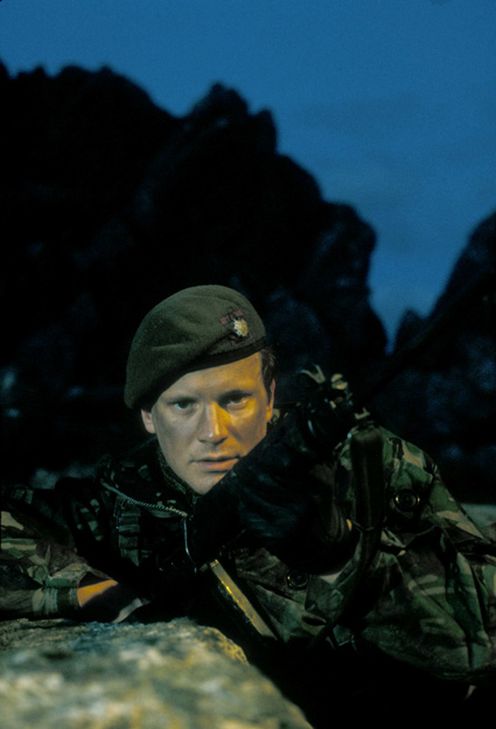
<p>Every major conflict in living memory has become the subject of drama almost the moment it was over. The Falklands war, which this month reached its thirtieth anniversary and is again in the news due to renewed tensions between Britain and Argentina over the islands, is no exception. Numerous plays about the conflict reached the stage and radio in its aftermath, but none caught the attention of the public at large. However, when television tackled the subject for the mass audience, the results were frequently politically charged and contentious.</p>{"id":2519,"date":"2012-04-02T21:44:38","date_gmt":"2012-04-02T20:44:38","guid":{"rendered":"http:\/\/www.britishtelevisiondrama.org.uk\/?p=2519"},"modified":"2024-08-30T11:42:21","modified_gmt":"2024-08-30T10:42:21","slug":"disputed-territory-drama-and-the-falklands","status":"publish","type":"post","link":"http:\/\/www.britishtelevisiondrama.org.uk\/?p=2519","title":{"rendered":"Disputed Territory: Drama and the Falklands"},"content":{"rendered":"<h4>by OLIVER WAKE<\/h4>\n<p><a href=\"http:\/\/www.britishtelevisiondrama.org.uk\/wp-content\/uploads\/2012\/04\/BTVD_Tumbledown_pic1.jpg\"><img loading=\"lazy\" decoding=\"async\" src=\"http:\/\/www.britishtelevisiondrama.org.uk\/wp-content\/uploads\/2012\/04\/BTVD_Tumbledown_pic1-204x300.jpg\" alt=\"\" title=\"BTVD_Tumbledown_pic1\" width=\"204\" height=\"300\" class=\"alignleft size-medium wp-image-2526\" srcset=\"http:\/\/www.britishtelevisiondrama.org.uk\/wp-content\/uploads\/2012\/04\/BTVD_Tumbledown_pic1-204x300.jpg 204w, http:\/\/www.britishtelevisiondrama.org.uk\/wp-content\/uploads\/2012\/04\/BTVD_Tumbledown_pic1.jpg 496w\" sizes=\"auto, (max-width: 204px) 100vw, 204px\" \/><\/a><\/p>\n<p>Every major conflict in living memory has become the subject of drama almost the moment it was over. The Falklands war, which this month reached its thirtieth anniversary and is again in the news due to renewed tensions between Britain and Argentina over the islands, is no exception. Numerous plays about the conflict reached the stage and radio in its aftermath, but none caught the attention of the public at large. However, when television tackled the subject for the mass audience, the results were frequently politically charged and contentious.<\/p>\n<p><!--more--><\/p>\n<p>First was Don Shaw\u2019s <a href=\"http:\/\/www.britishtelevisiondrama.org.uk\/?p=884\" target=\"\u201c_self\u201d\" rel=\"noopener\"><em>The Falklands Factor<\/em><\/a>, for the BBC\u2019s <em>Play for Today<\/em>, which was screened in April 1983, less than a year after the war\u2019s end.<sup id=\"rf1-2519\"><a href=\"#fn1-2519\" title=\"See Oliver Wake\u2019s article on this play, here: &lt;a href=&quot;http:\/\/www.britishtelevisiondrama.org.uk\/?p=884&quot; target=&quot;\u201c_self\u201d&quot; rel=&quot;noopener&quot;&gt;&lt;em&gt;The Falklands Factor&lt;\/em&gt;.\" rel=\"footnote\">1<\/a><\/sup> Shaw dramatised a previous cold war for the Falklands from 1770-71 to illuminate the history of the conflict and draw parallels with the recent war. The play strongly hints at the role of political expediency in each response to a Falklands invasion and, by showing how diplomacy \u2013 narrowly \u2013 averted bloodshed, questioned whether the same could not have been achieved in 1982.<\/p>\n<p>The use of picture book-style animation to depict events around the islands and an omniscient narrator, making clear the now-and-then parallels, prevented the play becoming simply a dull spectacle of middle aged men in period dress arguing. It also benefited from the highly watchable presences of John Bird as scheming Prime Minister Lord North and Donald Pleasence as the distant and distracted Dr Johnson, who helped subdue the public\u2019s lust for war over the Falklands.<\/p>\n<p>The links between past and present conflicts were to have been made even more explicit with a newsreel montage of the recent war at the conclusion. However, at the eleventh hour the BBC\u2019s Director of Programmes, Brian Wenham, insisted upon its removal, reportedly for fear of offending those bereaved by the conflict. Shaw alleged political censorship, suggesting the Corporation were afraid of offending the government in the run up to a potential general election.<sup id=\"rf2-2519\"><a href=\"#fn2-2519\" title=\"Anon, \u2018Diary\u2019, &lt;em&gt;The Guardian&lt;\/em&gt;, 26 April 1983, p. 19.\" rel=\"footnote\">2<\/a><\/sup><\/p>\n<p>Screened on BBC2 less than three months later, in July 1983, Maggie Wadey\u2019s <em>The Waiting War<\/em> dramatised the conflict via the experiences of three navy wives in Portsmouth whose husbands were aboard HMS <em>Sheffield<\/em>. It was shot in Portsmouth itself and based on Wadey\u2019s interviews with the families of Task Force sailors in the town. The drama charted their experiences from the <em>Sheffield<\/em> being redirected to the South Atlantic, to media reports of the ship\u2019s sinking and their frantic efforts to get news from the impenetrable official channels.<\/p>\n<p><em>The Waiting War<\/em> highlighted the anxieties of service families, the way in which television and radio bulletins become sources of fear in the absence of official news, and their hopeless task dealing with Ministry of Defence bureaucracy. It also indicated the ignorance of many about the objective over which their loved ones were fighting, with one character asking: \u201cWhere are the bloody Falklands anyway?\u201d, a question many may again be asking as the latest diplomatic row over the islands rumbles on during the war\u2019s thirtieth anniversary.<\/p>\n<p>By all accounts, <em>The Waiting War<\/em> was a success. Television critic Peter Fiddick praised the \u201ctaut, economical play\u201d for maintaining \u201ca delicate balance in keeping such potentially sensational material at the same time angry and decent.\u201d<sup id=\"rf3-2519\"><a href=\"#fn3-2519\" title=\"Peter Fiddick, \u2018The Waiting War\u2019, &lt;em&gt;The Guardian&lt;\/em&gt;, 7 July 1983, p. 10.\" rel=\"footnote\">3<\/a><\/sup> He also noted the \u201cstrong performances\u201d of the cast. Peter Ackroyd was equally impressed, calling it a \u201cpowerful drama\u201d and finding it \u201csuccessful enough that, in parts, it was too painful to watch.\u201d<sup id=\"rf4-2519\"><a href=\"#fn4-2519\" title=\"Peter Ackroyd, \u2018Realities of fear\u2019, &lt;em&gt;The Times&lt;\/em&gt;, 7 July 1983, p. 9.\" rel=\"footnote\">4<\/a><\/sup> It was one of very few Falklands themed television dramas not to provoke controversy.<\/p>\n<p>ITV\u2019s only Falklands drama was also the only one for the children\u2019s audience, being made as part of Thames Television\u2019s schools series <em>Middle English<\/em>. Screened in September and October 1983, Jan Needle\u2019s three-part <em>A Game of Soldiers<\/em> depicted how children encountering the real world consequences of the battles they played at could themselves get caught up in the \u2018fog of war\u2019. A trio of children on the Falklands find a wounded young Argentinean conscript hiding in a sheep shelter. He is scared to surrender himself to the British army because propaganda has convinced him he would be shot. The children, meanwhile, are afraid to tell their parents as one of them had overheard them discussing an incident in which local &#8216;hothead&#8217; farmers had killed lost Argentinean conscripts. The impasse is unresolved and the drama ends in tragedy.<\/p>\n<p><iframe loading=\"lazy\"  id=\"_ytid_69892\"  width=\"584\" height=\"438\"  data-origwidth=\"584\" data-origheight=\"438\" src=\"https:\/\/www.youtube.com\/embed\/UC6J9p2-Yqw?enablejsapi=1&#038;autoplay=0&#038;cc_load_policy=0&#038;cc_lang_pref=&#038;iv_load_policy=1&#038;loop=0&#038;rel=1&#038;fs=1&#038;playsinline=0&#038;autohide=2&#038;theme=dark&#038;color=red&#038;controls=1&#038;disablekb=0&#038;\" class=\"__youtube_prefs__  epyt-is-override  no-lazyload\" title=\"YouTube player\"  allow=\"fullscreen; accelerometer; autoplay; clipboard-write; encrypted-media; gyroscope; picture-in-picture; web-share\" referrerpolicy=\"strict-origin-when-cross-origin\" allowfullscreen data-no-lazy=\"1\" data-skipgform_ajax_framebjll=\"\"><\/iframe><\/p>\n<p>This rumour of civilian atrocities and the content of the drama\u2019s accompanying classroom study materials resulted in protests from the Falkland Islands Government (via their London representative) and the Ministry of Defence. Whilst some of the MoD\u2019s complaint related to a reference in the literature to Northern Ireland which doesn\u2019t concern us here, both parties objected to the suggestion that islanders killed Argentineans, which was flatly denied, as was the idea that even rumours of such occurrences had circulated. \u201cIt sounds thoroughly slanted and calculated to insert into young minds the idea that something like this happened, even if the play is presented as fiction\u201d, the Falkland Islands Government complained.<sup id=\"rf5-2519\"><a href=\"#fn5-2519\" title=\"Adrian Monk for the Falkland Islands Government quoted in John Ezard, \u2018Lessons of modern warfare upset MoD\u2019, &lt;em&gt;The Guardian&lt;\/em&gt;, 8 September 1983, p. 1.\" rel=\"footnote\">5<\/a><\/sup><\/p>\n<p>The producer, Peter Tabern, responded that there was no allegation that Falklands farmers had killed Argentinean conscripts and that the drama was based on evidence that the local Falklands defence force had resisted actively during the occupation, with the rest being \u201cinvention\u201d.<sup id=\"rf6-2519\"><a href=\"#fn6-2519\" title=\"Peter Tabern, quoted in ibid.\" rel=\"footnote\">6<\/a><\/sup> The storyline had been chosen to help teachers prompt classroom discussion about the nature of rumours in war. However, this was not reflected in the already contentious classroom literature which accompanied the series.<\/p>\n<p>The MoD queried the programme\u2019s suitability for children with the Independent Broadcasting Authority and, bowing to pressure, Thames Television\u2019s managing director Bryan Cowgill had a voiceover added to the series to confirm the fictional nature of the storyline. <em>A Game of Soldiers<\/em> was described as \u201ca vivid, moving and recommendably stimulating work\u201d by <em>The Guardian<\/em>, where it was also reported to have been dubbed within the television industry \u201cFamous Five Go Mad in The Falklands\u201d.<sup id=\"rf7-2519\"><a href=\"#fn7-2519\" title=\"John Ezard et al, \u2018Fantasy islands\u2019, &lt;em&gt;The Guardian&lt;\/em&gt;, 20 September 1983, p. 12.\" rel=\"footnote\">7<\/a><\/sup> It went on to be nominated for a BAFTA award in the best children\u2019s programme: documentary\/educational category, in which context the reference to documentary was perhaps unfortunate.<\/p>\n<p>The next Falklands drama was as much a stage phenomenon as a television one. In mid-1983 the Royal Court theatre staged the two-part show <em>Falkland Sound\/Voces de Malvinas<\/em>. The first half was a dramatisation of the letters home of naval officer Lt David Tinker, who served \u2013 and was killed \u2013 in the Falklands war. The letters between Tinker and his father illustrated how his experiences influenced him to feel that the conflict was Britain\u2019s most pointless war.<\/p>\n<p>When the production toured Britain it was \u2018banned\u2019 from Plymouth, a navy city from which many of the Task Force personnel hailed, \u201cto spare the feelings of bereaved families.\u201d<sup id=\"rf8-2519\"><a href=\"#fn8-2519\" title=\"Anon, \u2018Play banned to spare feelings\u2019, &lt;em&gt;The Stage&lt;\/em&gt;, 21 July 1983, p. 22. Although the term \u2018banned\u2019 was used in the press it seems overly sensational. The reports from the time suggest it was more a case of a theatre withdrawing from their agreement to host the touring production. Its eventual Plymouth production seems to have been effected simply via another venue being found.\" rel=\"footnote\">8<\/a><\/sup> It was ultimately staged in Plymouth, thanks to an alternative theatre, towards the end of the year. This production was filmed for the BBC2 arts series <em>Open Space<\/em> and transmitted in February 1984 under the revised title <em>Falkland Sound to Plymouth Sound<\/em> with the inclusion of responses from the local audience.<\/p>\n<p>The following year saw Ewart Alexander\u2019s BBC1 drama <em>The Mimosa Boys<\/em>, based on the diaries and letters of Tim Rees, the unit photographer with 1st Battalion, Welsh Guards. The play covered the journey of the Welsh Guards battalion to the Falklands on the QE2 and their subsequent losses aboard the HMS <em>Sir Galahad<\/em> when it was attacked at Bluff Cove. The play focused on four Guardsmen, and the families at home in Wales, concentrating primarily on the soldiers\u2019 transit to the Falklands, with the action packed into the last ten minutes.<\/p>\n<p>The political angle was not far away. The play raised questions about the circumstances which led to the Guards being left amassed, vulnerable and undefended aboard ship, when all military protocols cautioned against such a scenario. \u201cI hope it will reawaken the demands for an inquiry into what really happened at Bluff Cove\u201d, commented director John Hefin.<sup id=\"rf9-2519\"><a href=\"#fn9-2519\" title=\"Hefin quoted in Sandy Smithies, \u2018Television\u2019, &lt;em&gt;The Guardian&lt;\/em&gt;, 19 June 1985, p. 28.\" rel=\"footnote\">9<\/a><\/sup> Hefin\u2019s production for BBC Wales didn\u2019t have to go far to find locations, filming East Falkland moorland scenes in the Brecon Beacons and using a disused Cardiff church as Port Stanley cathedral<\/p>\n<p>Alexander drew his title from history; the <em>Mimosa<\/em> was the ship which, in 1865, carried Welsh emigrants to Argentina, where they settled. With this ironic title, the Bluff Cove carnage as the play\u2019s inevitable climax and dialogue such as a farmer referring to the \u201cbloody Union Jack\u201d, the drama took an anti-war stance. Generally, television critics found it an unnecessary dramatisation of a episode in the conflict already well covered by recent documentaries, in particular <em>Simon\u2019s War<\/em>, about the Welsh Guardsman Simon Weston who was grievously wounded in the Bluff Cove attack.<\/p>\n<p>In another indication of the political sensitivity of Falklands war dramas, Alexander later reported that the play\u2019s press showing had been postponed three times and that he had been asked not to give interviews about it by BBC executives concerned \u2013 specifically in relation to a reference to the sinking of the Belgrano \u2013 not to offend the Thatcher government at a delicate stage in licence fee negotiations.<sup id=\"rf10-2519\"><a href=\"#fn10-2519\" title=\"Ewart Alexander in Alan Road, \u2018A very difficult tale to tell\u2019, &lt;em&gt;The Observer&lt;\/em&gt;, 6 June 1993, p.67.\" rel=\"footnote\">10<\/a><\/sup><\/p>\n<p><a href=\"http:\/\/www.britishtelevisiondrama.org.uk\/wp-content\/uploads\/2012\/04\/BTVD_Sinkthebelgrano_pic1.jpg\"><img loading=\"lazy\" decoding=\"async\" src=\"http:\/\/www.britishtelevisiondrama.org.uk\/wp-content\/uploads\/2012\/04\/BTVD_Sinkthebelgrano_pic1-271x300.jpg\" alt=\"\" title=\"BTVD_Sinkthebelgrano_pic1\" width=\"271\" height=\"300\" class=\"alignleft size-medium wp-image-2530\" srcset=\"http:\/\/www.britishtelevisiondrama.org.uk\/wp-content\/uploads\/2012\/04\/BTVD_Sinkthebelgrano_pic1-271x300.jpg 271w, http:\/\/www.britishtelevisiondrama.org.uk\/wp-content\/uploads\/2012\/04\/BTVD_Sinkthebelgrano_pic1.jpg 320w\" sizes=\"auto, (max-width: 271px) 100vw, 271px\" \/><\/a><\/p>\n<p>The sinking of the Belgrano had been the most divisive and controversial act of the whole Falklands campaign. Playwright Steven Berkoff wrote a television play in verse about the incident, called <em>Sink the Belgrano!<\/em>, in 1985. The play was a vicious cartoon, presenting savage caricatures of Thatcher and her cabinet, depicting them as warmongers seeking to inflame the conflict to win political popularity. In view of the controversies to follow, it was perhaps for the best that the BBC declined to produce it. Berkoff noted that at the BBC there was \u201ca kind of caution about things not being balanced\u201d and adapted his play for the stage.<sup id=\"rf11-2519\"><a href=\"#fn11-2519\" title=\"Berkoff quoted in \u2018People at Large\u2019, &lt;em&gt;The Guardian&lt;\/em&gt;, 27 December 1985, p. 20.\" rel=\"footnote\">11<\/a><\/sup><\/p>\n<p>Alan Berrie\u2019s <em>The Queen\u2019s Arms<\/em>, produced by BBC Northern Ireland in 1986, used the Falklands as a backdrop to tell a \u2018state of the nation\u2019 drama, with a rundown pub as a microcosm of Britain. Berrie\u2019s drama portrayed the British public as jingoistic flag-wavers, easily incited to crave foreign blood, with war as televised spectator sport. \u201cA bit dour and humourless, but it\u2019s a brave, hard-hitting play\u201d, stated <em>The Guardian<\/em>.<sup id=\"rf12-2519\"><a href=\"#fn12-2519\" title=\"Hugh Hebert, \u2018Drinking in the Falklands factor\u2019, &lt;em&gt;The Guardian&lt;\/em&gt;, 4 August 1986, p. 9.\" rel=\"footnote\">12<\/a><\/sup><\/p>\n<p>Perhaps the biggest controversy was over <a href=\"http:\/\/www.britishtelevisiondrama.org.uk\/?p=2600\" target=\"_self\" rel=\"noopener\">Ian Curteis<\/a>\u2019 <em>The Falklands Play<\/em>, an epic drama documentary for the BBC covering the political and diplomatic processes in London, Buenos Ares and at the United Nations before and after the Argentinean invasion. Although commissioned in 1983, Curteis deferred the project to allow institutional sensitivities about the war, which were impeding his research, to pass. He progressed with the play in 1985 and it was scheduled to be screened on the conflict\u2019s fifth anniversary in 1987.<\/p>\n<p><a href=\"http:\/\/www.britishtelevisiondrama.org.uk\/wp-content\/uploads\/2012\/04\/BTVD_FalklandsPlay_promopic.jpg\"><img loading=\"lazy\" decoding=\"async\" src=\"http:\/\/www.britishtelevisiondrama.org.uk\/wp-content\/uploads\/2012\/04\/BTVD_FalklandsPlay_promopic.jpg\" alt=\"\" title=\"BTVD_FalklandsPlay_promopic\" width=\"396\" height=\"188\" class=\"alignleft size-full wp-image-2524\" srcset=\"http:\/\/www.britishtelevisiondrama.org.uk\/wp-content\/uploads\/2012\/04\/BTVD_FalklandsPlay_promopic.jpg 396w, http:\/\/www.britishtelevisiondrama.org.uk\/wp-content\/uploads\/2012\/04\/BTVD_FalklandsPlay_promopic-300x142.jpg 300w\" sizes=\"auto, (max-width: 396px) 100vw, 396px\" \/><\/a><\/p>\n<p><em>The Falklands Play<\/em> hit the headlines when its production was suddenly postponed at a late stage in 1986. The script showed Prime Minister Margaret Thatcher in a positive light, making all efforts to avoid war, weeping over reports of casualties and personally writing condolence letters to the bereaved. Curteis alleged the postponement followed an instruction, which he had refused, from Peter Goodchild, the BBC\u2019s Head of Plays, to show Thatcher and her cabinet less sympathetically, and acting on more pragmatically political and self-serving motives. This action, he claimed, represented left-wing bias at the BBC.<\/p>\n<p>The BBC denied Curteis\u2019s allegations but their statements were contradictory, with the quality of the script being cited as the reason for postponement, then that it would be irresponsible for them to produce <em>The Falklands Play<\/em>, which depicted the current Prime Minister and Government, in the run-up to (another) looming general election. The story ran and ran in the press along with various allied allegations of BBC left-wing partiality. Inevitably, the postponement became cancellation. Eventually, a greatly reduced version of the script, removing entirely the Argentinean scenes (which had depicted the Junta as drunken gangsters), was produced simultaneously for BBC television and radio to mark the war\u2019s 20th anniversary in 2002.<\/p>\n<p>With so much already written about it (and the full script published), the low budget production could never have lived up to expectations. The script had not aged well, with the contemporary relevance of much of it (such as the US\/UK relations angle) and topical jokes (sensitivity to references to Suez &#8211; a previous British campaign about which Curteis had written a similar drama documentary &#8211; and the changing names of ex-British colonial territories) having lost their significance in the intervening years. Even so, there was interest to be found in Curteis\u2019s depictions of cabinet meetings and dramatisations of heated Commons exchanges. Patricia Hodge was magnetic as the unstoppable force of Margaret Thatcher when confronted with any obstacle, but also made her humane and anxious.<\/p>\n<p>Further uproar was caused by the next big Falklands drama, 1988\u2019s <em>Tumbledown<\/em>. Charles Wood\u2019s play dramatised the experience of Lt Robert Lawrence, who had won the Military Cross for his part in the assault on Mount Tumbledown, where he was shot in the head by a sniper, leaving him alive but disabled. Mixing scenes from before, during and after the war, the drama depicts Lawrence\u2019s transformation from eager, courageous and professional young officer to bitter and angry veteran. Played by Colin Firth, Lawrence was by turns boyish, charming and insufferably arrogant.<\/p>\n<p><em>Tumbledown<\/em> showed the grim realities of battle, with gory scenes of close-quarters combat (at one point Lawrence repeatedly bayonets a pleading Argentinean soldier in the face) and emergency surgery patching up Lawrence\u2019s brain. Yet, perhaps importantly, although they appear briefly in the battle scenes, it is not the Argentineans who are Lawrence\u2019s enemy (he points out that the sniper was only doing his job), but the military and civilian authorities who, as he perceived it, neglected and abused him following his injury. The drama shows him patronised and talked down to by nurses and medical orderlies, bullied and humiliated by physiotherapists and kept from view at a service of remembrance.<\/p>\n<p>In its early stages of production in 1986, <em>Tumbledown<\/em> was drawn into the ongoing controversy surrounding <em>The Falklands Play<\/em>. With its negative portrayal of Lawrence\u2019s treatment, it was labelled in the press as a left-wing drama critical of the Falklands war, and therefore a further indictment of BBC bias in view of the cancellation of <em>The Falklands Play<\/em>. <em>Tumbledown<\/em> was then delayed \u2013 ostensibly due to budgetary reasons but Wood stated it was due to the General Election \u2013 and was eventually filmed in late 1987 for screening the following year. Having seen the script, the MoD had suggested major changes and refused any assistance with the filming when these were not made.<sup id=\"rf13-2519\"><a href=\"#fn13-2519\" title=\"For more background on &lt;em&gt;Tumbledown&lt;\/em&gt;, see Geoffrey Reeves, \u2018Tumbledown (Charles Wood) and The Falklands Play (Ian Curteis): The Falklands Faction\u2019, in George W Brandt (ed), &lt;em&gt;British Television Drama in the 1980s&lt;\/em&gt; (Cambridge: Cambridge University Press, 1993).\" rel=\"footnote\">13<\/a><\/sup><\/p>\n<p>In a bid to have the scheduled broadcast cancelled, legal action was launched close to transmission by another veteran of the war, who perceived himself as the basis of one character briefly encountered by Lawrence in the drama (presumably having read the script which Wood had published the previous year). This was settled at the last minute with the removal of twelve seconds of dialogue \u201con compassionate grounds\u201d.<sup id=\"rf14-2519\"><a href=\"#fn14-2519\" title=\"Ibid, p. 147.\" rel=\"footnote\">14<\/a><\/sup> The press reaction to the drama was rabid, with accusations of bias, inaccuracy and morbidity. Complaints also arose from many of those who saw themselves or their professions maligned in the drama. Thanks in part to the publicity storm, <em>Tumbledown<\/em> reached an audience estimated in excess of 10 million. It went on to win six major awards, including the BAFTA for best single drama, and was nominated for many others.<\/p>\n<p>Although not straight drama, mention should be made of the only outright dramatic comedy about the conflict. The two-part <em>South Atlantic Raiders<\/em> was a characteristically anarchic comedy inspired by the Argentinean invasion from Channel 4&#8217;s occasional series <em>The Comic Strip Presents&#8230;<\/em>, seen in 1990. The same year the BBC had screened a television version of Nick Perry&#8217;s 1982-set stage play <em>Arrivederci Millwall<\/em>, in which the nationalistic fervour around the Falklands campaign boosted the violent xenophobia of a gang of British football hooligans.<\/p>\n<p>The final big Falklands drama was writer\/director Stuart Urban\u2019s <em>An Ungentlemanly Act<\/em> which, for the conflict\u2019s tenth anniversary in 1992, dramatised the Argentinean invasion of the Falklands and the British defence and ultimate surrender. Keen to keep the anniversary low-key, the Foreign Office and MoD refused any co-operation with the production, which led to a cameraman being arrested for surreptitiously filming an RAF Hercules for use in the programme. Urban was able to film on the Falkland Islands themselves and recreate scenes around the real Government House and other locations in Stanley, lending an impressive verisimilitude to his recreations.<\/p>\n<p><a href=\"http:\/\/www.britishtelevisiondrama.org.uk\/wp-content\/uploads\/2012\/04\/BTVD_UngentlemanlyAct_pic1.jpg\"><img loading=\"lazy\" decoding=\"async\" src=\"http:\/\/www.britishtelevisiondrama.org.uk\/wp-content\/uploads\/2012\/04\/BTVD_UngentlemanlyAct_pic1-300x223.jpg\" alt=\"\" title=\"BTVD_UngentlemanlyAct_pic1\" width=\"300\" height=\"223\" class=\"alignleft size-medium wp-image-2529\" srcset=\"http:\/\/www.britishtelevisiondrama.org.uk\/wp-content\/uploads\/2012\/04\/BTVD_UngentlemanlyAct_pic1-300x223.jpg 300w, http:\/\/www.britishtelevisiondrama.org.uk\/wp-content\/uploads\/2012\/04\/BTVD_UngentlemanlyAct_pic1.jpg 688w\" sizes=\"auto, (max-width: 300px) 100vw, 300px\" \/><\/a><\/p>\n<p>The finished production was excellent, being both informative and highly entertaining. It boasted superb performances from Ian Richardson as the Islands\u2019 governor, Rex Hunt, Rosemary Leach as his wife Mavis, and Bob Peck as Major Norman, the Royal Marines commander who led the defence of the islands. Urban drew a welcome vein of humour from the absurdities of both island life and the invasion itself. Aside from some concern about Urban having possibly exaggerated Mavis Hunt\u2019s drinking, <em>An Ungentlemanly Act<\/em> was well received. Richardson was nominated for two awards for his performance and the drama won the 1993 BAFTA best single drama award. Sometime later, however, the real Rex Hunt complained of some inaccuracies in its depiction of his actions, but these were minor quibbles only.<\/p>\n<p>There have been no further dramas on British television dealing specifically with the Falklands war. The makers of war drama have moved on to Britain\u2019s more recent involvements in the Balkans and the Middle East over the last few decades. However, the Falklands conflict has provided a backdrop for a number of storylines from drama series and serials in recent years, as it had for <em>The Queen\u2019s Arms<\/em>, for example <em>Ashes to Ashes<\/em> in 2009, <em>Waking the Dead<\/em> in 2011, and most recently an episode of BBC2\u2019s <em>White Heat<\/em> in April 2012.<sup id=\"rf15-2519\"><a href=\"#fn15-2519\" title=\"The episode broadcast on 5 April 2012.\" rel=\"footnote\">15<\/a><\/sup> It seems that this brief but fierce war remains dramatically useful as a symbol of Britain\u2019s changing status as an ex-imperial power and, in this age of coalitions, its last days as a nation able to act independently as a military force far from home.<\/p>\n<p>\u00a9 Oliver Wake, 2012.<\/p>\n<p><em>Originally posted: 2 April 2012.<br \/>\nUpdates:<br \/>\n20 May 2012: Minor revisions.<\/em><\/p>\n<p><body><!-- Start of StatCounter Code --><br \/>\n<script type=\"text\/javascript\">\nvar sc_project=5750652; \nvar sc_invisible=1; \nvar sc_partition=68; \nvar sc_click_stat=1; \nvar sc_security=\"6dd1aa39\"; \n<\/script><\/p>\n<p><script type=\"text\/javascript\"\nsrc=\"http:\/\/www.statcounter.com\/counter\/counter.js\"><\/script><noscript>\n<div<br \/>\nclass=&#8221;statcounter&#8221;><a title=\"wordpress stats \"<br \/>\nhref=&#8221;http:\/\/www.statcounter.com\/wordpress.org\/&#8221;<br \/>\ntarget=&#8221;_blank&#8221;><img class=\"statcounter\"<br \/>\nsrc=&#8221;http:\/\/c.statcounter.com\/5750652\/0\/6dd1aa39\/1\/&#8221;<br \/>\nalt=&#8221;wordpress stats &#8221; ><\/a><\/div>\n<p><\/noscript><br \/>\n<!-- End of StatCounter Code --><\/body><\/p>\n<hr class=\"footnotes\"><ol class=\"footnotes\" style=\"list-style-type:decimal\"><li id=\"fn1-2519\"><p >See Oliver Wake\u2019s article on this play, here: <a href=\"http:\/\/www.britishtelevisiondrama.org.uk\/?p=884\" target=\"\u201c_self\u201d\" rel=\"noopener\"><em>The Falklands Factor<\/em>.&nbsp;<a href=\"#rf1-2519\" class=\"backlink\" title=\"Return to footnote 1.\">&#8617;<\/a><\/p><\/li><li id=\"fn2-2519\"><p >Anon, \u2018Diary\u2019, <em>The Guardian<\/em>, 26 April 1983, p. 19.&nbsp;<a href=\"#rf2-2519\" class=\"backlink\" title=\"Return to footnote 2.\">&#8617;<\/a><\/p><\/li><li id=\"fn3-2519\"><p >Peter Fiddick, \u2018The Waiting War\u2019, <em>The Guardian<\/em>, 7 July 1983, p. 10.&nbsp;<a href=\"#rf3-2519\" class=\"backlink\" title=\"Return to footnote 3.\">&#8617;<\/a><\/p><\/li><li id=\"fn4-2519\"><p >Peter Ackroyd, \u2018Realities of fear\u2019, <em>The Times<\/em>, 7 July 1983, p. 9.&nbsp;<a href=\"#rf4-2519\" class=\"backlink\" title=\"Return to footnote 4.\">&#8617;<\/a><\/p><\/li><li id=\"fn5-2519\"><p >Adrian Monk for the Falkland Islands Government quoted in John Ezard, \u2018Lessons of modern warfare upset MoD\u2019, <em>The Guardian<\/em>, 8 September 1983, p. 1.&nbsp;<a href=\"#rf5-2519\" class=\"backlink\" title=\"Return to footnote 5.\">&#8617;<\/a><\/p><\/li><li id=\"fn6-2519\"><p >Peter Tabern, quoted in ibid.&nbsp;<a href=\"#rf6-2519\" class=\"backlink\" title=\"Return to footnote 6.\">&#8617;<\/a><\/p><\/li><li id=\"fn7-2519\"><p >John Ezard et al, \u2018Fantasy islands\u2019, <em>The Guardian<\/em>, 20 September 1983, p. 12.&nbsp;<a href=\"#rf7-2519\" class=\"backlink\" title=\"Return to footnote 7.\">&#8617;<\/a><\/p><\/li><li id=\"fn8-2519\"><p >Anon, \u2018Play banned to spare feelings\u2019, <em>The Stage<\/em>, 21 July 1983, p. 22. Although the term \u2018banned\u2019 was used in the press it seems overly sensational. The reports from the time suggest it was more a case of a theatre withdrawing from their agreement to host the touring production. Its eventual Plymouth production seems to have been effected simply via another venue being found.&nbsp;<a href=\"#rf8-2519\" class=\"backlink\" title=\"Return to footnote 8.\">&#8617;<\/a><\/p><\/li><li id=\"fn9-2519\"><p >Hefin quoted in Sandy Smithies, \u2018Television\u2019, <em>The Guardian<\/em>, 19 June 1985, p. 28.&nbsp;<a href=\"#rf9-2519\" class=\"backlink\" title=\"Return to footnote 9.\">&#8617;<\/a><\/p><\/li><li id=\"fn10-2519\"><p >Ewart Alexander in Alan Road, \u2018A very difficult tale to tell\u2019, <em>The Observer<\/em>, 6 June 1993, p.67.&nbsp;<a href=\"#rf10-2519\" class=\"backlink\" title=\"Return to footnote 10.\">&#8617;<\/a><\/p><\/li><li id=\"fn11-2519\"><p >Berkoff quoted in \u2018People at Large\u2019, <em>The Guardian<\/em>, 27 December 1985, p. 20.&nbsp;<a href=\"#rf11-2519\" class=\"backlink\" title=\"Return to footnote 11.\">&#8617;<\/a><\/p><\/li><li id=\"fn12-2519\"><p >Hugh Hebert, \u2018Drinking in the Falklands factor\u2019, <em>The Guardian<\/em>, 4 August 1986, p. 9.&nbsp;<a href=\"#rf12-2519\" class=\"backlink\" title=\"Return to footnote 12.\">&#8617;<\/a><\/p><\/li><li id=\"fn13-2519\"><p >For more background on <em>Tumbledown<\/em>, see Geoffrey Reeves, \u2018Tumbledown (Charles Wood) and The Falklands Play (Ian Curteis): The Falklands Faction\u2019, in George W Brandt (ed), <em>British Television Drama in the 1980s<\/em> (Cambridge: Cambridge University Press, 1993).&nbsp;<a href=\"#rf13-2519\" class=\"backlink\" title=\"Return to footnote 13.\">&#8617;<\/a><\/p><\/li><li id=\"fn14-2519\"><p >Ibid, p. 147.&nbsp;<a href=\"#rf14-2519\" class=\"backlink\" title=\"Return to footnote 14.\">&#8617;<\/a><\/p><\/li><li id=\"fn15-2519\"><p >The episode broadcast on 5 April 2012.&nbsp;<a href=\"#rf15-2519\" class=\"backlink\" title=\"Return to footnote 15.\">&#8617;<\/a><\/p><\/li><\/p><\/ol><\/hr>","protected":false},"excerpt":{"rendered":null,"protected":false},"author":1,"featured_media":0,"comment_status":"open","ping_status":"open","sticky":false,"template":"","format":"standard","meta":{"footnotes":""},"categories":[137,139],"tags":[31,205,196,217,198,214,212,203,199,210,206,207,201,216,209,16,200,211,213,208,202,220,215,204,197,218,219],"class_list":["post-2519","post","type-post","status-publish","format-standard","hentry","category-essays","category-oliver-wake","tag-1980s","tag-a-game-of-soldiers","tag-an-ungentlemanly-act","tag-ashes-to-ashes","tag-charles-wood","tag-ewart-alexander","tag-falkland-sound","tag-falklands","tag-ian-curteis","tag-iba","tag-jan-needle","tag-maggie-wadey","tag-middle-english","tag-peter-goodchild","tag-peter-tabern","tag-play-for-today","tag-richard-eyre","tag-royal-court","tag-sink-the-belgrano","tag-steven-berkoff","tag-stuart-urban","tag-the-falklands-play","tag-the-mimosa-boys","tag-the-waiting-war","tag-tumbledown","tag-waking-the-dead","tag-white-heat"],"_links":{"self":[{"href":"http:\/\/www.britishtelevisiondrama.org.uk\/index.php?rest_route=\/wp\/v2\/posts\/2519","targetHints":{"allow":["GET"]}}],"collection":[{"href":"http:\/\/www.britishtelevisiondrama.org.uk\/index.php?rest_route=\/wp\/v2\/posts"}],"about":[{"href":"http:\/\/www.britishtelevisiondrama.org.uk\/index.php?rest_route=\/wp\/v2\/types\/post"}],"author":[{"embeddable":true,"href":"http:\/\/www.britishtelevisiondrama.org.uk\/index.php?rest_route=\/wp\/v2\/users\/1"}],"replies":[{"embeddable":true,"href":"http:\/\/www.britishtelevisiondrama.org.uk\/index.php?rest_route=%2Fwp%2Fv2%2Fcomments&post=2519"}],"version-history":[{"count":41,"href":"http:\/\/www.britishtelevisiondrama.org.uk\/index.php?rest_route=\/wp\/v2\/posts\/2519\/revisions"}],"predecessor-version":[{"id":8294,"href":"http:\/\/www.britishtelevisiondrama.org.uk\/index.php?rest_route=\/wp\/v2\/posts\/2519\/revisions\/8294"}],"wp:attachment":[{"href":"http:\/\/www.britishtelevisiondrama.org.uk\/index.php?rest_route=%2Fwp%2Fv2%2Fmedia&parent=2519"}],"wp:term":[{"taxonomy":"category","embeddable":true,"href":"http:\/\/www.britishtelevisiondrama.org.uk\/index.php?rest_route=%2Fwp%2Fv2%2Fcategories&post=2519"},{"taxonomy":"post_tag","embeddable":true,"href":"http:\/\/www.britishtelevisiondrama.org.uk\/index.php?rest_route=%2Fwp%2Fv2%2Ftags&post=2519"}],"curies":[{"name":"wp","href":"https:\/\/api.w.org\/{rel}","templated":true}]}}