<h4>by OLIVER WAKE</h4>
<p><a href="http://www.britishtelevisiondrama.org.uk/wp-content/uploads/2012/06/Messina_Dorian_credit.png"><img loading="lazy" decoding="async" src="http://www.britishtelevisiondrama.org.uk/wp-content/uploads/2012/06/Messina_Dorian_credit.png" alt="" title="Messina_Dorian_credit" width="250" height="188" class="alignleft size-full wp-image-2727" /></a></p>
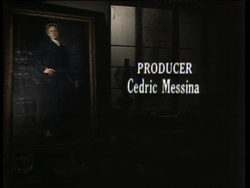
<p>Cedric Messina must be one of British television’s most prolific producers and directors of dramatic programmes, with at least 250 drama and opera productions to his name. He worked extensively in television for 25 years, always for the BBC as he was committed to the principle of public service broadcasting.</p>{"id":2715,"date":"2012-06-24T18:54:39","date_gmt":"2012-06-24T17:54:39","guid":{"rendered":"http:\/\/www.britishtelevisiondrama.org.uk\/?p=2715"},"modified":"2024-08-30T11:41:48","modified_gmt":"2024-08-30T10:41:48","slug":"cedric-messina-2","status":"publish","type":"post","link":"http:\/\/www.britishtelevisiondrama.org.uk\/?p=2715","title":{"rendered":"Cedric Messina"},"content":{"rendered":"<h4>by OLIVER WAKE<\/h4>\n<p><a href=\"http:\/\/www.britishtelevisiondrama.org.uk\/wp-content\/uploads\/2012\/06\/Messina_Dorian_credit.png\"><img loading=\"lazy\" decoding=\"async\" src=\"http:\/\/www.britishtelevisiondrama.org.uk\/wp-content\/uploads\/2012\/06\/Messina_Dorian_credit.png\" alt=\"\" title=\"Messina_Dorian_credit\" width=\"250\" height=\"188\" class=\"alignleft size-full wp-image-2727\" \/><\/a><\/p>\n<p>Cedric Messina must be one of British television\u2019s most prolific producers and directors of dramatic programmes, with at least 250 drama and opera productions to his name. He worked extensively in television for 25 years, always for the BBC as he was committed to the principle of public service broadcasting.<\/p>\n<p><!--more--><\/p>\n<p>He was born in Port Elizabeth, South Africa to Sicilian and Welsh immigrant parents on 14 December 1920. He was brought up and educated in Johannesburg while his father worked in the copper mines of Zimbabwe (then Rhodesia). Messina joined the South African Broadcasting Corporation (SABC) in the 1930s, initially working as a radio announcer and later as a producer. His broadcasting career was interrupted by the Second World War, during which he served with both the British and American armies.<\/p>\n<p>After the war, the SABC posted Messina to Durban to set up a drama unit, where he was responsible for producing a play each week and became the broadcaster\u2019s head of drama. From around 1947 he spent a period on attachment with BBC radio in London, where he worked as both an announcer and producer before returning to South Africa. He had been promised a permanent position with BBC radio which he later returned to claim in 1958. As a BBC radio producer he produced a variety of programming, from popular series such as <em>Mrs Dale\u2019s Diary<\/em> to adaptations of numerous classical stage plays.<sup id=\"rf1-2715\"><a href=\"#fn1-2715\" title=\"These biographical notes about Messina\u2019s life and career before he moved into television are drawn from a number of sources, including David Sweetman, &lt;em&gt;Mary Renault: A Biography&lt;\/em&gt; (London: Chatto &#038; Windus, 1993), p. 128; Anon, \u2018Cedric Messina\u2019, &lt;em&gt;The Stage and Television Today&lt;\/em&gt;, 10 June 1993, p. 30; Anon, \u2018Cedric Messina\u2019, &lt;em&gt;The Times&lt;\/em&gt;, 13 May 1993, p. 23; Anon, \u2018The Seekers\u2019, &lt;em&gt;Radio Times&lt;\/em&gt;, 30 April 1964, p. 16; and Keith Williams, \u2018Cedric Messina\u2019, &lt;em&gt;The Guardian&lt;\/em&gt;, 21 May 1993, p. 34. (The obituaries noted above include a number of mistakes regarding dates of particular Messina projects which I have endeavoured to correct in the main text of this overview of his work by referring to contemporary sources where possible but the exact dating for Messina\u2019s move to Durban and return from the initial BBC posting remain unclear.\" rel=\"footnote\">1<\/a><\/sup><\/p>\n<p>In 1962, Messina moved over to BBC television as a drama director, directing a number of episodes of the series <em>Dr Finlay\u2019s Casebook<\/em> that year and the next. At the end of 1963 he also directed a 90 minute adaptation of Friedrich D\u00fcerrenmatt\u2019s <em>The Physicists<\/em>, under producer Peter Luke, which better reflected his main interest in drama sourced from the stage.<\/p>\n<p>With the arrival of the BBC\u2019s second television channel in 1964, new posts and opportunities opened at the Corporation. The BBC\u2019s head of television drama, Sydney Newman, invited Messina to become a producer for BBC2, or as Messina put it: \u201cSydney Newman hit me over the head and made me into a producer\u201d.<sup id=\"rf2-2715\"><a href=\"#fn2-2715\" title=\"Messina in Marjorie Bilbow, \u2018Marrying the right play to the right director\u2019, &lt;em&gt;The Stage and Television Today&lt;\/em&gt;, 22 April 1965, p. 10.\" rel=\"footnote\">2<\/a><\/sup> It seems he accepted the new post somewhat reluctantly but was rewarded with control of the channel\u2019s premier drama anthology strand, <em>Theatre 625<\/em>, which began in May 1964.<sup id=\"rf3-2715\"><a href=\"#fn3-2715\" title=\"Ibid.\" rel=\"footnote\">3<\/a><\/sup> <\/p>\n<p><em>Theatre 625<\/em> was an attempt to bring \u201cdepth\u201d to the drama schedule; to \u201cexplore dramatic themes rather more profoundly than has been possible up to now.\u201d<sup id=\"rf4-2715\"><a href=\"#fn4-2715\" title=\"Anon, \u2018The Seekers\u2019, 1964.\" rel=\"footnote\">4<\/a><\/sup> Productions were loosely grouped in twos or threes, each in some way dealing with the same theme, such as \u2018belief\u2019 and \u2018women in crisis\u2019. The series was to use as much original writing as possible but existing works were also accommodated where they helped explore the set theme, such as Albert Camus\u2019s <em>The Just<\/em> and the theme of political assassination. \u201cTo me one of the most important people of all is the writer\u201d, Messina commented at the time; \u201cMaking the writer known is what <em>Theatre 625<\/em> has, I hope, been doing in a small way.\u201d<sup id=\"rf5-2715\"><a href=\"#fn5-2715\" title=\"Messina in Marjorie Bilbow, \u2018Marrying the right play to the right director\u2019.\" rel=\"footnote\">5<\/a><\/sup><\/p>\n<p>There was room for writers to experiment with the scope of television drama in <em>Theatre 625<\/em>, for example with Keith Dewhurst\u2019s large-scale <em>The Siege of Manchester<\/em>, which Messina called \u201ca revolution in the way of writing historical plays.\u201d<sup id=\"rf6-2715\"><a href=\"#fn6-2715\" title=\"Messina in Anon, \u2018All set for big BBC-2 opening in the North\u2019, &lt;em&gt;The Stage and Television Today&lt;\/em&gt;, 28 October 1965, p. 11.\" rel=\"footnote\">6<\/a><\/sup> Although produced by his successor, Messina commissioned John Hopkins\u2019s <em>Talking to a Stranger<\/em>, which explored the same themes and events from four different perspectives over a quartet of plays. It was a critical and popular success and came to be recognised as one of the decade\u2019s greatest accomplishments in original television writing.<\/p>\n<p>Soon another project came along, with Messina becoming producer of BBC2\u2019s <em>Thursday Theatre<\/em> anthology in addition to <em>Theatre 625<\/em>. <em>Thursday Theatre<\/em> was announced as \u201ca series of television versions of well-known stage successes\u201d and included plays such as T S Eliot\u2019s <em>The Cocktail Party<\/em> and J B Priestley\u2019s <em>When We Are Married<\/em>.<sup id=\"rf7-2715\"><a href=\"#fn7-2715\" title=\"Anon, \u2018\u2018Seven faces of BBC-2\u2019 to go\u2019, &lt;em&gt;The Stage and Television Today&lt;\/em&gt;, 3 September 1964, p. 11.\" rel=\"footnote\">7<\/a><\/sup> <\/p>\n<p>The series opened with <em>Captain Carvallo<\/em>, which left the critic of <em>The Stage and Television Today<\/em> highly impressed. He concluded: \u201cthis production proves that stage plays can be brought from the stage to television without losing anything.\u201d<sup id=\"rf8-2715\"><a href=\"#fn8-2715\" title=\"Bill Edmund, \u2018Captain Carvallo\u2019, &lt;em&gt;The Stage and Television Today&lt;\/em&gt;, 15 October 1964, p. 12.\" rel=\"footnote\">8<\/a><\/sup> As ever when considering the work of a producer, we must bear in mind that the director (in this case Charles Jarrott) is at least equally responsible for a production\u2019s artistic quality. Messina produced <em>Thursday Theatre<\/em>\u2019s first thirteen plays, which ran from October to the last day of 1964, before handing the reigns over to Bernard Hepton.<\/p>\n<p>Messina continued to produce <em>Theatre 625<\/em> with some success. His production of an adaptation of George Orwell\u2019s <em>Keep the Aspidistra Flying<\/em>, directed by Christopher Morahan, \u201creminded us what could be done with the medium\u201d according to <em>The Times<\/em>.<sup id=\"rf9-2715\"><a href=\"#fn9-2715\" title=\"Television Critic, \u2018Questionable remarks on police\u2019, &lt;em&gt;The Times&lt;\/em&gt;, 15 August 1966, p. 12. This review follows the repeat broadcast of the play in question.\" rel=\"footnote\">9<\/a><\/sup> In early 1966 drama critic Michael Billington noted that the strand was \u201ceasily the most indispensable drama series that television currently has to offer \u2026 Under its producer, Cedric Messina, the standard of script-selection and performance is consistently high.\u201d<sup id=\"rf10-2715\"><a href=\"#fn10-2715\" title=\"Michael Billington, \u2018Flippant style conceals some shrewd observation\u2019, &lt;em&gt;The Stage and Television Today&lt;\/em&gt;, 17 February 1966, p. 12.\" rel=\"footnote\">10<\/a><\/sup><\/p>\n<p>Although new writing continued to feature, adaptations of novels and, in particular, stage plays came to dominate <em>Theatre 625<\/em> as it went along, with plays grouped by theme phased out. We can only speculate on the reason for these changes; perhaps after his <em>Thursday Theatre<\/em> work came to an end Messina felt the need for a new outlet for the production of the established stage plays that he so loved.<\/p>\n<p>Messina\u2019s producership of <em>Theatre 625<\/em> came to a close around April 1966 (although his productions were screened until the end of that July) when Michael Bakewell took the role over, having relinquished his executive head of plays position on medical advice.<sup id=\"rf11-2715\"><a href=\"#fn11-2715\" title=\"Anon, \u2018Gerald Savory now BBC\u2019s Head of Plays\u2019, &lt;em&gt;The Stage and Television Today&lt;\/em&gt;, 14 April 1966, p. 11.\" rel=\"footnote\">11<\/a><\/sup> Messina was moved over to produce <em>Play of the Month<\/em> for BBC1. <em>Play of the Month<\/em> had begun in October 1965 to showcase \u201cThe play as an event, as a special occasion. The play as a major statement on a big theme. The play specially mounted, spectacularly staged.\u201d<sup id=\"rf12-2715\"><a href=\"#fn12-2715\" title=\"Elwyn Jones, \u2018Luther\u2019, &lt;em&gt;Radio Times&lt;\/em&gt;, 14 October 1965, p. 35.\" rel=\"footnote\">12<\/a><\/sup><\/p>\n<p>Messina had previously produced the debut <em>Play of the Month<\/em>, <em>Luther<\/em>, and February 1966\u2019s instalment, <em>Where Angels Fear to Tread<\/em>, before becoming the series\u2019 regular producer. His selection of plays for <em>Play of the Month<\/em> followed a similar trajectory to <em>Theatre 625<\/em>. Whereas it had previously included original writing, adaptations of novels and stage plays, the latter dominated under Messina\u2019s producership. Indeed, the 1968 season was announced in the industry press as being \u201cdevoted to a series of classic plays with star casts\u201d.<sup id=\"rf13-2715\"><a href=\"#fn13-2715\" title=\"Anon, \u2018BBC\u2019s drama for the spring and summer\u2019, &lt;em&gt;The Stage and Television Today&lt;\/em&gt;, 15 February 1968, p. 9.\" rel=\"footnote\">13<\/a><\/sup><\/p>\n<p><a href=\"http:\/\/www.britishtelevisiondrama.org.uk\/wp-content\/uploads\/2012\/06\/Messina_Dorian_cast.png\"><img loading=\"lazy\" decoding=\"async\" src=\"http:\/\/www.britishtelevisiondrama.org.uk\/wp-content\/uploads\/2012\/06\/Messina_Dorian_cast.png\" alt=\"\" title=\"Messina_Dorian_cast\" width=\"350\" height=\"263\" class=\"alignleft size-full wp-image-2726\" srcset=\"http:\/\/www.britishtelevisiondrama.org.uk\/wp-content\/uploads\/2012\/06\/Messina_Dorian_cast.png 350w, http:\/\/www.britishtelevisiondrama.org.uk\/wp-content\/uploads\/2012\/06\/Messina_Dorian_cast-300x225.png 300w\" sizes=\"auto, (max-width: 350px) 100vw, 350px\" \/><\/a><\/p>\n<p>The series drew from the European and American stage predominantly, with work by all the major dramatists: Terence Rattigan, Henrik Ibsen, Anton Chekhov, Arthur Miller, Bertolt Brecht, Sophocles and many others. Inevitably, the British tradition was most commonly represented, with the works of William Shakespeare, George Bernard Shaw and Oscar Wilde being regularly seen. Adaptations of novels also occasionally featured, usually those of the British literary canon, such as works by CP Snow, W Somerset Maugham, EM Forster, Daniel Defoe and Virginia Woolf. Messina\u2019s <em>Play of the Month<\/em> productions came to be recognised for their lavish production quality and star-studded casts, as befitted a series defined by its infrequence.<\/p>\n<p>Messina\u2019s assignment of <em>Play of the Month<\/em> confirms his professional reputation as a safe pair of hands for significant productions. This is further reflected by a comment from television critic James Thomas a few years later: &#8220;When you see the name Cedric Messina as producer you can be 90 per cent sure that there will be an exceptional piece of television, well worth watching for its own sake, whatever your tastes.&#8221;<sup id=\"rf14-2715\"><a href=\"#fn14-2715\" title=\"James Thomas, \u2018Cedric dishes up a feast of delights\u2019, &lt;em&gt;Daily Express&lt;\/em&gt;, 27 December 1973, p. 8.\" rel=\"footnote\">14<\/a><\/sup> No doubt it was this reputation which resulted in Messina being allocated to produce the BBC\u2019s January 1967 entry into the Eurovision play-making project \u2018The Largest Theatre in the World\u2019. Fritz Hochw\u00e4lder\u2019s <em>The Order<\/em> concerned a crime under the German occupation of the Netherlands returning to haunt an Austrian police inspector in the present. The production, directed by Basil Coleman, drew high praise from <em>The Times<\/em>, which noted that: \u201cOne has rarely seen a television play more intensely enthralling.\u201d<sup id=\"rf15-2715\"><a href=\"#fn15-2715\" title=\"Our Television Critic, \u2018A merciless study of guilt\u2019, &lt;em&gt;The Times&lt;\/em&gt;, 19 January 1967, p. 6.\" rel=\"footnote\">15<\/a><\/sup> <\/p>\n<p>The following year, Messina\u2019s name was one of those reportedly mentioned within the BBC in connection with the head of drama position being vacated by Newman. It is not known whether Messina formally applied for the post or how seriously he may have been considered, and the role was won by Shaun Sutton.<sup id=\"rf16-2715\"><a href=\"#fn16-2715\" title=\"PHS, \u2018The Times Diary\u2019, &lt;em&gt;The Times&lt;\/em&gt;, 26 October 1967, p. 10.\" rel=\"footnote\">16<\/a><\/sup><\/p>\n<p>As well as drama, Messina had a passion for opera. He had produced Benjamin Britten\u2019s <em>The Little Sweep<\/em> at Christmas 1964 and Giacomo Puccini\u2019s <em>La Boh\u00e8me<\/em> in January 1966, and quite possibly others in these early years of his television career. (Whereas catalogues of drama productions are in the public domain, enabling us to be cover these comprehensively, no such record is available for opera, making it harder to assess the number of these productions with any confidence of accuracy. We have provided a list of Messina credits including his known opera work <a href=\"http:\/\/www.britishtelevisiondrama.org.uk\/?p=2658\" target=\"_self\" rel=\"noopener\">here<\/a>.)<sup id=\"rf17-2715\"><a href=\"#fn17-2715\" title=\"Sources include, but are not restricted to, &lt;a href=&quot;http:\/\/www.kaleidoscope.org.uk\/&quot; target=&quot;_self&quot; rel=&quot;noopener&quot;&gt;Kaleidoscope&lt;\/a&gt;.\" rel=\"footnote\">17<\/a><\/sup> In April 1966 it was announced that he was being put in charge of all BBC television\u2019s studio opera productions, resulting in a major season of opera running across both BBC television channels in 1966-67.<sup id=\"rf18-2715\"><a href=\"#fn18-2715\" title=\"Anon, \u2018Gerald Savory now BBC\u2019s Head of Plays\u2019.\" rel=\"footnote\">18<\/a><\/sup> \u201cOur intention is to win wider audiences for opera by presenting imaginative productions of high quality\u201d, Messina said at the time, noting also that it was \u201cthe first time a television organisation has undertaken opera on such an enormous scale.\u201d<sup id=\"rf19-2715\"><a href=\"#fn19-2715\" title=\"Messina in Anon, \u2018BBC season of peak-hour opera\u2019, &lt;em&gt;The Stage and Television Today&lt;\/em&gt;, 10 November 1966, p. 11.\" rel=\"footnote\">19<\/a><\/sup><\/p>\n<p>The season commenced in November 1966 with <em>The Mines of Sulphur<\/em> and ran intermittently for a year. It included a mix of established works, such as <em>Faust<\/em> and PI Tchaikovsky\u2019s <em>Eugene Onegin<\/em>, and new commissions for television, such as <em>Some Place of Darkness<\/em>, which had a libretto by John Hopkins. Messina reported that his selection of operas for television was governed by \u201ca kind of instinct that tells you whether or not something will work on the screen.\u201d<sup id=\"rf20-2715\"><a href=\"#fn20-2715\" title=\"Messina in Michael Billington, \u2018For BBC opera the future is full of infinite possibilities\u2019, &lt;em&gt;The Stage and Television Today&lt;\/em&gt;, 4 May 1967, p. 12.\" rel=\"footnote\">20<\/a><\/sup> Benjamin Britten\u2019s <em>Billy Budd<\/em>, directed by Basil Coleman, was particularly successful, with <em>The Times<\/em> noting that it \u201cmust have made many converts to opera on television\u201d, and was entered into the Hors Concours category at 1967\u2019s Prague International Television festival. Messina continued to produce occasional operas and musical plays over the following years.<\/p>\n<p>Messina\u2019s ongoing work on <em>Play of the Month<\/em> was supplemented with the series <em>Solo<\/em> in 1970 and <em>Stage 2<\/em> in the next two years, both for BBC2. <em>Solo<\/em> was a series of short one-person shows in which a leading actor of the time played a famous writer or artist, such as Margaret Tyzack as Mrs Beeton and Michael Jayston as Wilfred Owen. <em>Stage 2<\/em> was another anthology of theatre plays translated to television and its productions seem indistinguishable from those of <em>Play of the Month<\/em> (any many were later repeated in <em>Play of the Month<\/em>, confirming their interchangability).<sup id=\"rf21-2715\"><a href=\"#fn21-2715\" title=\"Plays for one strand were commonly rescheduled into other strands, despite those strands\u2019 apparently differing remits.&lt;br \/&gt;\n     To use Messina as our example, his run as producer of &lt;em&gt;Play of the Month&lt;\/em&gt; is seemingly broken for the January 1968 instalment, &lt;em&gt;The Parachute&lt;\/em&gt;, which was produced by Tony Garnett. But Garnett wasn\u2019t temporarily substituted for Messina, he was (intermittently) producing &lt;em&gt;The Wednesday Play&lt;\/em&gt;, for which &lt;em&gt;The Parachute&lt;\/em&gt; was commissioned and produced and in which it was later repeated. Why &lt;em&gt;The Parachute&lt;\/em&gt;\u2019s debut screening was reallocated to &lt;em&gt;Play of the Month&lt;\/em&gt; is unknown to me. Similarly, &lt;em&gt;A Piece of Resistance&lt;\/em&gt; had earlier broken in on &lt;em&gt;The Wednesday Play&lt;\/em&gt;, as had &lt;em&gt;The Order&lt;\/em&gt; for \u2018The Largest Theatre in the World\u2019 project. &lt;em&gt;A Piece of Resistance&lt;\/em&gt; appears to be one of Messina\u2019s &lt;em&gt;Theatre 625&lt;\/em&gt; productions intended for BBC2 relocated to BBC1 \u2013 indeed, the &lt;em&gt;Radio Times&lt;\/em&gt; suggests the &lt;em&gt;Wednesday Play&lt;\/em&gt; screening was a repeat of a play already seen in &lt;em&gt;Theatre 625&lt;\/em&gt; (this was common at the time, probably because not all viewers could receive the new BBC2) but in fact there had been no prior transmission of the play.&lt;br \/&gt;\n     These occasional swaps of programmes \u2013 presumably at the behest of schedulers or executives rather than those who made the programmes with specific slots in mind \u2013 break down the walls between drama anthology strands, diluting their individual identities which were built around a particular type of play (&lt;em&gt;The Wednesday Play&lt;\/em&gt;\u2019s contemporary writing and &lt;em&gt;Play of the Month&lt;\/em&gt;\u2019s canonical works, for example). Whether this was for good or ill, and how far the audience noticed or cared, is hard to say. It does, however, make the job of the researcher of television plays somewhat more complicated!\" rel=\"footnote\">21<\/a><\/sup> A particular <em>Stage 2<\/em> success was <em>The Duchess of Malfi<\/em>, which was unusual in being recorded entirely on location by director James MacTaggart, and was nominated for an International Emmy award.<\/p>\n<p>Although primarily working as a producer from the mid-1960s until the end of his BBC career, Messina did occasionally return to directing also, mainly for <em>Play of the Month<\/em>. His version of <em>The Three Sisters<\/em> (which he produced as well as directed) was lavishly praised in <em>The Guardian<\/em>: \u201cIt was extravagantly cast, brilliantly designed, and splendidly detailed. Cedric Messina, the director, achieved feats of space; the sets were deep and cool, and in the ensemble playing the small screen never seemed a disadvantage.\u201d<sup id=\"rf22-2715\"><a href=\"#fn22-2715\" title=\"Oliver Pritchett, \u2018Three Sisters\u2019, &lt;em&gt;The Guardian&lt;\/em&gt;, 19 January 1970, p. 8.\" rel=\"footnote\">22<\/a><\/sup> Messina\u2019s direction of <em>The Merchant of Venice<\/em> was \u201cunobtrusive and always sympathetic to changes in pace and mood\u201d according to <em>The Stage and Television Today<\/em>, and his version of <em>The Apple Cart<\/em> was felt to be \u201cpositively sparkling\u201d by Peter Fiddick in <em>The Guardian<\/em>.<sup id=\"rf23-2715\"><a href=\"#fn23-2715\" title=\"Michael Le Moignan, \u2018The Merchant of Venice\u2019, &lt;em&gt;The Stage and Television Today&lt;\/em&gt;, 20 April 1972, p. 11; Peter Fiddick, \u2018The Apple Cart on television\u2019, &lt;em&gt;The Guardian&lt;\/em&gt;, 20 January 1975, p. 8.\" rel=\"footnote\">23<\/a><\/sup><\/p>\n<p>Messina was not himself an innovator in terms of televisual style. Leah Panos reports that his \u201capproach to studio productions was generally considered to be rather conventional, as he was interested in cultivating a \u2018decorative aesthetic\u2019 based on a showman\u2019s instinct for beautiful sets and costumes, and star casts\u201d, as some of the comments above attest.<sup id=\"rf24-2715\"><a href=\"#fn24-2715\" title=\"Leah Panos, \u2018Stylised Worlds: Colour Separation Overlay in BBC Television Plays of the 1970s\u2019, &lt;em&gt;Critical Studies in Television&lt;\/em&gt;, Vol. 8, No. 3 (Autumn 2013), p. 3.\" rel=\"footnote\">24<\/a><\/sup> Billy Smart has noted that Messina had a \u201c\u2018house style\u2019 of casting familiar television performers and [when directing] relaying performances through conventional shot selection.\u201d<sup id=\"rf25-2715\"><a href=\"#fn25-2715\" title=\"Billy Smart, \u2018Three Different Cherry Orchards, Thee Different Worlds\u2019: Chekhov at the BBC, 1962-81\u2019, &lt;em&gt;Critical Studies in Television&lt;\/em&gt;, Vol. 9, No. 3 (Autumn 2014), p. 71.\" rel=\"footnote\">25<\/a><\/sup> Yet, as producer he enthusiastically exploited new television technologies to expand the scope of this \u2018decorative aesthetic\u2019 into the extremes of the realistic and the fantastical. <\/p>\n<p>During the 1970s, new lightweight Outside Broadcast video equipment enabled drama to be recorded on location using the economic multi-camera method of studio work, rather than the more expensive and inflexible single-camera film method usually employed on location. Messina seized on this to record whole productions in appropriate period settings. Smart has noted how this move \u201ccan in part be attributed to his strong theatrical impresario\/showman\u2019s instincts; historical locations such as castles and stately homes, set in landscaped gardens and verdant countryside, offered great opportunities for arresting spectacle and decorative detail.\u201d<sup id=\"rf26-2715\"><a href=\"#fn26-2715\" title=\"Billy Smart, \u2018The BBC Television Audience Research Reports, 1957-1979: Recorded Opinions and Invisible Expectations\u2019, &lt;em&gt;Historical Journal of Film, Radio and Television&lt;\/em&gt;, Vol. 34, No. 3 (2014), p. 456.\" rel=\"footnote\">26<\/a><\/sup> Messina produced at least ten plays wholly on OB video across the 1970s, including <em>The Duchess of Malfi<\/em> (directed by James MacTaggart) in the appropriately Jacobean Chastleton House in 1972, and <em>Love\u2019s Labour\u2019s Lost<\/em> (directed by Basil Coleman) at Glyndebourne House in 1975. These productions were not all wholly successful (for example, sound could be less controllable on location than in studio) but their impressive locations certainly lent their narratives a greater degree of verisimilitude and grandeur than studio settings offered.<sup id=\"rf27-2715\"><a href=\"#fn27-2715\" title=\"See Ibid. for an exploration of these productions and how audiences responded to them.\" rel=\"footnote\">27<\/a><\/sup> <\/p>\n<p>Messina was also an advocate of the Colour Separation Overlay image mixing technique (essentially the original formulation of today\u2019s \u2018green screen\u2019), using it most extensively in primarily fantasy contexts. Notably, CSO was used to good effect in the 1973 storybook-style production of <em>Candide<\/em> (directed by James MacTaggart), in the 1976 production of <em>The Chester Mystery Plays<\/em> (directed by Piers Haggard), which used abstract visuals and backdrops reminiscent of illuminated manuscripts, both for <em>Play of the Month<\/em>, and, somewhat later, in 1981 for a fantastical, Arabic art-inspired production of <em>Tales from a Thousand and One Nights<\/em> (directed by Michael Hayes). The results were mixed but Messina remained enthusiastic about the possibilities of such techniques in drama.<sup id=\"rf28-2715\"><a href=\"#fn28-2715\" title=\"For an analysis of these experiments with CSO, see Panos, \u2018Stylised Worlds\u2019.\" rel=\"footnote\">28<\/a><\/sup> <\/p>\n<p>Messina\u2019s regular producership of <em>Play of the Month<\/em> concluded in 1977, after eleven years. He moved on to a new and ambitious project, the idea for which had come to him while OB recording for the <em>Play of the Month<\/em> production <em>The Little Minister<\/em> on location at Glamis Castle in 1975. He realised that it would be the perfect setting for a location production of <em>As You Like It<\/em> and the idea quickly expanded into a plan for the BBC to produce all 37 of Shakespeare\u2019s plays as a permanent record of the bard\u2019s dramatic works in performance.<sup id=\"rf29-2715\"><a href=\"#fn29-2715\" title=\"Messina in \u2018Interview: Cedric Messina Discusses &lt;em&gt;The Shakespeare Plays&lt;\/em&gt;\u2019, &lt;em&gt;Shakespeare Quarterly&lt;\/em&gt;, Vol. 3, No. 2 (Spring 1979), p. 134. Accessed online via: http:\/\/www.jstor.org\/discover\/10.2307\/2869287?uid=3738032&#038;uid=2129&#038;uid=2&#038;uid=70&#038;uid=4&#038;sid=56246911333 [Accessed 9 June 2012]\" rel=\"footnote\">29<\/a><\/sup> There were numerous hurdles to overcome before production could begin, including negotiating special arrangements with talent unions and the raising of significant sums of co-production finance from America<\/p>\n<p>After a lengthy production period, the first batch of plays were transmitted from the end of 1978, starting with <em>Romeo and Juliet<\/em>. The critical reaction was mixed. Messina had insisted that all the plays be made in \u201cthe style true to the period in which they were set\u201d, free of any \u201ceccentric interpretations\u201d.<sup id=\"rf30-2715\"><a href=\"#fn30-2715\" title=\"Messina in Anon, \u2018Romeo first of the 37\u2019, &lt;em&gt;The Stage and Television Today&lt;\/em&gt;, 9 November 1978, p. 19.\" rel=\"footnote\">30<\/a><\/sup>This led to some critics finding his productions unimaginative and uninvolving, with American backers reportedly demanding \u201cmore liveliness\u201d.<sup id=\"rf31-2715\"><a href=\"#fn31-2715\" title=\"Television Today Reporter, \u2018No modern dress in Miller\u2019s Shakespeare\u2019, &lt;em&gt;The Stage and Television Today&lt;\/em&gt;, 28 June 1979, p.20.\" rel=\"footnote\">31<\/a><\/sup> <\/p>\n<p>Although it was without public reference to such criticism, Messina was replaced by Jonathan Miller as producer of the series in 1980. Messina\u2019s production of <em>Much Ado About Nothing<\/em> was scrapped for reasons which remain murky, with a new version later made by Shaun Sutton, who had been the BBC\u2019s head of drama during the project\u2019s early years and later succeeded Miller as its producer. This production aside, Messina had been responsible for the first twelve instalments of the series and was present with Sutton to receive the Royal Television Society\u2019s Judges Award for the series upon its conclusion in 1985.<sup id=\"rf32-2715\"><a href=\"#fn32-2715\" title=\"Anon, \u2018Granada\u2019s 28 Up was most original\u2019, &lt;em&gt;The Stage and Television Today&lt;\/em&gt;, 30 May 1985, p. 17.\" rel=\"footnote\">32<\/a><\/sup> The series has proved one of the BBC\u2019s greatest exports, with sales to around fifty countries.<\/p>\n<p>Messina returned to producing (and occasionally directing) plays for BBC drama strands including <em>Playhouse<\/em> and <em>Theatre Night<\/em>, but by this point the single play and, in particular, the play drawn from the stage, were in decline on British television. In 1979 Messina had produced <a href=\"http:\/\/www.britishtelevisiondrama.org.uk\/?p=2600\" target=\"_self\" rel=\"noopener\">Ian Curteis<\/a>\u2019s epic documentary drama <em>Suez 1956<\/em> and was set to produced the author\u2019s similar <a href=\"http:\/\/www.britishtelevisiondrama.org.uk\/?p=2519\" target=\"_self\" rel=\"noopener\"><em>The Falklands Play<\/em><\/a> in 1986 until it was cancelled in contentious circumstances, becoming a media <em>cause c\u00e9l\u00e8bre<\/em>.<\/p>\n<p>Messina\u2019s last BBC production was 1987\u2019s <em>The Happy Valley<\/em>, which had a personal connection for him. It concerned the murder of Lord Erroll in Kenya in 1941 and was told from the point of view of Erroll\u2019s neighbour Juanita Carberry. \u201cThe play is an idea of mine\u201d, Messina said, \u201cI knew the Carberry family in Johannesburg in 1940, though I only met Juanita 18 months ago.\u201d<sup id=\"rf33-2715\"><a href=\"#fn33-2715\" title=\"Messina in Anon, \u2018Arts Diary: Rivals for a murder\u2019, The Times, 22 June 1985, p. 20.\" rel=\"footnote\">33<\/a><\/sup><\/p>\n<p>Thereafter although retired from the BBC, Messina continued to work, often in America, and was active in his support for the rebuilding of Shakespeare\u2019s Globe Theatre in London. He didn\u2019t live to see the completed recreation, passing away on 30 April 1993. Messina left behind a vast body of high quality television drama and opera, including new works for the medium and definitive recorded productions of many of the world\u2019s greatest plays.<\/p>\n<p>\u00a9 Oliver Wake, 2012<\/p>\n<p>Our list of Messina credits including his opera work: <a href=\"http:\/\/www.britishtelevisiondrama.org.uk\/?p=2658\" target=\"_self\" rel=\"noopener\">here<\/a>. As ever, we welcome additions and corrections.<\/p>\n<p><em>Originally posted: 24 June 2012.<br \/>\nUpdates:<br \/>\n27 September 2013: added Thomas quotation and modified Sutton sentence.<br \/>\n16 March 2022: added three new paragraphs (three successive paragraphs starting at &#8220;Messina was not himself&#8221;) and accompanying new endnotes; one letter typographical correction; amended &#8220;more extensively&#8221; to &#8220;most extensively&#8221;; amended &#8220;recording&#8221; to &#8220;OB recording&#8221;.<\/em><\/p>\n<p><body><!-- Start of StatCounter Code --><br \/>\n<script type=\"text\/javascript\">\nvar sc_project=5750652; \nvar sc_invisible=1; \nvar sc_partition=68; \nvar sc_click_stat=1; \nvar sc_security=\"6dd1aa39\"; \n<\/script><\/p>\n<p><script type=\"text\/javascript\"\nsrc=\"http:\/\/www.statcounter.com\/counter\/counter.js\"><\/script><noscript>\n<div<br \/>\nclass=&#8221;statcounter&#8221;><a title=\"wordpress stats \"<br \/>\nhref=&#8221;http:\/\/www.statcounter.com\/wordpress.org\/&#8221;<br \/>\ntarget=&#8221;_blank&#8221;><img class=\"statcounter\"<br \/>\nsrc=&#8221;http:\/\/c.statcounter.com\/5750652\/0\/6dd1aa39\/1\/&#8221;<br \/>\nalt=&#8221;wordpress stats &#8221; ><\/a><\/div>\n<p><\/noscript><br \/>\n<!-- End of StatCounter Code --><\/body><\/p>\n<hr class=\"footnotes\"><ol class=\"footnotes\" style=\"list-style-type:decimal\"><li id=\"fn1-2715\"><p >These biographical notes about Messina\u2019s life and career before he moved into television are drawn from a number of sources, including David Sweetman, <em>Mary Renault: A Biography<\/em> (London: Chatto &#038; Windus, 1993), p. 128; Anon, \u2018Cedric Messina\u2019, <em>The Stage and Television Today<\/em>, 10 June 1993, p. 30; Anon, \u2018Cedric Messina\u2019, <em>The Times<\/em>, 13 May 1993, p. 23; Anon, \u2018The Seekers\u2019, <em>Radio Times<\/em>, 30 April 1964, p. 16; and Keith Williams, \u2018Cedric Messina\u2019, <em>The Guardian<\/em>, 21 May 1993, p. 34. (The obituaries noted above include a number of mistakes regarding dates of particular Messina projects which I have endeavoured to correct in the main text of this overview of his work by referring to contemporary sources where possible but the exact dating for Messina\u2019s move to Durban and return from the initial BBC posting remain unclear.&nbsp;<a href=\"#rf1-2715\" class=\"backlink\" title=\"Return to footnote 1.\">&#8617;<\/a><\/p><\/li><li id=\"fn2-2715\"><p >Messina in Marjorie Bilbow, \u2018Marrying the right play to the right director\u2019, <em>The Stage and Television Today<\/em>, 22 April 1965, p. 10.&nbsp;<a href=\"#rf2-2715\" class=\"backlink\" title=\"Return to footnote 2.\">&#8617;<\/a><\/p><\/li><li id=\"fn3-2715\"><p >Ibid.&nbsp;<a href=\"#rf3-2715\" class=\"backlink\" title=\"Return to footnote 3.\">&#8617;<\/a><\/p><\/li><li id=\"fn4-2715\"><p >Anon, \u2018The Seekers\u2019, 1964.&nbsp;<a href=\"#rf4-2715\" class=\"backlink\" title=\"Return to footnote 4.\">&#8617;<\/a><\/p><\/li><li id=\"fn5-2715\"><p >Messina in Marjorie Bilbow, \u2018Marrying the right play to the right director\u2019.&nbsp;<a href=\"#rf5-2715\" class=\"backlink\" title=\"Return to footnote 5.\">&#8617;<\/a><\/p><\/li><li id=\"fn6-2715\"><p >Messina in Anon, \u2018All set for big BBC-2 opening in the North\u2019, <em>The Stage and Television Today<\/em>, 28 October 1965, p. 11.&nbsp;<a href=\"#rf6-2715\" class=\"backlink\" title=\"Return to footnote 6.\">&#8617;<\/a><\/p><\/li><li id=\"fn7-2715\"><p >Anon, \u2018\u2018Seven faces of BBC-2\u2019 to go\u2019, <em>The Stage and Television Today<\/em>, 3 September 1964, p. 11.&nbsp;<a href=\"#rf7-2715\" class=\"backlink\" title=\"Return to footnote 7.\">&#8617;<\/a><\/p><\/li><li id=\"fn8-2715\"><p >Bill Edmund, \u2018Captain Carvallo\u2019, <em>The Stage and Television Today<\/em>, 15 October 1964, p. 12.&nbsp;<a href=\"#rf8-2715\" class=\"backlink\" title=\"Return to footnote 8.\">&#8617;<\/a><\/p><\/li><li id=\"fn9-2715\"><p >Television Critic, \u2018Questionable remarks on police\u2019, <em>The Times<\/em>, 15 August 1966, p. 12. This review follows the repeat broadcast of the play in question.&nbsp;<a href=\"#rf9-2715\" class=\"backlink\" title=\"Return to footnote 9.\">&#8617;<\/a><\/p><\/li><li id=\"fn10-2715\"><p >Michael Billington, \u2018Flippant style conceals some shrewd observation\u2019, <em>The Stage and Television Today<\/em>, 17 February 1966, p. 12.&nbsp;<a href=\"#rf10-2715\" class=\"backlink\" title=\"Return to footnote 10.\">&#8617;<\/a><\/p><\/li><li id=\"fn11-2715\"><p >Anon, \u2018Gerald Savory now BBC\u2019s Head of Plays\u2019, <em>The Stage and Television Today<\/em>, 14 April 1966, p. 11.&nbsp;<a href=\"#rf11-2715\" class=\"backlink\" title=\"Return to footnote 11.\">&#8617;<\/a><\/p><\/li><li id=\"fn12-2715\"><p >Elwyn Jones, \u2018Luther\u2019, <em>Radio Times<\/em>, 14 October 1965, p. 35.&nbsp;<a href=\"#rf12-2715\" class=\"backlink\" title=\"Return to footnote 12.\">&#8617;<\/a><\/p><\/li><li id=\"fn13-2715\"><p >Anon, \u2018BBC\u2019s drama for the spring and summer\u2019, <em>The Stage and Television Today<\/em>, 15 February 1968, p. 9.&nbsp;<a href=\"#rf13-2715\" class=\"backlink\" title=\"Return to footnote 13.\">&#8617;<\/a><\/p><\/li><li id=\"fn14-2715\"><p >James Thomas, \u2018Cedric dishes up a feast of delights\u2019, <em>Daily Express<\/em>, 27 December 1973, p. 8.&nbsp;<a href=\"#rf14-2715\" class=\"backlink\" title=\"Return to footnote 14.\">&#8617;<\/a><\/p><\/li><li id=\"fn15-2715\"><p >Our Television Critic, \u2018A merciless study of guilt\u2019, <em>The Times<\/em>, 19 January 1967, p. 6.&nbsp;<a href=\"#rf15-2715\" class=\"backlink\" title=\"Return to footnote 15.\">&#8617;<\/a><\/p><\/li><li id=\"fn16-2715\"><p >PHS, \u2018The Times Diary\u2019, <em>The Times<\/em>, 26 October 1967, p. 10.&nbsp;<a href=\"#rf16-2715\" class=\"backlink\" title=\"Return to footnote 16.\">&#8617;<\/a><\/p><\/li><li id=\"fn17-2715\"><p >Sources include, but are not restricted to, <a href=\"http:\/\/www.kaleidoscope.org.uk\/\" target=\"_self\" rel=\"noopener\">Kaleidoscope<\/a>.&nbsp;<a href=\"#rf17-2715\" class=\"backlink\" title=\"Return to footnote 17.\">&#8617;<\/a><\/p><\/li><li id=\"fn18-2715\"><p >Anon, \u2018Gerald Savory now BBC\u2019s Head of Plays\u2019.&nbsp;<a href=\"#rf18-2715\" class=\"backlink\" title=\"Return to footnote 18.\">&#8617;<\/a><\/p><\/li><li id=\"fn19-2715\"><p >Messina in Anon, \u2018BBC season of peak-hour opera\u2019, <em>The Stage and Television Today<\/em>, 10 November 1966, p. 11.&nbsp;<a href=\"#rf19-2715\" class=\"backlink\" title=\"Return to footnote 19.\">&#8617;<\/a><\/p><\/li><li id=\"fn20-2715\"><p >Messina in Michael Billington, \u2018For BBC opera the future is full of infinite possibilities\u2019, <em>The Stage and Television Today<\/em>, 4 May 1967, p. 12.&nbsp;<a href=\"#rf20-2715\" class=\"backlink\" title=\"Return to footnote 20.\">&#8617;<\/a><\/p><\/li><li id=\"fn21-2715\"><p >Plays for one strand were commonly rescheduled into other strands, despite those strands\u2019 apparently differing remits.<br \/>\n     To use Messina as our example, his run as producer of <em>Play of the Month<\/em> is seemingly broken for the January 1968 instalment, <em>The Parachute<\/em>, which was produced by Tony Garnett. But Garnett wasn\u2019t temporarily substituted for Messina, he was (intermittently) producing <em>The Wednesday Play<\/em>, for which <em>The Parachute<\/em> was commissioned and produced and in which it was later repeated. Why <em>The Parachute<\/em>\u2019s debut screening was reallocated to <em>Play of the Month<\/em> is unknown to me. Similarly, <em>A Piece of Resistance<\/em> had earlier broken in on <em>The Wednesday Play<\/em>, as had <em>The Order<\/em> for \u2018The Largest Theatre in the World\u2019 project. <em>A Piece of Resistance<\/em> appears to be one of Messina\u2019s <em>Theatre 625<\/em> productions intended for BBC2 relocated to BBC1 \u2013 indeed, the <em>Radio Times<\/em> suggests the <em>Wednesday Play<\/em> screening was a repeat of a play already seen in <em>Theatre 625<\/em> (this was common at the time, probably because not all viewers could receive the new BBC2) but in fact there had been no prior transmission of the play.<br \/>\n     These occasional swaps of programmes \u2013 presumably at the behest of schedulers or executives rather than those who made the programmes with specific slots in mind \u2013 break down the walls between drama anthology strands, diluting their individual identities which were built around a particular type of play (<em>The Wednesday Play<\/em>\u2019s contemporary writing and <em>Play of the Month<\/em>\u2019s canonical works, for example). Whether this was for good or ill, and how far the audience noticed or cared, is hard to say. It does, however, make the job of the researcher of television plays somewhat more complicated!&nbsp;<a href=\"#rf21-2715\" class=\"backlink\" title=\"Return to footnote 21.\">&#8617;<\/a><\/p><\/li><li id=\"fn22-2715\"><p >Oliver Pritchett, \u2018Three Sisters\u2019, <em>The Guardian<\/em>, 19 January 1970, p. 8.&nbsp;<a href=\"#rf22-2715\" class=\"backlink\" title=\"Return to footnote 22.\">&#8617;<\/a><\/p><\/li><li id=\"fn23-2715\"><p >Michael Le Moignan, \u2018The Merchant of Venice\u2019, <em>The Stage and Television Today<\/em>, 20 April 1972, p. 11; Peter Fiddick, \u2018The Apple Cart on television\u2019, <em>The Guardian<\/em>, 20 January 1975, p. 8.&nbsp;<a href=\"#rf23-2715\" class=\"backlink\" title=\"Return to footnote 23.\">&#8617;<\/a><\/p><\/li><li id=\"fn24-2715\"><p >Leah Panos, \u2018Stylised Worlds: Colour Separation Overlay in BBC Television Plays of the 1970s\u2019, <em>Critical Studies in Television<\/em>, Vol. 8, No. 3 (Autumn 2013), p. 3.&nbsp;<a href=\"#rf24-2715\" class=\"backlink\" title=\"Return to footnote 24.\">&#8617;<\/a><\/p><\/li><li id=\"fn25-2715\"><p >Billy Smart, \u2018Three Different Cherry Orchards, Thee Different Worlds\u2019: Chekhov at the BBC, 1962-81\u2019, <em>Critical Studies in Television<\/em>, Vol. 9, No. 3 (Autumn 2014), p. 71.&nbsp;<a href=\"#rf25-2715\" class=\"backlink\" title=\"Return to footnote 25.\">&#8617;<\/a><\/p><\/li><li id=\"fn26-2715\"><p >Billy Smart, \u2018The BBC Television Audience Research Reports, 1957-1979: Recorded Opinions and Invisible Expectations\u2019, <em>Historical Journal of Film, Radio and Television<\/em>, Vol. 34, No. 3 (2014), p. 456.&nbsp;<a href=\"#rf26-2715\" class=\"backlink\" title=\"Return to footnote 26.\">&#8617;<\/a><\/p><\/li><li id=\"fn27-2715\"><p >See Ibid. for an exploration of these productions and how audiences responded to them.&nbsp;<a href=\"#rf27-2715\" class=\"backlink\" title=\"Return to footnote 27.\">&#8617;<\/a><\/p><\/li><li id=\"fn28-2715\"><p >For an analysis of these experiments with CSO, see Panos, \u2018Stylised Worlds\u2019.&nbsp;<a href=\"#rf28-2715\" class=\"backlink\" title=\"Return to footnote 28.\">&#8617;<\/a><\/p><\/li><li id=\"fn29-2715\"><p >Messina in \u2018Interview: Cedric Messina Discusses <em>The Shakespeare Plays<\/em>\u2019, <em>Shakespeare Quarterly<\/em>, Vol. 3, No. 2 (Spring 1979), p. 134. Accessed online via: http:\/\/www.jstor.org\/discover\/10.2307\/2869287?uid=3738032&#038;uid=2129&#038;uid=2&#038;uid=70&#038;uid=4&#038;sid=56246911333 [Accessed 9 June 2012]&nbsp;<a href=\"#rf29-2715\" class=\"backlink\" title=\"Return to footnote 29.\">&#8617;<\/a><\/p><\/li><li id=\"fn30-2715\"><p >Messina in Anon, \u2018Romeo first of the 37\u2019, <em>The Stage and Television Today<\/em>, 9 November 1978, p. 19.&nbsp;<a href=\"#rf30-2715\" class=\"backlink\" title=\"Return to footnote 30.\">&#8617;<\/a><\/p><\/li><li id=\"fn31-2715\"><p >Television Today Reporter, \u2018No modern dress in Miller\u2019s Shakespeare\u2019, <em>The Stage and Television Today<\/em>, 28 June 1979, p.20.&nbsp;<a href=\"#rf31-2715\" class=\"backlink\" title=\"Return to footnote 31.\">&#8617;<\/a><\/p><\/li><li id=\"fn32-2715\"><p >Anon, \u2018Granada\u2019s 28 Up was most original\u2019, <em>The Stage and Television Today<\/em>, 30 May 1985, p. 17.&nbsp;<a href=\"#rf32-2715\" class=\"backlink\" title=\"Return to footnote 32.\">&#8617;<\/a><\/p><\/li><li id=\"fn33-2715\"><p >Messina in Anon, \u2018Arts Diary: Rivals for a murder\u2019, The Times, 22 June 1985, p. 20.&nbsp;<a href=\"#rf33-2715\" class=\"backlink\" title=\"Return to footnote 33.\">&#8617;<\/p><\/li><\/p><\/ol><\/hr>","protected":false},"excerpt":{"rendered":null,"protected":false},"author":1,"featured_media":0,"comment_status":"open","ping_status":"open","sticky":false,"template":"","format":"standard","meta":{"footnotes":""},"categories":[13,139],"tags":[15,282,199,287,283,286,111,284],"class_list":["post-2715","post","type-post","status-publish","format-standard","hentry","category-biographies","category-oliver-wake","tag-adaptation","tag-cedric-messina","tag-ian-curteis","tag-opera","tag-play-of-the-month","tag-solo","tag-the-wednesday-play","tag-theatre-625"],"_links":{"self":[{"href":"http:\/\/www.britishtelevisiondrama.org.uk\/index.php?rest_route=\/wp\/v2\/posts\/2715","targetHints":{"allow":["GET"]}}],"collection":[{"href":"http:\/\/www.britishtelevisiondrama.org.uk\/index.php?rest_route=\/wp\/v2\/posts"}],"about":[{"href":"http:\/\/www.britishtelevisiondrama.org.uk\/index.php?rest_route=\/wp\/v2\/types\/post"}],"author":[{"embeddable":true,"href":"http:\/\/www.britishtelevisiondrama.org.uk\/index.php?rest_route=\/wp\/v2\/users\/1"}],"replies":[{"embeddable":true,"href":"http:\/\/www.britishtelevisiondrama.org.uk\/index.php?rest_route=%2Fwp%2Fv2%2Fcomments&post=2715"}],"version-history":[{"count":27,"href":"http:\/\/www.britishtelevisiondrama.org.uk\/index.php?rest_route=\/wp\/v2\/posts\/2715\/revisions"}],"predecessor-version":[{"id":8291,"href":"http:\/\/www.britishtelevisiondrama.org.uk\/index.php?rest_route=\/wp\/v2\/posts\/2715\/revisions\/8291"}],"wp:attachment":[{"href":"http:\/\/www.britishtelevisiondrama.org.uk\/index.php?rest_route=%2Fwp%2Fv2%2Fmedia&parent=2715"}],"wp:term":[{"taxonomy":"category","embeddable":true,"href":"http:\/\/www.britishtelevisiondrama.org.uk\/index.php?rest_route=%2Fwp%2Fv2%2Fcategories&post=2715"},{"taxonomy":"post_tag","embeddable":true,"href":"http:\/\/www.britishtelevisiondrama.org.uk\/index.php?rest_route=%2Fwp%2Fv2%2Ftags&post=2715"}],"curies":[{"name":"wp","href":"https:\/\/api.w.org\/{rel}","templated":true}]}}