<h4>by OLIVER WAKE</h4>
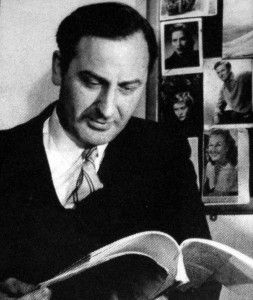
<p><img loading="lazy" decoding="async" src="http://www.britishtelevisiondrama.org.uk/wp-content/uploads/2010/01/Michael-Barry2-253x300.jpg" alt="Michael Barry" title="Michael Barry" width="253" height="300" class="alignleft size-medium wp-image-324" srcset="http://www.britishtelevisiondrama.org.uk/wp-content/uploads/2010/01/Michael-Barry2-253x300.jpg 253w, http://www.britishtelevisiondrama.org.uk/wp-content/uploads/2010/01/Michael-Barry2.JPG 708w" sizes="auto, (max-width: 253px) 100vw, 253px" /> </p>
<p>Although rarely discussed now, Michael Barry (1910-1988) had an important role in the development of British television drama. As a producer before and immediately after the Second World War and subsequently as the BBC’s first Head of Television Drama, he helped shape the new medium in its formative years.</p>{"id":319,"date":"2010-01-11T08:17:01","date_gmt":"2010-01-11T08:17:01","guid":{"rendered":"http:\/\/www.britishtelevisiondrama.org.uk\/?p=319"},"modified":"2024-09-01T10:05:56","modified_gmt":"2024-09-01T09:05:56","slug":"michael-barry","status":"publish","type":"post","link":"http:\/\/www.britishtelevisiondrama.org.uk\/?p=319","title":{"rendered":"Michael Barry"},"content":{"rendered":"<h4>by OLIVER WAKE<\/h4>\n<p><img loading=\"lazy\" decoding=\"async\" src=\"http:\/\/www.britishtelevisiondrama.org.uk\/wp-content\/uploads\/2010\/01\/Michael-Barry2-253x300.jpg\" alt=\"Michael Barry\" title=\"Michael Barry\" width=\"253\" height=\"300\" class=\"alignleft size-medium wp-image-324\" srcset=\"http:\/\/www.britishtelevisiondrama.org.uk\/wp-content\/uploads\/2010\/01\/Michael-Barry2-253x300.jpg 253w, http:\/\/www.britishtelevisiondrama.org.uk\/wp-content\/uploads\/2010\/01\/Michael-Barry2.JPG 708w\" sizes=\"auto, (max-width: 253px) 100vw, 253px\" \/> <\/p>\n<p>Although rarely discussed now, Michael Barry (1910-1988) had an important role in the development of British television drama. As a producer before and immediately after the Second World War and subsequently as the BBC\u2019s first Head of Television Drama, he helped shape the new medium in its formative years.<\/p>\n<p><!--more--><\/p>\n<p>After an unsuccessful school career, Barry initially studied agriculture, spending time on farms and 18 months at the Hertfordshire Agricultural Institute before deciding he wanted to work in theatre. He turned to acting and studied for a year at the Royal Academy of Dramatic Art before going into repertory theatre for an &#8220;exciting&#8221; year in Northampton, then moving on to Birmingham and London. Barry was born James Barry Jackson and we can speculate that he changed his professional name when entering the theatre business to avoid confusion with the established theatre director Sir Barry Jackson. This article uses his professional name throughout for convenience.<\/p>\n<p>With gaps in acting roles Barry also took work in other capacities in the theatre, building scenery, designing and stage managing. At the age of 23 he was appointed the director of the Hull Repertory Theatre where he spent a &#8220;superb&#8221; year,<sup id=\"rf1-319\"><a href=\"#fn1-319\" title=\"For a list of the plays that Barry produced in Hull, see the appendix at the end of this essay.\" rel=\"footnote\">1<\/a><\/sup> before taking charge of the Croydon Repertory Theatre, where he remained for two-and-a-half years. After this he felt &#8220;a little stale, a little tired, perhaps time for a change&#8221; and, at the suggestion of a friend, applied for the post of studio manager with the new BBC television service but was unsuccessful.<sup id=\"rf2-319\"><a href=\"#fn2-319\" title=\"Biographical information and quotations from Barry in these early paragraphs are from Michael Barry\u2019s appearance on BBC Radio Brighton interview programme &lt;em&gt;My Kind of Music&lt;\/em&gt;, transmission date unknown (likely late 1970s).\" rel=\"footnote\">2<\/a><\/sup> Undeterred, Barry then applied to be a television producer. His BBC file still includes two glowing letters of recommendation from previous employers in the theatre.<sup id=\"rf3-319\"><a href=\"#fn3-319\" title=\"The BBC retains a two-part personal file covering Barry&#8217;s career at its Written Archives Centre (hereafter BBC WAC), referenced L2\/26\/1 and L2\/26\/2. The letters of recommendation are included in the former.\" rel=\"footnote\">3<\/a><\/sup> Barry later recalled:<\/p>\n<blockquote><p>The first interview at Broadcasting House began uneventfully enough; a quiet figure behind a large desk asked formal questions, but before long we were both on our feet talking excitedly about the production photographs spread out before us.<\/p>\n<p>The enthusiasm of this senior official was my introduction to television.<sup id=\"rf4-319\"><a href=\"#fn4-319\" title=\"Michael Barry, \u2018TV is creating its own drama\u2019, &lt;em&gt;News Chronicle&lt;\/em&gt;, 5 January 1953, p. unknown. Cutting from Broadcasting Press Cuttings file P655\/2, BBC WAC.\" rel=\"footnote\">4<\/a><\/sup> <\/p><\/blockquote>\n<p>He was taken on, arriving at the BBC\u2019s modest Alexandra Palace studios in North London in early 1938. As in radio, the BBC at that time did not recognise the independent role of director, so Barry\u2019s work as producer also involved artistic aspects now more associated with directors. Although drama was his primary interest, and the genre in which he would specialise, as a producer Barry had to helm a variety of programmes in the early days of the television service. His earliest known production was an edition of topical magazine <em>Picture Page<\/em> in April 1938.<sup id=\"rf5-319\"><a href=\"#fn5-319\" title=\"&lt;em&gt;Picture Page&lt;\/em&gt;, tx. 7 April 1938. All transmissions detailed in these notes were on the BBC\u2019s sole television channel, unless stated otherwise.\" rel=\"footnote\">5<\/a><\/sup> Only ten days later his first television play, <em>The Marvellous History of St Bernard<\/em>, which he knew from his theatre days, was transmitted.<sup id=\"rf6-319\"><a href=\"#fn6-319\" title=\"&lt;em&gt;The Marvellous History of St Bernard&lt;\/em&gt;, tx. 17 April 1938.\" rel=\"footnote\">6<\/a><\/sup> Even this early in his career Barry was experimenting with television, varying camera lenses and playing with focus as part of a career-long quest to achieve a sense of &#8220;vitality&#8221; on screen, which saw him pioneer new techniques and push standards.<sup id=\"rf7-319\"><a href=\"#fn7-319\" title=\"Michael Barry, &lt;em&gt;From the Palace to the Grove&lt;\/em&gt; (London: Royal Television Society, 1992), p. 22. This work is the main source for much of the first half of this article.\" rel=\"footnote\">7<\/a><\/sup> He rapidly found success, with <em>The Observer<\/em> noting that his production of <em>Richard of Bordeaux<\/em> was &#8220;remarkable for that special quality which belongs to television \u2026 a sense both of reality and intimacy.&#8221;<sup id=\"rf8-319\"><a href=\"#fn8-319\" title=\"E. H. R., \u2018Television\u2019, &lt;em&gt;The Observer&lt;\/em&gt;, 25 December 1938, p. 16. &lt;em&gt;Richard of Bordeaux&lt;\/em&gt;, tx. 18 December 1938. There was a second live performance nine days later. Live repeats a few days, sometimes a week or two, after the initial transmission were very common for drama productions until around the mid-1950s and as such many of Barry\u2019s productions discussed here were transmitted twice in quick succession. In this essay we reference only the initial transmission. Some productions considered particularly successful were reproduced again months or years later. As these were new productions they are more notable than routine live repeats and as such are noted here.\" rel=\"footnote\">8<\/a><\/sup><\/p>\n<p>Television\u2019s insatiable appetite for programming and the rapid turnaround times for productions saw Barry produce a further 23 plays (including three short plays transmitted in one day<sup id=\"rf9-319\"><a href=\"#fn9-319\" title=\"&lt;em&gt;For Those in Peril&lt;\/em&gt;, &lt;em&gt;Smiling at Grief&lt;\/em&gt; and &lt;em&gt;The Lover&lt;\/em&gt;, tx. 19 May 1939. The live repeats of the three were staggered over two days.\" rel=\"footnote\">9<\/a><\/sup> ), plus at least three further instalments of <em>Picture Page<\/em>, in little more than a year. This hectic schedule encouraged Barry to favour plays already familiar from his own stage productions, despite his own concerns about their suitability for television. An early success with a new script for television was his own reduced adaptation of <em>Pride and Prejudice<\/em> (1938), which was found &#8220;charming&#8221; by <em>The Times<\/em>.<sup id=\"rf10-319\"><a href=\"#fn10-319\" title=\"Anonymous, \u2018Pride and Prejudice\u2019, &lt;i&gt;The Times&lt;\/i&gt;, 30 May 1938, p.21. &lt;i&gt;Pride and Prejudice&lt;\/i&gt;, tx. 22 May 1938\" rel=\"footnote\">10<\/a><\/sup> <\/p>\n<p>When war was declared on 1 September 1939, the BBC\u2019s television service was brought to an abrupt close. Already a reservist, Barry had been called up for service the previous month, leaving his colleague Eric Crozier to complete his production of <em>A Cup of Happiness<\/em>.<sup id=\"rf11-319\"><a href=\"#fn11-319\" title=\"&lt;em&gt;A Cup of Happiness&lt;\/em&gt;, tx. 27 August 1939. Barry, &lt;em&gt;From the Palace to the Grove&lt;\/em&gt;, p. 44.\" rel=\"footnote\">11<\/a><\/sup> Soon afterwards Barry gained an officer\u2019s commission in the Royal Marines, with whom he spent the duration of the war whilst receiving a retainer salary from the BBC. His war work included appointment in 1944 as first Assistant Military Secretary on the Headquarters Staff of the Royal Marines, which involved organising Marine dispositions for D-Day; he later served with his battalion in Germany.<sup id=\"rf12-319\"><a href=\"#fn12-319\" title=\"1944 position documented by Barry in his BBC Staff Application Form for the position of Head of Television Documentaries, dated 7 March 1951, BBC WAC L2\/26\/2. Germany reference from Barry, &lt;em&gt;From the Palace to the Grove&lt;\/em&gt;, p. 45.\" rel=\"footnote\">12<\/a><\/sup> He returned to Britain in late 1945 and re-joined the BBC again as a producer in March 1946 as the BBC\u2019s television service was preparing to reopen. He initially lacked enthusiasm for his resumed producer\u2019s duties, questioning his work and the task of trying to televise theatre plays in the absence of new scripts, with no writers prepared to work for television.<sup id=\"rf13-319\"><a href=\"#fn13-319\" title=\"&lt;em&gt;My Kind of Music&lt;\/em&gt;.\" rel=\"footnote\">13<\/a><\/sup> His ennui was dispelled upon reading <em>The Silence of the Sea<\/em>, a French novel published by the underground press in 1942, thinking &#8220;this is what television is all about&#8221;.<sup id=\"rf14-319\"><a href=\"#fn14-319\" title=\"Ibid.\" rel=\"footnote\">14<\/a><\/sup> <\/p>\n<p>Barry later recalled how his 1946 dramatisation of <em>The Silence of the Sea<\/em> acted &#8220;as a spur, which led on to the six most exciting years that I have ever had, being allowed to write and direct, write and direct.&#8221;<sup id=\"rf15-319\"><a href=\"#fn15-319\" title=\"Ibid.\" rel=\"footnote\">15<\/a><\/sup> His script was chosen as a practice exercise prior to television\u2019s resumption and then as the main evening programme on the night the service reopened.<sup id=\"rf16-319\"><a href=\"#fn16-319\" title=\"&lt;em&gt;The Silence of the Sea&lt;\/em&gt;, tx. 7 June 1946.\" rel=\"footnote\">16<\/a><\/sup> Its sympathetic portrait of a young German soldier billeted on a resentful French family was a brave choice given that hostilities with Germany had ended barely a year earlier. Recognising the limitation imposed on the visualisation of the drama by the archaic equipment, Barry made prominent use of sound, with the interior monologue of Kenneth More as the German soldier and various sound effects played into the live performance.<\/p>\n<p>Barry produced two more war plays in 1946, both drawn from radio scripts: <i>They Flew Through Sand<\/i>, a fast-paced action story set in North Africa, and <i>Adventure Story<\/i>, which portrayed a young couple returning from the war and struggling to adapt to the banalities of peacetime life.<sup id=\"rf17-319\"><a href=\"#fn17-319\" title=\"&lt;i&gt;They Flew Through Sand&lt;\/i&gt;, tx. 14 June 1946. &lt;i&gt;Adventure Story&lt;\/i&gt;, tx. 29 July 1964.\" rel=\"footnote\">17<\/a><\/sup> Written by Charles Terrot, with whom Barry went on to have a productive creative partnership, <i>Adventure Story<\/i> was a complex production which stretched Barry\u2019s talents. As he had done before the war, Barry improvised the numerous settings required within the tiny studio. With the use of shadows and small items of scenery (and, in one instance, stage hands throwing water), he employed the power of suggestion to provide the numerous locations that could not have been built in the studio. Sound effects, models and back projection were used to give what Barry called &#8220;a depth and vitality to a tiny setting&#8221;.<sup id=\"rf18-319\"><a href=\"#fn18-319\" title=\"Barry, &lt;i&gt;From the Palace to the Grove&lt;\/i&gt;, p. 63.\" rel=\"footnote\">18<\/a><\/sup> The play was a success and was restaged for television several times.<\/p>\n<p><img loading=\"lazy\" decoding=\"async\" src=\"http:\/\/www.britishtelevisiondrama.org.uk\/wp-content\/uploads\/2010\/01\/I-Want-to-Be-a-Doctor-in-studio1-300x225.jpg\" alt=\"&#039;I Want to Be a Doctor&#039; in studio\" title=\"&#039;I Want to Be a Doctor&#039; in studio\" width=\"300\" height=\"225\" class=\"aligncenter size-medium wp-image-328\" srcset=\"http:\/\/www.britishtelevisiondrama.org.uk\/wp-content\/uploads\/2010\/01\/I-Want-to-Be-a-Doctor-in-studio1-300x225.jpg 300w, http:\/\/www.britishtelevisiondrama.org.uk\/wp-content\/uploads\/2010\/01\/I-Want-to-Be-a-Doctor-in-studio1-1024x768.jpg 1024w, http:\/\/www.britishtelevisiondrama.org.uk\/wp-content\/uploads\/2010\/01\/I-Want-to-Be-a-Doctor-in-studio1.JPG 1758w\" sizes=\"auto, (max-width: 300px) 100vw, 300px\" \/><\/p>\n<p>Barry broke new ground with <i>I Want to be an Actor<\/i> (1946), a script by journalist and radio producer Robert Barr which became television\u2019s first dramatised documentary.<sup id=\"rf19-319\"><a href=\"#fn19-319\" title=\"&lt;i&gt;I Want to be an Actor&lt;\/i&gt;, tx 6 October 1946.\" rel=\"footnote\">19<\/a><\/sup> It inspired Barry to write his own drama documentary about the history of medical practice, <i>I Want to be a Doctor<\/i> (1947), which was well regarded at the BBC: Cecil McGivern, the newly installed Television Programme Director, recognised it as &#8220;a sign-post to the way ahead for scripts of its kind&#8221;.<sup id=\"rf20-319\"><a href=\"#fn20-319\" title=\"Barry, &lt;i&gt;From the Palace to the Grove&lt;\/i&gt;, p. 81. &lt;i&gt;I Want to be a Doctor&lt;\/i&gt;, tx. 20 May 1947. It was reproduced later the same year and again in 1950.\" rel=\"footnote\">20<\/a><\/sup><\/p>\n<p>In 1948, Barry was invited by producer Donald Wilson to direct a film at Pinewood Studios. The result was <i>Stop Press Girl<\/i> (1949), a light fantasy about a girl whose presence interferes with machinery. Shooting used Wilson and designer David Rawnsley&#8217;s experimental &#8220;Independent Frame&#8221; method, which put the onus on pre-production planning, production-line mechanisation and speed. The filming occurred rapidly across the end of 1948 and start of 1949, with Barry back at the BBC in time for his April production of <em>Behold the Man<\/em>. Barry later felt he had allowed the mechanised technique to stifle the film\u2019s comedy. <i>The Times<\/i> complained that it moved &#8220;in a series of uneasy fits and starts&#8221;,<sup id=\"rf21-319\"><a href=\"#fn21-319\" title=\"Anonymous, \u2018New Films in London\u2019, &lt;i&gt;The Times&lt;\/i&gt;, 6 June 1949, p. 7.\" rel=\"footnote\">21<\/a><\/sup> and Barry called it &#8220;one of the industry\u2019s least distinguished works&#8221;.<sup id=\"rf22-319\"><a href=\"#fn22-319\" title=\"Barry, &lt;i&gt;From the Palace to the Grove&lt;\/i&gt;, p. 101.\" rel=\"footnote\">22<\/a><\/sup><\/p>\n<p>Nevertheless, McGivern noted in an addendum to Barry&#8217;s 1949 Annual Confidential Report that his knowledge of the Independent Frame film method would be useful to him and to television, noting also that Barry was &#8220;conscientious, imaginative and hard-working&#8221; and recommending an improved pay grade.<sup id=\"rf23-319\"><a href=\"#fn23-319\" title=\"Cecil McGivern addendum to Michael Barry&#8217;s 1949 Annual Confidential Report, 15 March 1949, BBC WAC L2\/26\/1.\" rel=\"footnote\">23<\/a><\/sup> The report itself, by Head of Drama Robert MacDermot, noted that &#8220;Michael Barry is possibly the most competent all-round producer on the staff of Television. He is extremely thorough &#038; conscientious but at the same time always ready for experiments in new techniques.&#8221;<sup id=\"rf24-319\"><a href=\"#fn24-319\" title=\"Robert MacDermot, Annual Confidential Report, 9 February 1949, BBC WAC L2\/26\/1.\" rel=\"footnote\">24<\/a><\/sup> Barry was &#8216;strongly&#8217; recommended for the next Senior Producer vacancy, though the report suggested the BBC may be at risk of losing him to the world of films.<\/p>\n<p>Remaining at the BBC, Barry was going from strength to strength in the late 1940s and had particular success with <i>The Passionate Pilgrim<\/i> (1949), his own adaptation of Charles Terrot\u2019s novel <i>Miss Nightingale\u2019s Ladies<\/i>.<sup id=\"rf25-319\"><a href=\"#fn25-319\" title=\"&lt;i&gt;The Passionate Pilgrim&lt;\/i&gt;, tx. 7 August 1949.\" rel=\"footnote\">25<\/a><\/sup> A form of historical documentary based on the true story of one of Florence Nightingale\u2019s nurses in the Crimea, the play was lauded by the <i>Daily Telegraph<\/i> as &#8220;A triumphant production&#8221; and by C.A. Lejeune as &#8220;beautifully acted throughout, and produced by Michael Barry with courage, tenderness and a real sense of the medium as a nascent art&#8221;.<sup id=\"rf26-319\"><a href=\"#fn26-319\" title=\"Lejeune was writing in the &lt;i&gt;Observer&lt;\/i&gt;. Both reviews are quoted in Barry, &lt;i&gt;From the Palace to the Grove&lt;\/i&gt;, p. 114.\" rel=\"footnote\">26<\/a><\/sup> Barry&#8217;s personal file at the BBC reveals that around the same time he was invited to join a company called Parthian Films to be their Director of Filmed Television Programmes, which would have involved filming distinguished theatre productions, but he chose to stick with the BBC to pursue original work such as <em>The Passionate Pilgrim<\/em>.<sup id=\"rf27-319\"><a href=\"#fn27-319\" title=\"Michael Barry to Norman Collins, Controller of Television, 19 October 1949, BBC WAC L2\/26\/1.\" rel=\"footnote\">27<\/a><\/sup> Barry\u2019s restaging of the play in 1953 was broadcast two days before Queen Elizabeth II\u2019s coronation, for which sales of television sets rocketed, and so was many viewers\u2019 first experience of television drama.<\/p>\n<p>Barry&#8217;s desire to encourage new writing specifically for television is noted in his BBC file. In a memo from late 1949, I. Beynon-Lewis noted that &#8220;Michael Barry&#8217;s main contribution to the advancement of Television Drama technique has [&#8230;] been connected with the stimulation of original writing for Television. This has involved a continual search for writers sensible to the medium, collaborating with them in the construction of the play, and the constructive criticism of completed works submitted under this heading.&#8221; Beynon-Lewis noted that the experimental nature of the work occasionally resulted in a &#8220;flop&#8221; but that &#8220;each production, whether a &#8216;flop&#8217; or a success, has made a definite contribution towards the advance of technique.&#8221;<sup id=\"rf28-319\"><a href=\"#fn28-319\" title=\"I. Beynon-Lewis to H.C.E., 15 November 1949, BBC WAC L2\/26\/1.\" rel=\"footnote\">28<\/a><\/sup><\/p>\n<p>Written and produced by Barry, <i>Promise of Tomorrow<\/i> (1950) was a play about three young people aspiring to succeed in the theatre world.<sup id=\"rf29-319\"><a href=\"#fn29-319\" title=\"&lt;i&gt;Promise of Tomorrow&lt;\/i&gt;, tx. 16 April 1950.\" rel=\"footnote\">29<\/a><\/sup> Barry was allowed the rare privilege of shooting brief film sequences to insert into the otherwise live transmission, depicting his characters travelling by train and road, including sequences at night, providing &#8220;the sort of locations where the reality of sodden coats and rain lashed windscreens provided verisimilitude&#8221;.<sup id=\"rf30-319\"><a href=\"#fn30-319\" title=\"Barry, &lt;i&gt;From the Palace to the Grove&lt;\/i&gt;, p. 125.\" rel=\"footnote\">30<\/a><\/sup> C.A. Lejeune reported that it elicited a mixed reaction, some viewers &#8220;touched and charmed&#8221; while others &#8220;gave it up in bewilderment and exasperation&#8221;.<sup id=\"rf31-319\"><a href=\"#fn31-319\" title=\"Quoted in Ibid, p. 127.\" rel=\"footnote\">31<\/a><\/sup> <em>The Manchester Guardian<\/em>\u2019s critic fell into the former camp and provided an insight into Barry\u2019s innovative style, noting how the play<\/p>\n<blockquote><p>proved that the medium is much more responsive than most plays produced so far have shown us [&#8230;] Michael Barry\u2019s play has shown that a much quicker and more fluent handling is possible [&#8230;] because the producer is the same as the writer and handles the television scene with assurance and skill life comes to this unexceptional story and is in fact extraordinarily interesting to watch. There are moments of real suspense and emotion in it [&#8230;] Mr. Barry uses many clever devices for keeping the movement going: for instance, the progress downhill by the repertory theatre, illustrated by playbills and clapping, and many other quick and allusive ways of indicating things. In fact he has removed the heavy-footed feel from television in this play and achieved a sort of film technique which is far more effective than films proper are on the television screen.<sup id=\"rf32-319\"><a href=\"#fn32-319\" title=\"Anonymous (Radio Critic), \u2018Promise of To-morrow\u2019, &lt;em&gt;The Manchester Guardian&lt;\/em&gt;, 24 April 1950, p. 5.\" rel=\"footnote\">32<\/a><\/sup> <\/p><\/blockquote>\n<p>His ambition growing, Barry adapted and produced Terence Rattigan\u2019s <i>Adventure Story<\/i> (1950, not to be confused with the war play of the same name discussed above), a large-scale biography of Alexander the Great.<sup id=\"rf33-319\"><a href=\"#fn33-319\" title=\"&lt;em&gt;Adventure Story&lt;\/em&gt;, tx. 30 July 1950.\" rel=\"footnote\">33<\/a><\/sup> He was allowed a two-hour timeslot and both of Alexandra Palace\u2019s studios to stage the epic story. Barry chose to highlight &#8220;thought and action against amorphous backgrounds [&#8230;] and great care was taken to make every frame as perfect a composition as possible&#8221;.<sup id=\"rf34-319\"><a href=\"#fn34-319\" title=\"Barry, &lt;em&gt;From the Palace to the Grove&lt;\/em&gt;, p. 140.\" rel=\"footnote\">34<\/a><\/sup> Lejeune reported that it was &#8220;done with distinction, but is too big, remote, and dressy a subject for the home screen.&#8221;<sup id=\"rf35-319\"><a href=\"#fn35-319\" title=\"C A Lejeune, \u2018Television\u2019, &lt;em&gt;The Observer&lt;\/em&gt;, 6 August 1950, p. 6.\" rel=\"footnote\">35<\/a><\/sup> Barry concurred, writing later that the subject was probably &#8220;too large and remote to be encompassed dramatically&#8221;, but that &#8220;the fascination lay within the attempt&#8221;.<sup id=\"rf36-319\"><a href=\"#fn36-319\" title=\"Barry, &lt;em&gt;From the Palace to the Grove&lt;\/em&gt;, p. 140.\" rel=\"footnote\">36<\/a><\/sup> Other Barry productions from this period included Karel and Josef Capek\u2019s <em>The Insect Play<\/em> (1950), in which human society is parodied in the world of insects.<sup id=\"rf37-319\"><a href=\"#fn37-319\" title=\"&lt;em&gt;The Insect Play&lt;\/em&gt;, tx. 28 May 1950. Apologies that our system is unable to replicate an accented C.\" rel=\"footnote\">37<\/a><\/sup> After his popular earlier productions, Barry felt that <i>The Insect Play<\/i> and <i>Adventure Story<\/i>\u2019s &#8220;visual and oral images [&#8230;] had gone further, in diverse ways, to stretch the illusion of space within the small screen&#8221;.<sup id=\"rf38-319\"><a href=\"#fn38-319\" title=\"Barry, &lt;em&gt;From the Palace to the Grove&lt;\/em&gt;, pp. 145-146.\" rel=\"footnote\">38<\/a><\/sup><\/p>\n<p>In the summer of 1950 Barry received the offer of a job in American television with CBS, but despite the prospect of a substantially higher salary, he declined, happy with the level of support and creative freedom at the BBC.<sup id=\"rf39-319\"><a href=\"#fn39-319\" title=\"Ibid, pp. 138-139.\" rel=\"footnote\">39<\/a><\/sup> He was excited by projects such as <i>Shout Aloud Salvation<\/i> (1951), which proved to be amongst his most successful productions.<sup id=\"rf40-319\"><a href=\"#fn40-319\" title=\"&lt;em&gt;Shout Aloud Salvation&lt;\/em&gt;, tx. 15 April 1951.\" rel=\"footnote\">40<\/a><\/sup> Adapting the manuscript of Charles Terrot\u2019s sprawling historical novel about the early days of the Salvation Army, Barry reduced the story to focus on two young women despatched to introduce the Salvation Army into a bleak northern town. It was another large-scale production, with 50 characters, a riot staged in the studio, a real Salvation Army band and brief film sequences. An opening sequence used narration over a montage of background sounds and both still and moving images, indicating the bricolage approach employed by Barry, as he applied whichever techniques from radio and film best established his setting with the modest resources at his disposal.<\/p>\n<p>Reaction to <i>Shout Aloud Salvation<\/i> was highly positive: <em>The Manchester Guardian<\/em> found that &#8220;everything was 100 per cent [&#8230;] The scenes changed swiftly, the technique was excellent, and &#8216;Shout Aloud Salvation&#8217; was the proof that the television &#8216;blood and thunder&#8217; drama is fascinating.&#8221;<sup id=\"rf41-319\"><a href=\"#fn41-319\" title=\"Anonymous (Radio Critic), \u2018\u201cShout Aloud Salvation\u201d\u2019, &lt;em&gt;The Manchester Guardian&lt;\/em&gt;, 18 April 1951, p. 3.\" rel=\"footnote\">41<\/a><\/sup> The <i>Evening Standard<\/i> called it the &#8220;Most successful of original television plays&#8221; and the <i>Derby Evening Times<\/i> voiced a consensus that it was &#8220;extraordinarily moving&#8221;.<sup id=\"rf42-319\"><a href=\"#fn42-319\" title=\"Quoted in Barry, &lt;i&gt;From the Palace to the Grove&lt;\/i&gt;, p. 179.\" rel=\"footnote\">42<\/a><\/sup> The play\u2019s conclusion was criticised and Barry realised it had been over-ambitious and inadequately realised: it was amended for a new production five years later by George More O\u2019Ferrall.<sup id=\"rf43-319\"><a href=\"#fn43-319\" title=\"Ibid, pp. 179-180. &lt;em&gt;Sunday Night Theatre&lt;\/em&gt;: \u2018Shout Aloud Salvation\u2019, tx. 14 May 1956.\" rel=\"footnote\">43<\/a><\/sup><\/p>\n<p>Barry&#8217;s &#8220;outstanding contribution to the development of Television Drama&#8221; with <em>Shout Aloud Salvation<\/em>, <em>Promise of Tomorrow<\/em> and <em>The Passionate Pilgrim<\/em> resulted in a recommendation in 1951 for him to receive a special bonus payment, an unusual high accolade at the BBC.<sup id=\"rf44-319\"><a href=\"#fn44-319\" title=\"The suggestion (and quotation used) came from Head of Drama Val Gielgud in a memo to Controller of Television Programmes Cecil McGivern on 17 April 1951; the Controller is said to have concurred in a memo from Assistant Head of Television Administration Leslie Page dated 1 June 1951, BBC WAC L2\/26\/1.\" rel=\"footnote\">44<\/a><\/sup> For all his success in drama, Barry was still a general producer and his BBC file indicates that, as well as plays, his 1951 assignments included two instalments of <em>The Epilogue<\/em> in the month prior to <em>Shout Aloud Salvation<\/em>.<sup id=\"rf45-319\"><a href=\"#fn45-319\" title=\"\u2018Michael Barry: List of Productions from April, 1950, to April, 1951\u2019, BBC WAC L2\/26\/1. No context is given but this short document was likely created as part of the consideration of Barry for the post of Assistant Head of Drama, Television.\" rel=\"footnote\">45<\/a><\/sup><\/p>\n<p>As Barry drafted <i>Shout Aloud Salvation<\/i>, the BBC advertised the new posts of Head of Television Documentaries and Assistant Head of Drama, Television. Perhaps surprisingly, Barry applied for the former, as the latter was an unknown quantity at that time.<sup id=\"rf46-319\"><a href=\"#fn46-319\" title=\"This is how Barry explained the situation in &lt;em&gt;From the Palace to the Grove&lt;\/em&gt;, pp. 156-157. His BBC file supports his recollection: as referenced in endnote 12 above, his application form for the Head of Television Documentaries role is preserved. There is no application form for the Assistant Head of Drama, Television role within his file.\" rel=\"footnote\">46<\/a><\/sup> However, he was called for an interview for the Drama post. Internal BBC documents suggest it was not a wholly foregone conclusion that the post would be offered to him, as seven external and three internal candidates were considered by the appointment Board in May 1951.<sup id=\"rf47-319\"><a href=\"#fn47-319\" title=\"Minutes of Appointment Board for Assistant Head of Drama, Television Service, 7 May 1951, BBC WAC L2\/26\/1.\" rel=\"footnote\">47<\/a><\/sup> Barry reported in his memoir that he insisted the position was unsuitable, but that Director of Television George Barnes said Barry\u2019s acceptance was important to television, assuring him that he would have a free hand, with Val Gielgud, the then-current Head of Drama over both radio and television, soon to return to his preferred province in radio.<\/p>\n<p>BBC files broadly confirm this plan, with Barnes writing two days after the Appointment Board that Gielgud would shift his attention from 90% television to 90% radio, pending a future decision about functional heads for these services. Barry was to work directly to the Controller of Television Programmes, &#8220;being only answerable to Gielgud on standards of performance and selection and for advice in regard to the theatrical professional generally.&#8221;<sup id=\"rf48-319\"><a href=\"#fn48-319\" title=\"Minutes of conversation between George Barnes and D.H.B., 9 May 1951, BBC WAC L2\/26\/1.\" rel=\"footnote\">48<\/a><\/sup> Barnes noted that this had been put to Barry, who was &#8220;entirely agreeable&#8221;. Barry himself recalled having been talked around, and suggested &#8220;we try it for six months&#8221;.<sup id=\"rf49-319\"><a href=\"#fn49-319\" title=\"Barry, &lt;em&gt;From the Palace to the Grove&lt;\/em&gt;, p. 187.\" rel=\"footnote\">49<\/a><\/sup> He was to stay ten years. He was appointed in May 1951 and after three months the Head of Television Administration reported: &#8220;He is an exceptional man and is by way of proving himself to be a model Section Head.&#8221;<sup id=\"rf50-319\"><a href=\"#fn50-319\" title=\"Memo: J.A.C. Knott [Head of Television Administration] to C.S.A., \u2018Mr Michael Barry\u2019, 13 August 1951, BBC WAC L2\/26\/1.\" rel=\"footnote\">50<\/a><\/sup> An exceptional increment to his salary was recommended and granted.<sup id=\"rf51-319\"><a href=\"#fn51-319\" title=\"The approval of the recommended increment is made clear not from correspondence retained in the file, which is silent on this point, but from the inside cover on which role changes and salary increments are recorded. In this case a &#8220;special increment&#8221; is recorded two days after the recommendation for it noted above. BBC WAC L2\/26\/1.\" rel=\"footnote\">51<\/a><\/sup> Radio and television formally separated in April 1952, with Barry duly receiving the Head of Television Drama title.<sup id=\"rf52-319\"><a href=\"#fn52-319\" title=\"Anonymous [Staff Reporter], \u2018TV to be More Independent\u2019, &lt;em&gt;The Observer&lt;\/em&gt;, 13 April 1952, p. 1.\" rel=\"footnote\">52<\/a><\/sup><\/p>\n<p>In his new role, Barry prioritised attracting new writers to television and improving productions, impulses that had driven him since his early days as a producer.<sup id=\"rf53-319\"><a href=\"#fn53-319\" title=\"Barry, &lt;em&gt;From the Palace to the Grove&lt;\/em&gt;, pp. 186-187.\" rel=\"footnote\">53<\/a><\/sup> He established the Drama Script Section, with a Script Supervisor under his direct control whose brief was to find new writing. Barry&#8217;s success here was noted in his Annual Confidential Report of November 1951, with Cecil McGivern (now Controller of Television Programmes) recording that &#8220;Since taking over his job, he has had a very heavy and difficult time, he has, however, managed to give a fresh impetus to the writing of scripts specially for Television and has placed his small script section on a sound, businesslike and effective footing.&#8221;<sup id=\"rf54-319\"><a href=\"#fn54-319\" title=\"Cecil McGivern, Annual Confidential Report, 21 November 1951, BBC WAC L2\/26\/1. We do not know what the difficulties alluded to were.\" rel=\"footnote\">54<\/a><\/sup><\/p>\n<p>Within a year the Script Supervisor reported &#8220;very encouraging&#8221; statistics, including that 12 out of 107 dramas transmitted over the past twelve months had been new works written specially for television (against hardly any in the previous five years).<sup id=\"rf55-319\"><a href=\"#fn55-319\" title=\"Quoted in Robin Wade, &lt;i&gt;Where the Difference Began&lt;\/i&gt; (BBC internal document detailing history of the Drama Script Section, not formally published, 1975), p. 6.\" rel=\"footnote\">55<\/a><\/sup> Under Barry\u2019s leadership, this increased to 256 new works for television in the twelve months ending March 1960.<sup id=\"rf56-319\"><a href=\"#fn56-319\" title=\"Statistic quoted by Donald Wilson in his Introduction to Michael Barry\u2019s &lt;i&gt;The Television Playwright&lt;\/i&gt; (London: Michael Joseph, 1960), p. 14.\" rel=\"footnote\">56<\/a><\/sup> The post of staff writer was also created, the first filled by Nigel Kneale, whose three original <i>Quatermass<\/i> serials (1953, 1955, 1958-59) thrilled television audiences during the 1950s. Other writers attracted included freelancer <a href=\"http:\/\/www.britishtelevisiondrama.org.uk\/?p=384\" target=\"_self\" rel=\"noopener\">Iain MacCormick<\/a> who provided a number of highly topical new plays throughout the decade. Other initiatives included the Television Writers\u2019 Course, which had 700 applicants by February 1952, and numerous writing competitions.<sup id=\"rf57-319\"><a href=\"#fn57-319\" title=\"Anonymous, \u2018Writing for Television\u2019, &lt;em&gt;The Times&lt;\/em&gt;, 19 February 1952, p. 7.\" rel=\"footnote\">57<\/a><\/sup> In December 1952, the <em>Dundee Courier<\/em> reported that one of Barry&#8217;s new initiatives was to be the introduction of a fortnightly 40-minute &#8220;playlet&#8221; &#8220;especially designed for television&#8221;.<sup id=\"rf58-319\"><a href=\"#fn58-319\" title=\"Anonymous (\u2018Special Correspondent\u2019), \u2018What you&#8217;ll see on TV in 1953\u2019, &lt;em&gt;Dundee Courier&lt;\/em&gt;, 19 December 1952, p. 3.\" rel=\"footnote\">58<\/a><\/sup><\/p>\n<p>The first Script Supervisor was (briefly) Hazel Wilkinson, who was succeeded by Sir Basil Bartlett. In 1955 the Script Section expanded to cover other television genres under the leadership of Donald Wilson, who had produced Barry&#8217;s film <em>Stop Press Girl<\/em> in 1948. Wilson had also worked with Barry as a writer contributing to television in the first half of the 1950s, and in his BECTU Oral History Project interview in 1991 recalled Barry as the only person with whom he could have worked in a superior then subordinate position, as he did in moving from film to television.<sup id=\"rf59-319\"><a href=\"#fn59-319\" title=\"Donald Wilson interviewed by Linda Wood on 12 July 1991 for the BECTU Oral History Project. Available online &lt;a href=&quot;http:\/\/www.historyproject.org.uk\/interview\/donald-wilson&quot; target=&quot;_self&quot; rel=&quot;noopener&quot;&gt;here.&lt;\/a&gt;\" rel=\"footnote\">59<\/a><\/sup> <\/p>\n<p>Barry aimed to replace &#8220;dead wood&#8221; with new producers from film and theatre.<sup id=\"rf60-319\"><a href=\"#fn60-319\" title=\"Barry, &lt;i&gt;From the Palace to the Grove&lt;\/i&gt;, p. 187.\" rel=\"footnote\">60<\/a><\/sup> New talents included Rudolph Cartier and <a href=\"http:\/\/www.britishtelevisiondrama.org.uk\/?p=461\" target=\"_self\" rel=\"noopener\">Don Taylor<\/a>, who went on to produce the type of vital work that Barry wanted to see. Cartier did much to expand television\u2019s scope, with large-scale stories, but was only able to do so with the staunch support of Barry, who shared and encouraged his aims. Innovative producers, rapidly advancing technology and increased resources greatly improved production standards over Barry\u2019s decade in charge.<\/p>\n<p>Barry&#8217;s BBC file suggests he may have taken some time to adapt to being in an administrative position. In his Annual Confidential Report of mid-1952, McGivern reported &#8220;An excellent year&#8217;s work&#8221; but that Barry was &#8220;less sure administratively&#8221;.<sup id=\"rf61-319\"><a href=\"#fn61-319\" title=\"Cecil McGivern, Annual Confidential Report, 7 July 1952, BBC WAC L2\/26\/1.\" rel=\"footnote\">61<\/a><\/sup> However, his next report, in April 1953, noted that &#8220;during the year he grew in stature and in his ability to handle responsibility and difficulties and that he is now exercising a firm, capable grasp [&#8230;] The scope, competence and interest of television drama has increased in the past year and has won very high praise both inside and outside of the Service.&#8221;<sup id=\"rf62-319\"><a href=\"#fn62-319\" title=\"Cecil McGivern, Annual Confidential Report, 18 May 1954, BBC WAC L2\/26\/1.\" rel=\"footnote\">62<\/a><\/sup> Some weaknesses were, however, starting to show by the time of Barry&#8217;s 1955 report. McGivern praised Barry&#8217;s character and ability but suggested he needed to make a &#8220;sharper and clearer division between the creative side and the administrative side of his Department&#8221;. The recent appointment of an Assistant Head and Organiser was expected to enable Barry to concentrate on the former.<sup id=\"rf63-319\"><a href=\"#fn63-319\" title=\"Cecil McGivern, Annual Confidential Report, 7 June 1955, BBC WAC L2\/26\/2.\" rel=\"footnote\">63<\/a><\/sup> <\/p>\n<p>Pushing his department\u2019s technical progression, Barry was instrumental in establishing BBC Television\u2019s Experimental Group in 1956, the aim of which was to devise new means of televising conventional subjects. This led to the creation of the more specialised Langham Group in 1959, which pioneered experimental drama techniques. Immediately prior to the Langham Group\u2019s creation, Barry co-produced the experimental play <i>A Sleeping Clergyman<\/i> (1959) with one of the group\u2019s founding members.<sup id=\"rf64-319\"><a href=\"#fn64-319\" title=\"&lt;em&gt;A Sleeping Clergyman&lt;\/em&gt;, tx. 11 January 1959.\" rel=\"footnote\">64<\/a><\/sup> Although some suggested the Langham Group\u2019s legacy was minimal, Barry felt quite the reverse, seeing it in 1961 as &#8220;a sort of underground movement, that\u2019s affected just about every department of drama, in some way or another&#8221;.<sup id=\"rf65-319\"><a href=\"#fn65-319\" title=\"Barry quote from Anonymous, \u2018I Believe in the Freedom to Create\u2019, &lt;i&gt;The Stage and Television Today&lt;\/i&gt;, 1 June 1961, p. 10.\" rel=\"footnote\">65<\/a><\/sup> Barry remained a staunch supporter of experimentation in television, and thought that the BBC should lead it.<sup id=\"rf66-319\"><a href=\"#fn66-319\" title=\"For more on the Langham Group see John Hill, \u2018\u2018Creative in its own right\u2019: the Langham Group and the search for a new television drama\u2019, in Laura Mulvey and Jamie Sexton (editors), &lt;i&gt;Experimental British Television&lt;\/i&gt; (Manchester: Manchester University Press, 2007).\" rel=\"footnote\">66<\/a><\/sup><\/p>\n<p>Barry was also a supporter of strong and provocative work, such as Nigel Kneale\u2019s adaptation of George Orwell\u2019s <a href=\"http:\/\/www.britishtelevisiondrama.org.uk\/?p=4722 target=\"_self\"><em>Nineteen Eighty-Four<\/em><\/a> (1954), which was produced by Rudolph Cartier.<sup id=\"rf67-319\"><a href=\"#fn67-319\" title=\"&lt;em&gt;Nineteen Eighty-Four&lt;\/em&gt;, tx. 12 December 1954.\" rel=\"footnote\">67<\/a><\/sup> When the play provoked a national controversy, Barry defended it in a <em>Panorama<\/em> debate and refused to cancel the scheduled repeat performance, which he went on to introduce in person.<sup id=\"rf68-319\"><a href=\"#fn68-319\" title=\"&lt;em&gt;Panorama&lt;\/em&gt;, tx. 15 December 1954.\" rel=\"footnote\">68<\/a><\/sup> Barry also came under fire later in his reign over BBC television drama for allowing plays to depict the seedier and more squalid elements of modern life. For example, a newspaper correspondent complained of the BBC and its writers\u2019 &#8220;morbid preoccupation with sin and abnormality, Squalor, misery, beastliness, despair, the hopelessness of marriage, sex, violence, gutter behaviour&#8221;.<sup id=\"rf69-319\"><a href=\"#fn69-319\" title=\"H.K. Mount, \u2018BBC plays\u2019, &lt;em&gt;The Guardian&lt;\/em&gt;, 21 January 1961, p. 6.\" rel=\"footnote\">69<\/a><\/sup> The Langham Group\u2019s production <em>The Torrents of Spring<\/em> (1959) was criticised within the BBC for its &#8220;licentiousness&#8221; and even shortly before this incident Barry had been stirred to circulate a memo addressing criticisms of &#8220;sexiness&#8221; in television plays.<sup id=\"rf70-319\"><a href=\"#fn70-319\" title=\"Hill, \u2018&#8221;Creative in its own right&#8221;: the Langham Group and the search for a new television drama\u2019, pp. 26, 30 (endnote 35).\" rel=\"footnote\">70<\/a><\/sup><\/p>\n<p>Being head of department did not prevent Barry \u2013 who later said he &#8220;hated desk work&#8221;<sup id=\"rf71-319\"><a href=\"#fn71-319\" title=\"Quoted in Peter Cotes, \u2018Mr Michael Barry\u2019, &lt;i&gt;The Times&lt;\/i&gt;, 4 July 1988, p. 16.\" rel=\"footnote\">71<\/a><\/sup> \u2013 from maintaining an active presence in the studio. Indeed, in his 1954 Annual Confidential Report, McGivern noted, slightly disapprovingly, that &#8220;Mr Barry still tends at times to feel the weight of his responsibility and to seek to escape from it into production&#8221;.<sup id=\"rf72-319\"><a href=\"#fn72-319\" title=\"McGivern, Annual Confidential Report, 18 May 1954.\" rel=\"footnote\">72<\/a><\/sup> Barry produced occasional plays, such as <i>The Man with a Load of Mischief<\/i>, which he was pleased to produce for a second time in 1952, taking advantage of the greater resources of the BBC\u2019s new Lime Grove studios, and a rare production of George Bernard Shaw\u2019s <i>Heartbreak House<\/i> in 1958.<sup id=\"rf73-319\"><a href=\"#fn73-319\" title=\"&lt;i&gt;The Man with a Load of Mischief&lt;\/i&gt;, tx. 14 December 1952. &lt;i&gt;Heartbreak House&lt;\/i&gt;, tx. 2 February 1958.\" rel=\"footnote\">73<\/a><\/sup> The same year he commissioned and produced the new play <i>Till Time Shall End<\/i> to mark the 400th anniversary of the accession of Elizabeth I.<sup id=\"rf74-319\"><a href=\"#fn74-319\" title=\"&lt;i&gt;Till Time Shall End&lt;\/i&gt;, tx. 30 November 1958.\" rel=\"footnote\">74<\/a><\/sup> His production of Robert Ardrey\u2019s documentary play <i>The Shadow of Heroes<\/i> (1959), about 1956\u2019s Hungarian revolution, was particularly successful, with Barry praised for &#8220;his use of cameras, his presentation and the use he made of the crowd scenes&#8221;, which made for a &#8220;moving historical document&#8221;.<sup id=\"rf75-319\"><a href=\"#fn75-319\" title=\"Derek Hoddinott, \u2018In Vision\u2019, &lt;i&gt;The Stage and Television Today&lt;\/i&gt;, 30 July 1959, p. 7. &lt;i&gt;Sunday Night Theatre&lt;\/i&gt;: &lt;i&gt;Shadow of Heroes&lt;\/i&gt;, tx. 19 July 1959.\" rel=\"footnote\">75<\/a><\/sup><\/p>\n<p>Donald Wilson sheds some light on Barry&#8217;s insistence on continuing to undertake hands-on production himself. Wilson reported that both of them felt that &#8220;anyone heading a production department should put himself up for scrutiny by his colleagues, by his juniors, by the people working with him [&#8230;] in Michael&#8217;s case by going down on the floor and directing a piece now and again, which he did.&#8221;<sup id=\"rf76-319\"><a href=\"#fn76-319\" title=\"Wilson, BECTU Oral History Project interview.\" rel=\"footnote\">76<\/a><\/sup> The recollection of director Alvin Rakoff, who worked under Barry, suggests this tactic was successful:<\/p>\n<blockquote><p>Michael was a man to be listened to. He was no slouch as a practising director. He had been talked into giving up his first love of direct contact with actors and cameras, to take on the job of administrator. Of course, he would sneak back &#8211; as first lovers do &#8211; to directing again, if only to prove us young Turks that he was still more than capable, literally, of calling the shots.<sup id=\"rf77-319\"><a href=\"#fn77-319\" title=\"Alvin Rakoff, &lt;em&gt;I&#8217;m Just the Guy Who Says Action!&lt;\/em&gt; (independently published, 2021), p. 33. This memoir is highly recommended as an insight into British television drama production in the 1950s.\" rel=\"footnote\">77<\/a><\/sup> <\/p><\/blockquote>\n<p>It is worth considering Rakoff&#8217;s experiences working under Barry as an illustration of Barry&#8217;s approach to his executive work. In his memoir, <em>I&#8217;m Just the Guy Who Says Action!<\/em>, Rakoff recalls Barry (who had brought him into the BBC) as demonstrating trust in his judgement, supporting him, offering advice but refusing to overrule him when Rakoff declined to follow it, and deferring to the younger man&#8217;s judgement.<sup id=\"rf78-319\"><a href=\"#fn78-319\" title=\"Ibid. See in particular pp. 35-37 and pp. 67-68.\" rel=\"footnote\">78<\/a><\/sup> One result of this was Rakoff&#8217;s stunningly successful 1957 production <em>Requiem for a Heavyweight<\/em>, which introduced Sean Connery in his first leading role, despite Barry&#8217;s expressed misgivings over both Connery&#8217;s casting and the play&#8217;s title.<sup id=\"rf79-319\"><a href=\"#fn79-319\" title=\"&lt;em&gt;Sunday Night Theatre&lt;\/em&gt;: &#8216;Requiem for a Heavyweight&#8217;, tx. 31 March 1957.\" rel=\"footnote\">79<\/a><\/sup> Another example occurred during Rakoff&#8217;s production of <em>The Caine Mutiny Court-Martial<\/em> in 1958, when Barry backed Rakoff against a cast rebellion which sought to have him replaced.<sup id=\"rf80-319\"><a href=\"#fn80-319\" title=\"Barry, &lt;em&gt;From the Palace to the Grove&lt;\/em&gt;, pp. 158-159. &lt;em&gt;Sunday Night Theatre&lt;\/em&gt;: &#8216;The Caine Mutiny Court-Martial&#8217;, tx. 1 June 1958.\" rel=\"footnote\">80<\/a><\/sup> <\/p>\n<p>Plays were the primary form of drama for Barry, although he presided over the introduction of numerous popular series and serials, such as <i>Dixon of Dock Green<\/i> (1955-76), <i>The Grove Family<\/i> (1954-57) and <i>Quatermass<\/i>. As Don Taylor recalled, &#8220;under Michael Barry, the emphasis had been very clearly upon the production of television plays. The rest was a sideline, popular audience stuff, but not what the department was for. Michael Barry was a man of the theatre, and his values were the values of that milieu and that age&#8221;.<sup id=\"rf81-319\"><a href=\"#fn81-319\" title=\"Don Taylor, &lt;i&gt;Days of Vision &#8211; Working with David Mercer: Television Drama Then and Now&lt;\/i&gt; (London: Methuen, 1990), pp. 99-100.\" rel=\"footnote\">81<\/a><\/sup> His drama policy was occasionally criticised, as <i>The Stage and Television Today<\/i> reported, for &#8220;living in the theatrical past&#8221;, as &#8220;being out of touch with the present-day idiom of TV thought&#8221; and as &#8220;presenting plays with no appeal to modern minds&#8221;.<sup id=\"rf82-319\"><a href=\"#fn82-319\" title=\"Anonymous, \u2018BBC-tv shows the way it can be done\u2019, &lt;i&gt;The Stage and Television Today&lt;\/i&gt;, 21 January 1960, p. 11.\" rel=\"footnote\">82<\/a><\/sup> The criticism reflected his perceived lack of a popular touch and, despite his championing of new television writing, his department\u2019s continued scheduling of theatrical or classically &#8220;worthy&#8221; play series such as the unpopular <i>Television World Theatre<\/i> (1957-58). The arrival of ITV in 1955, with its more populist programming, highlighted the gulf between BBC programming and the public\u2019s taste, and the Corporation was slow to respond to its success.<\/p>\n<p>In Barry&#8217;s 1958 Annual Confidential Report, the latest Controller of Programmes for television, Kenneth Adam, praised Barry&#8217;s constant innovation and ability, and the output of his department. However, the BBC was feeling the effects of the loss of their monopoly, with some of their audience deserting them for the more populist fare of ITV. In retrospect, Adam&#8217;s closing remarks seem prophetic of what would follow a few years later. He noted that the situation was &#8220;increasingly competitive. Both the content of our plays, and the way in which they are put on, call for constant watchfulness. We must stay ahead. It will not be easy but I believe that we can do it.&#8221;<sup id=\"rf83-319\"><a href=\"#fn83-319\" title=\"Kenneth Adam, Annual Confidential Report, 30 December 1958, BBC WAC L2\/26\/2.\" rel=\"footnote\">83<\/a><\/sup> It transpired that the BBC <em>could<\/em> compete effectively, but not with Barry at the helm.<\/p>\n<p>This was not apparent in his 1959 Annual Confidential Report, written by Adam. The previous year Barry had joined the BBC&#8217;s Planning Committee and Adam reported that his contribution had been &#8220;stimulating and most helpful [&#8230;] often on matters outside his special field&#8221;, confirming Barry&#8217;s usefulness within the wider world of broadcasting beyond drama. Adam&#8217;s comments suggest that Barry&#8217;s own department was entering a transitional period, with &#8220;some re-thinking, in production values (not yet complete) and some regrouping of resources. At such a time, the accumulated practical wisdom, and the continuing freshness and liberal quality of Mr. Barry&#8217;s mind, combine to be of the highest-level to his staff, and to other colleagues.&#8221;<sup id=\"rf84-319\"><a href=\"#fn84-319\" title=\"Kenneth Adam, Annual Confidential Report, 12 October 1959, BBC WAC L2\/26\/2.\" rel=\"footnote\">84<\/a><\/sup> A further comment, possibly by an additional unidentified author, added that Barry &#8220;remains one of the most important and most able senior officials in the BBC Television Service. His reputation in Britain and abroad grows&#8221;.<sup id=\"rf85-319\"><a href=\"#fn85-319\" title=\"Ibid. This final comment appears in the &#8216;endorsement&#8217; section of the report which might indicate it was the contribution of an additional author, but as one is not clearly indicated it may simply be a continuation of Adam&#8217;s comment.\" rel=\"footnote\">85<\/a><\/sup> <\/p>\n<p>It is unclear to what this final remark about Barry&#8217;s reputation alludes. Possibly Barry had travelled overseas to attend broadcasting industry events and showcased recordings of BBC programmes made by his department. He might also have had more hands-on input with foreign broadcasters who lacked the BBC&#8217;s experience with drama, as he did in 1953 when he supervised an English language production of <em>Portrait by Peko<\/em> by BBC producer Lionel Harris for a Dusseldorf exhibition at the invitation of West German broadcaster NWDR.<sup id=\"rf86-319\"><a href=\"#fn86-319\" title=\"Memo: Imlay Newbiggin-Watts to F.S., \u2018Mr Michael Barry: Visit to Dusseldorf\u2019, 21 August 1953, BBC WAC L2\/26\/1.\" rel=\"footnote\">86<\/a><\/sup> This production occurred a mere few days after Harris had produced it for BBC television, so presumably the BBC&#8217;s cast were involved also.<sup id=\"rf87-319\"><a href=\"#fn87-319\" title=\"&lt;em&gt;Sunday Night Theatre&lt;\/em&gt;: &#8216;Portrait by Peko&#8217;, tx. 23 August 1953, with a second performance on 27 August. The date of the Dusseldorf production is not known but Barry was only there between 30 August and 1 September 1953.\" rel=\"footnote\">87<\/a><\/sup> <\/p>\n<p>Barry&#8217;s 1960 Annual Confidential Report further hinted at trouble ahead. Adam praised Barry&#8217;s work in launching <em>An Age of Kings<\/em> (1960) &#8211; the serialisation of Shakespeare&#8217;s history plays &#8211; and detective series <em>Maigret<\/em> (1960-63), and noted that Barry was never complacent, &#8220;always seeking to get closer to perfection&#8221;.<sup id=\"rf88-319\"><a href=\"#fn88-319\" title=\"Kenneth Adam, Annual Confidential Report, July 1960 (day illegible but probably 12), BBC WAC L2\/26\/2.\" rel=\"footnote\">88<\/a><\/sup> Yet Adam also noted that he had been &#8220;conscious of some anxiety in Michael Barry&#8217;s outlook and demeanour&#8221;. This was related to some difficult circumstances oliquely referenced, but in the context of events the following year it may also be suggestive that Barry was aware of a growing gulf between his aspirations for his department and those of his superiors.<\/p>\n<p>These matters came to a head in September 1961, when Barry suddenly resigned his post. He maintained a gentlemanly discretion over his reasons, but according to Don Taylor:<\/p>\n<blockquote><p>Rumour and bar conversation had it that Michael had resigned \u2013 it had been a real resignation, not a polite sacking \u2013 because the sixth floor, the programme controllers and directors, had demanded of him a change of policy with regard to BBC Drama output that he could not accept. More series and serials were required, and Michael, who regarded himself as a plays man, was not prepared to preside over such a change.<sup id=\"rf89-319\"><a href=\"#fn89-319\" title=\"Taylor, &lt;i&gt;Days of Vision&lt;\/i&gt;, p. 99.\" rel=\"footnote\">89<\/a><\/sup> <\/p><\/blockquote>\n<p>Donald Wilson reported a similar account. In his BECTU Oral History Project interview he suggested that almost immediately following the introduction of ITV, the BBC&#8217;s values and standards reduced in an effort to compete, ultimately leading to Barry exiting his role and the more populist Sydney Newman (eventually) taking over.<sup id=\"rf90-319\"><a href=\"#fn90-319\" title=\"Wilson, BECTU Oral History Project interview.\" rel=\"footnote\">90<\/a><\/sup> As an aside, when asked who had most helped him in his own career, Wilson replied: &#8220;Michael Barry probably more than most, simply because Michael had certain standards which you&#8217;d be mad not to try to arrive at yourself. Splendid man.&#8221;<sup id=\"rf91-319\"><a href=\"#fn91-319\" title=\"Ibid.\" rel=\"footnote\">91<\/a><\/sup> <\/p>\n<p>Just two months later the Guild of Television Producers and Directors (the forerunner of BAFTA) recognised Barry\u2019s achievements, giving him the Desmond David Award for services to television.<sup id=\"rf92-319\"><a href=\"#fn92-319\" title=\"Anonymous, \u2018Television Awards\u2019, &lt;i&gt;The Times&lt;\/i&gt;, 29 November 1961, p. 15.\" rel=\"footnote\">92<\/a><\/sup> Under Barry\u2019s leadership, the Television Drama Department had expanded to the point that it had produced over 220 hours of drama in 1961.<sup id=\"rf93-319\"><a href=\"#fn93-319\" title=\"Peter Black, \u2018BBC Drama\u2019 (letter), &lt;i&gt;The Times&lt;\/i&gt;, 14 October 1967, p. 9.\" rel=\"footnote\">93<\/a><\/sup> As <em>The Times<\/em> argued, it was a period of &#8220;drive, organization and artistic skill&#8221;.<sup id=\"rf94-319\"><a href=\"#fn94-319\" title=\"Anonymous, \u2018Mr Michael Barry\u2019, &lt;em&gt;The Times&lt;\/em&gt;, 30 June 1988, p. 16.\" rel=\"footnote\">94<\/a><\/sup> Innovative drama programming &#8211; such as the play &#8220;cycles&#8221; of Iain MacCormick, <i>An Age of Kings<\/i>, and the immensely popular <i>Maigret<\/i> and <em>Dixon of Dock Green<\/em> &#8211; all originated under Barry.<\/p>\n<p>Barry was admired both professionally and personally. Don Taylor thought he represented the &#8220;liberal humanist attitude to the production of drama&#8221;<sup id=\"rf95-319\"><a href=\"#fn95-319\" title=\"Taylor, &lt;i&gt;Days of Vision&lt;\/i&gt;, p. 100.\" rel=\"footnote\">95<\/a><\/sup>, and another producer, Peter Cotes, described him as &#8220;warm, generous and self-effacing&#8221;.<sup id=\"rf96-319\"><a href=\"#fn96-319\" title=\"Anonymous, \u2018Mr Michael Barry\u2019.\" rel=\"footnote\">96<\/a><\/sup> While department head, he was recognised in the industry press as &#8220;a highly sensitive and intelligent man with a strong sense of dedication, whose liberal-minded handling of his department is, among other things, an object-lesson in human relationships.&#8221;<sup id=\"rf97-319\"><a href=\"#fn97-319\" title=\"Anonymous, \u2018BBC-tv shows the way it can be done\u2019, &lt;i&gt;The Stage and Television Today&lt;\/i&gt;, 21 January 1960, p. 11.\" rel=\"footnote\">97<\/a><\/sup><\/p>\n<p>The liberal-mindedness may be illustrated by emerging evidence of his championing of non-white dramatists and performers. Infamously, British television drama was slow to expand opportunities to people of colour but Barry does appear to have made tentative steps towards addressing that in the 1950s, as Britain became a more obviously multi-racial society with the early waves of Commonwealth immigration. He gave production slots to playwright Evan Jones, for example, and arranged a scholarship for actor and playwright Errol John to study theatre in the US.<sup id=\"rf98-319\"><a href=\"#fn98-319\" title=\"Darrell M. Newton, &lt;em&gt;Paving the Empire Road &#8211; BBC television and black Britons&lt;\/em&gt; (Manchester: Manchester University Press, 2011), p. 107.\" rel=\"footnote\">98<\/a><\/sup> <\/p>\n<p>Barry did not resign from the BBC, only stepping down from his specific role within it while remaining on its staff in an unusual arrangement that enabled him to be seconded to Eire&#8217;s new television service, Telefis Eireann, from September 1961. An internal BBC document written in 1963 looking back on the secondment explained:<\/p>\n<blockquote><p>In the summer of 1961, Mr. Barry was offered by Radio Eireann the post of Controller of Programmes in the recently established Irish Television Service. Since resignation from the Corporation would involve loss of pension rights, the Corporation agreed at the special request of Radio Eireann to second Mr. Barry for a period of three years. It was considered important that someone of his distinction from public service broadcasting should fill this new post so that Irish Television could develop along the right lines. From the [BBC] Television point of view too there were advantages at that time in taking the opportunity of a change in direction of its Drama Department in spite of the unique contribution of Mr. Barry.<sup id=\"rf99-319\"><a href=\"#fn99-319\" title=\"Director of Administration, \u2018Mr Michael Barry: Premature Retirement\u2019, 30 May 1963, BBC WAC L2\/26\/2.\" rel=\"footnote\">99<\/a><\/sup> <\/p><\/blockquote>\n<p>Barry&#8217;s July 1961 Annual Confidential Report by the latest Controller of Programmes, Stuart Hood, noted that the Drama Department had undergone &#8220;a difficult period&#8221; which included &#8220;a shift in programme policy&#8221;, while Barry was reported to feel that &#8220;he has made his contribution to BBC Drama&#8221; and was interested in accepting an offer such as that from Telefis Eireann.<sup id=\"rf100-319\"><a href=\"#fn100-319\" title=\"Stuart Hood, Annual Confidential Report, sections dated 5 and 20 July 1961, BBC WAC L2\/26\/2.\" rel=\"footnote\">100<\/a><\/sup> These comments and the remark above regarding a &#8220;change in direction&#8221; seem to confirm Don Taylor&#8217;s suggestion that Barry&#8217;s superiors favoured a new direction for television drama which Barry felt unable to follow. However, there is no suggestion in this report of any perceived failure: it states that Barry has &#8220;continued to produce work of a very high standard in all fields&#8221;. He did not leave under a cloud and the possibility of his return to the BBC upon the conclusion of the secondment was left open, but without any guarantees being offered by the Corporation.<sup id=\"rf101-319\"><a href=\"#fn101-319\" title=\"Director of Administration, \u2018Mr. Michael Barry: Premature Retirement\u2019.\" rel=\"footnote\">101<\/a><\/sup> <\/p>\n<p>Barry&#8217;s secondment was supposed to last three years but was brought to an early termination by Barry following what was later reported to have been &#8220;policy disagreements&#8221;.<sup id=\"rf102-319\"><a href=\"#fn102-319\" title=\"Anonymous, \u2018Mr. Michael Barry\u2019.\" rel=\"footnote\">102<\/a><\/sup> He signalled his intention to step down after a little more than a year but ultimately remained for two years. There was industry speculation that he would return to the BBC where a special appointment could be created for him but this proved unfounded.<sup id=\"rf103-319\"><a href=\"#fn103-319\" title=\"This speculation appears in \u2018What Happens to Barry Now at the BBC?\u2019, &lt;i&gt;The Stage and Television Today&lt;\/i&gt;, 27 September 1962, p. 9.\" rel=\"footnote\">103<\/a><\/sup> His BBC personal file suggests that consideration was given to possibilities of redeploying Barry but that, as had been anticipated prior to the secondment, no suitable role existed and consequently he was allowed to take early retirement from the Corporation in late 1963.<sup id=\"rf104-319\"><a href=\"#fn104-319\" title=\"Various memos, BBC WAC L2\/26\/2.\" rel=\"footnote\">104<\/a><\/sup> It was a mark of the value placed on Barry&#8217;s contribution to the BBC that he was given preferential retirement terms.<\/p>\n<p>However, Barry was not finished with television or the BBC and he returned to the hands-on work he preferred on a freelance basis, producing and directing a handful of dramas in the mid-1960s. He also wrote, for example dramatising Clemence Dane\u2019s <i>Broome Stages<\/i> (1966), which he also produced and directed.<sup id=\"rf105-319\"><a href=\"#fn105-319\" title=\"&lt;i&gt;Broome Stages&lt;\/i&gt;: BBC2, eight episodes, 25 October 1966 through 13 December 1966.\" rel=\"footnote\">105<\/a><\/sup><\/p>\n<p>He also produced the epic <i>The Wars of the Roses<\/i> (1965), a trilogy of plays derived from Shakespeare\u2019s histories which were performed by the Royal Shakespeare Company.<sup id=\"rf106-319\"><a href=\"#fn106-319\" title=\"&lt;i&gt;The Wars of the Roses&lt;\/i&gt;: \u2018Henry IV\u2019 (BBC1, 8 April 1965), \u2018Edward IV\u2019 (BBC1, 15 April 1965), \u2018Richard III\u2019 (BBC1, 22 April 1965). The plays were repeated on BBC2 the following year.\" rel=\"footnote\">106<\/a><\/sup> With directors from the RSC and BBC, plays were recorded on the specially adapted stage of Stratford-upon-Avon\u2019s Shakespeare Theatre using the BBC\u2019s Outside Broadcast units. With eight cameras in use and a control gallery installed in the theatre\u2019s circle bar for the five-week recording, the project was technically demanding. The BBC described it as the &#8220;biggest technical operation ever carried out by the BBC in the field of drama&#8221;.<sup id=\"rf107-319\"><a href=\"#fn107-319\" title=\"Quoted in Anonymous, \u2018BBC\u2019s version of the Wars of the Roses\u2019, &lt;i&gt;The Stage and Television Today&lt;\/i&gt;, 14 January 1965, p. 10.\" rel=\"footnote\">107<\/a><\/sup> The production illustrates both Barry\u2019s level of technical accomplishment and his continuing affinity with subjects drawn from the theatre. For Barry, &#8220;the real interest lies in the way television and a theatre enterprise of the first order have worked together to produce a television recording of what has taken place on the Strafford stage [&#8230;] to make it available to all the hundreds of thousands of people in this country and abroad who could not see it.&#8221;<sup id=\"rf108-319\"><a href=\"#fn108-319\" title=\"Barry, quoted in Ibid.\" rel=\"footnote\">108<\/a><\/sup> <i>The Stage and Television Today<\/i> called it &#8220;a triumph of co-operation between television and the theatre&#8221;, arguing that:<\/p>\n<blockquote><p>the full potential of a television version was realised and everything of the stage version was preserved without distortion. The plays are not merely stage productions photographed but television productions in their own right. Television has made it possible to expand on the original production where the material was improved by it \u2013 the crowd and battle scenes, for example, could encompass more on television.<sup id=\"rf109-319\"><a href=\"#fn109-319\" title=\"Anonymous, \u2018Shakespeare from BBC\u2019, &lt;i&gt;The Stage and Television Today&lt;\/i&gt;, 8 April 1965, p. 10.\" rel=\"footnote\">109<\/a><\/sup><\/p><\/blockquote>\n<p>Away from television, in 1965 Barry was appointed literary adviser to provincial theatres by the Arts Council, of whose drama panel he had been a member, to promote new and neglected plays. In 1967 he briefly returned to theatre directing. He later became Professor of Drama for California\u2019s Stanford University, before returning to Britain in 1972 to become the Principal of the London Academy of Music and Dramatic Art. He finally retired in 1978. He completed a memoir of his time as a television producer, entitled <i>From the Palace to the Grove<\/i>, which was published posthumously in 1992. Michael Barry died in 1988 at the age of 78.<\/p>\n<p>In the time since he left his Head of Drama post it has become common for lazy critics to dismiss the BBC\u2019s drama output under Barry as staid and stage-bound, particularly in comparison to the more populist fare of his self-aggrandising successor, Sydney Newman. Whilst Barry\u2019s theatrical background was certainly reflected in his drama policy, this is an unfair simplification. Barry did much to encourage new television writing, to support ambitious producers in telling bold stories, and to improve the technical quality of the department\u2019s output. In doing this Barry provided the firm foundations upon which Newman and his successors were able to build and further expand the scope and popularity of the medium. It is therefore a mistake to downplay Barry\u2019s successes and ignore his contribution to the development of television drama, without which it would have remained in the nursery for much longer.<\/p>\n<p>\u00a9 Oliver Wake, 2010, 2013 and 2024<\/p>\n<p><em>Thanks to the BBC Written Archives Centre for access to Barry&#8217;s personal file.<\/em><\/p>\n<p>Although this piece was posted in 2010, it has been revised and updated several times, with a lot of new material added in 2024. For details, see &#8216;Updates&#8217; list below.<\/p>\n<p><strong>MICHAEL BARRY&#8217;S TELEVISION CREDITS<\/strong><\/p>\n<p>[prod] = produced by Michael Barry<br \/>\n[adap] = adapted for television by Michael Barry<br \/>\n[wr] = written by Michael Barry<br \/>\n[dir] = directed by Michael Barry<\/p>\n<p>NB. Prior to <em>The Wars of the Roses<\/em> Barry also directed productions he produced, as the two roles were routinely combined under the producer title at the BBC until around 1963. There are three exceptions where the directors are listed separately below.<\/p>\n<p>07\/04\/1938\tPicture Page [prod]<br \/>\n17\/04\/1938\tThe Marvellous History of St Bernard [prod]<br \/>\n27\/04\/1938\tThere\u2019s Always Juliet [prod]<br \/>\n02\/05\/1938\tThere\u2019s Always Juliet [prod]<br \/>\n12\/05\/1938\tPicture Page [prod]<br \/>\n22\/05\/1938\tPride and Prejudice [adap &#038; prod]<br \/>\n27\/05\/1938 \tPride and Prejudice [adap &#038; prod]<br \/>\n15\/06\/1938\tLady Precious Stream [adap &#038; prod]<br \/>\n17\/06\/1938 \tLady Precious Stream [adap &#038; prod]<br \/>\n23\/06\/1938\tPicture Page [prod]<br \/>\n12\/07\/1938\tThe Case of the Frightened Lady [prod]<br \/>\n20\/07\/1938 \tThe Case of the Frightened Lady [prod]<br \/>\n04\/08\/1938\tLaburnham Grove [adap &#038; prod]<br \/>\n06\/08\/1938 \tLaburnham Grove [adap &#038; prod]<br \/>\n21\/08\/1938\tLibel [prod]<br \/>\n01\/09\/1938 \tLibel [prod]<br \/>\n08\/10\/1938\tLondon Wall [prod]<br \/>\n12\/10\/1938 \tLondon Wall [prod]<br \/>\n28\/10\/1938\tSmoky Cell [prod]*<br \/>\n31\/10\/1938\tSmoky Cell [prod]<br \/>\n21\/11\/1938 \tThe Wind and the Rain [prod]<br \/>\n29\/11\/1938\tThe Wind and the Rain [prod]<br \/>\n18\/12\/1938\tRichard of Bordeaux [prod]<br \/>\n27\/12\/1938 \tRichard of Bordeaux [prod]<br \/>\n09\/01\/1939 \tMiddle Class Murder [prod]<br \/>\n14\/01\/1939\tMiddle Class Murder [prod]<br \/>\n30\/01\/1939 \tMoney for Jam [prod]<br \/>\n08\/02\/1939\tMoney for Jam [prod]<br \/>\n22\/02\/1939\tLadies in Waiting [prod]<br \/>\n27\/02\/1939 \tLadies in Waiting [prod]<br \/>\n15\/03\/1939\tLibel [prod]<br \/>\n20\/03\/1939 \tLibel [prod]<br \/>\n14\/04\/1939 \tThe Shoemaker\u2019s Last [prod]<br \/>\n17\/04\/1939 \tThe Shoemaker\u2019s Last [prod]<br \/>\n05\/05\/1939 \tLondon Wall [prod]<br \/>\n08\/05\/1939 \tLondon Wall [prod]<br \/>\n19\/05\/1939\tFor those in Peril \/ Smiling at Grief \/ The Lover [prod, 3 short plays]<br \/>\n23\/05\/1939 \tFor those in Peril \/ The Lover [prod, 2 short plays]<br \/>\n26\/05\/1939 \tSmiling at Grief [prod]<br \/>\n24\/06\/1939 \tSmoky Cell [prod]<br \/>\n30\/06\/1939 \tSmoky Cell [prod]<br \/>\n15\/07\/1939\tSheppey [prod]<br \/>\n21\/07\/1939 \tSheppey [prod]<br \/>\n27\/08\/1939\tA Cup of Happiness [prod, completed by Eric Crozier in MB\u2019s absence]<br \/>\n07\/06\/1946\tThe Silence of the Sea [adap &#038; prod]<br \/>\n11\/06\/1946\tThe Silence of the Sea [adap &#038; prod]<br \/>\n14\/06\/1946\tThey Flew Through Sand [adap &#038; prod]<br \/>\n17\/06\/1946 \tThey Flew Through Sand [adap &#038; prod]<br \/>\n09\/07\/1946 \tSpring Meeting [prod]<br \/>\n17\/07\/1946\tSpring Meeting [prod]<br \/>\n29\/07\/1946\tAdventure Story [adap &#038; prod]<br \/>\n09\/08\/1946\tAdventure Story [adap &#038; prod]<br \/>\n03\/09\/1946\tPaola and Francesca [adap &#038; prod]<br \/>\n11\/09\/1946 \tPaola and Francesca [adap &#038; prod]<br \/>\n23\/09\/1946\tAdventure Story [adap &#038; prod]<br \/>\n24\/09\/1946\tAdventure Story [adap &#038; prod]<br \/>\n06\/10\/1946\tI Want to be an Actor [prod]<br \/>\n21\/11\/1946\tThe Man with a Load of Mischief [prod]<br \/>\n22\/11\/1946 \tThe Man with a Load of Mischief [prod]<br \/>\n12\/12\/1946\tPeter and Paul [adap &#038; prod]<br \/>\n13\/12\/1946 \tPeter and Paul [adap &#038; prod]<br \/>\n29\/12\/1946\tToad of Toad Hall [adap &#038; prod]<br \/>\n06\/01\/1947\tToad of Toad Hall [adap &#038; prod]<br \/>\n30\/01\/1947 \tThe Wandering Jew [adap &#038; prod]<br \/>\n31\/01\/1947\tThe Wandering Jew [adap &#038; prod]<br \/>\n06\/04\/1947 \tRichard of Bordeaux [prod]<br \/>\n08\/04\/1947      Indoor Fireworks [prod]<br \/>\n20\/05\/1947\tI Want to be a Doctor [wr &#038; prod]<br \/>\n27\/07\/1947\tBoys in Brown [tx from theatre, television presentation by MB]<br \/>\n04\/09\/1947\tThe Little Dry Thorn [adap &#038; prod]<br \/>\n05\/09\/1947 \tThe Little Dry Thorn [adap &#038; prod]<br \/>\n05\/10\/1947\tRomeo and Juliet [prod]<br \/>\n13\/10\/1947\tRomeo and Juliet [prod]<br \/>\n03\/11\/1947\tI Want to be a Doctor [wr &#038; prod]<br \/>\n23\/11\/1947\tBy-Way to Eden [adap &#038; prod]<br \/>\n25\/11\/1947 \tBy-Way to Eden [adap &#038; prod]<br \/>\n21\/12\/1947 \tToad of Toad Hall [adap &#038; prod]<br \/>\n29\/12\/1947 \tToad of Toad Hall [adap &#038; prod]<br \/>\n19\/02\/1948\tCrock of Gold [co-wr &#038; prod]<br \/>\n20\/02\/1948 \tCrock of Gold [co-wr &#038; prod]<br \/>\n21\/03\/1948 \tFor the Children: Scenes from Twelfth Night and Macbeth [co-devised, and presented for television, by MB]<br \/>\n25\/03\/1948\tFor the Children: Scenes from Twelfth Night and Macbeth [co-devised, and presented for television, by MB]**<br \/>\n23\/05\/1948\tEmma [prod]<br \/>\n18\/09\/1948\tLondon Wall [prod]<br \/>\n28\/09\/1948 \tLondon Wall [prod]<br \/>\n17\/10\/1948\tTake Back Your Freedom [adap &#038; prod]<br \/>\n21\/10\/1948 \tTake Back Your Freedom [adap &#038; prod]<br \/>\n19\/12\/1948 \tToad of Toad Hall [adap &#038; prod]<br \/>\n23\/12\/1948 \tToad of Toad Hall [adap &#038; prod]<br \/>\n17\/04\/1949\tBehold the Man [prod]<br \/>\n21\/04\/1949 \tBehold the Man [prod]<br \/>\n05\/06\/1949\tDeep Waters [prod]<br \/>\n09\/06\/1949 \tDeep Waters [prod]<br \/>\n07\/08\/1949\tThe Passionate Pilgrim [co-wr &#038; prod]<br \/>\n11\/08\/1949 \tThe Passionate Pilgrim [co-wr &#038; prod]<br \/>\n18\/09\/1949\tAn English Summer [prod]<br \/>\n22\/09\/1949 \tAn English Summer [prod]<br \/>\n20\/11\/1949\tTrelawny of the Wells [adap &#038; prod]<br \/>\n24\/11\/1949 \tTrelawny of the Wells [adap &#038; prod]<br \/>\n25\/12\/1949 \tToad of Toad Hall [adap &#038; prod]<br \/>\n02\/01\/1950 \tToad of Toad Hall [adap &#038; prod]<br \/>\n19\/01\/1950\tI Want to be a Doctor [wr &#038; prod]<br \/>\n14\/03\/1950\tThe Bells [prod]<br \/>\n16\/04\/1950\tPromise of Tomorrow [wr &#038; prod]<br \/>\n20\/04\/1950\tPromise of Tomorrow [wr &#038; prod]<br \/>\n28\/05\/1950 \tThe Insect Play [adapt &#038; prod]<br \/>\n01\/06\/1950\tThe Insect Play [adapt &#038; prod]<br \/>\n30\/07\/1950\tAdventure Story [prod]<br \/>\n03\/08\/1950 \tAdventure Story [prod]<br \/>\n05\/09\/1950\tOver the Odds [prod]<br \/>\n22\/10\/1950\tStrife [adap &#038; prod]<br \/>\n24\/10\/1950 \tStrife [adap &#038; prod]<br \/>\n12\/11\/1950 \tTusitala [prod]<br \/>\n16\/11\/1950\tTusitala [prod]<br \/>\n17\/12\/1950\tMiss Hargreaves [prod]<br \/>\n21\/12\/1950 \tMiss Hargreaves [prod]<br \/>\n15\/04\/1951\tShout Aloud Salvation [co-wr &#038; prod]<br \/>\n19\/04\/1951 \tShout Aloud Salvation [co-wr &#038; prod]<br \/>\n10\/06\/1951      A scene from the Princes Theatre production of The Seventh Veil [presented by MB]<br \/>\n29\/01\/1952      The Cocktail Party [dir] (produced by Desmond Davis)<br \/>\n11\/05\/1952\tMartine [prod] (directed by Ken Tynan)<br \/>\n05\/08\/1952\tA Cradle of Willow<br \/>\n23\/09\/1952\tThe Infinite Shoeblack [prod] (directed by Peter Cotes)<br \/>\n14\/12\/1952\tThe Man with a Load of Mischief [prod]<br \/>\n18\/12\/1952 \tThe Man with a Load of Mischief [prod]<br \/>\n18\/03\/1953      Wednesday Theatre: Happiness My Goal [prod]<br \/>\n15\/04\/1953      Wednesday Theatre: Great Catherine [assistant prod] (produced by Barbara Burnham)<br \/>\n31\/05\/1953\tThe Passionate Pilgrim [adap &#038; prod]<br \/>\n16\/08\/1953\tWhere the Heart is [prod]<br \/>\n20\/08\/1953 \tWhere the Heart is [prod]<br \/>\n27\/12\/1953\tThe Rose Without a Thorn [prod]<br \/>\n31\/12\/1953 \tThe Rose Without a Thorn [prod]<br \/>\n19\/03\/1954      Journey&#8217;s End extract [prod] (part of Thank You, Ally Pally)<br \/>\n20\/10\/1954      Out of Bounds [prod]<br \/>\n18\/09\/1955\tThe Scarlet Pimpernel [prod]<br \/>\n08\/04\/1956\tTwilight of a Warrior [prod] (directed by John Jacobs)<br \/>\n13\/05\/1956\tShout Aloud Salvation [wr]<br \/>\n25\/12\/1956      What&#8217;s On Tonight [contributor]<br \/>\n25\/12\/1956      Home is the Sailor [prod]<br \/>\n04\/04\/1957\tThe Cocktail Party [prod]<br \/>\n28\/07\/1957\tThe Apple Cart [prod]<br \/>\n02\/02\/1958\tWorld Theatre: Heartbreak House [prod]<br \/>\n30\/11\/1958\tTill Time Shall End [prod]<br \/>\n11\/01\/1959\tA Sleeping Clergyman [co-prod]<br \/>\n19\/07\/1959\tShadow of Heroes [prod]<br \/>\n03\/01\/1960\tTwentieth Century Theatre: Justice [prod]<br \/>\n08\/04\/1965 \u2013 22\/04\/1965 The Wars of the Roses [prod]<br \/>\n26\/09\/1965\tTheatre 625: Rosmersholm [dir]<br \/>\n09\/05\/1965 \u2013 06\/06\/1965\tThe Scarlet and Black [adap]<br \/>\n13\/06\/1965 \u2013 04\/07\/1965\tThe Rise and Fall of Cesar Birotteau [dir]<br \/>\n09\/07\/1966 \u2013 16\/07\/1966\tThe Heart of Midlothian [dir]<br \/>\n25\/10\/1966 \u2013 13\/12\/1966\tBroome Stages [adap, prod &#038; dir]<br \/>\n30\/01\/1968\tOmnibus: Abelard and Heloise [dir]<\/p>\n<p>*There is some doubt about this production. <em>The Times<\/em>\u2019s television listing for the day of transmission states it is <em>Smoky Cell<\/em>. The <em>Radio Times<\/em> lists an entirely different play, also produced by Barry, called <em>Whistling in the Dark<\/em>. However, the former seems more likely both because <em>Smoky Cell<\/em> was definitely performed three days later, fitting the usual pattern of two performances, and because, being published on the transmission date, <em>The Times<\/em> seems likely to have the most up to date information on the schedule. Intriguingly, Barry\u2019s memoir, which lists his productions up to 1951 (albeit with some errors), has no production for this date at all, with only one performance of <em>Smoky Cell<\/em> in 1938. We welcome further information to clarify the details of this broadcast.<\/p>\n<p>**It is not clear if this second performance occurred. Barry includes it in a list of his productions in his memoir (although, as above, this does include some errors) and it is listed in the <em>Radio Times<\/em>. However, it is not included in the television schedule for the day published in <em>The Times<\/em>, which, as noted above, could be expected to be the most up to date published listing.<\/p>\n<p>APPENDIX BY DAVID ROLINSON:<br \/>\n<STRONG>MICHAEL BARRY&#8217;S THEATRE CREDITS (HULL)<\/STRONG><br \/>\nAccording to theatre programmes held by Hull History Centre, Michael Barry was the producer of the following plays. At this time, Hull Repertory Theatre (as mentioned by Oliver Wake above) held their productions at The Little Theatre.<br \/>\n08\/10\/1934 The Rose without a Thorn by Clifford Bax<br \/>\n12\/11\/1934 Another Language by Rose Franken<br \/>\n19\/11\/1934 The Maitlands by Ronald MacKenzie<br \/>\n26\/11\/1934 The Lady of Camellias by Alexandre Dumas<br \/>\n10\/12\/1934 Sheppey by W. Somerset Maugham<br \/>\n26\/12\/1934 Toad of Toad Hall by A.A. Milne<br \/>\n14\/01\/1935 The Late Christopher Bean by Emlyn Williams<br \/>\n28\/01\/1935 Laburnum Grove by J.B. Priestley<br \/>\n04\/02\/1935 Flowers of the Forest by John Van Druten<br \/>\n25\/02\/1935 The Distaff Side by John Van Druten<br \/>\n25\/03\/1935 The Breadwinner by W. Somerset Maugham<br \/>\n01\/04\/1935 The Anatomist by James Bridie<br \/>\n08\/04\/1935 Her Shop by Aimee &#038; Philip Stuart<br \/>\n29\/04\/1935 Major Barbara by George Bernard Shaw<br \/>\n06\/05\/1935 Clive of India by W.P. Lipscomb &#038; R.J. Minney<br \/>\n13\/05\/1935 Conflict by Miles Malleson<br \/>\n20\/05\/1935 Theatre Royal by George Kaufman &#038; Edna Ferber<br \/>\n03\/06\/1935 Three Cornered Moon by Gertrude Tonkonogy<br \/>\n10\/06\/1935 The Ware Case by George Pleydell<br \/>\n17\/06\/1935 Summer&#8217;s Lease by Winifred Howe<br \/>\n24\/06\/1935 Touchwood by C.L. Anthony<br \/>\n01\/07\/1935 The Play&#8217;s the Thing by Molnar<br \/>\nProducers of plays immediately before and after Barry&#8217;s credits: Noel Howlett and R. Lindsell Stuart.<br \/>\nTo research these plays, contact and visit Hull History Centre. The holdings relating to this topic begin <a href=\"https:\/\/catalogue.hullhistorycentre.org.uk\/catalogue\/C-DFBN?tab=summary\" target=\"_self\" rel=\"noopener\">here<\/a>.<\/p>\n<p><em>Originally posted: 11 January 2010.<br \/>\nUpdates:<br \/>\n20 November 2013: substantial new material added in the main text and endnotes; new list of credits added; minor corrections to existing text and endnotes.<br \/>\n4 January 2014: added For the Children credit and accompanying note.<br \/>\n26 August 2024: substantial new material added in the main text and endnotes. This new material includes sections covering BECTU, Rakoff and Barry&#8217;s name change, but most of the new material includes substantial additions from files at the BBC Written Archives Centre. As a result of the amount of new material, there are at least a dozen new paragraphs plus changes to existing paragraphs including new sentences, and other changes to accommodate them (such as paragraph restructuring or splitting\/moving material). Minor corrections to existing text; standardisation of presentation of page numbers in some endnotes. In the appendices: changes to the list of credits (one deletion and several additions) plus David Rolinson added a new appendix with Hull theatre credits.<br \/>\n30 August 2024: completed standardising presentation of ellipses; revised Stop Press Girl paragraph; corrected errors created by the editor during the 26 August update, such as coding removing the last sentence of one paragraph.<\/p>\n<p>[This piece first appeared in This Way Up issue 22 in 2009. It is presented here in substantially expanded and revised form.] <\/em><\/p>\n<p><body><!-- Start of StatCounter Code --><br \/>\n<script type=\"text\/javascript\">\nvar sc_project=5750652; \nvar sc_invisible=1; \nvar sc_partition=68; \nvar sc_click_stat=1; \nvar sc_security=\"6dd1aa39\"; \n<\/script><\/p>\n<p><script type=\"text\/javascript\"\nsrc=\"http:\/\/www.statcounter.com\/counter\/counter.js\"><\/script><noscript><\/p>\n<div\nclass=\"statcounter\"><a title=\"wordpress stats \" href=\"http:\/\/www.statcounter.com\/wordpress.org\/\" target=\"_blank\" rel=\"noopener\"><img class=\"statcounter\"\nsrc=\"http:\/\/c.statcounter.com\/5750652\/0\/6dd1aa39\/1\/\"\nalt=\"wordpress stats \" ><\/a><\/div>\n<p><\/noscript><br \/>\n<!-- End of StatCounter Code --><\/body><\/p>\n<hr class=\"footnotes\"><ol class=\"footnotes\" style=\"list-style-type:decimal\"><li id=\"fn1-319\"><p >For a list of the plays that Barry produced in Hull, see the appendix at the end of this essay.&nbsp;<a href=\"#rf1-319\" class=\"backlink\" title=\"Return to footnote 1.\">&#8617;<\/a><\/p><\/li><li id=\"fn2-319\"><p >Biographical information and quotations from Barry in these early paragraphs are from Michael Barry\u2019s appearance on BBC Radio Brighton interview programme <em>My Kind of Music<\/em>, transmission date unknown (likely late 1970s).&nbsp;<a href=\"#rf2-319\" class=\"backlink\" title=\"Return to footnote 2.\">&#8617;<\/a><\/p><\/li><li id=\"fn3-319\"><p >The BBC retains a two-part personal file covering Barry&#8217;s career at its Written Archives Centre (hereafter BBC WAC), referenced L2\/26\/1 and L2\/26\/2. The letters of recommendation are included in the former.&nbsp;<a href=\"#rf3-319\" class=\"backlink\" title=\"Return to footnote 3.\">&#8617;<\/a><\/p><\/li><li id=\"fn4-319\"><p >Michael Barry, \u2018TV is creating its own drama\u2019, <em>News Chronicle<\/em>, 5 January 1953, p. unknown. Cutting from Broadcasting Press Cuttings file P655\/2, BBC WAC.&nbsp;<a href=\"#rf4-319\" class=\"backlink\" title=\"Return to footnote 4.\">&#8617;<\/a><\/p><\/li><li id=\"fn5-319\"><p ><em>Picture Page<\/em>, tx. 7 April 1938. All transmissions detailed in these notes were on the BBC\u2019s sole television channel, unless stated otherwise.&nbsp;<a href=\"#rf5-319\" class=\"backlink\" title=\"Return to footnote 5.\">&#8617;<\/a><\/p><\/li><li id=\"fn6-319\"><p ><em>The Marvellous History of St Bernard<\/em>, tx. 17 April 1938.&nbsp;<a href=\"#rf6-319\" class=\"backlink\" title=\"Return to footnote 6.\">&#8617;<\/a><\/p><\/li><li id=\"fn7-319\"><p >Michael Barry, <em>From the Palace to the Grove<\/em> (London: Royal Television Society, 1992), p. 22. This work is the main source for much of the first half of this article.&nbsp;<a href=\"#rf7-319\" class=\"backlink\" title=\"Return to footnote 7.\">&#8617;<\/a><\/p><\/li><li id=\"fn8-319\"><p >E. H. R., \u2018Television\u2019, <em>The Observer<\/em>, 25 December 1938, p. 16. <em>Richard of Bordeaux<\/em>, tx. 18 December 1938. There was a second live performance nine days later. Live repeats a few days, sometimes a week or two, after the initial transmission were very common for drama productions until around the mid-1950s and as such many of Barry\u2019s productions discussed here were transmitted twice in quick succession. In this essay we reference only the initial transmission. Some productions considered particularly successful were reproduced again months or years later. As these were new productions they are more notable than routine live repeats and as such are noted here.&nbsp;<a href=\"#rf8-319\" class=\"backlink\" title=\"Return to footnote 8.\">&#8617;<\/a><\/p><\/li><li id=\"fn9-319\"><p ><em>For Those in Peril<\/em>, <em>Smiling at Grief<\/em> and <em>The Lover<\/em>, tx. 19 May 1939. The live repeats of the three were staggered over two days.&nbsp;<a href=\"#rf9-319\" class=\"backlink\" title=\"Return to footnote 9.\">&#8617;<\/a><\/p><\/li><li id=\"fn10-319\"><p >Anonymous, \u2018Pride and Prejudice\u2019, <i>The Times<\/i>, 30 May 1938, p.21. <i>Pride and Prejudice<\/i>, tx. 22 May 1938&nbsp;<a href=\"#rf10-319\" class=\"backlink\" title=\"Return to footnote 10.\">&#8617;<\/a><\/p><\/li><li id=\"fn11-319\"><p ><em>A Cup of Happiness<\/em>, tx. 27 August 1939. Barry, <em>From the Palace to the Grove<\/em>, p. 44.&nbsp;<a href=\"#rf11-319\" class=\"backlink\" title=\"Return to footnote 11.\">&#8617;<\/a><\/p><\/li><li id=\"fn12-319\"><p >1944 position documented by Barry in his BBC Staff Application Form for the position of Head of Television Documentaries, dated 7 March 1951, BBC WAC L2\/26\/2. Germany reference from Barry, <em>From the Palace to the Grove<\/em>, p. 45.&nbsp;<a href=\"#rf12-319\" class=\"backlink\" title=\"Return to footnote 12.\">&#8617;<\/a><\/p><\/li><li id=\"fn13-319\"><p ><em>My Kind of Music<\/em>.&nbsp;<a href=\"#rf13-319\" class=\"backlink\" title=\"Return to footnote 13.\">&#8617;<\/a><\/p><\/li><li id=\"fn14-319\"><p >Ibid.&nbsp;<a href=\"#rf14-319\" class=\"backlink\" title=\"Return to footnote 14.\">&#8617;<\/a><\/p><\/li><li id=\"fn15-319\"><p >Ibid.&nbsp;<a href=\"#rf15-319\" class=\"backlink\" title=\"Return to footnote 15.\">&#8617;<\/a><\/p><\/li><li id=\"fn16-319\"><p ><em>The Silence of the Sea<\/em>, tx. 7 June 1946.&nbsp;<a href=\"#rf16-319\" class=\"backlink\" title=\"Return to footnote 16.\">&#8617;<\/a><\/p><\/li><li id=\"fn17-319\"><p ><i>They Flew Through Sand<\/i>, tx. 14 June 1946. <i>Adventure Story<\/i>, tx. 29 July 1964.&nbsp;<a href=\"#rf17-319\" class=\"backlink\" title=\"Return to footnote 17.\">&#8617;<\/a><\/p><\/li><li id=\"fn18-319\"><p >Barry, <i>From the Palace to the Grove<\/i>, p. 63.&nbsp;<a href=\"#rf18-319\" class=\"backlink\" title=\"Return to footnote 18.\">&#8617;<\/a><\/p><\/li><li id=\"fn19-319\"><p ><i>I Want to be an Actor<\/i>, tx 6 October 1946.&nbsp;<a href=\"#rf19-319\" class=\"backlink\" title=\"Return to footnote 19.\">&#8617;<\/a><\/p><\/li><li id=\"fn20-319\"><p >Barry, <i>From the Palace to the Grove<\/i>, p. 81. <i>I Want to be a Doctor<\/i>, tx. 20 May 1947. It was reproduced later the same year and again in 1950.&nbsp;<a href=\"#rf20-319\" class=\"backlink\" title=\"Return to footnote 20.\">&#8617;<\/a><\/p><\/li><li id=\"fn21-319\"><p >Anonymous, \u2018New Films in London\u2019, <i>The Times<\/i>, 6 June 1949, p. 7.&nbsp;<a href=\"#rf21-319\" class=\"backlink\" title=\"Return to footnote 21.\">&#8617;<\/a><\/p><\/li><li id=\"fn22-319\"><p >Barry, <i>From the Palace to the Grove<\/i>, p. 101.&nbsp;<a href=\"#rf22-319\" class=\"backlink\" title=\"Return to footnote 22.\">&#8617;<\/a><\/p><\/li><li id=\"fn23-319\"><p >Cecil McGivern addendum to Michael Barry&#8217;s 1949 Annual Confidential Report, 15 March 1949, BBC WAC L2\/26\/1.&nbsp;<a href=\"#rf23-319\" class=\"backlink\" title=\"Return to footnote 23.\">&#8617;<\/a><\/p><\/li><li id=\"fn24-319\"><p >Robert MacDermot, Annual Confidential Report, 9 February 1949, BBC WAC L2\/26\/1.&nbsp;<a href=\"#rf24-319\" class=\"backlink\" title=\"Return to footnote 24.\">&#8617;<\/a><\/p><\/li><li id=\"fn25-319\"><p ><i>The Passionate Pilgrim<\/i>, tx. 7 August 1949.&nbsp;<a href=\"#rf25-319\" class=\"backlink\" title=\"Return to footnote 25.\">&#8617;<\/a><\/p><\/li><li id=\"fn26-319\"><p >Lejeune was writing in the <i>Observer<\/i>. Both reviews are quoted in Barry, <i>From the Palace to the Grove<\/i>, p. 114.&nbsp;<a href=\"#rf26-319\" class=\"backlink\" title=\"Return to footnote 26.\">&#8617;<\/a><\/p><\/li><li id=\"fn27-319\"><p >Michael Barry to Norman Collins, Controller of Television, 19 October 1949, BBC WAC L2\/26\/1.&nbsp;<a href=\"#rf27-319\" class=\"backlink\" title=\"Return to footnote 27.\">&#8617;<\/a><\/p><\/li><li id=\"fn28-319\"><p >I. Beynon-Lewis to H.C.E., 15 November 1949, BBC WAC L2\/26\/1.&nbsp;<a href=\"#rf28-319\" class=\"backlink\" title=\"Return to footnote 28.\">&#8617;<\/a><\/p><\/li><li id=\"fn29-319\"><p ><i>Promise of Tomorrow<\/i>, tx. 16 April 1950.&nbsp;<a href=\"#rf29-319\" class=\"backlink\" title=\"Return to footnote 29.\">&#8617;<\/a><\/p><\/li><li id=\"fn30-319\"><p >Barry, <i>From the Palace to the Grove<\/i>, p. 125.&nbsp;<a href=\"#rf30-319\" class=\"backlink\" title=\"Return to footnote 30.\">&#8617;<\/a><\/p><\/li><li id=\"fn31-319\"><p >Quoted in Ibid, p. 127.&nbsp;<a href=\"#rf31-319\" class=\"backlink\" title=\"Return to footnote 31.\">&#8617;<\/a><\/p><\/li><li id=\"fn32-319\"><p >Anonymous (Radio Critic), \u2018Promise of To-morrow\u2019, <em>The Manchester Guardian<\/em>, 24 April 1950, p. 5.&nbsp;<a href=\"#rf32-319\" class=\"backlink\" title=\"Return to footnote 32.\">&#8617;<\/a><\/p><\/li><li id=\"fn33-319\"><p ><em>Adventure Story<\/em>, tx. 30 July 1950.&nbsp;<a href=\"#rf33-319\" class=\"backlink\" title=\"Return to footnote 33.\">&#8617;<\/a><\/p><\/li><li id=\"fn34-319\"><p >Barry, <em>From the Palace to the Grove<\/em>, p. 140.&nbsp;<a href=\"#rf34-319\" class=\"backlink\" title=\"Return to footnote 34.\">&#8617;<\/a><\/p><\/li><li id=\"fn35-319\"><p >C A Lejeune, \u2018Television\u2019, <em>The Observer<\/em>, 6 August 1950, p. 6.&nbsp;<a href=\"#rf35-319\" class=\"backlink\" title=\"Return to footnote 35.\">&#8617;<\/a><\/p><\/li><li id=\"fn36-319\"><p >Barry, <em>From the Palace to the Grove<\/em>, p. 140.&nbsp;<a href=\"#rf36-319\" class=\"backlink\" title=\"Return to footnote 36.\">&#8617;<\/a><\/p><\/li><li id=\"fn37-319\"><p ><em>The Insect Play<\/em>, tx. 28 May 1950. Apologies that our system is unable to replicate an accented C.&nbsp;<a href=\"#rf37-319\" class=\"backlink\" title=\"Return to footnote 37.\">&#8617;<\/a><\/p><\/li><li id=\"fn38-319\"><p >Barry, <em>From the Palace to the Grove<\/em>, pp. 145-146.&nbsp;<a href=\"#rf38-319\" class=\"backlink\" title=\"Return to footnote 38.\">&#8617;<\/a><\/p><\/li><li id=\"fn39-319\"><p >Ibid, pp. 138-139.&nbsp;<a href=\"#rf39-319\" class=\"backlink\" title=\"Return to footnote 39.\">&#8617;<\/a><\/p><\/li><li id=\"fn40-319\"><p ><em>Shout Aloud Salvation<\/em>, tx. 15 April 1951.&nbsp;<a href=\"#rf40-319\" class=\"backlink\" title=\"Return to footnote 40.\">&#8617;<\/a><\/p><\/li><li id=\"fn41-319\"><p >Anonymous (Radio Critic), \u2018\u201cShout Aloud Salvation\u201d\u2019, <em>The Manchester Guardian<\/em>, 18 April 1951, p. 3.&nbsp;<a href=\"#rf41-319\" class=\"backlink\" title=\"Return to footnote 41.\">&#8617;<\/a><\/p><\/li><li id=\"fn42-319\"><p >Quoted in Barry, <i>From the Palace to the Grove<\/i>, p. 179.&nbsp;<a href=\"#rf42-319\" class=\"backlink\" title=\"Return to footnote 42.\">&#8617;<\/a><\/p><\/li><li id=\"fn43-319\"><p >Ibid, pp. 179-180. <em>Sunday Night Theatre<\/em>: \u2018Shout Aloud Salvation\u2019, tx. 14 May 1956.&nbsp;<a href=\"#rf43-319\" class=\"backlink\" title=\"Return to footnote 43.\">&#8617;<\/a><\/p><\/li><li id=\"fn44-319\"><p >The suggestion (and quotation used) came from Head of Drama Val Gielgud in a memo to Controller of Television Programmes Cecil McGivern on 17 April 1951; the Controller is said to have concurred in a memo from Assistant Head of Television Administration Leslie Page dated 1 June 1951, BBC WAC L2\/26\/1.&nbsp;<a href=\"#rf44-319\" class=\"backlink\" title=\"Return to footnote 44.\">&#8617;<\/a><\/p><\/li><li id=\"fn45-319\"><p >\u2018Michael Barry: List of Productions from April, 1950, to April, 1951\u2019, BBC WAC L2\/26\/1. No context is given but this short document was likely created as part of the consideration of Barry for the post of Assistant Head of Drama, Television.&nbsp;<a href=\"#rf45-319\" class=\"backlink\" title=\"Return to footnote 45.\">&#8617;<\/a><\/p><\/li><li id=\"fn46-319\"><p >This is how Barry explained the situation in <em>From the Palace to the Grove<\/em>, pp. 156-157. His BBC file supports his recollection: as referenced in endnote 12 above, his application form for the Head of Television Documentaries role is preserved. There is no application form for the Assistant Head of Drama, Television role within his file.&nbsp;<a href=\"#rf46-319\" class=\"backlink\" title=\"Return to footnote 46.\">&#8617;<\/a><\/p><\/li><li id=\"fn47-319\"><p >Minutes of Appointment Board for Assistant Head of Drama, Television Service, 7 May 1951, BBC WAC L2\/26\/1.&nbsp;<a href=\"#rf47-319\" class=\"backlink\" title=\"Return to footnote 47.\">&#8617;<\/a><\/p><\/li><li id=\"fn48-319\"><p >Minutes of conversation between George Barnes and D.H.B., 9 May 1951, BBC WAC L2\/26\/1.&nbsp;<a href=\"#rf48-319\" class=\"backlink\" title=\"Return to footnote 48.\">&#8617;<\/a><\/p><\/li><li id=\"fn49-319\"><p >Barry, <em>From the Palace to the Grove<\/em>, p. 187.&nbsp;<a href=\"#rf49-319\" class=\"backlink\" title=\"Return to footnote 49.\">&#8617;<\/a><\/p><\/li><li id=\"fn50-319\"><p >Memo: J.A.C. Knott [Head of Television Administration] to C.S.A., \u2018Mr Michael Barry\u2019, 13 August 1951, BBC WAC L2\/26\/1.&nbsp;<a href=\"#rf50-319\" class=\"backlink\" title=\"Return to footnote 50.\">&#8617;<\/a><\/p><\/li><li id=\"fn51-319\"><p >The approval of the recommended increment is made clear not from correspondence retained in the file, which is silent on this point, but from the inside cover on which role changes and salary increments are recorded. In this case a &#8220;special increment&#8221; is recorded two days after the recommendation for it noted above. BBC WAC L2\/26\/1.&nbsp;<a href=\"#rf51-319\" class=\"backlink\" title=\"Return to footnote 51.\">&#8617;<\/a><\/p><\/li><li id=\"fn52-319\"><p >Anonymous [Staff Reporter], \u2018TV to be More Independent\u2019, <em>The Observer<\/em>, 13 April 1952, p. 1.&nbsp;<a href=\"#rf52-319\" class=\"backlink\" title=\"Return to footnote 52.\">&#8617;<\/a><\/p><\/li><li id=\"fn53-319\"><p >Barry, <em>From the Palace to the Grove<\/em>, pp. 186-187.&nbsp;<a href=\"#rf53-319\" class=\"backlink\" title=\"Return to footnote 53.\">&#8617;<\/a><\/p><\/li><li id=\"fn54-319\"><p >Cecil McGivern, Annual Confidential Report, 21 November 1951, BBC WAC L2\/26\/1. We do not know what the difficulties alluded to were.&nbsp;<a href=\"#rf54-319\" class=\"backlink\" title=\"Return to footnote 54.\">&#8617;<\/a><\/p><\/li><li id=\"fn55-319\"><p >Quoted in Robin Wade, <i>Where the Difference Began<\/i> (BBC internal document detailing history of the Drama Script Section, not formally published, 1975), p. 6.&nbsp;<a href=\"#rf55-319\" class=\"backlink\" title=\"Return to footnote 55.\">&#8617;<\/a><\/p><\/li><li id=\"fn56-319\"><p >Statistic quoted by Donald Wilson in his Introduction to Michael Barry\u2019s <i>The Television Playwright<\/i> (London: Michael Joseph, 1960), p. 14.&nbsp;<a href=\"#rf56-319\" class=\"backlink\" title=\"Return to footnote 56.\">&#8617;<\/a><\/p><\/li><li id=\"fn57-319\"><p >Anonymous, \u2018Writing for Television\u2019, <em>The Times<\/em>, 19 February 1952, p. 7.&nbsp;<a href=\"#rf57-319\" class=\"backlink\" title=\"Return to footnote 57.\">&#8617;<\/a><\/p><\/li><li id=\"fn58-319\"><p >Anonymous (\u2018Special Correspondent\u2019), \u2018What you&#8217;ll see on TV in 1953\u2019, <em>Dundee Courier<\/em>, 19 December 1952, p. 3.&nbsp;<a href=\"#rf58-319\" class=\"backlink\" title=\"Return to footnote 58.\">&#8617;<\/a><\/p><\/li><li id=\"fn59-319\"><p >Donald Wilson interviewed by Linda Wood on 12 July 1991 for the BECTU Oral History Project. Available online <a href=\"http:\/\/www.historyproject.org.uk\/interview\/donald-wilson\" target=\"_self\" rel=\"noopener\">here.<\/a>&nbsp;<a href=\"#rf59-319\" class=\"backlink\" title=\"Return to footnote 59.\">&#8617;<\/a><\/p><\/li><li id=\"fn60-319\"><p >Barry, <i>From the Palace to the Grove<\/i>, p. 187.&nbsp;<a href=\"#rf60-319\" class=\"backlink\" title=\"Return to footnote 60.\">&#8617;<\/a><\/p><\/li><li id=\"fn61-319\"><p >Cecil McGivern, Annual Confidential Report, 7 July 1952, BBC WAC L2\/26\/1.&nbsp;<a href=\"#rf61-319\" class=\"backlink\" title=\"Return to footnote 61.\">&#8617;<\/a><\/p><\/li><li id=\"fn62-319\"><p >Cecil McGivern, Annual Confidential Report, 18 May 1954, BBC WAC L2\/26\/1.&nbsp;<a href=\"#rf62-319\" class=\"backlink\" title=\"Return to footnote 62.\">&#8617;<\/a><\/p><\/li><li id=\"fn63-319\"><p >Cecil McGivern, Annual Confidential Report, 7 June 1955, BBC WAC L2\/26\/2.&nbsp;<a href=\"#rf63-319\" class=\"backlink\" title=\"Return to footnote 63.\">&#8617;<\/a><\/p><\/li><li id=\"fn64-319\"><p ><em>A Sleeping Clergyman<\/em>, tx. 11 January 1959.&nbsp;<a href=\"#rf64-319\" class=\"backlink\" title=\"Return to footnote 64.\">&#8617;<\/a><\/p><\/li><li id=\"fn65-319\"><p >Barry quote from Anonymous, \u2018I Believe in the Freedom to Create\u2019, <i>The Stage and Television Today<\/i>, 1 June 1961, p. 10.&nbsp;<a href=\"#rf65-319\" class=\"backlink\" title=\"Return to footnote 65.\">&#8617;<\/a><\/p><\/li><li id=\"fn66-319\"><p >For more on the Langham Group see John Hill, \u2018\u2018Creative in its own right\u2019: the Langham Group and the search for a new television drama\u2019, in Laura Mulvey and Jamie Sexton (editors), <i>Experimental British Television<\/i> (Manchester: Manchester University Press, 2007).&nbsp;<a href=\"#rf66-319\" class=\"backlink\" title=\"Return to footnote 66.\">&#8617;<\/a><\/p><\/li><li id=\"fn67-319\"><p ><em>Nineteen Eighty-Four<\/em>, tx. 12 December 1954.&nbsp;<a href=\"#rf67-319\" class=\"backlink\" title=\"Return to footnote 67.\">&#8617;<\/a><\/p><\/li><li id=\"fn68-319\"><p ><em>Panorama<\/em>, tx. 15 December 1954.&nbsp;<a href=\"#rf68-319\" class=\"backlink\" title=\"Return to footnote 68.\">&#8617;<\/a><\/p><\/li><li id=\"fn69-319\"><p >H.K. Mount, \u2018BBC plays\u2019, <em>The Guardian<\/em>, 21 January 1961, p. 6.&nbsp;<a href=\"#rf69-319\" class=\"backlink\" title=\"Return to footnote 69.\">&#8617;<\/a><\/p><\/li><li id=\"fn70-319\"><p >Hill, \u2018&#8221;Creative in its own right&#8221;: the Langham Group and the search for a new television drama\u2019, pp. 26, 30 (endnote 35).&nbsp;<a href=\"#rf70-319\" class=\"backlink\" title=\"Return to footnote 70.\">&#8617;<\/a><\/p><\/li><li id=\"fn71-319\"><p >Quoted in Peter Cotes, \u2018Mr Michael Barry\u2019, <i>The Times<\/i>, 4 July 1988, p. 16.&nbsp;<a href=\"#rf71-319\" class=\"backlink\" title=\"Return to footnote 71.\">&#8617;<\/a><\/p><\/li><li id=\"fn72-319\"><p >McGivern, Annual Confidential Report, 18 May 1954.&nbsp;<a href=\"#rf72-319\" class=\"backlink\" title=\"Return to footnote 72.\">&#8617;<\/a><\/p><\/li><li id=\"fn73-319\"><p ><i>The Man with a Load of Mischief<\/i>, tx. 14 December 1952. <i>Heartbreak House<\/i>, tx. 2 February 1958.&nbsp;<a href=\"#rf73-319\" class=\"backlink\" title=\"Return to footnote 73.\">&#8617;<\/a><\/p><\/li><li id=\"fn74-319\"><p ><i>Till Time Shall End<\/i>, tx. 30 November 1958.&nbsp;<a href=\"#rf74-319\" class=\"backlink\" title=\"Return to footnote 74.\">&#8617;<\/a><\/p><\/li><li id=\"fn75-319\"><p >Derek Hoddinott, \u2018In Vision\u2019, <i>The Stage and Television Today<\/i>, 30 July 1959, p. 7. <i>Sunday Night Theatre<\/i>: <i>Shadow of Heroes<\/i>, tx. 19 July 1959.&nbsp;<a href=\"#rf75-319\" class=\"backlink\" title=\"Return to footnote 75.\">&#8617;<\/a><\/p><\/li><li id=\"fn76-319\"><p >Wilson, BECTU Oral History Project interview.&nbsp;<a href=\"#rf76-319\" class=\"backlink\" title=\"Return to footnote 76.\">&#8617;<\/a><\/p><\/li><li id=\"fn77-319\"><p >Alvin Rakoff, <em>I&#8217;m Just the Guy Who Says Action!<\/em> (independently published, 2021), p. 33. This memoir is highly recommended as an insight into British television drama production in the 1950s.&nbsp;<a href=\"#rf77-319\" class=\"backlink\" title=\"Return to footnote 77.\">&#8617;<\/a><\/p><\/li><li id=\"fn78-319\"><p >Ibid. See in particular pp. 35-37 and pp. 67-68.&nbsp;<a href=\"#rf78-319\" class=\"backlink\" title=\"Return to footnote 78.\">&#8617;<\/a><\/p><\/li><li id=\"fn79-319\"><p ><em>Sunday Night Theatre<\/em>: &#8216;Requiem for a Heavyweight&#8217;, tx. 31 March 1957.&nbsp;<a href=\"#rf79-319\" class=\"backlink\" title=\"Return to footnote 79.\">&#8617;<\/a><\/p><\/li><li id=\"fn80-319\"><p >Barry, <em>From the Palace to the Grove<\/em>, pp. 158-159. <em>Sunday Night Theatre<\/em>: &#8216;The Caine Mutiny Court-Martial&#8217;, tx. 1 June 1958.&nbsp;<a href=\"#rf80-319\" class=\"backlink\" title=\"Return to footnote 80.\">&#8617;<\/a><\/p><\/li><li id=\"fn81-319\"><p >Don Taylor, <i>Days of Vision &#8211; Working with David Mercer: Television Drama Then and Now<\/i> (London: Methuen, 1990), pp. 99-100.&nbsp;<a href=\"#rf81-319\" class=\"backlink\" title=\"Return to footnote 81.\">&#8617;<\/a><\/p><\/li><li id=\"fn82-319\"><p >Anonymous, \u2018BBC-tv shows the way it can be done\u2019, <i>The Stage and Television Today<\/i>, 21 January 1960, p. 11.&nbsp;<a href=\"#rf82-319\" class=\"backlink\" title=\"Return to footnote 82.\">&#8617;<\/a><\/p><\/li><li id=\"fn83-319\"><p >Kenneth Adam, Annual Confidential Report, 30 December 1958, BBC WAC L2\/26\/2.&nbsp;<a href=\"#rf83-319\" class=\"backlink\" title=\"Return to footnote 83.\">&#8617;<\/a><\/p><\/li><li id=\"fn84-319\"><p >Kenneth Adam, Annual Confidential Report, 12 October 1959, BBC WAC L2\/26\/2.&nbsp;<a href=\"#rf84-319\" class=\"backlink\" title=\"Return to footnote 84.\">&#8617;<\/a><\/p><\/li><li id=\"fn85-319\"><p >Ibid. This final comment appears in the &#8216;endorsement&#8217; section of the report which might indicate it was the contribution of an additional author, but as one is not clearly indicated it may simply be a continuation of Adam&#8217;s comment.&nbsp;<a href=\"#rf85-319\" class=\"backlink\" title=\"Return to footnote 85.\">&#8617;<\/a><\/p><\/li><li id=\"fn86-319\"><p >Memo: Imlay Newbiggin-Watts to F.S., \u2018Mr Michael Barry: Visit to Dusseldorf\u2019, 21 August 1953, BBC WAC L2\/26\/1.&nbsp;<a href=\"#rf86-319\" class=\"backlink\" title=\"Return to footnote 86.\">&#8617;<\/a><\/p><\/li><li id=\"fn87-319\"><p ><em>Sunday Night Theatre<\/em>: &#8216;Portrait by Peko&#8217;, tx. 23 August 1953, with a second performance on 27 August. The date of the Dusseldorf production is not known but Barry was only there between 30 August and 1 September 1953.&nbsp;<a href=\"#rf87-319\" class=\"backlink\" title=\"Return to footnote 87.\">&#8617;<\/a><\/p><\/li><li id=\"fn88-319\"><p >Kenneth Adam, Annual Confidential Report, July 1960 (day illegible but probably 12), BBC WAC L2\/26\/2.&nbsp;<a href=\"#rf88-319\" class=\"backlink\" title=\"Return to footnote 88.\">&#8617;<\/a><\/p><\/li><li id=\"fn89-319\"><p >Taylor, <i>Days of Vision<\/i>, p. 99.&nbsp;<a href=\"#rf89-319\" class=\"backlink\" title=\"Return to footnote 89.\">&#8617;<\/a><\/p><\/li><li id=\"fn90-319\"><p >Wilson, BECTU Oral History Project interview.&nbsp;<a href=\"#rf90-319\" class=\"backlink\" title=\"Return to footnote 90.\">&#8617;<\/a><\/p><\/li><li id=\"fn91-319\"><p >Ibid.&nbsp;<a href=\"#rf91-319\" class=\"backlink\" title=\"Return to footnote 91.\">&#8617;<\/a><\/p><\/li><li id=\"fn92-319\"><p >Anonymous, \u2018Television Awards\u2019, <i>The Times<\/i>, 29 November 1961, p. 15.&nbsp;<a href=\"#rf92-319\" class=\"backlink\" title=\"Return to footnote 92.\">&#8617;<\/a><\/p><\/li><li id=\"fn93-319\"><p >Peter Black, \u2018BBC Drama\u2019 (letter), <i>The Times<\/i>, 14 October 1967, p. 9.&nbsp;<a href=\"#rf93-319\" class=\"backlink\" title=\"Return to footnote 93.\">&#8617;<\/a><\/p><\/li><li id=\"fn94-319\"><p >Anonymous, \u2018Mr Michael Barry\u2019, <em>The Times<\/em>, 30 June 1988, p. 16.&nbsp;<a href=\"#rf94-319\" class=\"backlink\" title=\"Return to footnote 94.\">&#8617;<\/a><\/p><\/li><li id=\"fn95-319\"><p >Taylor, <i>Days of Vision<\/i>, p. 100.&nbsp;<a href=\"#rf95-319\" class=\"backlink\" title=\"Return to footnote 95.\">&#8617;<\/a><\/p><\/li><li id=\"fn96-319\"><p >Anonymous, \u2018Mr Michael Barry\u2019.&nbsp;<a href=\"#rf96-319\" class=\"backlink\" title=\"Return to footnote 96.\">&#8617;<\/a><\/p><\/li><li id=\"fn97-319\"><p >Anonymous, \u2018BBC-tv shows the way it can be done\u2019, <i>The Stage and Television Today<\/i>, 21 January 1960, p. 11.&nbsp;<a href=\"#rf97-319\" class=\"backlink\" title=\"Return to footnote 97.\">&#8617;<\/a><\/p><\/li><li id=\"fn98-319\"><p >Darrell M. Newton, <em>Paving the Empire Road &#8211; BBC television and black Britons<\/em> (Manchester: Manchester University Press, 2011), p. 107.&nbsp;<a href=\"#rf98-319\" class=\"backlink\" title=\"Return to footnote 98.\">&#8617;<\/a><\/p><\/li><li id=\"fn99-319\"><p >Director of Administration, \u2018Mr Michael Barry: Premature Retirement\u2019, 30 May 1963, BBC WAC L2\/26\/2.&nbsp;<a href=\"#rf99-319\" class=\"backlink\" title=\"Return to footnote 99.\">&#8617;<\/a><\/p><\/li><li id=\"fn100-319\"><p >Stuart Hood, Annual Confidential Report, sections dated 5 and 20 July 1961, BBC WAC L2\/26\/2.&nbsp;<a href=\"#rf100-319\" class=\"backlink\" title=\"Return to footnote 100.\">&#8617;<\/a><\/p><\/li><li id=\"fn101-319\"><p >Director of Administration, \u2018Mr. Michael Barry: Premature Retirement\u2019.&nbsp;<a href=\"#rf101-319\" class=\"backlink\" title=\"Return to footnote 101.\">&#8617;<\/a><\/p><\/li><li id=\"fn102-319\"><p >Anonymous, \u2018Mr. Michael Barry\u2019.&nbsp;<a href=\"#rf102-319\" class=\"backlink\" title=\"Return to footnote 102.\">&#8617;<\/a><\/p><\/li><li id=\"fn103-319\"><p >This speculation appears in \u2018What Happens to Barry Now at the BBC?\u2019, <i>The Stage and Television Today<\/i>, 27 September 1962, p. 9.&nbsp;<a href=\"#rf103-319\" class=\"backlink\" title=\"Return to footnote 103.\">&#8617;<\/a><\/p><\/li><li id=\"fn104-319\"><p >Various memos, BBC WAC L2\/26\/2.&nbsp;<a href=\"#rf104-319\" class=\"backlink\" title=\"Return to footnote 104.\">&#8617;<\/a><\/p><\/li><li id=\"fn105-319\"><p ><i>Broome Stages<\/i>: BBC2, eight episodes, 25 October 1966 through 13 December 1966.&nbsp;<a href=\"#rf105-319\" class=\"backlink\" title=\"Return to footnote 105.\">&#8617;<\/a><\/p><\/li><li id=\"fn106-319\"><p ><i>The Wars of the Roses<\/i>: \u2018Henry IV\u2019 (BBC1, 8 April 1965), \u2018Edward IV\u2019 (BBC1, 15 April 1965), \u2018Richard III\u2019 (BBC1, 22 April 1965). The plays were repeated on BBC2 the following year.&nbsp;<a href=\"#rf106-319\" class=\"backlink\" title=\"Return to footnote 106.\">&#8617;<\/a><\/p><\/li><li id=\"fn107-319\"><p >Quoted in Anonymous, \u2018BBC\u2019s version of the Wars of the Roses\u2019, <i>The Stage and Television Today<\/i>, 14 January 1965, p. 10.&nbsp;<a href=\"#rf107-319\" class=\"backlink\" title=\"Return to footnote 107.\">&#8617;<\/a><\/p><\/li><li id=\"fn108-319\"><p >Barry, quoted in Ibid.&nbsp;<a href=\"#rf108-319\" class=\"backlink\" title=\"Return to footnote 108.\">&#8617;<\/a><\/p><\/li><li id=\"fn109-319\"><p >Anonymous, \u2018Shakespeare from BBC\u2019, <i>The Stage and Television Today<\/i>, 8 April 1965, p. 10.&nbsp;<a href=\"#rf109-319\" class=\"backlink\" title=\"Return to footnote 109.\">&#8617;<\/a><\/p><\/li><\/ol><\/hr><\/img>","protected":false},"excerpt":{"rendered":null,"protected":false},"author":1,"featured_media":0,"comment_status":"open","ping_status":"open","sticky":false,"template":"","format":"standard","meta":{"footnotes":""},"categories":[13,139],"tags":[15,118,462,441,154,452,96,103,81,438,435,102,119,440,59,32,439,437,38,99,436,120],"class_list":["post-319","post","type-post","status-publish","format-standard","hentry","category-biographies","category-oliver-wake","tag-adaptation","tag-austen","tag-biographies","tag-charles-terrot","tag-dixon-of-dock-green","tag-docudrama","tag-don-taylor","tag-donald-wilson","tag-drama-documentary","tag-florence-nightingale","tag-hull-repertory-theatre","tag-iain-maccormick","tag-langham-group","tag-maigret","tag-michael-barry","tag-nigel-kneale","tag-nineteen-eighty-four","tag-pinewood","tag-rudolph-cartier","tag-shakespeare","tag-stop-press-girl","tag-the-wars-of-the-roses"],"_links":{"self":[{"href":"http:\/\/www.britishtelevisiondrama.org.uk\/index.php?rest_route=\/wp\/v2\/posts\/319","targetHints":{"allow":["GET"]}}],"collection":[{"href":"http:\/\/www.britishtelevisiondrama.org.uk\/index.php?rest_route=\/wp\/v2\/posts"}],"about":[{"href":"http:\/\/www.britishtelevisiondrama.org.uk\/index.php?rest_route=\/wp\/v2\/types\/post"}],"author":[{"embeddable":true,"href":"http:\/\/www.britishtelevisiondrama.org.uk\/index.php?rest_route=\/wp\/v2\/users\/1"}],"replies":[{"embeddable":true,"href":"http:\/\/www.britishtelevisiondrama.org.uk\/index.php?rest_route=%2Fwp%2Fv2%2Fcomments&post=319"}],"version-history":[{"count":88,"href":"http:\/\/www.britishtelevisiondrama.org.uk\/index.php?rest_route=\/wp\/v2\/posts\/319\/revisions"}],"predecessor-version":[{"id":8338,"href":"http:\/\/www.britishtelevisiondrama.org.uk\/index.php?rest_route=\/wp\/v2\/posts\/319\/revisions\/8338"}],"wp:attachment":[{"href":"http:\/\/www.britishtelevisiondrama.org.uk\/index.php?rest_route=%2Fwp%2Fv2%2Fmedia&parent=319"}],"wp:term":[{"taxonomy":"category","embeddable":true,"href":"http:\/\/www.britishtelevisiondrama.org.uk\/index.php?rest_route=%2Fwp%2Fv2%2Fcategories&post=319"},{"taxonomy":"post_tag","embeddable":true,"href":"http:\/\/www.britishtelevisiondrama.org.uk\/index.php?rest_route=%2Fwp%2Fv2%2Ftags&post=319"}],"curies":[{"name":"wp","href":"https:\/\/api.w.org\/{rel}","templated":true}]}}