<h4>by NEIL SINYARD</h4>
<p><strong>Writer:</strong> Gwyneth Hughes; <strong>Based on (book):</strong> Donald Spoto, <em>Spellbound by Beauty</em>; <strong>Producer:</strong> Amanda Jenks; <strong>Director:</strong>Julian Jarrold</p>
<p><img loading="lazy" decoding="async" src="http://www.britishtelevisiondrama.org.uk/wp-content/uploads/2013/01/BTVD_TheGirl_01-e1359405046492.png" alt="BTVD_TheGirl_01" width="350" height="197" class="alignleft size-full wp-image-3432" /><br />
There is a compelling moment in Strindberg’s <em>The Father</em> when a doctor is recalling a production of Ibsen’s <em>Ghosts</em> and being dismayed by Mrs Alving’s vilification of her late husband. ‘I thought to myself,’ says the Doctor, ‘What a damned shame the fellow’s dead and can’t defend himself!’</p>
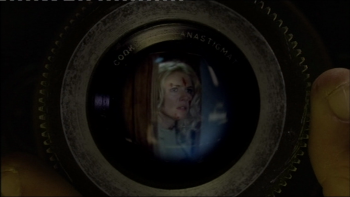
<p>I felt a bit like that whilst watching the BBC/HBO production <em>The Girl</em>,<sup id="rf1-3428"><a href="#fn1-3428" title="&lt;em&gt;The Girl&lt;/em&gt;, tx. BBC2, 26 December 2012." rel="footnote">1</a></sup> Julian Jarrold’s film about the deteriorating relationship between Alfred Hitchcock and his new discovery Tippi Hedren during the making of <em>The Birds</em> (1963) and <em>Marnie</em> (1964). Dramatic characterisation comes perilously close to character assassination. Jarrold’s previous TV piece, the award-winning <em>Appropriate Adult</em>, was also rooted in reality and had certainly confirmed his aptitude for exploring the dark side of human personality; and <em>The Girl</em> is a powerful and progressively harrowing film about sexual harassment, psychological cruelty, and the abuse of power.<sup id="rf2-3428"><a href="#fn2-3428" title="&lt;em&gt;Appropriate Adult&lt;/em&gt;, tx. ITV, 4 and 11 September 2011." rel="footnote">2</a></sup> I think the two leading performances are superb. Toby Jones’s mimicry of Hitchcock is masterly, but he also probes to the melancholy behind the façade; and Sienna Miller likewise conveys a tough and courageous resilience beneath the actress’s surface elegance. At the outset, however, the film claims to be based on extensive research (though there is no mention of Tony Lee Moral’s richly detailed book on the making of <em>Marnie</em><sup id="rf3-3428"><a href="#fn3-3428" title="Tony Lee Moral, &lt;em&gt;Hitchcock and the Making of Marnie&lt;/em&gt; (Scarecrow Press, 2005)." rel="footnote">3</a></sup> ) and thus is purporting to be an accurate account of events. On the level of veracity rather than drama, the film becomes more problematic.</p>

<hr class="footnotes"><ol class="footnotes" style="list-style-type:decimal"><li id="fn1-3428"><p ><em>The Girl</em>, tx. BBC2, 26 December 2012.&nbsp;<a href="#rf1-3428" class="backlink" title="Return to footnote 1.">&#8617;</a></p></li><li id="fn2-3428"><p ><em>Appropriate Adult</em>, tx. ITV, 4 and 11 September 2011.&nbsp;<a href="#rf2-3428" class="backlink" title="Return to footnote 2.">&#8617;</a></p></li><li id="fn3-3428"><p >Tony Lee Moral, <em>Hitchcock and the Making of Marnie</em> (Scarecrow Press, 2005).&nbsp;<a href="#rf3-3428" class="backlink" title="Return to footnote 3.">&#8617;</a></p></li></ol></hr>{"id":3428,"date":"2013-01-31T06:00:22","date_gmt":"2013-01-31T06:00:22","guid":{"rendered":"http:\/\/www.britishtelevisiondrama.org.uk\/?p=3428"},"modified":"2024-08-30T11:40:16","modified_gmt":"2024-08-30T10:40:16","slug":"hitching-your-wagon-to-a-star-some-random-and-rambling-reflections-on-alfred-hitchcock-and-the-girl-2012","status":"publish","type":"post","link":"http:\/\/www.britishtelevisiondrama.org.uk\/?p=3428","title":{"rendered":"Hitching Your Wagon to a Star: Some random and rambling reflections on Alfred Hitchcock and <em>The Girl<\/em> (2012)"},"content":{"rendered":"<h4>by NEIL SINYARD<\/h4>\n<p><strong>Writer:<\/strong> Gwyneth Hughes; <strong>Based on (book):<\/strong> Donald Spoto, <em>Spellbound by Beauty<\/em>; <strong>Producer:<\/strong> Amanda Jenks; <strong>Director:<\/strong>Julian Jarrold<\/p>\n<p><img loading=\"lazy\" decoding=\"async\" src=\"http:\/\/www.britishtelevisiondrama.org.uk\/wp-content\/uploads\/2013\/01\/BTVD_TheGirl_01-e1359405046492.png\" alt=\"BTVD_TheGirl_01\" width=\"350\" height=\"197\" class=\"alignleft size-full wp-image-3432\" \/><\/a><br \/>\nThere is a compelling moment in Strindberg\u2019s <em>The Father<\/em> when a doctor is recalling a production of Ibsen\u2019s <em>Ghosts<\/em> and being dismayed by Mrs Alving\u2019s vilification of her late husband. \u2018I thought to myself,\u2019 says the Doctor, \u2018What a damned shame the fellow\u2019s dead and can\u2019t defend himself!\u2019<\/p>\n<p>I felt a bit like that whilst watching the BBC\/HBO production <em>The Girl<\/em>,<sup id=\"rf1-3428\"><a href=\"#fn1-3428\" title=\"&lt;em&gt;The Girl&lt;\/em&gt;, tx. BBC2, 26 December 2012.\" rel=\"footnote\">1<\/a><\/sup> Julian Jarrold\u2019s film about the deteriorating relationship between Alfred Hitchcock and his new discovery Tippi Hedren during the making of <em>The Birds<\/em> (1963) and <em>Marnie<\/em> (1964). Dramatic characterisation comes perilously close to character assassination. Jarrold\u2019s previous TV piece, the award-winning <em>Appropriate Adult<\/em>, was also rooted in reality and had certainly confirmed his aptitude for exploring the dark side of human personality; and <em>The Girl<\/em> is a powerful and progressively harrowing film about sexual harassment, psychological cruelty, and the abuse of power.<sup id=\"rf2-3428\"><a href=\"#fn2-3428\" title=\"&lt;em&gt;Appropriate Adult&lt;\/em&gt;, tx. ITV, 4 and 11 September 2011.\" rel=\"footnote\">2<\/a><\/sup> I think the two leading performances are superb. Toby Jones\u2019s mimicry of Hitchcock is masterly, but he also probes to the melancholy behind the fa\u00e7ade; and Sienna Miller likewise conveys a tough and courageous resilience beneath the actress\u2019s surface elegance. At the outset, however, the film claims to be based on extensive research (though there is no mention of Tony Lee Moral\u2019s richly detailed book on the making of <em>Marnie<\/em><sup id=\"rf3-3428\"><a href=\"#fn3-3428\" title=\"Tony Lee Moral, &lt;em&gt;Hitchcock and the Making of Marnie&lt;\/em&gt; (Scarecrow Press, 2005).\" rel=\"footnote\">3<\/a><\/sup> ) and thus is purporting to be an accurate account of events. On the level of veracity rather than drama, the film becomes more problematic.<\/p>\n<p><!--more--><br \/>\n<iframe loading=\"lazy\"  id=\"_ytid_24979\"  width=\"584\" height=\"329\"  data-origwidth=\"584\" data-origheight=\"329\" src=\"https:\/\/www.youtube.com\/embed\/NpP93bpTxnQ?enablejsapi=1&#038;autoplay=0&#038;cc_load_policy=0&#038;cc_lang_pref=&#038;iv_load_policy=1&#038;loop=0&#038;rel=1&#038;fs=1&#038;playsinline=0&#038;autohide=2&#038;theme=dark&#038;color=red&#038;controls=1&#038;disablekb=0&#038;\" class=\"__youtube_prefs__  epyt-is-override  no-lazyload\" title=\"YouTube player\"  allow=\"fullscreen; accelerometer; autoplay; clipboard-write; encrypted-media; gyroscope; picture-in-picture; web-share\" referrerpolicy=\"strict-origin-when-cross-origin\" allowfullscreen data-no-lazy=\"1\" data-skipgform_ajax_framebjll=\"\"><\/iframe><br \/>\nGwyneth Hughes\u2019s screenplay acknowledges Donald Spoto\u2019s book, <em>Spellbound by Beauty<\/em> as its major source.<sup id=\"rf4-3428\"><a href=\"#fn4-3428\" title=\"Donald Spoto, &lt;em&gt;Spellbound by Beauty: Hitchcock and His Leading Ladies&lt;\/em&gt; (London: Hutchinson, 2008).\" rel=\"footnote\">4<\/a><\/sup> Hitchcock scholars will know that this was Spoto\u2019s third book on the director, following his genuinely insightful critical appraisal of the films and a contentious and controversial Hitchcock biography, <em>Dark Side of Genius<\/em>.<sup id=\"rf5-3428\"><a href=\"#fn5-3428\" title=\"Donald Spoto, &lt;em&gt;The Art of Alfred Hitchcock: Fifty Years of his Motion Pictures&lt;\/em&gt; (Hopkinson and Blake, 1976; revised second edition Doubleday, 1992); Donald Spoto, &lt;em&gt;The Dark Side of Genius: The Life of Alfred Hitchcock&lt;\/em&gt; (1983).\" rel=\"footnote\">5<\/a><\/sup> I\u2019m tempted to see it as a trilogy of disillusionment, in which an author finds his idol has feet of clay and endeavours to destroy what he set out originally to honour. It reminded me of a lovely moment in Barbara Leaming\u2019s biography of Orson Welles,<sup id=\"rf6-3428\"><a href=\"#fn6-3428\" title=\"Barbara Leaming, &lt;em&gt;Orson Welles: A Biography&lt;\/em&gt; (London: Weidenfeld and Nicolson, 1985).\" rel=\"footnote\">6<\/a><\/sup> when Welles muses on a possible movie about a biographer who, having begun in all innocence and enthusiasm, ends up shooting his subject: and I sometimes think that Spoto has done the equivalent of that with Hitchcock. In other ways he calls to mind a biographer like Norman Sherry who has done three volumes of biography of Graham Greene. When you\u2019ve spent half your life in the study of a single personality, I suppose you inevitably become very possessive of your subject, to whom, you must feel, you alone hold the key. Like Sherry, Spoto pushes a particular line of interpretation that is seductive and partially persuasive but does not (and indeed could not) tell the whole truth. So subtleties and nuances tend to be erased from the scene; insinuation takes the place of information; hypotheses harden into allegation; and, in this case, a complex and disturbing human story is reductively summarised in the <em>Radio Times<\/em> by Alison Graham (admittedly, not the most sophisticated of critical commentators) as the tale of, quote, \u2018an old perv&#8230; [who] after being rejected repeatedly by Hedren, becomes sadistic towards his star, making sure she\u2019s pecked by real birds\u2019.<sup id=\"rf7-3428\"><a href=\"#fn7-3428\" title=\"&lt;em&gt;Radio Times&lt;\/em&gt; preview, reference to follow.\" rel=\"footnote\">7<\/a><\/sup> Hitchcock and Hedren deserve better than that; so, for that matter, does <em>The Girl<\/em>, but it could have done more, I feel, to avoid laying itself open to such crude characterisation.<\/p>\n<p><img loading=\"lazy\" decoding=\"async\" src=\"http:\/\/www.britishtelevisiondrama.org.uk\/wp-content\/uploads\/2013\/01\/BTVD_TheGirl_02-e1359405302792.png\" alt=\"BTVD_TheGirl_02\" width=\"350\" height=\"197\" class=\"alignleft size-full wp-image-3433\" \/><\/a><br \/>\n<em>The Girl<\/em> begins well, with a concise evocation of period (the early 60s) and of the mystique of film-making (a telling close-up of the eye makes one think of <em>Psycho<\/em>: throughout Jarrold tucks in frequent allusions to Hitchcock\u2019s sense of colour and composition without their becoming laboured or simply imitative). Hedren\u2019s arrival at the studio for her meeting with Hitch is wittily similar to the arrival of Melanie at Bodega Bay in <em>The Birds<\/em> (the nervous excitement of a young woman in a strange environment anticipating a mysterious assignation). Their first meeting over lunch, where Hitchcock serves a red wine known as the \u2018Heartbreak Grape\u2019, has intimations of things to come, particularly when the scene concludes with a sexually suggestive limerick, of which the man had an apparently inexhaustible store. I wondered if the ominous tone was being established too early, to the detriment of credibility and of Hitchcock\u2019s courtesy and comedy. He is soon to say, \u2018As is well known, I have no sense of humour,\u2019 which the remainder of the film will confirm, but the real Hitchcock would surely have said that as a joke, particularly if one recalls his persona for his TV shows; indeed, he once told a National Film Theatre audience (jokingly) that \u2018every film I make is a comedy\u2019.<sup id=\"rf8-3428\"><a href=\"#fn8-3428\" title=\"There is a transcript of his 1967 NFT interview available &lt;a href=&quot;http:\/\/explore.bfi.org.uk\/4e4bc0d3a057c&quot; target=&quot;_self&gt;here.&lt;\/a&gt; \" rel=\"footnote\">8<\/a><\/sup> I\u2019ve always loved his response to a journalist at the Cannes press conference after the screening of <em>The Birds<\/em>. \u2018How did you get the birds to act so well?\u2019 he was asked. \u2018They were very well paid,\u2019 he replied.<\/p>\n<p><img loading=\"lazy\" decoding=\"async\" src=\"http:\/\/www.britishtelevisiondrama.org.uk\/wp-content\/uploads\/2013\/01\/BTVD_TheGirl_03-e1359405326459.png\" alt=\"BTVD_TheGirl_03\" width=\"350\" height=\"197\" class=\"alignleft size-full wp-image-3434\" \/><\/a><br \/>\n<a href=\"http:\/\/www.britishtelevisiondrama.org.uk\/wp-content\/uploads\/2013\/01\/BTVD_TheGirl_Hedren-e1359405442120.png\"><img loading=\"lazy\" decoding=\"async\" src=\"http:\/\/www.britishtelevisiondrama.org.uk\/wp-content\/uploads\/2013\/01\/BTVD_TheGirl_Hedren-e1359405442120.png\" alt=\"BTVD_TheGirl_Hedren\" width=\"350\" height=\"263\" class=\"alignleft size-full wp-image-3438\" \/><\/a><\/p>\n<p>The screen test scene seems a little sensationalised compared with the visual evidence one has seen elsewhere (was Hedren actually instructed to give her screen partner, Martin Balsam a passionate kiss, as she is here?).<sup id=\"rf9-3428\"><a href=\"#fn9-3428\" title=\"The image of Hedren&#8217;s screen test which accompanies this piece is taken from &lt;em&gt;Reputations&lt;\/em&gt;: &#8216;Hitch&#8217; Part 2, &#8216;Alfred the Auteur&#8217;, tx. BBC2, 1 June 1999.\" rel=\"footnote\">9<\/a><\/sup> However, the scene in the restaurant, where Hitchcock, in the presence of his wife Alma (Imelda Staunton), uses a gift of a bird-shaped brooch to tell her she has been cast in the leading role, is genuinely touching and apparently close to what actually occurred. Hitchcock is also shown explaining and rehearsing a scene with his new, relatively untrained star. He did spend hours with Tippi Hedren going over her roles and she has always expressed gratitude for what she learned from him. The recorded tapes of their discussions on the role of <em>Marnie<\/em>, for example, suggested complete professionalism on both sides rather than (as suggested in <em>The Girl<\/em>) sublimated passion on one.<\/p>\n<p>We are moving towards what for me is one of the most troublesome scenes in the film, because it is clearly intended to set up much of what follows, and yet it fails to convince. Being driven to the location, Hitchcock clumsily attempts to force his attentions on Hedren and she has to resist his assault and escape from the car. Did this actually happen? I don\u2019t know. In the \u2018Making of&#8217; featurette on the DVD, Julian Jarrold asserts that Hitchcock began making sexual advances towards Hedren midway through the shooting of <em>The Birds<\/em>,<sup id=\"rf10-3428\"><a href=\"#fn10-3428\" title=\"&lt;em&gt;The Girl&lt;\/em&gt; DVD, Acorn, 2012.\" rel=\"footnote\">10<\/a><\/sup> but this is contradicted by the most authoritative of recent Hitchcock biographers, Patrick McGilligan, who has written about the making of <em>The Birds<\/em> that \u2018no one had noticed any signs that the director was obsessed with his leading lady, that Hitchcock had fallen in love with Hedren&#8230;nor is there any evidence that he treated her with deliberate cruelty.\u2019<sup id=\"rf11-3428\"><a href=\"#fn11-3428\" title=\"Patrick McGilligan, &lt;em&gt;Alfred Hitchcock: A Life in Darkness and Light&lt;\/em&gt; (ReganBooks, 2003).\" rel=\"footnote\">11<\/a><\/sup> Jay Presson Allen, who replaced Evan Hunter as screenwriter on <em>Marnie<\/em> and became a good friend of Hitchcock, is on record as saying that \u2018he would never in one million years do anything to embarrass himself.\u2019 One could allow for an element of dramatic licence, but, even in the context of the film, the scene seems implausible. If he were intent on making sexual advances to Miss Hedren, one would have thought he would have chosen a better place and time than in the back of a limousine in full view of the  driver\u2019s mirror and within sight of the film\u2019s location and crew. Also, if he is misbehaving so early, why didn\u2019t Hedren walk away from the situation then? The question is raised later but never answered.<\/p>\n<p><img loading=\"lazy\" decoding=\"async\" src=\"http:\/\/www.britishtelevisiondrama.org.uk\/wp-content\/uploads\/2013\/01\/BTVD_TheGirl_06-e1359406668491.png\" alt=\"BTVD_TheGirl_06\" width=\"350\" height=\"197\" class=\"alignleft size-full wp-image-3468\" \/><\/a><br \/>\n<div id=\"attachment_3469\" style=\"width: 360px\" class=\"wp-caption alignleft\"><img loading=\"lazy\" decoding=\"async\" aria-describedby=\"caption-attachment-3469\" src=\"http:\/\/www.britishtelevisiondrama.org.uk\/wp-content\/uploads\/2013\/01\/BTVD_TheGirl_07-e1359406696134.png\" alt=\"The phone booth: The Girl (two images above) and The Birds (two images below)\" width=\"350\" height=\"197\" class=\"size-full wp-image-3469\" \/><p id=\"caption-attachment-3469\" class=\"wp-caption-text\">The phone booth: <em>The Girl<\/em> (two images above) and <em>The Birds<\/em> (two images below)<\/p><\/div><\/p>\n<p>I would speculate on two reasons for the scene, if it is not authenticated by other evidence. One is, the screenwriter might have been following (or directed to follow) that screenwriting manual directive that a script should have some sort of decisive turning-point after about twenty minutes or so in order to sustain an audience\u2019s interest. (This might be in Robert McKee\u2019s <em>Story<\/em>, but as that book talks about screenwriting without even mentioning Billy Wilder, or a perfect screenplay like <em>The Apartment<\/em>, one would be justified in ignoring that advice.) The second reason is to motivate what follows, which is the revenge of the director for the rejection. Unfortunately, if the originating scene doesn\u2019t work, then it\u2019s not likely that what follows will either. In the phone-booth scene, where the heroine is trapped whilst the birds are supposedly marauding outside, one of the props malfunctions, shattering the glass and causing cuts to the actress\u2019s face. Was it an accident? Everything in the way the scene is filmed, from Hitchcock\u2019s intimidating presence that makes the actress tremble to the insistent close-ups of his face prior to the incident, suggests that it is a deliberate ploy of the director to terrorise the star. Yet it seems quite incredible that a director would risk jeopardising his own film by deliberately injuring his leading actress in a perverse endeavour to obtain her obedience. <\/p>\n<p><img loading=\"lazy\" decoding=\"async\" src=\"http:\/\/www.britishtelevisiondrama.org.uk\/wp-content\/uploads\/2013\/01\/BTVD_TheGirl_TheBirds_2-e1359406738650.png\" alt=\"BTVD_TheGirl_TheBirds_2\" width=\"350\" height=\"197\" class=\"alignleft size-full wp-image-3443\" \/><\/a><br \/>\n<img loading=\"lazy\" decoding=\"async\" src=\"http:\/\/www.britishtelevisiondrama.org.uk\/wp-content\/uploads\/2013\/01\/BTVD_TheGirl_TheBirds_3-e1359406752403.png\" alt=\"BTVD_TheGirl_TheBirds_3\" width=\"350\" height=\"197\" class=\"alignleft size-full wp-image-3444\" \/><\/a><\/p>\n<p>This is taken to an extreme in the notorious attic scene, where Melanie is attacked and almost killed by the birds and where Hitchcock took five days to shoot the scene, using real birds rather than the dummy ones that Hedren had been expecting. It is true that the scene caused Hedren (and Hitchcock, as even Spoto acknowledges) much distress and that production had to be postponed until she had recovered from her ordeal. But to imply, as <em>The Girl<\/em> does, that Hitchcock sadistically and deliberately prolonged the shooting as further stages in his revenge or demonstration of power seems dubious, to say the least. Hitchcock undoubtedly appreciated the  importance of the scene; it was the film\u2019s dramatic climax and if it didn\u2019t work, then the whole film would be severely diminished. (For the same reason, he had taken seven days over the shooting of the much shorter shower-murder sequence in <em>Psycho<\/em>, because he recognised its centrality: if that scene failed to deliver, then the whole film would go down the drain, as it were.) This is not necessarily condoning his methods, of course (though they are far from unprecedented in the behaviour of movie directors) but is simply to explain the reason behind the lengths he went to: it was for the benefit of the film not for the punishment of its leading lady. Indeed Tippi Hedren herself made the shrewd observation that it was probably that one scene which had prompted Hitchcock to seek out an unknown for the leading role in the first place: he knew that an established star would have balked at it.<\/p>\n<p>Incidentally, contrary to the suggestion in <em>The Girl<\/em>, Tippi Hedren had not been cast in the title role of <em>Marnie<\/em> whilst <em>The Birds<\/em> was still in production. This further undercuts the notion that Hitchcock at that stage was already infatuated with his leading lady. His preference all along had been for Grace Kelly in a comeback role, but when she finally declined the role out of obeisance to her royal responsibilities, Hitchcock did not (as he is shown doing in <em>The Girl<\/em>) immediately offer the role to Hedren, but contemplated and even tested other actresses before making up his mind. According to Patrick McGilligan, the casting of Hedren was \u2018almost circumstantial\u2019: she happened to be around, and available, and, he thought, capable.<\/p>\n<p>In <em>The Girl<\/em>, before <em>Marnie<\/em> has actually started shooting, there is a brief, interesting exchange between Alma and Hitchcock\u2019s formidable personal assistant, Peggy Robertson (Penelope Wilton), who was the guardian of all Hitchcock\u2019s business and personal arrangements and whom even the fearsome Bernard Herrmann, I was once told, \u2018was wary of\u2019. They are wondering what it is that enthrals Hitchcock so much about Hedren and that distinguishes her in his eyes from the other glamorous blondes he has directed- Madeleine Carroll, Joan Fontaine, Grace Kelly, Eva-Marie Saint etc. \u2018Whatever he throws at her,\u2019 Peggy says, \u2018she makes him feel he can\u2019t hurt her.\u2019 It is not a very satisfactory explanation and not one that is borne out by the film. One of the disappointments of <em>The Girl<\/em> is the supporting characterisation. The actors are well cast and the parts are well played, but key questions remain unanswered. Why didn\u2019t Alma intervene? She knows what is going on and is obviously disturbed by it, and she deserves more space and attention for her point of view. Similarly, what did Peggy Robertson make of it? Why is she so conciliatory on Hitchcock\u2019s behalf? At one point in the film, Hitchcock is unpardonably rude to her, to the point of reducing her to tears, but she remains fiercely supportive. Hitchcock tended to surround himself with female assistants who became long-serving members of his staff and devoted to him, but there is little suggestion here of why he inspired that loyalty. A dimension is missing.<\/p>\n<p><img loading=\"lazy\" decoding=\"async\" src=\"http:\/\/www.britishtelevisiondrama.org.uk\/wp-content\/uploads\/2013\/01\/BTVD_TheGirl_04-e1359406057890.png\" alt=\"BTVD_TheGirl_04\" width=\"350\" height=\"197\" class=\"alignleft size-full wp-image-3435\" \/><br \/>\nThe <em>Marnie<\/em> section in <em>The Girl<\/em> seems on surer factual ground than <em>The Birds<\/em>, at least in the sense that it is generally agreed that there was, towards the ending of the filming, a massive falling-out between director and star. Hitchcock\u2019s first official biographer, John Russell Taylor, when asking the director about this, was told that she had said something that no one was allowed to say. When Taylor pressed him further, Hitchcock replied: \u2018She referred to my weight.\u2019 Taylor took that to mean that she had called him a \u2018fat pig\u2019 or something of that order, and certainly one of the things that <em>The Girl<\/em> legitimately stresses is Hitchcock\u2019s sensitivity about his physical appearance and what Toby Jones in the DVD \u2018Making of\u2019 documentary called Hitchcock\u2019s \u2018self- loathing of his own body.\u2019 (I have always been saddened and rather moved by Hitchcock\u2019s description of himself as a boy as \u2018a remarkably unattractive child,\u2019 and wondering who had made him feel that way about himself.) What specifically prompted Hedren\u2019s outburst, though, and how far Hitchcock\u2019s sexual harassment went, has been widely debated. In <em>The Girl<\/em>, there is a declaration of love, instantly rejected, leaving Hitchcock to fantasise about a reciprocal response before staring out at the camera, as if he is seeing a grotesque reflection of himself. After a forlorn telephone conversation with Hedren at Christmastime, part of which has been overheard by his wife, Hitchcock is told by Alma that he\u2019d run a mile if the girl did offer herself to him. In a final scene in his office, he asks for sexual favours in return for what he has done for her. Was that the case? If so, one cannot imagine his harbouring much anticipation of success or being surprised by her rejection: the scene is chilling in its lack of romance. <\/p>\n<p><img loading=\"lazy\" decoding=\"async\" src=\"http:\/\/www.britishtelevisiondrama.org.uk\/wp-content\/uploads\/2013\/01\/BTVD_TheGirl_05-e1359406080904.png\" alt=\"BTVD_TheGirl_05\" width=\"350\" height=\"197\" class=\"alignleft size-full wp-image-3436\" \/><\/a><br \/>\n<img loading=\"lazy\" decoding=\"async\" src=\"http:\/\/www.britishtelevisiondrama.org.uk\/wp-content\/uploads\/2013\/01\/BTVD_TheGirl_Marnie_1-e1359406101139.png\" alt=\"BTVD_TheGirl_Marnie_1\" width=\"350\" height=\"263\" class=\"alignleft size-full wp-image-3439\" \/><\/a><br \/>\n<em>The Girl<\/em> concludes with a fine reconstruction of the opening shot of <em>Marnie<\/em> (one of the cinema\u2019s all-time great openings) and the implication that, for Hedren, this is the end of the nightmare. One of the final captions of the film mentions that they never worked together again; and certainly one of Hitchcock\u2019s most indefensible acts in this saga was his refusal to release her from her seven-year contract, which effectively sabotaged the development of her acting career. It might be worth recalling, though, that their communication was not as final as the film makes out. They did meet informally several times in the year after the <em>Marnie<\/em> experience, and Tippi Hedren was sufficiently un-embittered to attend the Life Achievement Award ceremony for Hitchcock at the American Film Institute in 1979, a year before his death.<\/p>\n<p>The other caption at the end of <em>The Girl<\/em> states, perhaps argumentatively, that \u2018Marnie is now hailed as Hitchcock\u2019s final masterpiece.\u2019 Some (not me) would make that claim for the later <em>Frenzy<\/em>. Others (not me) would dispute that <em>Marnie<\/em> is a masterpiece at all. Even its screenwriter Jay Presson Allen thought its later high reputation undeserved. In a recent article in <em>The Guardian<\/em>,<sup id=\"rf12-3428\"><a href=\"#fn12-3428\" title=\"Alex von Tunzelman, &#8216;Do &lt;em&gt;Hitchcock&lt;\/em&gt; and &lt;em&gt;The Girl&lt;\/em&gt; reveal the horrible truth about Hitch?&#8217;, &lt;em&gt;The Guardian&lt;\/em&gt;, 11 January 2013. Available &lt;a href=&quot;http:\/\/www.guardian.co.uk\/film\/2013\/jan\/11\/hitchcock-the-girl-truth-master-suspense&quot; target=&quot;_self&quot; rel=&quot;noopener&quot;&gt;here&lt;\/a&gt;.\" rel=\"footnote\">12<\/a><\/sup> Alex von Tunzelman wrote that \u2018<em>Marnie<\/em> is a terrible movie and a cruel one: the idea that a woman sexually traumatised by her childhood can be saved by submitting to a controlling rapist, is offensive, as well as plain wrong.\u2019 That bizarre oversimplification of the movie (a rough dramatic equivalent would be to say that <em>Othello<\/em> is fundamentally a play about a man who murders his wife because he thinks she\u2019s misplaced his handkerchief) is, one hopes, the most extreme example of the misapplication of Hitchcock\u2019s characterisation in <em>The Girl<\/em> to a reading of his films. The greatest of all Hitchcock critics, Robin Wood suggested provocatively that <em>Marnie<\/em> was a test-case: if you didn\u2019t like it, then you didn\u2019t really like Hitchcock; and if you didn\u2019t love it, then you couldn\u2019t love cinema.<sup id=\"rf13-3428\"><a href=\"#fn13-3428\" title=\"Robin Wood, &#8216;The Trouble with Marnie&#8217;, &lt;em&gt;Marnie&lt;\/em&gt; DVD release.\" rel=\"footnote\">13<\/a><\/sup> In the 1980s Wood was worrying about whether Hitchcock could be rescued from feminist rage. <\/p>\n<p><div id=\"attachment_3440\" style=\"width: 360px\" class=\"wp-caption alignleft\"><img loading=\"lazy\" decoding=\"async\" aria-describedby=\"caption-attachment-3440\" src=\"http:\/\/www.britishtelevisiondrama.org.uk\/wp-content\/uploads\/2013\/01\/BTVD_TheGirl_Marnie_2-e1359406118961.png\" alt=\"&quot;his men are fully implicated in the deed&quot;: Hitchcock and the gaze in Marnie\" width=\"350\" height=\"263\" class=\"size-full wp-image-3440\" \/><p id=\"caption-attachment-3440\" class=\"wp-caption-text\">&#8220;his men are fully implicated in the deed&#8221;: Hitchcock and the gaze in <em>Marnie<\/em><\/p><\/div><br \/>\n<img loading=\"lazy\" decoding=\"async\" src=\"http:\/\/www.britishtelevisiondrama.org.uk\/wp-content\/uploads\/2013\/01\/BTVD_TheGirl_Marnie_3-e1359406162272.png\" alt=\"BTVD_TheGirl_Marnie_3\" width=\"350\" height=\"263\" class=\"alignleft size-full wp-image-3441\" \/><\/a><br \/>\nIn fact, one of the interesting things about Hitchcock criticism after the first wave of auteurism was the defence of his films by feminist film critics, for example, Camille Paglia on <em>The Birds<\/em>,<sup id=\"rf14-3428\"><a href=\"#fn14-3428\" title=\"Camille Paglia, &lt;em&gt;BFI Film Classics: The Birds&lt;\/em&gt; (London: BFI, 1998).\" rel=\"footnote\">14<\/a><\/sup> and the trail-blazing Molly Haskell on <em>Marnie<\/em>, which she described as \u2018one of his most disturbing and, from a woman\u2019s point of view, most important films&#8230;.If Hitchcock\u2019s women must be tortured and punished, his men are fully implicated in the deed- and the more detached they seem, the more guilty and morally responsible.\u2019<sup id=\"rf15-3428\"><a href=\"#fn15-3428\" title=\"Molly Haskell, &lt;em&gt;From Reverence to Rape: the Treatment of Women in the Movies&lt;\/em&gt; (Holt, Rhinehart and Wilson, 1976), p. 351.\" rel=\"footnote\">15<\/a><\/sup> In other words, according to Haskell, the films are as much a critique of the male desire to dominate as they are visions of the victimisation of the female; and the opening scenes of <em>Marnie<\/em>, for example, very eloquently suggest the heroine\u2019s kleptomania as her revenge on patriarchy, and subtly delineate how far she can operate in a male-dominated world whilst still retaining her financial and sexual independence.<sup id=\"rf16-3428\"><a href=\"#fn16-3428\" title=\"See also Tania Modleski, &lt;em&gt;The Women Who Knew Too Much: Hitchcock and Feminist Theory&lt;\/em&gt; (Routledge, 2005).\" rel=\"footnote\">16<\/a><\/sup> There are no token females in Hitchcock\u2019s films or women who are there simply as \u2018love interest\u2019. They are invariably there as strong characters in their own right, and only Cukor, Ophuls and Wyler (I have problems with Hawks) can consistently match Hitchcock for complexity of female characterisation during the heyday of Hollywood\u2019s Golden Age. One of the most interesting aspects of both <em>The Birds<\/em> and <em>Marnie<\/em> is the prominence of the feminine perspective. In <em>The Birds<\/em> women are the drivers of the plot, and the male characters are fairly marginal; in <em>Marnie<\/em>, the women are at least as important as the men.<\/p>\n<p>In <em>Marnie<\/em>, it is well known that the honeymoon scene caused a rift between the original writer Evan Hunter and Hitchcock (though it is intriguing that Hunter\u2019s female replacement, Jay Presson Allen had no problem with it). The scene is given appropriate prominence in <em>The Girl<\/em>, and Hunter\u2019s unease about Hitchcock\u2019s visual presentation (Hitchcock\u2019s insistence that the camera be on the heroine\u2019s face at the moment of intercourse) is dutifully reported and that moment replicated. Hunter seemed to interpret Hitchcock\u2019s strategy as the sadistic relish of a male chauvinist, but it is possible to see it in exactly the opposite way and suggest that Hitchcock wanted at this point to emphasise Marnie\u2019s feelings of horror and desolation. (She is, after all, to follow the experience with an attempt at suicide.) Certainly the character of Marnie (the repression, the private fears beneath the level of the conscious mind, the sublimation of her sexuality) seems much closer to that of Hitchcock\u2019s personality than does the virile, self-confident hero played by Sean Connery (\u2018in a brilliant performance\u2019 says Molly Haskell, and I agree). This could suggest a degree of empathy between title character and director. In this regard, Hitchcock could be seen as more masochist than misogynist- that is, he puts himself through his heroine\u2019s pain- and that the power of his films comes not from the display of his sadism but from the intensity of his sympathy. An equally important scene in <em>Marnie<\/em>, which is not referenced in <em>The Girl<\/em>, is a later \u2018free association\u2019 session between husband and wife, which Marnie significantly initiates but then has to retreat in terror as the responses threaten to penetrate her defences: she ends up crying, \u2018Oh help me, please God, somebody help me!\u2019 In their lengthy discussion of the scene, Hedren remarked to Hitchcock, \u2018It\u2019s a very sad scene, isn\u2019t it?\u2019, to which he replied, \u2018Yes, but it comes out of anger&#8230;\u2019. It is a very suggestive comment. Marnie\u2019s rage at her repression and her feeling of imprisonment within her own body could easily correlate to Hitchcock\u2019s own feelings. <\/p>\n<p>The making of <em>The Birds<\/em> and <em>Marnie<\/em> is a sad tale overall- except for the movies themselves. Tippi Hedren came through the experience with dignity whereas Hitchcock emerged from what he described to Truffaut as \u2018the emotional siege I went through\u2019 with far less credit; but I was surprised by Julian Jarrold\u2019s description of the films in the DVD featurette as \u2018artificial and old fashioned\u2019 for today\u2019s audiences and representing a \u2018decline as a style of film-making\u2019. The truth is that the two films continue to provoke extensive discussion and analysis: for their stylistic experimentations that often veer towards surrealism and expressionism; for their generic elusiveness, suspense set-pieces, and open endings; for their thematic boldness on issues such as repression, frigidity, memory and child abuse; for the complexity of their sexual politics; for the astounding imagery that finds visual correlatives for emotional states; and much else besides. Moreover, Hitchcock\u2019s stock has never been higher, what with two films and a play (by Terry Johnson) about him currently in circulation as I write; more books about him and his work by far than about any other film director; and his most personal movie, <em>Vertigo<\/em> (widely dismissed on first release) recently being voted in an international survey of critics as the best film ever made. He would undoubtedly have been gratified by this, as he came to regret the droll, podgy joker persona he had adopted for his TV series, because he thought it obscured his true achievement as a film artist. Ironically, the public persona has become less likeable as the recognition of artistic stature has increased, though Hitchcock, in his defence, could no doubt have cited many cases of mistreatment by directors of their stars (Preminger, Lang, Powell, Ford, Kubrick etc. etc.) in their exertion of power for the benefit of their films. It might even go with the pressures of the job. As William Wyler once commented to Charlton Heston, \u2018Believe me, , but you don\u2019t make good movies that way.\u2019<\/p>\n<p><em>Citizen Kane<\/em> probably had the best idea for cine-biography. Take a great person as subject; have a wealth of contradictory accounts from people who claim to have known him or her really well; and then at the end, undercut all this evidence by revealing something (ideally from childhood) that none of the witnesses knew about or ever will know; and suggest that this might prove the key to the whole personality- or, then again, probably not. In other words, respect the mystery. Hitchcock\u2019s films probably tell you more about his character than his biographies: they are the dreams in the dark of a very complex man. I think he would have endorsed what Orson Welles once told an interviewer: \u2018My work is what enables me to come out of myself. I like what I do, not what I am. Do you know the best service anyone could render to art? Destroy all biographies. Only art can explain the life of a man and not the contrary.\u2019<sup id=\"rf17-3428\"><a href=\"#fn17-3428\" title=\"Orson Welles to Jean Clay, 1962. Quoted in various sources including Simon Callow, &lt;em&gt;Orson Welles Volume 1: The Road to Xanadu&lt;\/em&gt;.\" rel=\"footnote\">17<\/a><\/sup><\/p>\n<p><em>You may be interested in visiting <a href=\"http:\/\/neilsinyard.britishtelevisiondrama.org.uk\/\" target=\"_self\" rel=\"noopener\">this new website compiling some of Neil Sinyard&#8217;s writing on film and other topics<\/a>, our new sister site.<\/em><\/p>\n<p><em>Originally posted: 31 January 2013.<\/em><sup id=\"rf18-3428\"><a href=\"#fn18-3428\" title=\"Footnotes by David Rolinson.\" rel=\"footnote\">18<\/a><\/sup><\/p>\n<p><body><!-- Start of StatCounter Code --><br \/>\n<script type=\"text\/javascript\">\nvar sc_project=5750652; \nvar sc_invisible=1; \nvar sc_partition=68; \nvar sc_click_stat=1; \nvar sc_security=\"6dd1aa39\"; \n<\/script><\/p>\n<p><script type=\"text\/javascript\"\nsrc=\"http:\/\/www.statcounter.com\/counter\/counter.js\"><\/script><noscript>\n<div<br \/>\nclass=&#8221;statcounter&#8221;><a title=\"wordpress stats \"<br \/>\nhref=&#8221;http:\/\/www.statcounter.com\/wordpress.org\/&#8221;<br \/>\ntarget=&#8221;_blank&#8221;><img class=\"statcounter\"<br \/>\nsrc=&#8221;http:\/\/c.statcounter.com\/5750652\/0\/6dd1aa39\/1\/&#8221;<br \/>\nalt=&#8221;wordpress stats &#8221; ><\/a><\/div>\n<p><\/noscript><br \/>\n<!-- End of StatCounter Code --><\/body><\/p>\n<hr class=\"footnotes\"><ol class=\"footnotes\" style=\"list-style-type:decimal\"><li id=\"fn1-3428\"><p ><em>The Girl<\/em>, tx. BBC2, 26 December 2012.&nbsp;<a href=\"#rf1-3428\" class=\"backlink\" title=\"Return to footnote 1.\">&#8617;<\/a><\/p><\/li><li id=\"fn2-3428\"><p ><em>Appropriate Adult<\/em>, tx. ITV, 4 and 11 September 2011.&nbsp;<a href=\"#rf2-3428\" class=\"backlink\" title=\"Return to footnote 2.\">&#8617;<\/a><\/p><\/li><li id=\"fn3-3428\"><p >Tony Lee Moral, <em>Hitchcock and the Making of Marnie<\/em> (Scarecrow Press, 2005).&nbsp;<a href=\"#rf3-3428\" class=\"backlink\" title=\"Return to footnote 3.\">&#8617;<\/a><\/p><\/li><li id=\"fn4-3428\"><p >Donald Spoto, <em>Spellbound by Beauty: Hitchcock and His Leading Ladies<\/em> (London: Hutchinson, 2008).&nbsp;<a href=\"#rf4-3428\" class=\"backlink\" title=\"Return to footnote 4.\">&#8617;<\/a><\/p><\/li><li id=\"fn5-3428\"><p >Donald Spoto, <em>The Art of Alfred Hitchcock: Fifty Years of his Motion Pictures<\/em> (Hopkinson and Blake, 1976; revised second edition Doubleday, 1992); Donald Spoto, <em>The Dark Side of Genius: The Life of Alfred Hitchcock<\/em> (1983).&nbsp;<a href=\"#rf5-3428\" class=\"backlink\" title=\"Return to footnote 5.\">&#8617;<\/a><\/p><\/li><li id=\"fn6-3428\"><p >Barbara Leaming, <em>Orson Welles: A Biography<\/em> (London: Weidenfeld and Nicolson, 1985).&nbsp;<a href=\"#rf6-3428\" class=\"backlink\" title=\"Return to footnote 6.\">&#8617;<\/a><\/p><\/li><li id=\"fn7-3428\"><p ><em>Radio Times<\/em> preview, reference to follow.&nbsp;<a href=\"#rf7-3428\" class=\"backlink\" title=\"Return to footnote 7.\">&#8617;<\/a><\/p><\/li><li id=\"fn8-3428\"><p >There is a transcript of his 1967 NFT interview available <a>here.<\/a> &nbsp;<a href=\"#rf8-3428\" class=\"backlink\" title=\"Return to footnote 8.\">&#8617;<\/a><\/p><\/li><li id=\"fn9-3428\"><p >The image of Hedren&#8217;s screen test which accompanies this piece is taken from <em>Reputations<\/em>: &#8216;Hitch&#8217; Part 2, &#8216;Alfred the Auteur&#8217;, tx. BBC2, 1 June 1999.&nbsp;<a href=\"#rf9-3428\" class=\"backlink\" title=\"Return to footnote 9.\">&#8617;<\/a><\/p><\/li><li id=\"fn10-3428\"><p ><em>The Girl<\/em> DVD, Acorn, 2012.&nbsp;<a href=\"#rf10-3428\" class=\"backlink\" title=\"Return to footnote 10.\">&#8617;<\/a><\/p><\/li><li id=\"fn11-3428\"><p >Patrick McGilligan, <em>Alfred Hitchcock: A Life in Darkness and Light<\/em> (ReganBooks, 2003).&nbsp;<a href=\"#rf11-3428\" class=\"backlink\" title=\"Return to footnote 11.\">&#8617;<\/a><\/p><\/li><li id=\"fn12-3428\"><p >Alex von Tunzelman, &#8216;Do <em>Hitchcock<\/em> and <em>The Girl<\/em> reveal the horrible truth about Hitch?&#8217;, <em>The Guardian<\/em>, 11 January 2013. Available <a href=\"http:\/\/www.guardian.co.uk\/film\/2013\/jan\/11\/hitchcock-the-girl-truth-master-suspense\" target=\"_self\" rel=\"noopener\">here<\/a>.&nbsp;<a href=\"#rf12-3428\" class=\"backlink\" title=\"Return to footnote 12.\">&#8617;<\/a><\/p><\/li><li id=\"fn13-3428\"><p >Robin Wood, &#8216;The Trouble with Marnie&#8217;, <em>Marnie<\/em> DVD release.&nbsp;<a href=\"#rf13-3428\" class=\"backlink\" title=\"Return to footnote 13.\">&#8617;<\/a><\/p><\/li><li id=\"fn14-3428\"><p >Camille Paglia, <em>BFI Film Classics: The Birds<\/em> (London: BFI, 1998).&nbsp;<a href=\"#rf14-3428\" class=\"backlink\" title=\"Return to footnote 14.\">&#8617;<\/a><\/p><\/li><li id=\"fn15-3428\"><p >Molly Haskell, <em>From Reverence to Rape: the Treatment of Women in the Movies<\/em> (Holt, Rhinehart and Wilson, 1976), p. 351.&nbsp;<a href=\"#rf15-3428\" class=\"backlink\" title=\"Return to footnote 15.\">&#8617;<\/a><\/p><\/li><li id=\"fn16-3428\"><p >See also Tania Modleski, <em>The Women Who Knew Too Much: Hitchcock and Feminist Theory<\/em> (Routledge, 2005).&nbsp;<a href=\"#rf16-3428\" class=\"backlink\" title=\"Return to footnote 16.\">&#8617;<\/a><\/p><\/li><li id=\"fn17-3428\"><p >Orson Welles to Jean Clay, 1962. Quoted in various sources including Simon Callow, <em>Orson Welles Volume 1: The Road to Xanadu<\/em>.&nbsp;<a href=\"#rf17-3428\" class=\"backlink\" title=\"Return to footnote 17.\">&#8617;<\/a><\/p><\/li><li id=\"fn18-3428\"><p >Footnotes by David Rolinson.&nbsp;<a href=\"#rf18-3428\" class=\"backlink\" title=\"Return to footnote 18.\">&#8617;<\/p><\/li><\/p><\/ol><\/hr>","protected":false},"excerpt":{"rendered":null,"protected":false},"author":1,"featured_media":0,"comment_status":"open","ping_status":"open","sticky":false,"template":"","format":"standard","meta":{"footnotes":""},"categories":[137,368],"tags":[372,452,374,81,371,370,369,373],"class_list":["post-3428","post","type-post","status-publish","format-standard","hentry","category-essays","category-neil-sinyard","tag-alfred-hitchcock","tag-docudrama","tag-donald-spoto","tag-drama-documentary","tag-gwyneth-hughes","tag-julian-jarrold","tag-the-girl","tag-tippi-hedren"],"_links":{"self":[{"href":"http:\/\/www.britishtelevisiondrama.org.uk\/index.php?rest_route=\/wp\/v2\/posts\/3428","targetHints":{"allow":["GET"]}}],"collection":[{"href":"http:\/\/www.britishtelevisiondrama.org.uk\/index.php?rest_route=\/wp\/v2\/posts"}],"about":[{"href":"http:\/\/www.britishtelevisiondrama.org.uk\/index.php?rest_route=\/wp\/v2\/types\/post"}],"author":[{"embeddable":true,"href":"http:\/\/www.britishtelevisiondrama.org.uk\/index.php?rest_route=\/wp\/v2\/users\/1"}],"replies":[{"embeddable":true,"href":"http:\/\/www.britishtelevisiondrama.org.uk\/index.php?rest_route=%2Fwp%2Fv2%2Fcomments&post=3428"}],"version-history":[{"count":77,"href":"http:\/\/www.britishtelevisiondrama.org.uk\/index.php?rest_route=\/wp\/v2\/posts\/3428\/revisions"}],"predecessor-version":[{"id":8283,"href":"http:\/\/www.britishtelevisiondrama.org.uk\/index.php?rest_route=\/wp\/v2\/posts\/3428\/revisions\/8283"}],"wp:attachment":[{"href":"http:\/\/www.britishtelevisiondrama.org.uk\/index.php?rest_route=%2Fwp%2Fv2%2Fmedia&parent=3428"}],"wp:term":[{"taxonomy":"category","embeddable":true,"href":"http:\/\/www.britishtelevisiondrama.org.uk\/index.php?rest_route=%2Fwp%2Fv2%2Fcategories&post=3428"},{"taxonomy":"post_tag","embeddable":true,"href":"http:\/\/www.britishtelevisiondrama.org.uk\/index.php?rest_route=%2Fwp%2Fv2%2Ftags&post=3428"}],"curies":[{"name":"wp","href":"https:\/\/api.w.org\/{rel}","templated":true}]}}