<h4>by OLIVER WAKE</h4>
<p><img loading="lazy" decoding="async" src="http://www.britishtelevisiondrama.org.uk/wp-content/uploads/2013/10/BTVD_Osborne_1-e1383061239662.png" alt="BTVD_Osborne_1" width="250" height="188" class="alignleft size-full wp-image-4133" /></p>
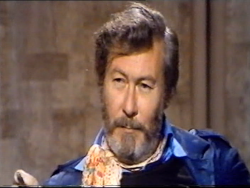
<p>With his 1956 play <em>Look Back in Anger</em>, John Osborne (1929-1994) famously kick-started the theatrical trend for &#8220;Angry Young Men&#8221; and drama which explored the grimmer side of contemporary life, putting society’s discontents centre-stage. Amongst a body of further stage plays, Osborne also produced a clutch of screenplays for cinema and, more pertinently for us, television.</p>
<p>Television had played a modest part in the success of <em>Look Back in Anger</em>. The play was at break-even point when an extract was broadcast from the Royal Court theatre by the BBC close to the end of its run.<sup id="rf1-4055"><a href="#fn1-4055" title="&lt;em&gt;Look Back in Anger&lt;/em&gt;, BBC, tx. 16 October 1956." rel="footnote">1</a></sup> Following this exposure, the rest of the run sold out and the play was transferred to the Lyric theatre to meet excess demand.<sup id="rf2-4055"><a href="#fn2-4055" title="The effect of the televised extract is detailed in John Russell Taylor, &lt;em&gt;Anger and after: A Guide to the New British Drama&lt;/em&gt;, Revised edition (London: Methuen, 1969), p. 35, amongst many other sources. For further information, including how the impact of the televised extract has been exaggerated, see John Wyver’s fascinating post ‘From the ’50s: Look Back in Anger (BBC and ITV, 1956)’ on the &lt;em&gt;Screenplays&lt;/em&gt; blog (posted 30 June 2013), available &lt;a href=&quot;http://screenplaystv.wordpress.com/2013/06/30/from-the-50s-look-back-in-anger-bbc-and-itv-1956/&quot; target=&quot;_self&quot; rel=&quot;noopener&quot;&gt;here&lt;/a&gt;." rel="footnote">2</a></sup> Six weeks after the excerpt was televised, the full play was broadcast by Granada, directed by its theatre director Tony Richardson.  Writing in <em>The Manchester Guardian</em>, Bernard Levin found that the play made &#8220;tremendous television.&#8221;<sup id="rf3-4055"><a href="#fn3-4055" title="Bernard Levin, ‘Truth Duller Than Fiction’, &lt;em&gt;The Manchester Guardian&lt;/em&gt;, 1 December 1956, p. 5." rel="footnote">3</a></sup> <em>Look Back in Anger</em> was produced for television in Britain again twice, by the BBC in 1976, to mark the play’s twentieth anniversary, and as an ITV/Channel 4 co-production of Judi Dench’s stage version in 1989.<sup id="rf4-4055"><a href="#fn4-4055" title="&lt;em&gt;Play of the Month&lt;/em&gt;: ‘Look Back in Anger’, BBC1, tx. 21 November 1976; &lt;em&gt;Look Back in Anger&lt;/em&gt;, ITV, tx. 10 August 1989." rel="footnote">4</a></sup> Extracts were also performed in two episodes of <em>The Present Stage</em>, ABC’s 1966 series exploring modern drama.<sup id="rf5-4055"><a href="#fn5-4055" title="&lt;em&gt;The Present Stage&lt;/em&gt;: ‘Look Back in Anger’ (1 &#038; 2), ITV, tx. 17 and 24 April 1966." rel="footnote">5</a></sup> </p>

<hr class="footnotes"><ol class="footnotes" style="list-style-type:decimal"><li id="fn1-4055"><p ><em>Look Back in Anger</em>, BBC, tx. 16 October 1956.&nbsp;<a href="#rf1-4055" class="backlink" title="Return to footnote 1.">&#8617;</a></p></li><li id="fn2-4055"><p >The effect of the televised extract is detailed in John Russell Taylor, <em>Anger and after: A Guide to the New British Drama</em>, Revised edition (London: Methuen, 1969), p. 35, amongst many other sources. For further information, including how the impact of the televised extract has been exaggerated, see John Wyver’s fascinating post ‘From the ’50s: Look Back in Anger (BBC and ITV, 1956)’ on the <em>Screenplays</em> blog (posted 30 June 2013), available <a href="http://screenplaystv.wordpress.com/2013/06/30/from-the-50s-look-back-in-anger-bbc-and-itv-1956/" target="_self" rel="noopener">here</a>.&nbsp;<a href="#rf2-4055" class="backlink" title="Return to footnote 2.">&#8617;</a></p></li><li id="fn3-4055"><p >Bernard Levin, ‘Truth Duller Than Fiction’, <em>The Manchester Guardian</em>, 1 December 1956, p. 5.&nbsp;<a href="#rf3-4055" class="backlink" title="Return to footnote 3.">&#8617;</a></p></li><li id="fn4-4055"><p ><em>Play of the Month</em>: ‘Look Back in Anger’, BBC1, tx. 21 November 1976; <em>Look Back in Anger</em>, ITV, tx. 10 August 1989.&nbsp;<a href="#rf4-4055" class="backlink" title="Return to footnote 4.">&#8617;</a></p></li><li id="fn5-4055"><p ><em>The Present Stage</em>: ‘Look Back in Anger’ (1 &#038; 2), ITV, tx. 17 and 24 April 1966.&nbsp;<a href="#rf5-4055" class="backlink" title="Return to footnote 5.">&#8617;</a></p></li></ol></hr>{"id":4055,"date":"2013-10-30T06:00:14","date_gmt":"2013-10-30T06:00:14","guid":{"rendered":"http:\/\/www.britishtelevisiondrama.org.uk\/?p=4055"},"modified":"2024-08-30T11:38:50","modified_gmt":"2024-08-30T10:38:50","slug":"john-osborne","status":"publish","type":"post","link":"http:\/\/www.britishtelevisiondrama.org.uk\/?p=4055","title":{"rendered":"John Osborne"},"content":{"rendered":"<h4>by OLIVER WAKE<\/h4>\n<p><img loading=\"lazy\" decoding=\"async\" src=\"http:\/\/www.britishtelevisiondrama.org.uk\/wp-content\/uploads\/2013\/10\/BTVD_Osborne_1-e1383061239662.png\" alt=\"BTVD_Osborne_1\" width=\"250\" height=\"188\" class=\"alignleft size-full wp-image-4133\" \/><\/p>\n<p>With his 1956 play <em>Look Back in Anger<\/em>, John Osborne (1929-1994) famously kick-started the theatrical trend for &#8220;Angry Young Men&#8221; and drama which explored the grimmer side of contemporary life, putting society\u2019s discontents centre-stage. Amongst a body of further stage plays, Osborne also produced a clutch of screenplays for cinema and, more pertinently for us, television.<\/p>\n<p>Television had played a modest part in the success of <em>Look Back in Anger<\/em>. The play was at break-even point when an extract was broadcast from the Royal Court theatre by the BBC close to the end of its run.<sup id=\"rf1-4055\"><a href=\"#fn1-4055\" title=\"&lt;em&gt;Look Back in Anger&lt;\/em&gt;, BBC, tx. 16 October 1956.\" rel=\"footnote\">1<\/a><\/sup> Following this exposure, the rest of the run sold out and the play was transferred to the Lyric theatre to meet excess demand.<sup id=\"rf2-4055\"><a href=\"#fn2-4055\" title=\"The effect of the televised extract is detailed in John Russell Taylor, &lt;em&gt;Anger and after: A Guide to the New British Drama&lt;\/em&gt;, Revised edition (London: Methuen, 1969), p. 35, amongst many other sources. For further information, including how the impact of the televised extract has been exaggerated, see John Wyver\u2019s fascinating post \u2018From the \u201950s: Look Back in Anger (BBC and ITV, 1956)\u2019 on the &lt;em&gt;Screenplays&lt;\/em&gt; blog (posted 30 June 2013), available &lt;a href=&quot;http:\/\/screenplaystv.wordpress.com\/2013\/06\/30\/from-the-50s-look-back-in-anger-bbc-and-itv-1956\/&quot; target=&quot;_self&quot; rel=&quot;noopener&quot;&gt;here&lt;\/a&gt;.\" rel=\"footnote\">2<\/a><\/sup> Six weeks after the excerpt was televised, the full play was broadcast by Granada, directed by its theatre director Tony Richardson.  Writing in <em>The Manchester Guardian<\/em>, Bernard Levin found that the play made &#8220;tremendous television.&#8221;<sup id=\"rf3-4055\"><a href=\"#fn3-4055\" title=\"Bernard Levin, \u2018Truth Duller Than Fiction\u2019, &lt;em&gt;The Manchester Guardian&lt;\/em&gt;, 1 December 1956, p. 5.\" rel=\"footnote\">3<\/a><\/sup> <em>Look Back in Anger<\/em> was produced for television in Britain again twice, by the BBC in 1976, to mark the play\u2019s twentieth anniversary, and as an ITV\/Channel 4 co-production of Judi Dench\u2019s stage version in 1989.<sup id=\"rf4-4055\"><a href=\"#fn4-4055\" title=\"&lt;em&gt;Play of the Month&lt;\/em&gt;: \u2018Look Back in Anger\u2019, BBC1, tx. 21 November 1976; &lt;em&gt;Look Back in Anger&lt;\/em&gt;, ITV, tx. 10 August 1989.\" rel=\"footnote\">4<\/a><\/sup> Extracts were also performed in two episodes of <em>The Present Stage<\/em>, ABC\u2019s 1966 series exploring modern drama.<sup id=\"rf5-4055\"><a href=\"#fn5-4055\" title=\"&lt;em&gt;The Present Stage&lt;\/em&gt;: \u2018Look Back in Anger\u2019 (1 &#038; 2), ITV, tx. 17 and 24 April 1966.\" rel=\"footnote\">5<\/a><\/sup> <\/p>\n<p><!--more--><\/p>\n<p>Osborne\u2019s next theatre play was <em>The Entertainer<\/em>, staged in 1957. It was produced for television by the BBC in 1993, though, without consultation with Osborne, all the music hall songs at the heart of the play were stripped out.<sup id=\"rf6-4055\"><a href=\"#fn6-4055\" title=\"John Heilpern, &lt;em&gt;John Osborne: A Patriot for Us&lt;\/em&gt; (London: Chatto &#038; Windus, 2006), p. 469.\" rel=\"footnote\">6<\/a><\/sup> Osborne\u2019s 1961 play <em>Luther<\/em> was produced by the BBC as the first instalment of their lavish <em>Play of the Month<\/em> (1965-83) series and again (this time as a co-production with a German company) in a shorter version just three years later.<sup id=\"rf7-4055\"><a href=\"#fn7-4055\" title=\"&lt;em&gt;Play of the Month&lt;\/em&gt;: \u2018Luther\u2019, BBC1, tx. 19 October 1965. &lt;em&gt;Luther&lt;\/em&gt;, BBC2, tx. 21 December 1968.\" rel=\"footnote\">7<\/a><\/sup> <em>The Hotel in Amsterdam<\/em>, first staged in 1968, made it to television on ITV in 1971, with a new production seen on BBC4 in 2004.<sup id=\"rf8-4055\"><a href=\"#fn8-4055\" title=\"&lt;em&gt;The Hotel in Amsterdam&lt;\/em&gt;, ITV, tx. 14 March 1971; &lt;em&gt;The Hotel in Amsterdam&lt;\/em&gt;, BBC4, tx. 9 March 2004.\" rel=\"footnote\">8<\/a><\/sup> Television adaptations such as these \u2013 and those made or broadcast in other countries \u2013 did not add to Osborne\u2019s oeuvre as a playwright but, arguably more importantly, made his most famous works accessible to millions of viewers who couldn\u2019t or wouldn\u2019t travel to the few theatres (mainly in London) where they were performed, and kept his name in the public eye.<\/p>\n<p>Despite Osborne dismissing television dramatists as &#8220;the pavement artists of drama&#8221;,<sup id=\"rf9-4055\"><a href=\"#fn9-4055\" title=\"Osborne quoted in Heilpern, &lt;em&gt;John Osborne&lt;\/em&gt;, p. 279.\" rel=\"footnote\">9<\/a><\/sup> his first original television play, <em>A Subject of Scandal and Concern<\/em>, appeared in 1960.<sup id=\"rf10-4055\"><a href=\"#fn10-4055\" title=\"&lt;em&gt;The Sunday-Night Play&lt;\/em&gt;: \u2018A Subject of Scandal and Concern\u2019, BBC, tx. 6 November 1960.\" rel=\"footnote\">10<\/a><\/sup> It dramatised the case of George Holyoake, a socialist lecturer who, in 1842, became the last man to be imprisoned for blasphemy. The play was produced by the BBC after being offered to a number of ITV companies, who insisted on cuts and revisions. Even so, Osborne\u2019s narrator, who was written as a costumed figure addressing the audience from within the dramatised scenes, was replaced by television interviewer John Freeman narrating straight to camera from behind a desk in an anonymous studio environment. Osborne\u2019s intention was a distancing effect akin to that of Brecht, but periodically removing the audience from the conventional, naturalistic drama scenes into a blank studio may have been a distance too far.<sup id=\"rf11-4055\"><a href=\"#fn11-4055\" title=\"For more on &lt;em&gt;A Subject of Scandal and Concern&lt;\/em&gt;, see Russell Taylor, &lt;em&gt;Anger and After&lt;\/em&gt;, pp. 52-54.\" rel=\"footnote\">11<\/a><\/sup> It came across as &#8220;not so much a play as an illustrated lecture&#8221;, as critic John Russell Taylor wrote.<sup id=\"rf12-4055\"><a href=\"#fn12-4055\" title=\"Ibid., p. 53.\" rel=\"footnote\">12<\/a><\/sup> <em>The Observer<\/em>\u2019s Maurice Richardson called it &#8220;an exceptionally good play&#8221;, but other reviews were less kind.<sup id=\"rf13-4055\"><a href=\"#fn13-4055\" title=\"Maurice Richardson in &lt;em&gt;The Observer&lt;\/em&gt;, reproduced in the National Film Theatre programme notes for a screening of &lt;em&gt;A Subject of Scandal and Concern&lt;\/em&gt; in March 2003.\" rel=\"footnote\">13<\/a><\/sup> <\/p>\n<p>Osborne made his belated return to television a decade later with <em>The Right Prospectus<\/em> (1970).<sup id=\"rf14-4055\"><a href=\"#fn14-4055\" title=\"&lt;a href=&quot;http:\/\/www.britishtelevisiondrama.org.uk\/?page_id=858&quot; target=&quot;_self&quot; rel=&quot;noopener&quot;&gt;&lt;em&gt;Play for Today&lt;\/em&gt;&lt;\/a&gt;: \u2018The Right Prospectus\u2019, BBC1, tx. 22 October 1970.\" rel=\"footnote\">14<\/a><\/sup> It was a satirical piece in which a wealthy couple, the Newbolds, disguise themselves as schoolboys to infiltrate a public school. Osborne reported that the idea came to him in a dream, as he said many ideas did, and was partly inspired by people\u2019s common nostalgia for their schooldays.<sup id=\"rf15-4055\"><a href=\"#fn15-4055\" title=\"Osborne in the &lt;em&gt;Radio Times&lt;\/em&gt; cited in Malcolm Page, &lt;em&gt;File on Osborne&lt;\/em&gt; (London: Methuen, 1988), pp. 59-60.\" rel=\"footnote\">15<\/a><\/sup> Producer Irene Shubik felt that the play had &#8220;a sense of regret for certain passing values, a wistful middle-aged look back at youthful experience, and it had many satirical observations to make on the school system and the way people choose schools for their children from &#8216;the right prospectus'&#8221;.<sup id=\"rf16-4055\"><a href=\"#fn16-4055\" title=\"Irene Shubik, &lt;em&gt;Play for Today: The Evolution of Television Drama&lt;\/em&gt;, Second edition (Manchester: Manchester University Press, 2000), p. 99.\" rel=\"footnote\">16<\/a><\/sup> Once production on the play was underway, Osborne disassociated himself from it and even at one point offered to buy the script back from the BBC. However, he later voiced his appreciation of the production, writing that he had been &#8220;struck by the care and attention that had gone into it&#8221;.<sup id=\"rf17-4055\"><a href=\"#fn17-4055\" title=\"Osborne, quoted in Ibid., p. 100.\" rel=\"footnote\">17<\/a><\/sup><\/p>\n<p>The critical reaction was mixed. &#8220;It started with a splendid basic idea \u2026 after that it went absolutely nowhere and had absolutely nothing to say at considerable length&#8221;, said <em>Plays and Players<\/em>.<sup id=\"rf18-4055\"><a href=\"#fn18-4055\" title=\"Stanley Price in &lt;em&gt;Plays and Players&lt;\/em&gt; quoted in Page, &lt;em&gt;File on Osborne&lt;\/em&gt;, p. 60.\" rel=\"footnote\">18<\/a><\/sup> <em>The Stage and Television Today<\/em> found it &#8220;slightly baffling&#8221;, suggesting it was only a partial success due to Osborne\u2019s lack of experience in television.<sup id=\"rf19-4055\"><a href=\"#fn19-4055\" title=\"Kevin Morgan, \u2018Baffling, but brilliant acting\u2019, &lt;em&gt;The Stage and Television Today&lt;\/em&gt;, 29 October 1970, p. 11.\" rel=\"footnote\">19<\/a><\/sup> <em>The Daily Telegraph<\/em> found it &#8220;not merely the most distinguished original television play of the year, but one which will linger uneasily in my mind for years ahead&#8221;.<sup id=\"rf20-4055\"><a href=\"#fn20-4055\" title=\"Sean Day-Lewis in &lt;em&gt;The Daily Telegraph&lt;\/em&gt; quoted in Shubik, Play for Today, p. 100.\" rel=\"footnote\">20<\/a><\/sup> George Melly\u2019s insightful <em>Observer<\/em> review is worth quoting at length: <\/p>\n<blockquote><p>As a dream the play worked, but as you\u2019d expect Osborne didn\u2019t let it rest there. Into this base he poured all his customary vices and virtues: his equivocal feelings about class, England, and sex; his marvellous rhetoric; his inability to prune\u2026 The high-spot in my view \u2013 one of those speeches which have the stamp of a major writer \u2013 was the lecture on the meaning of the House delivered by the cruel and beautiful head-boy to his subservient middle-aged fag. The balance between cynicism and conviction in this speech, its sexual Puritanism expressed in language of coarse frankness, said a great deal about the exercise of power in our time. <\/p><\/blockquote>\n<p>Inevitably, comparisons were made with Lindsay Anderson\u2019s recent film <em>if\u2026<\/em>, also set in a public school and containing fantasy elements. Melly came down firmly in Osborne\u2019s favour, finding <em>The Right Prospectus<\/em> &#8220;a more profound, less self-indulgent and finally an infinitely more satisfying exploration of the areas they examine in common.&#8221;<sup id=\"rf21-4055\"><a href=\"#fn21-4055\" title=\"George Melly, \u2018Back to dream-school\u2019, &lt;em&gt;The Observer&lt;\/em&gt;, 25 October 1970, p. 32.\" rel=\"footnote\">21<\/a><\/sup> <\/p>\n<p>September 1974 saw two brand new Osborne dramas on ITV. Although now sounding somewhat trite and trivial, Osborne\u2019s half-hour <em>Ms, or Jill and Jack<\/em> was a critical success.<sup id=\"rf22-4055\"><a href=\"#fn22-4055\" title=\"&lt;em&gt;Late Night Theatre&lt;\/em&gt;: \u2018Ms, or Jill and Jack\u2019, ITV, tx. 11 September 1974.\" rel=\"footnote\">22<\/a><\/sup> The premise was that of a simple reversal of early-1970s gender roles: Jill is the high powered executive who belongs to an exclusive club in which old ladies lounge in leather armchairs, whilst Jack is the young actor she takes to dinner, intending seduction after the chauffeur-driven journey to her bachelor pad. Jill Bennett, then Osborne\u2019s wife, played her namesake. &#8220;Its beauty lay in the masterly detail in the writing and acting, which commented wittily on the minutiae of a thousand television plays where Jack makes the running&#8221;, wrote Tom Stoppard in <em>The Observer<\/em>.<sup id=\"rf23-4055\"><a href=\"#fn23-4055\" title=\"Tom Stoppard, \u2018The Miss UK sales promotion\u2019, &lt;em&gt;The Observer&lt;\/em&gt;, 15 September 1974, p. 38.\" rel=\"footnote\">23<\/a><\/sup> <em>The Guardian<\/em>\u2019s Peter Fiddick was equally impressed, calling it &#8220;a delight \u2026 a perfect use of the half-hour, a simple idea, carried off with concentrated craft and wit.&#8221;<sup id=\"rf24-4055\"><a href=\"#fn24-4055\" title=\"Peter Fiddick, \u2018We are starting a week in which, on whatever channel, original television drama is entirely absent&#8217;, &lt;em&gt;The Guardian&lt;\/em&gt;, 30 September 1974, p. 10.\" rel=\"footnote\">24<\/a><\/sup> Michael Ratcliffe in <em>The Times<\/em> wrote that &#8220;this little play was one of the coolest things [Osborne] has done, ironic and sexy, with its proportions and weight judged to perfection.&#8221;<sup id=\"rf25-4055\"><a href=\"#fn25-4055\" title=\"Michael Ratcliffe, \u2018John Osborne at his coolest\u2019, &lt;em&gt;The Times&lt;\/em&gt;, 12 September 1974, p. 17.\" rel=\"footnote\">25<\/a><\/sup> <\/p>\n<p>The month\u2019s second Osborne offering was more serious in tone. <em>The Gift of Friendship<\/em> was about man of letters Jocelyn Broome, who invites fellow writer and old school friend Bill Wakely to dinner to make him his literary executor in preparation for his death.<sup id=\"rf26-4055\"><a href=\"#fn26-4055\" title=\"&lt;em&gt;The Gift of Friendship&lt;\/em&gt;, ITV, tx. 24 September 1974.\" rel=\"footnote\">26<\/a><\/sup> When this occurs, Wakely learns from Broome\u2019s diaries that he has detested him all his life. It is a characteristically bitter story for Osborne, whose own hate-filled diaries emerged only some years after his death. <em>The Times<\/em> found it &#8220;a genuine dramatic reckoning between two sharply defined characters&#8221;, and noted that one of the women of the play was &#8220;one of the most unredeemedly hateful characters Mr Osborne has ever devised&#8221;, which was quite an achievement for a man often accused of misogyny.<sup id=\"rf27-4055\"><a href=\"#fn27-4055\" title=\"Michael Radcliffe, \u2018Last\u2019s night\u2019s television\u2019, &lt;em&gt;The Times&lt;\/em&gt;, 24 September 1974, p. 14.\" rel=\"footnote\">27<\/a><\/sup> Two months after its transmission, Osborne submitted an extract from the play to the <em>New Statesman<\/em>\u2019s competition to impersonate an Osborne play, but his entry wasn\u2019t selected.<sup id=\"rf28-4055\"><a href=\"#fn28-4055\" title=\"Heilpern, &lt;em&gt;John Osborne&lt;\/em&gt;, p. 369.\" rel=\"footnote\">28<\/a><\/sup> <\/p>\n<p><em>Almost a Vision<\/em>, seen on ITV in September 1976, was another short piece showcasing the talents of Jill Bennett, whom Osborne was soon to divorce.<sup id=\"rf29-4055\"><a href=\"#fn29-4055\" title=\"&lt;em&gt;The Wednesday Special&lt;\/em&gt;: \u2018Almost a Vision\u2019 (one half of a double-bill), ITV, tx. 1 September 1976.\" rel=\"footnote\">29<\/a><\/sup> It was essentially a duologue with a couple talking in a bedroom at what one critic described as &#8216;smart orgy&#8217;.<sup id=\"rf30-4055\"><a href=\"#fn30-4055\" title=\"Nancy Banks-Smith, \u2018Almost a Vision\u2019, &lt;em&gt;The Guardian&lt;\/em&gt;, 2 September 1976, p. 8.\" rel=\"footnote\">30<\/a><\/sup> &#8220;Osborne has a very acute ear for the rhythms of everyday speech, and the often inconsequential remarks, pauses and occasional more profound remarks were a joy to listen to&#8221;, wrote <em>The Stage and Television Today<\/em>.<sup id=\"rf31-4055\"><a href=\"#fn31-4055\" title=\"Jackie Dyason, \u2018Two original and thoughtful plays\u2019, &lt;em&gt;The Stage and Television Today&lt;\/em&gt;, 9 September 1976, p. 15.\" rel=\"footnote\">31<\/a><\/sup> <\/p>\n<p><img loading=\"lazy\" decoding=\"async\" src=\"http:\/\/www.britishtelevisiondrama.org.uk\/wp-content\/uploads\/2013\/10\/BTVD_Osborne_Gray-e1383076000448.png\" alt=\"BTVD_Osborne_Gray\" width=\"250\" height=\"188\" class=\"alignleft size-full wp-image-4158\" \/><br \/>\nThe same month the BBC televised Osborne\u2019s stage adaptation, written a few years earlier, of Oscar Wilde\u2019s <em>The Picture of Dorian Gray<\/em>.<sup id=\"rf32-4055\"><a href=\"#fn32-4055\" title=\"&lt;em&gt;Play of the Month&lt;\/em&gt;: \u2018The Picture of Dorian Gray\u2019, BBC1, tx. 19 September 1976.\" rel=\"footnote\">32<\/a><\/sup> As well as emphasising the story\u2019s homosexual overtones, Osborne\u2019s script condenses the beginning and end of the novel, but omits the middle \u2013 its &#8220;heart&#8221; according to Martin Amis\u2019s <em>Spectator<\/em> review \u2013 which depicts Gray\u2019s corruption. Amis pithily noted that &#8220;If Wilde had thought the idea dramatic, he would doubtless have been the first to write a play about it.&#8221;<sup id=\"rf33-4055\"><a href=\"#fn33-4055\" title=\"Amis quoted in Page, &lt;em&gt;File on Osborne&lt;\/em&gt;, p. 76.\" rel=\"footnote\">33<\/a><\/sup><\/p>\n<p><em>You\u2019re Not Watching Me, Mummy<\/em> was a short play about the hollowness of an actor\u2019s existence, living for applause.<sup id=\"rf34-4055\"><a href=\"#fn34-4055\" title=\"&lt;em&gt;Playhouse&lt;\/em&gt;: \u2018You\u2019re Not Watching Me, Mummy\u2019, ITV, tx. 20 January 1980. Where ITV programmes have been screened on different dates in different ITV regions, we reference them by the earliest transmission we are aware of. However, in this case it is not clear that this was the play\u2019s first transmission as reliable data is not available. It had been scheduled for 30 July 1979 but was reportedly postponed to 30 August 1979, though it is unclear if it was seen in any of the various ITV regions on either of these dates.\" rel=\"footnote\">34<\/a><\/sup> It had been written a few years earlier, around the time Osborne was separating from Jill Bennett, on whom the central character is clearly based. Osborne\u2019s biographer John Heilpern noted that Anna Massey as the actress gave &#8220;a perfect impersonation&#8221; of Bennett.<sup id=\"rf35-4055\"><a href=\"#fn35-4055\" title=\"Heilpern, &lt;em&gt;John Osborne&lt;\/em&gt;, p. 398.\" rel=\"footnote\">35<\/a><\/sup> The play was not a success, according to <em>The Times<\/em>, which wrote that &#8220;boring the audience is no way to dramatise boredom, and crude, carelessly constructed dialogue is not the way to present an existence devoid of dignity.&#8221;<sup id=\"rf36-4055\"><a href=\"#fn36-4055\" title=\"Michael Church, \u2018You\u2019re Not Watching Me, Mummy\u2019, &lt;em&gt;The Times&lt;\/em&gt;, 19 January 1980, p. 8.\" rel=\"footnote\">36<\/a><\/sup> <em>The Stage and Television Today<\/em> felt that Osborne\u2019s &#8220;vitriolic vignette, etched in acid \u2026 did not amount to very much.&#8221;<sup id=\"rf37-4055\"><a href=\"#fn37-4055\" title=\"Jennifer Lovelace, \u2018Hare only narrowly avoided pretension\u2019, &lt;em&gt;The Stage and Television Today&lt;\/em&gt;, 24 January 1980, p. 10.\" rel=\"footnote\">37<\/a><\/sup> <em>Try a Little Tenderness<\/em>, about a selection of obnoxious country villagers sabotaging an unwelcome music festival, was written for television at the same time but left unproduced.<\/p>\n<p>Taking its title from <em>Hamlet<\/em>, <em>Very Like a Whale<\/em> was commissioned by London Weekend Television in 1971 but failed to reach production due to changes in the company\u2019s drama department. It eventually surfaced in 1980, thanks to ATV, with some updating of the script by director Alan Bridges.<sup id=\"rf38-4055\"><a href=\"#fn38-4055\" title=\"&lt;em&gt;Very Like a Whale&lt;\/em&gt;, ITV, tx. 13 February 1980.\" rel=\"footnote\">38<\/a><\/sup> The story concerned a business tycoon who becomes isolated and estranged from family and friends as he accumulates wealth and honours. It\u2019s not hard to see parallels with the life of Osborne himself, whose story was much the same but against a theatrical background. <em>The Guardian<\/em>\u2019s Nancy Banks-Smith was impressed by Osborne\u2019s staccato dialogue: &#8220;It is the crazing of the speech patterns, the guttering note of a breakdown or break-up and beautifully done.&#8221; But ultimately she found it &#8220;very long and deeply depressing&#8221;.<sup id=\"rf39-4055\"><a href=\"#fn39-4055\" title=\"Nancy Banks-Smith, \u2018Very Like a Whale\u2019, &lt;em&gt;The Guardian&lt;\/em&gt;, 14 February 1980, p. 11.\" rel=\"footnote\">39<\/a><\/sup> <em>The Stage and Television Today<\/em> felt that &#8220;the characters and situations of Osborne\u2019s play created phoney drama from phoney guilt&#8221;. <sup id=\"rf40-4055\"><a href=\"#fn40-4055\" title=\"Comment from review of another drama, a month or so later: Clive Hodgson, \u2018By two writers but personal and sensitive\u2019, &lt;em&gt;The Stage and Television Today&lt;\/em&gt;, 22 May 1980, p. 18.\" rel=\"footnote\">40<\/a><\/sup><\/p>\n<p>In 1972 Osborne had written a new stage version of Henrik Ibsen\u2019s <em>Hedda Gabler<\/em>. Reduced to 90 minutes, it was televised in 1981.<sup id=\"rf41-4055\"><a href=\"#fn41-4055\" title=\"&lt;em&gt;Hedda Gabler&lt;\/em&gt;, ITV, tx. 3 March 1981.\" rel=\"footnote\">41<\/a><\/sup> &#8220;The Osborne version, chopped in half from the original for ITV, has turned Ibsen\u2019s tragedy into a study in cynicism&#8221;, noted the <em>Sunday Times<\/em>.<sup id=\"rf42-4055\"><a href=\"#fn42-4055\" title=\"Geoffrey Cannon in the &lt;em&gt;Sunday Times&lt;\/em&gt; quoted in Page, &lt;em&gt;File on Osborne&lt;\/em&gt;, p. 66.\" rel=\"footnote\">42<\/a><\/sup> The following year, Osborne spent three months as a television critic for the <em>Mail on Sunday<\/em>, though he seems to have had little interest in the role, calling it a &#8220;light-hearted profitable exercise&#8221;.<sup id=\"rf43-4055\"><a href=\"#fn43-4055\" title=\"Osborne in &lt;em&gt;The Listener&lt;\/em&gt;, quoted in Page, &lt;em&gt;File on Osborne&lt;\/em&gt;, p. 87.\" rel=\"footnote\">43<\/a><\/sup><\/p>\n<p>Subtitled &#8220;the true story of G. F. Handel \u2026 occasionally&#8221;, <em>God Rot Tunbridge Wells!<\/em> was a biographical drama commissioned by Channel 4 to mark 1985\u2019s tercentenary of the composer\u2019s birth.<sup id=\"rf44-4055\"><a href=\"#fn44-4055\" title=\"&lt;em&gt;God Rot Tunbridge Wells!&lt;\/em&gt;, Channel 4, tx. 6 April 1985.\" rel=\"footnote\">44<\/a><\/sup> The subtitle alludes to the fact that what little is known about Handel\u2019s life is embellished with dramatic licence in Osborne\u2019s script, and a plethora of anachronisms in Tony Palmer\u2019s production. The title was Handel\u2019s exclamation upon attending a performance of his Messiah given by the Tunbridge Wells Ladies\u2019 Music Circle which was apparently so awful he afterwards fell ill and died. It was therefore a double irony that the day after the play\u2019s transmission, Osborne himself was taken ill and, having fallen into a coma, was rushed to hospital \u2013 in Tunbridge Wells. Unlike Handel, he recovered but his diabetes, which caused the episode, would kill him almost a decade later.<\/p>\n<p><em>God Rot Tunbridge Wells!<\/em> was not well received by the critics. <em>The Guardian<\/em>\u2019s Tom Sutcliffe noted that it &#8220;may be apocryphal Handel, but is absolutely authentic Osborne.&#8221; He went on to savage the whole endeavour in terms Osborne himself would have been proud of: &#8220;Palmer\u2019s Handel film is a vile travesty, patronising Handel\u2019s period with comic Chaplinesque riots, and at 140 minutes a lengthy reminder only of Osborne\u2019s maudlin egotism\u2026 The predominant flavour of Palmer and Osborne\u2019s marathon is false, cheap and irrelevant.&#8221;<sup id=\"rf45-4055\"><a href=\"#fn45-4055\" title=\"Tom Sutcliffe, \u2018Handel without care\u2019, &lt;em&gt;The Guardian&lt;\/em&gt;, 8 April 1985, p. 7.\" rel=\"footnote\">45<\/a><\/sup> Osborne admitted that it was &#8220;a &#8216;flawed work'&#8221; but suggested cynically that the play had been &#8220;a bit over-energetic and robust for some maidenly tastes&#8221;.<sup id=\"rf46-4055\"><a href=\"#fn46-4055\" title=\"Osborne in &lt;em&gt;The Spectator&lt;\/em&gt;, quoted in Page, &lt;em&gt;File on Osborne&lt;\/em&gt;, p. 81.\" rel=\"footnote\">46<\/a><\/sup> Despite this reaction, the drama was entered into 1985\u2019s international Film and Television Festival of New York and won a silver medal. <\/p>\n<p>Osborne also tackled a rather more personal non-fiction subject in 1985. Titled <em>A Better Class of Person<\/em>, with the subtitle &#8220;an extract of autobiography for Television&#8221;, Osborne\u2019s lengthy autobiographical play had a complicated lineage.<sup id=\"rf47-4055\"><a href=\"#fn47-4055\" title=\"&lt;em&gt;A Better Class of Person&lt;\/em&gt;, ITV, tx. 1 July 1985.\" rel=\"footnote\">47<\/a><\/sup> It was based on an earlier, unmade stage script he had written about his childhood years prior to writing the first volume of his autobiography, which took the same name, covered many of the same events and was published four years before the television version was seen.<sup id=\"rf48-4055\"><a href=\"#fn48-4055\" title=\"Celia Brayfield, \u2018Rational Anger\u2019, &lt;em&gt;The Times&lt;\/em&gt;, 2 July 1985, p. 9.\" rel=\"footnote\">48<\/a><\/sup> The play gives some insight into the playwright\u2019s bitterness, dramatising the slow death of his beloved father when Osborne was ten years old, and the apparently uncaring reaction of his detested, and caricatured, mother. <\/p>\n<p>The <em>New Statesman<\/em> found the drama &#8220;one of the most complex, acute and moving things that he has written. With marvellous precision, it delineates those shifting emotional allegiances which are the condition of childhood&#8221;.<sup id=\"rf49-4055\"><a href=\"#fn49-4055\" title=\"Andrew Rissik in &lt;em&gt;New Statesman&lt;\/em&gt;, quoted in Page, &lt;em&gt;File on Osborne&lt;\/em&gt;, p. 83.\" rel=\"footnote\">49<\/a><\/sup> Less impressed, the <em>Sunday Times<\/em> wrote that the play &#8220;went wrong because everyone who appeared was increasingly more frightful&#8221; and it &#8220;just did not work as drama. There was no structure. The unremitting bitterness deepened and it all went nowhere.&#8221;<sup id=\"rf50-4055\"><a href=\"#fn50-4055\" title=\"Byron Rogers in the &lt;em&gt;Sunday Times&lt;\/em&gt;, quoted in Page, &lt;em&gt;File on Osborne&lt;\/em&gt;, p. 83.\" rel=\"footnote\">50<\/a><\/sup> Osborne worked on a second autobiographical film script in the 1980s but it was never completed.<sup id=\"rf51-4055\"><a href=\"#fn51-4055\" title=\"Heilpern, &lt;em&gt;John Osborne&lt;\/em&gt;, p. 70.\" rel=\"footnote\">51<\/a><\/sup><\/p>\n<p>It was ten years before Osborne would attempt a further return to the small screen. In a similar vein to <em>God Rot Tunbridge Wells!<\/em>, and also celebrating a composer\u2019s tercentenary, was <em>England, My England<\/em>, a biography of Henry Purcell seen on Channel 4 in 1995.<sup id=\"rf52-4055\"><a href=\"#fn52-4055\" title=\"&lt;em&gt;England, My England&lt;\/em&gt;, Channel 4, tx. 25 December 1995.\" rel=\"footnote\">52<\/a><\/sup> Osborne had barely started the script when he died on Christmas Eve 1994. It was completed by Osborne\u2019s screenwriter friend Charles Wood and credited to them both. Despite the drama\u2019s mixed authorship, one newspaper\u2019s summary suggests Osborne\u2019s voice was easily discernible, noting that it &#8220;Contains little about Purcell\u2019s life, since almost nothing is known, and plenty about Osborne\u2019s prejudices, about which a great deal is known.&#8221;<sup id=\"rf53-4055\"><a href=\"#fn53-4055\" title=\"Anonymous, \u2018Pass Notes, No 721: Henry Purcell\u2019, &lt;em&gt;The Guardian&lt;\/em&gt;, 20 November 1995, p. 23.\" rel=\"footnote\">53<\/a><\/sup><\/p>\n<p>As well as being a writer, Osborne was an experienced actor and took roles of various sizes throughout his career, including in television and film. Perhaps his most ambitious and interesting role came in 1968 when he played Werner von Rager in the BBC\u2019s production of David Mercer\u2019s <em>The Parachute<\/em>.<sup id=\"rf54-4055\"><a href=\"#fn54-4055\" title=\"&lt;em&gt;Play of the Month&lt;\/em&gt;: \u2018The Parachute\u2019, BBC1, tx. 21 January 1968.\" rel=\"footnote\">54<\/a><\/sup> Werner is an angry young German growing up in a decadent aristocratic family as Germany moves towards Nazism. He joins the Luftwaffe in an attempt to prove himself, only to be crippled while testing a new parachute. It was a complex drama and a complex role which the still-young Osborne pulled off with aplomb. &#8220;John Osborne\u2019s Werner, watchful, reticent and doomed, seemed to be exactly right&#8221;, wrote Michael Billington in <em>The Times<\/em>.<sup id=\"rf55-4055\"><a href=\"#fn55-4055\" title=\"Michael Billington, \u2018David Mercer\u2019s study of young German aristocrat\u2019, &lt;em&gt;The Times&lt;\/em&gt;, 22 January 1968, p. 6.\" rel=\"footnote\">55<\/a><\/sup><\/p>\n<p>The above record of Osborne\u2019s television drama may read like a chronicle of frustration in light of the often dismissive reactions of the critics. However, this view is not entirely fair. Even if the individual plays were not always successful, Osborne\u2019s body of television work had an important role in his career. The televising of an extract from <em>Look Back in Anger<\/em> in 1956 cemented the play\u2019s success and, by extension, that of Osborne himself and the theatrical revolution that he precipitated. Whether by screening his original television drama or adaptations of his stage plays, television vastly expanded the audience for his work, ensuring Osborne\u2019s name and his bitter form of drama were known to millions who may never have stepped into a theatre or read a play review.<\/p>\n<p><em>Originally posted: 30 October 2013.<br \/>\nThis is a revised version of an article originally published in This Way Up issue 25 in 2009.<\/em><\/p>\n<p><body><!-- Start of StatCounter Code --><br \/>\n<script type=\"text\/javascript\">\nvar sc_project=5750652; \nvar sc_invisible=1; \nvar sc_partition=68; \nvar sc_click_stat=1; \nvar sc_security=\"6dd1aa39\"; \n<\/script><\/p>\n<p><script type=\"text\/javascript\"\nsrc=\"http:\/\/www.statcounter.com\/counter\/counter.js\"><\/script><noscript>\n<div<br \/>\nclass=&#8221;statcounter&#8221;><a title=\"wordpress stats \"<br \/>\nhref=&#8221;http:\/\/www.statcounter.com\/wordpress.org\/&#8221;<br \/>\ntarget=&#8221;_blank&#8221;><img class=\"statcounter\"<br \/>\nsrc=&#8221;http:\/\/c.statcounter.com\/5750652\/0\/6dd1aa39\/1\/&#8221;<br \/>\nalt=&#8221;wordpress stats &#8221; ><\/a><\/div>\n<p><\/noscript><br \/>\n<!-- End of StatCounter Code --><\/body><\/p>\n<hr class=\"footnotes\"><ol class=\"footnotes\" style=\"list-style-type:decimal\"><li id=\"fn1-4055\"><p ><em>Look Back in Anger<\/em>, BBC, tx. 16 October 1956.&nbsp;<a href=\"#rf1-4055\" class=\"backlink\" title=\"Return to footnote 1.\">&#8617;<\/a><\/p><\/li><li id=\"fn2-4055\"><p >The effect of the televised extract is detailed in John Russell Taylor, <em>Anger and after: A Guide to the New British Drama<\/em>, Revised edition (London: Methuen, 1969), p. 35, amongst many other sources. For further information, including how the impact of the televised extract has been exaggerated, see John Wyver\u2019s fascinating post \u2018From the \u201950s: Look Back in Anger (BBC and ITV, 1956)\u2019 on the <em>Screenplays<\/em> blog (posted 30 June 2013), available <a href=\"http:\/\/screenplaystv.wordpress.com\/2013\/06\/30\/from-the-50s-look-back-in-anger-bbc-and-itv-1956\/\" target=\"_self\" rel=\"noopener\">here<\/a>.&nbsp;<a href=\"#rf2-4055\" class=\"backlink\" title=\"Return to footnote 2.\">&#8617;<\/a><\/p><\/li><li id=\"fn3-4055\"><p >Bernard Levin, \u2018Truth Duller Than Fiction\u2019, <em>The Manchester Guardian<\/em>, 1 December 1956, p. 5.&nbsp;<a href=\"#rf3-4055\" class=\"backlink\" title=\"Return to footnote 3.\">&#8617;<\/a><\/p><\/li><li id=\"fn4-4055\"><p ><em>Play of the Month<\/em>: \u2018Look Back in Anger\u2019, BBC1, tx. 21 November 1976; <em>Look Back in Anger<\/em>, ITV, tx. 10 August 1989.&nbsp;<a href=\"#rf4-4055\" class=\"backlink\" title=\"Return to footnote 4.\">&#8617;<\/a><\/p><\/li><li id=\"fn5-4055\"><p ><em>The Present Stage<\/em>: \u2018Look Back in Anger\u2019 (1 &#038; 2), ITV, tx. 17 and 24 April 1966.&nbsp;<a href=\"#rf5-4055\" class=\"backlink\" title=\"Return to footnote 5.\">&#8617;<\/a><\/p><\/li><li id=\"fn6-4055\"><p >John Heilpern, <em>John Osborne: A Patriot for Us<\/em> (London: Chatto &#038; Windus, 2006), p. 469.&nbsp;<a href=\"#rf6-4055\" class=\"backlink\" title=\"Return to footnote 6.\">&#8617;<\/a><\/p><\/li><li id=\"fn7-4055\"><p ><em>Play of the Month<\/em>: \u2018Luther\u2019, BBC1, tx. 19 October 1965. <em>Luther<\/em>, BBC2, tx. 21 December 1968.&nbsp;<a href=\"#rf7-4055\" class=\"backlink\" title=\"Return to footnote 7.\">&#8617;<\/a><\/p><\/li><li id=\"fn8-4055\"><p ><em>The Hotel in Amsterdam<\/em>, ITV, tx. 14 March 1971; <em>The Hotel in Amsterdam<\/em>, BBC4, tx. 9 March 2004.&nbsp;<a href=\"#rf8-4055\" class=\"backlink\" title=\"Return to footnote 8.\">&#8617;<\/a><\/p><\/li><li id=\"fn9-4055\"><p >Osborne quoted in Heilpern, <em>John Osborne<\/em>, p. 279.&nbsp;<a href=\"#rf9-4055\" class=\"backlink\" title=\"Return to footnote 9.\">&#8617;<\/a><\/p><\/li><li id=\"fn10-4055\"><p ><em>The Sunday-Night Play<\/em>: \u2018A Subject of Scandal and Concern\u2019, BBC, tx. 6 November 1960.&nbsp;<a href=\"#rf10-4055\" class=\"backlink\" title=\"Return to footnote 10.\">&#8617;<\/a><\/p><\/li><li id=\"fn11-4055\"><p >For more on <em>A Subject of Scandal and Concern<\/em>, see Russell Taylor, <em>Anger and After<\/em>, pp. 52-54.&nbsp;<a href=\"#rf11-4055\" class=\"backlink\" title=\"Return to footnote 11.\">&#8617;<\/a><\/p><\/li><li id=\"fn12-4055\"><p >Ibid., p. 53.&nbsp;<a href=\"#rf12-4055\" class=\"backlink\" title=\"Return to footnote 12.\">&#8617;<\/a><\/p><\/li><li id=\"fn13-4055\"><p >Maurice Richardson in <em>The Observer<\/em>, reproduced in the National Film Theatre programme notes for a screening of <em>A Subject of Scandal and Concern<\/em> in March 2003.&nbsp;<a href=\"#rf13-4055\" class=\"backlink\" title=\"Return to footnote 13.\">&#8617;<\/a><\/p><\/li><li id=\"fn14-4055\"><p ><a href=\"http:\/\/www.britishtelevisiondrama.org.uk\/?page_id=858\" target=\"_self\" rel=\"noopener\"><em>Play for Today<\/em><\/a>: \u2018The Right Prospectus\u2019, BBC1, tx. 22 October 1970.&nbsp;<a href=\"#rf14-4055\" class=\"backlink\" title=\"Return to footnote 14.\">&#8617;<\/a><\/p><\/li><li id=\"fn15-4055\"><p >Osborne in the <em>Radio Times<\/em> cited in Malcolm Page, <em>File on Osborne<\/em> (London: Methuen, 1988), pp. 59-60.&nbsp;<a href=\"#rf15-4055\" class=\"backlink\" title=\"Return to footnote 15.\">&#8617;<\/a><\/p><\/li><li id=\"fn16-4055\"><p >Irene Shubik, <em>Play for Today: The Evolution of Television Drama<\/em>, Second edition (Manchester: Manchester University Press, 2000), p. 99.&nbsp;<a href=\"#rf16-4055\" class=\"backlink\" title=\"Return to footnote 16.\">&#8617;<\/a><\/p><\/li><li id=\"fn17-4055\"><p >Osborne, quoted in Ibid., p. 100.&nbsp;<a href=\"#rf17-4055\" class=\"backlink\" title=\"Return to footnote 17.\">&#8617;<\/a><\/p><\/li><li id=\"fn18-4055\"><p >Stanley Price in <em>Plays and Players<\/em> quoted in Page, <em>File on Osborne<\/em>, p. 60.&nbsp;<a href=\"#rf18-4055\" class=\"backlink\" title=\"Return to footnote 18.\">&#8617;<\/a><\/p><\/li><li id=\"fn19-4055\"><p >Kevin Morgan, \u2018Baffling, but brilliant acting\u2019, <em>The Stage and Television Today<\/em>, 29 October 1970, p. 11.&nbsp;<a href=\"#rf19-4055\" class=\"backlink\" title=\"Return to footnote 19.\">&#8617;<\/a><\/p><\/li><li id=\"fn20-4055\"><p >Sean Day-Lewis in <em>The Daily Telegraph<\/em> quoted in Shubik, Play for Today, p. 100.&nbsp;<a href=\"#rf20-4055\" class=\"backlink\" title=\"Return to footnote 20.\">&#8617;<\/a><\/p><\/li><li id=\"fn21-4055\"><p >George Melly, \u2018Back to dream-school\u2019, <em>The Observer<\/em>, 25 October 1970, p. 32.&nbsp;<a href=\"#rf21-4055\" class=\"backlink\" title=\"Return to footnote 21.\">&#8617;<\/a><\/p><\/li><li id=\"fn22-4055\"><p ><em>Late Night Theatre<\/em>: \u2018Ms, or Jill and Jack\u2019, ITV, tx. 11 September 1974.&nbsp;<a href=\"#rf22-4055\" class=\"backlink\" title=\"Return to footnote 22.\">&#8617;<\/a><\/p><\/li><li id=\"fn23-4055\"><p >Tom Stoppard, \u2018The Miss UK sales promotion\u2019, <em>The Observer<\/em>, 15 September 1974, p. 38.&nbsp;<a href=\"#rf23-4055\" class=\"backlink\" title=\"Return to footnote 23.\">&#8617;<\/a><\/p><\/li><li id=\"fn24-4055\"><p >Peter Fiddick, \u2018We are starting a week in which, on whatever channel, original television drama is entirely absent&#8217;, <em>The Guardian<\/em>, 30 September 1974, p. 10.&nbsp;<a href=\"#rf24-4055\" class=\"backlink\" title=\"Return to footnote 24.\">&#8617;<\/a><\/p><\/li><li id=\"fn25-4055\"><p >Michael Ratcliffe, \u2018John Osborne at his coolest\u2019, <em>The Times<\/em>, 12 September 1974, p. 17.&nbsp;<a href=\"#rf25-4055\" class=\"backlink\" title=\"Return to footnote 25.\">&#8617;<\/a><\/p><\/li><li id=\"fn26-4055\"><p ><em>The Gift of Friendship<\/em>, ITV, tx. 24 September 1974.&nbsp;<a href=\"#rf26-4055\" class=\"backlink\" title=\"Return to footnote 26.\">&#8617;<\/a><\/p><\/li><li id=\"fn27-4055\"><p >Michael Radcliffe, \u2018Last\u2019s night\u2019s television\u2019, <em>The Times<\/em>, 24 September 1974, p. 14.&nbsp;<a href=\"#rf27-4055\" class=\"backlink\" title=\"Return to footnote 27.\">&#8617;<\/a><\/p><\/li><li id=\"fn28-4055\"><p >Heilpern, <em>John Osborne<\/em>, p. 369.&nbsp;<a href=\"#rf28-4055\" class=\"backlink\" title=\"Return to footnote 28.\">&#8617;<\/a><\/p><\/li><li id=\"fn29-4055\"><p ><em>The Wednesday Special<\/em>: \u2018Almost a Vision\u2019 (one half of a double-bill), ITV, tx. 1 September 1976.&nbsp;<a href=\"#rf29-4055\" class=\"backlink\" title=\"Return to footnote 29.\">&#8617;<\/a><\/p><\/li><li id=\"fn30-4055\"><p >Nancy Banks-Smith, \u2018Almost a Vision\u2019, <em>The Guardian<\/em>, 2 September 1976, p. 8.&nbsp;<a href=\"#rf30-4055\" class=\"backlink\" title=\"Return to footnote 30.\">&#8617;<\/a><\/p><\/li><li id=\"fn31-4055\"><p >Jackie Dyason, \u2018Two original and thoughtful plays\u2019, <em>The Stage and Television Today<\/em>, 9 September 1976, p. 15.&nbsp;<a href=\"#rf31-4055\" class=\"backlink\" title=\"Return to footnote 31.\">&#8617;<\/a><\/p><\/li><li id=\"fn32-4055\"><p ><em>Play of the Month<\/em>: \u2018The Picture of Dorian Gray\u2019, BBC1, tx. 19 September 1976.&nbsp;<a href=\"#rf32-4055\" class=\"backlink\" title=\"Return to footnote 32.\">&#8617;<\/a><\/p><\/li><li id=\"fn33-4055\"><p >Amis quoted in Page, <em>File on Osborne<\/em>, p. 76.&nbsp;<a href=\"#rf33-4055\" class=\"backlink\" title=\"Return to footnote 33.\">&#8617;<\/a><\/p><\/li><li id=\"fn34-4055\"><p ><em>Playhouse<\/em>: \u2018You\u2019re Not Watching Me, Mummy\u2019, ITV, tx. 20 January 1980. Where ITV programmes have been screened on different dates in different ITV regions, we reference them by the earliest transmission we are aware of. However, in this case it is not clear that this was the play\u2019s first transmission as reliable data is not available. It had been scheduled for 30 July 1979 but was reportedly postponed to 30 August 1979, though it is unclear if it was seen in any of the various ITV regions on either of these dates.&nbsp;<a href=\"#rf34-4055\" class=\"backlink\" title=\"Return to footnote 34.\">&#8617;<\/a><\/p><\/li><li id=\"fn35-4055\"><p >Heilpern, <em>John Osborne<\/em>, p. 398.&nbsp;<a href=\"#rf35-4055\" class=\"backlink\" title=\"Return to footnote 35.\">&#8617;<\/a><\/p><\/li><li id=\"fn36-4055\"><p >Michael Church, \u2018You\u2019re Not Watching Me, Mummy\u2019, <em>The Times<\/em>, 19 January 1980, p. 8.&nbsp;<a href=\"#rf36-4055\" class=\"backlink\" title=\"Return to footnote 36.\">&#8617;<\/a><\/p><\/li><li id=\"fn37-4055\"><p >Jennifer Lovelace, \u2018Hare only narrowly avoided pretension\u2019, <em>The Stage and Television Today<\/em>, 24 January 1980, p. 10.&nbsp;<a href=\"#rf37-4055\" class=\"backlink\" title=\"Return to footnote 37.\">&#8617;<\/a><\/p><\/li><li id=\"fn38-4055\"><p ><em>Very Like a Whale<\/em>, ITV, tx. 13 February 1980.&nbsp;<a href=\"#rf38-4055\" class=\"backlink\" title=\"Return to footnote 38.\">&#8617;<\/a><\/p><\/li><li id=\"fn39-4055\"><p >Nancy Banks-Smith, \u2018Very Like a Whale\u2019, <em>The Guardian<\/em>, 14 February 1980, p. 11.&nbsp;<a href=\"#rf39-4055\" class=\"backlink\" title=\"Return to footnote 39.\">&#8617;<\/a><\/p><\/li><li id=\"fn40-4055\"><p >Comment from review of another drama, a month or so later: Clive Hodgson, \u2018By two writers but personal and sensitive\u2019, <em>The Stage and Television Today<\/em>, 22 May 1980, p. 18.&nbsp;<a href=\"#rf40-4055\" class=\"backlink\" title=\"Return to footnote 40.\">&#8617;<\/a><\/p><\/li><li id=\"fn41-4055\"><p ><em>Hedda Gabler<\/em>, ITV, tx. 3 March 1981.&nbsp;<a href=\"#rf41-4055\" class=\"backlink\" title=\"Return to footnote 41.\">&#8617;<\/a><\/p><\/li><li id=\"fn42-4055\"><p >Geoffrey Cannon in the <em>Sunday Times<\/em> quoted in Page, <em>File on Osborne<\/em>, p. 66.&nbsp;<a href=\"#rf42-4055\" class=\"backlink\" title=\"Return to footnote 42.\">&#8617;<\/a><\/p><\/li><li id=\"fn43-4055\"><p >Osborne in <em>The Listener<\/em>, quoted in Page, <em>File on Osborne<\/em>, p. 87.&nbsp;<a href=\"#rf43-4055\" class=\"backlink\" title=\"Return to footnote 43.\">&#8617;<\/a><\/p><\/li><li id=\"fn44-4055\"><p ><em>God Rot Tunbridge Wells!<\/em>, Channel 4, tx. 6 April 1985.&nbsp;<a href=\"#rf44-4055\" class=\"backlink\" title=\"Return to footnote 44.\">&#8617;<\/a><\/p><\/li><li id=\"fn45-4055\"><p >Tom Sutcliffe, \u2018Handel without care\u2019, <em>The Guardian<\/em>, 8 April 1985, p. 7.&nbsp;<a href=\"#rf45-4055\" class=\"backlink\" title=\"Return to footnote 45.\">&#8617;<\/a><\/p><\/li><li id=\"fn46-4055\"><p >Osborne in <em>The Spectator<\/em>, quoted in Page, <em>File on Osborne<\/em>, p. 81.&nbsp;<a href=\"#rf46-4055\" class=\"backlink\" title=\"Return to footnote 46.\">&#8617;<\/a><\/p><\/li><li id=\"fn47-4055\"><p ><em>A Better Class of Person<\/em>, ITV, tx. 1 July 1985.&nbsp;<a href=\"#rf47-4055\" class=\"backlink\" title=\"Return to footnote 47.\">&#8617;<\/a><\/p><\/li><li id=\"fn48-4055\"><p >Celia Brayfield, \u2018Rational Anger\u2019, <em>The Times<\/em>, 2 July 1985, p. 9.&nbsp;<a href=\"#rf48-4055\" class=\"backlink\" title=\"Return to footnote 48.\">&#8617;<\/a><\/p><\/li><li id=\"fn49-4055\"><p >Andrew Rissik in <em>New Statesman<\/em>, quoted in Page, <em>File on Osborne<\/em>, p. 83.&nbsp;<a href=\"#rf49-4055\" class=\"backlink\" title=\"Return to footnote 49.\">&#8617;<\/a><\/p><\/li><li id=\"fn50-4055\"><p >Byron Rogers in the <em>Sunday Times<\/em>, quoted in Page, <em>File on Osborne<\/em>, p. 83.&nbsp;<a href=\"#rf50-4055\" class=\"backlink\" title=\"Return to footnote 50.\">&#8617;<\/a><\/p><\/li><li id=\"fn51-4055\"><p >Heilpern, <em>John Osborne<\/em>, p. 70.&nbsp;<a href=\"#rf51-4055\" class=\"backlink\" title=\"Return to footnote 51.\">&#8617;<\/a><\/p><\/li><li id=\"fn52-4055\"><p ><em>England, My England<\/em>, Channel 4, tx. 25 December 1995.&nbsp;<a href=\"#rf52-4055\" class=\"backlink\" title=\"Return to footnote 52.\">&#8617;<\/a><\/p><\/li><li id=\"fn53-4055\"><p >Anonymous, \u2018Pass Notes, No 721: Henry Purcell\u2019, <em>The Guardian<\/em>, 20 November 1995, p. 23.&nbsp;<a href=\"#rf53-4055\" class=\"backlink\" title=\"Return to footnote 53.\">&#8617;<\/a><\/p><\/li><li id=\"fn54-4055\"><p ><em>Play of the Month<\/em>: \u2018The Parachute\u2019, BBC1, tx. 21 January 1968.&nbsp;<a href=\"#rf54-4055\" class=\"backlink\" title=\"Return to footnote 54.\">&#8617;<\/a><\/p><\/li><li id=\"fn55-4055\"><p >Michael Billington, \u2018David Mercer\u2019s study of young German aristocrat\u2019, <em>The Times<\/em>, 22 January 1968, p. 6.&nbsp;<a href=\"#rf55-4055\" class=\"backlink\" title=\"Return to footnote 55.\">&#8617;<\/p><\/li><\/p><\/ol><\/hr>","protected":false},"excerpt":{"rendered":null,"protected":false},"author":1,"featured_media":0,"comment_status":"open","ping_status":"open","sticky":false,"template":"","format":"standard","meta":{"footnotes":""},"categories":[13,137,139],"tags":[198,97,419,429,389,420,424,433,16,283,432,211,423,422,426,431,421],"class_list":["post-4055","post","type-post","status-publish","format-standard","hentry","category-biographies","category-essays","category-oliver-wake","tag-charles-wood","tag-david-mercer","tag-john-osborne","tag-late-night-theatre","tag-lindsay-anderson","tag-look-back-in-anger","tag-luther","tag-oscar-wilde","tag-play-for-today","tag-play-of-the-month","tag-playhouse","tag-royal-court","tag-the-entertainer","tag-the-present-stage","tag-the-sunday-night-play","tag-the-wednesday-special","tag-theatre-on-tv"],"_links":{"self":[{"href":"http:\/\/www.britishtelevisiondrama.org.uk\/index.php?rest_route=\/wp\/v2\/posts\/4055","targetHints":{"allow":["GET"]}}],"collection":[{"href":"http:\/\/www.britishtelevisiondrama.org.uk\/index.php?rest_route=\/wp\/v2\/posts"}],"about":[{"href":"http:\/\/www.britishtelevisiondrama.org.uk\/index.php?rest_route=\/wp\/v2\/types\/post"}],"author":[{"embeddable":true,"href":"http:\/\/www.britishtelevisiondrama.org.uk\/index.php?rest_route=\/wp\/v2\/users\/1"}],"replies":[{"embeddable":true,"href":"http:\/\/www.britishtelevisiondrama.org.uk\/index.php?rest_route=%2Fwp%2Fv2%2Fcomments&post=4055"}],"version-history":[{"count":46,"href":"http:\/\/www.britishtelevisiondrama.org.uk\/index.php?rest_route=\/wp\/v2\/posts\/4055\/revisions"}],"predecessor-version":[{"id":8276,"href":"http:\/\/www.britishtelevisiondrama.org.uk\/index.php?rest_route=\/wp\/v2\/posts\/4055\/revisions\/8276"}],"wp:attachment":[{"href":"http:\/\/www.britishtelevisiondrama.org.uk\/index.php?rest_route=%2Fwp%2Fv2%2Fmedia&parent=4055"}],"wp:term":[{"taxonomy":"category","embeddable":true,"href":"http:\/\/www.britishtelevisiondrama.org.uk\/index.php?rest_route=%2Fwp%2Fv2%2Fcategories&post=4055"},{"taxonomy":"post_tag","embeddable":true,"href":"http:\/\/www.britishtelevisiondrama.org.uk\/index.php?rest_route=%2Fwp%2Fv2%2Ftags&post=4055"}],"curies":[{"name":"wp","href":"https:\/\/api.w.org\/{rel}","templated":true}]}}