<h4>by OLIVER WAKE</h4>
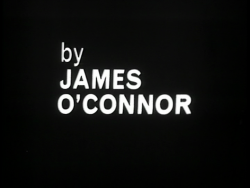
<p><img loading="lazy" decoding="async" src="http://www.britishtelevisiondrama.org.uk/wp-content/uploads/2017/03/BTVD_3CS_0-e1490902955604.png" alt="" width="250" height="188" class="alignleft size-full wp-image-7003" />James O’Connor – often known as Jimmy O’Connor – wrote a number of popular and successful television plays in the 1960s and early ‘70s, regularly collaborating with director Ken Loach. He had an unusual background for a television dramatist. He was formerly a career criminal who had turned to writing while serving a life sentence for murder, having narrowly avoided being hanged. </p>{"id":6983,"date":"2017-03-31T06:00:59","date_gmt":"2017-03-31T05:00:59","guid":{"rendered":"http:\/\/www.britishtelevisiondrama.org.uk\/?p=6983"},"modified":"2024-08-30T11:35:43","modified_gmt":"2024-08-30T10:35:43","slug":"james-o-connor","status":"publish","type":"post","link":"http:\/\/www.britishtelevisiondrama.org.uk\/?p=6983","title":{"rendered":"James O&#8217;Connor"},"content":{"rendered":"<h4>by OLIVER WAKE<\/h4>\n<p><img loading=\"lazy\" decoding=\"async\" src=\"http:\/\/www.britishtelevisiondrama.org.uk\/wp-content\/uploads\/2017\/03\/BTVD_3CS_0-e1490902955604.png\" alt=\"\" width=\"250\" height=\"188\" class=\"alignleft size-full wp-image-7003\" \/>James O\u2019Connor \u2013 often known as Jimmy O\u2019Connor \u2013 wrote a number of popular and successful television plays in the 1960s and early \u201870s, regularly collaborating with director Ken Loach. He had an unusual background for a television dramatist. He was formerly a career criminal who had turned to writing while serving a life sentence for murder, having narrowly avoided being hanged. <\/p>\n<p><!--more--><\/p>\n<p><strong>Early life<\/strong><\/p>\n<p>O\u2019Connor\u2019s life story encompasses the sensitive subjects of deprivation, domestic abuse and criminality which would not normally be appropriate topics for this website. We do not usually make personal biography a focus of our coverage, but O\u2019Connor himself emphasised how his early experiences informed his television plays, as did contemporary reactions to his work, and it is important for us to understand his background to understand his work. The following account of O\u2019Connor\u2019s life before becoming a television playwright is drawn from O\u2019Connor\u2019s autobiography <em>The Eleventh Commandment<\/em>.<sup id=\"rf1-6983\"><a href=\"#fn1-6983\" title=\"Jimmy O\u2019Connor, &lt;em&gt;The Eleventh Commandment&lt;\/em&gt; (St Peter Port: Seagull S. A., 1976). For curious readers, the eponymous Commandment is \u201cThou Shalt Not Plead Guilty\u201d.\" rel=\"footnote\">1<\/a><\/sup> Aside from the basic details of his murder conviction, reprieve and release, it is not possible to independently corroborate any of his reported life story. In view of O\u2019Connor\u2019s early life of dishonesty and later career as a storyteller, one may be inclined to wonder how far his account can be trusted to be accurate. We leave this for the reader to determine for themselves.<\/p>\n<p>James O\u2019Connor was born in London on 20 May 1918 to Irish parents. His father was unemployed but made ends meet as a small-time thief and conman. His mother worked as a prostitute. According to O\u2019Connor\u2019s account, his father was a violent man, regularly beating his wife, causing resentment from the young O\u2019Connor. O\u2019Connor reports that once he ran away from home and lived on the streets after his father lunged at him with a knife in response to the suggestion that he get a job. As a child O\u2019Connor turned to stealing to put food on the family table. Later, as a teenager, he mixed stealing with spells of legitimate work, working as a barrow boy and on the railway, although the exact chronology is a little unclear in O\u2019Connor\u2019s telling. As he got older, he started to work in gangs and the scale of his thefts increased. One was a smash-and-grab raid on a jeweller\u2019s shop with a pony and cart for the getaway. At 15 O\u2019Connor had his first spell in prison and from then on had regular appearances in court. He would be fined or, when he couldn\u2019t pay, detained for short spells.<\/p>\n<p>On the outbreak of war in 1939, O\u2019Connor joined the army with the express intention of using it as an opportunity to further his criminal career. He joined the Expeditionary Forces Institute, which provided NAAFI services in combat theatres. A bribe hastened his despatch to France where, as a corporal, later a sergeant, he was in charge of a tobacco and spirits warehouse, from which he systematically stole, resulting in a personal fortune of \u00a320,000 in cash. He only stopped stealing when he recognised a newcomer as an undercover CID man. As the Germans advanced through France, O\u2019Connor found himself caught up in the frantic scramble of the British retreat. A small shrapnel wound turned septic and he was given priority for evacuation from the west coast port of St Nazaire, some two weeks after the more famous evacuation from Dunkirk. O\u2019Connor boarded the <em>Lancastria<\/em>, which was soon attacked and sunk with an enormous loss of life. The <em>Lancastria<\/em>\u2019s sinking was, and remains, Britain\u2019s greatest maritime disaster, but news of the loss was supressed in Britain.<sup id=\"rf2-6983\"><a href=\"#fn2-6983\" title=\"For background on the &lt;em&gt;Lancastria&lt;\/em&gt;\u2019s sinking, see Anonymous, &lt;a href=&quot;http:\/\/www.bbc.co.uk\/history\/worldwars\/wwtwo\/lancastria_01.shtml&quot; target=&quot;_self&quot; rel=&quot;noopener&quot;&gt;\u2018The \u2018Lancastria\u2019 &#8211; a Secret Sacrifice in World War Two\u2019, &lt;em&gt;BBC History&lt;\/em&gt; website&lt;\/a&gt; (accessed February 2017).\" rel=\"footnote\">2<\/a><\/sup> O\u2019Connor was lucky, holding onto a raft until he was rescued by the Cambridgeshire which returned him to England. The bulk of his loot was lost at sea. When his superiors learnt of his criminal record, O\u2019Connor was discharged from the army.<\/p>\n<p>In civilian life, O\u2019Connor returned to crime, notably a campaign of burgling jewellers across southern England. He spent the second half of 1941 in prison following a further conviction for theft. On his day of release in January 1942 he was rearrested and charged with murder. He was accused, along with another man, of killing a coal merchant during a robbery in Kilburn the previous April. O\u2019Connor maintained that he had an alibi and that a stolen watch that supposedly connected him to the robbery actually came from a burglary he\u2019d committed in Bath.<\/p>\n<p>According to O\u2019Connor, his trial was perfunctory, with a poor performance from the defence counsel. Whereas his co-accused was acquitted, O\u2019Connor was convicted and sentenced to death. He spent the next eight weeks in the condemned cell at Pentonville prison with the constant presence of prison guards, as procedure decreed. He was confirmed in the Catholic faith in the blitz-damaged prison chapel. When his appeal was heard, O\u2019Connor became confident of acquittal as one of the judges questioned some of the prosecution\u2019s evidence. It was therefore all the more shocking to him that the appeal failed. He was scheduled to hang on his 24th birthday.<\/p>\n<p>O\u2019Connor wrote to the Home Secretary putting the facts of his case as he knew them. In particular, he disputed the evidence of a witness who, O\u2019Connor claims, was the receiver of stolen goods to whom he had given the allegedly incriminating watch. O\u2019Connor reported in his memoir that many years later this witness admitted his evidence had been invented after he was coerced by a corrupt detective. Just a few days before his execution the Home Secretary granted a reprieve, commuting O\u2019Connor\u2019s sentence to life imprisonment.<\/p>\n<p>O\u2019Connor subsequently spent nearly 11 years in various prisons, including Dartmoor where he found conditions harsh and prisoners mistreated, and the more enlightened Parkhurst. He lived among other reprieved inmates and violent offenders, learning of their backgrounds and criminal careers. He studied philosophy and psychology from books and turned to his own writing. He took a correspondence course in drama from an Oxford college and wrote short plays to pass the time. The tutor said his writing was too violent.<\/p>\n<p>When he was released on licence in 1952, O\u2019Connor set about trying to prove that he was innocent of murder and drew newspaper interest.<sup id=\"rf3-6983\"><a href=\"#fn3-6983\" title=\"See for example Anonymous, \u2018Freed Man Goes to Scotland Yard\u2019, &lt;em&gt;The &lt;\/em&gt; [Dundee] &lt;em&gt;Courier and Advertiser&lt;\/em&gt;, 17 March 1952, p. 3.\" rel=\"footnote\">3<\/a><\/sup> O\u2019Connor later claimed that when he confronted the detective who had been responsible for the case against him, he was told to drop the matter or he\u2019d be framed once more, with his solicitor (who had been listening in) making a sworn statement of the accuracy of this report. O\u2019Connor used his knowledge of crime and criminals to become a newspaper reporter for the weekly <em>Empire News<\/em>. On one awkward occasion he was introduced socially to Albert Pierrepoint, Britain\u2019s chief hangman, who would have been the one to execute him had he not been reprieved. O\u2019Connor reports that he later interviewed Pierrepoint about his unusual career.<\/p>\n<p><strong>Television<\/strong><\/p>\n<p>O\u2019Connor reported that in the mid-1950s he provided the dialogue for a BBC drama documentary about prisoners called <em>Beyond the Gate<\/em>, but had to go uncredited because his name would have been a barrier to shooting in a real prison. I can find no trace of this production but if it was broadcast as a documentary or as part of a current affairs series it would be harder to trace than a drama.<sup id=\"rf4-6983\"><a href=\"#fn4-6983\" title=\"If anyone can provide any further details of &lt;em&gt;Beyond the Gate&lt;\/em&gt;, please get in touch via the editorial address. (Thanks to the impressive work of the Kaleidoscope archive television organisation, British television drama has been exhaustively documented, but other genres have not yet had the same treatment.) \" rel=\"footnote\">4<\/a><\/sup> Later he opened a used cars dealership, but gave it up when he sold his first full television play to the BBC. He also met and married the upper-class barrister Nemone Lethbridge. The marriage had to be kept secret because of Lethbridge\u2019s profession and, indeed, O\u2019Connor reports that when the secret was eventually revealed she was made to give up practicing by the head of her chambers. <\/p>\n<p><strong><em>3 Clear Sundays<\/em><\/strong><\/p>\n<p><img loading=\"lazy\" decoding=\"async\" src=\"http:\/\/www.britishtelevisiondrama.org.uk\/wp-content\/uploads\/2017\/03\/BTVD_3CS_1-e1490902972649.png\" alt=\"\" width=\"250\" height=\"188\" class=\"alignleft size-full wp-image-7004\" \/>O\u2019Connor\u2019s television play <em>3 Clear Sundays<\/em> was named after the minimum period that the Home Office dictated must elapse between a sentence of death and the condemned man (or woman) being executed.<sup id=\"rf5-6983\"><a href=\"#fn5-6983\" title=\"&lt;em&gt;The Wednesday Play&lt;\/em&gt;: \u20183 Clear Sundays\u2019, BBC1, tx. 7 April 1965.\" rel=\"footnote\">5<\/a><\/sup> It was the story of young barrow boy Danny Lee who finds himself sentenced to a short spell in prison after being provoked into punching a police detective. In prison, two gangsters connive to have Danny allocated to their cell, where they take advantage of his naivety. They convince him to attack a warder: the plan is that they will have their sentences cut for intervening to save the officer, while Danny will have a substantial cash reward for his part upon his release. His concern for his pregnant girlfriend Rosa\u2019s financial needs compels him to cooperate. The plan goes wrong when Danny\u2019s blow to the officer\u2019s head kills him. Danny is convicted of murder, sentenced to death and hanged.<\/p>\n<p>Unsurprisingly, O\u2019Connor paints convincing portraits of prison life, the criminals Danny encounters and the horror of life in the condemned cell. But it would be a mistake to see <em>3 Clear Sundays<\/em> as autobiographical in anything but the loosest sense. Although Danny Lee hails from a family of petty criminals, as O\u2019Connor did, he is honest and hardworking, unlike O\u2019Connor, who was already a well-established crook long before his murder conviction. One hot-headed action results in Danny\u2019s imprisonment and it is easy to imagine that he would have continued a law-abiding life after his release, had it not been for the gangsters who exploit his anxieties about his pregnant girlfriend.<\/p>\n<p>Interestingly, O\u2019Connor himself is represented in the drama as the minor character Michael Carney. Carney\u2019s background, including a murder conviction and eleventh-hour reprieve, exactly mirrors that of O\u2019Connor. Carney appears only briefly in two scenes and has no role in the plot, but his presence serves to highlight the uncertainty and frustration of a reprieved convict who has no confirmed release date to look forward to, a situation O\u2019Connor had experienced for many years. These scenes also illustrate how long-serving and well-behaved prisoners, particularly those reprieved from execution, can become almost heroic figures within the penal system, being awarded a measure of respect and esteem even by senior prison staff.<\/p>\n<p><img loading=\"lazy\" decoding=\"async\" src=\"http:\/\/www.britishtelevisiondrama.org.uk\/wp-content\/uploads\/2017\/03\/BTVD_3CS-2-e1490903031402.png\" alt=\"\" width=\"250\" height=\"188\" class=\"alignleft size-full wp-image-7005\" \/>Despite his accidental killing of the warder, Danny (as played by Tony Selby) is portrayed as a decent and likeable man. This is essential to the thrust of O\u2019Connor\u2019s play: to make the point as plainly as possibly that capital punishment is brutal and needless. The effect would have been much diminished had Danny been portrayed as a hardened, callous criminal. Danny\u2019s character is contrasted with that of his mother, Britania (\u2018Britty\u2019), a \u2018fence\u2019 for stolen goods who sends her other sons out to steal to order. Her venality is sharply highlighted by the script, with her attachment to Danny being articulated in terms of money. \u201cHe\u2019s always been a good son to his mum and given me money,\u201d she says. Britty opposes the idea of Danny marrying the pregnant Rosa until she learns that Rosa\u2019s father has promised Rosa money upon marriage to a \u201cworker\u201d, whereupon Britty becomes very affectionate towards her. Later Britty is \u201clooking after\u201d money paid to Rosa by a journalist. After Danny is condemned for murder, Britty bemoans that this manner of death means that she will forfeit the life insurance money that would otherwise have been her due, which O\u2019Connor reported was his own mother\u2019s concern when he was condemned.<\/p>\n<p><em>3 Clear Sundays<\/em> was made for the BBC\u2019s drama anthology series <em>The Wednesday Play<\/em> (1964-70), which at this time was experimenting with form, for example mixing storytelling techniques such as narration, animation and montage. Here, folk songs with new lyrics (by Lethbridge) are used between scenes, hinting at a mythic quality to the story with Danny as an archetypal tragic folk hero. The drama ends on a documentary note with three captions: two of the captions quote from evidence heard in the 1950 Royal Commission on Capital Punishment, the other from Arthur Koestler\u2019s <em>Reflections on Hanging<\/em>. All three document the sometimes-horrific practicalities of hanging. Ken Loach\u2019s direction otherwise favours a highly naturalistic aesthetic, giving the play an intriguing mix of styles. Here Loach employs a handful of actors with whom he would go on to work repeatedly, including in future O\u2019Connor dramas.<\/p>\n<p><em>The Times<\/em> noted the play\u2019s \u201ctremendous impact\u201d.<sup id=\"rf6-6983\"><a href=\"#fn6-6983\" title=\"Anonymous, \u2018Lucid Advance to Terror\u2019, &lt;em&gt;The Times&lt;\/em&gt;, 8 April 1965, p. 6.\" rel=\"footnote\">6<\/a><\/sup> Some viewers wrote to newspapers to comment that the play had changed their view on hanging.<sup id=\"rf7-6983\"><a href=\"#fn7-6983\" title=\"See MK MacMurraugh-Kavanagh, \u2018&#8221;Drama&#8221; into &#8220;news&#8221;: strategies of intervention in &#8220;The Wednesday Play&#8221;\u2019, &lt;em&gt;Screen&lt;\/em&gt;, 38:3, Autumn 1997, p. 251.\" rel=\"footnote\">7<\/a><\/sup> One, who wrote that they were \u201cundecided about capital punishment\u201d before seeing the play, was now \u201cconvinced that this barbaric act of ending human life is better abolished.\u201d<sup id=\"rf8-6983\"><a href=\"#fn8-6983\" title=\"Letter published in &lt;em&gt;The Daily Mirror&lt;\/em&gt;, quoted in ibid.\" rel=\"footnote\">8<\/a><\/sup> However, O\u2019Connor\u2019s later suggestion in his memoir that the play had actually played a role in the later abolition of capital punishment in Britain is fanciful. This was already looking likely in view of the moratorium in effect before the play was broadcast and contemporary surveys show that public opinion on hanging changed very little across the decade (and, indeed, was never less than 61% in favour of capital punishment).<sup id=\"rf9-6983\"><a href=\"#fn9-6983\" title=\"Statistics taken from ibid.\" rel=\"footnote\">9<\/a><\/sup><\/p>\n<p><em><strong>Tap on the Shoulder<\/strong><\/em><\/p>\n<p>Although written first, <em>3 Clear Sundays<\/em> was actually the second of O\u2019Connor\u2019s plays to be screened. His next play, <em>Tap on the Shoulder<\/em>, was chosen to open the first full series of <em>The Wednesday Play<\/em> (in which <em>3 Clear Sundays<\/em> was also shown) in 1965.\u201d<sup id=\"rf10-6983\"><a href=\"#fn10-6983\" title=\"&lt;em&gt;The Wednesday Play&lt;\/em&gt;: \u2018Tap on the Shoulder\u2019, BBC1, tx. 6 January 1965.\" rel=\"footnote\">10<\/a><\/sup><\/p>\n<p>A group of professional petty criminals nurture the friendship of Archibald Cooper, a man who has made himself a respectable millionaire with a campaign of bribery, dishonesty and conspicuous support of respectable causes. During the course of the play he learns he is to be knighted in recognition of his charitable work. Using Cooper\u2019s land, the gang are able to access the temporary strong room on an unbuilt airport terminal in Southampton which holds gold bullion. They use the local Hunt ball, hosted by Cooper in his role as a pillar of the community, as their cover. They go from hobnobbing in evening dress with the landed gentry &#8211; and local police Chief Inspector, who sings Cooper\u2019s praises &#8211; to conducting a highly professional bullion raid, and back again before the alarm is raised. Cooper\u2019s friendly relations with the police enable the gang (carrying the stolen gold) to pass through police checkpoints unsearched the next morning.<\/p>\n<p>O\u2019Connor uses the gold bullion heist as the device through which to expose the corruption and hypocrisy he saw practised by apparently respectable society. Throughout the play O\u2019Connor depicts the ways, both large and small, in which apparently respectable members of the community are involved in some form of corruption. At the start of the play, a publican uses his masonic connections to make an arrangement with the police to allow some after-hours drinking, and towards the end he is shown donating generously to a benefit in aid of the family of a murdered policeman. Meanwhile, blind eyes are turned to Cooper\u2019s more nefarious activities while he gives generously to charity and the Conservative party. The eponymous \u2018tap on the shoulder\u2019 is a reference to both the policeman\u2019s touch of the collar when making an arrest and the monarch\u2019s touch with a sword when bestowing an honour. O\u2019Connor is wryly suggesting that the two do not necessarily exist in such separate social worlds as many would like to believe. This gives the play a very contemporary flavour, aligning it with the decline of deference to, and respect for, established authorities and those in positions of privilege, as came to be associated with the satire boom and counter-culture of the early to mid-1960s.<\/p>\n<p>The play\u2019s plot may have been partly inspired by the \u2018Great Train Robbery\u2019 of 1963, or at least by the public\u2019s interest in similar stories of audacious criminal raids in the robbery\u2019s aftermath. In <em>Tap on the Shoulder<\/em>, the gang appear to get away with their crime, as the train robbers initially seemed to. However, in a concluding scene of them relaxing at a European resort, one of the robbers reports having spotted a known informant. This, and camera shots highlighting the baleful presence of a waiter within earshot, suggest that, like the train robbers, these criminals may also later be brought to justice, if only as a result of the reward on offer. The possibility that their \u2018traditional\u2019 crime may lead to their downfall contrasts the gang with Cooper, who is depicted as continuing to prosper and receiving his knighthood, to suggest that white collar crime is really the crime of choice for the criminal who wishes to safely profit by their criminality. It is a cynical and subversive message that was typical of O\u2019Connor\u2019s outlook and of <em>The Wednesday Play<\/em>\u2019s remit at this time to be deliberately provocative.<\/p>\n<p>The above description misses the crucial point that, despite all its biting social comment, the play is also a comedy. O\u2019Connor\u2019s dialogue is witty and the energetic playing of Lee Montague as the larger-than-life Cooper sometimes gives the impression of farce. However, the drama also revels in a mix of styles, and as directed by Loach, the central scene of the bullion raid itself is highly suspenseful, akin to what might be expected of a more conventional crime drama.<\/p>\n<p><em><strong>The Coming Out Party<\/strong><\/em><\/p>\n<p>O\u2019Connor\u2019s next play, <em>The Coming Out Party<\/em> is an anomaly in his career, concerning itself with more with a child and the effect his parents\u2019 criminal lifestyle has on him than on the criminals themselves.<sup id=\"rf11-6983\"><a href=\"#fn11-6983\" title=\"&lt;em&gt;The Wednesday Play&lt;\/em&gt;: \u2018The Coming Out Party\u2019, BBC1, tx. 22 December 1965.\" rel=\"footnote\">11<\/a><\/sup>  12-year-old Timothy Odell lives with his grandparents in west London, having been told that his father (known as \u2018Ricketts\u2019) is at sea and his mother (Rosie) on holiday, whereas in reality both are in prison for petty crimes. He is known as \u2018Scimpy\u2019 thanks to his small size upon his birth during one his mother\u2019s earlier spells of detention. When he overhears his grandmother (herself a \u2018fence\u2019 for stolen goods) referring to his mother being in prison, he sets out across London to visit her.<\/p>\n<p>On being told by a policeman that prison is for bad people, Scimpy steals a charity box in the hope of being reunited with his mother in prison. Instead he is sent to a remand home, from which he escapes late at night with another boy with more experience of such institutions. The next day Scimpy completes his mission to reach the prison, only to learn that his mother was released earlier that day. His father meanwhile has been allowed 24 hours\u2019 \u2018respite\u2019 release with the aim of helping his family back onto a legal path. A \u2018coming out\u2019 party is thrown for Rosie at her local pub and she is delighted to be reunited (albeit temporarily) with Ricketts. When Scimpy turns up and is spotted by a detective who has been searching for him since his escape, a large-scale brawl breaks out. Ricketts is returned to prison. Shortly afterwards Rosie is again convicted and imprisoned, and again she is pregnant. Under the impression his grandparents will be a good influence, social services return Scimpy to their care only for him to run away and hitch a lift in a further attempt to find his mother, as the play ends.<\/p>\n<p>The story clearly has autobiographical elements for O\u2019Connor, whose own petty criminality as a child emerged from a family background of criminality. However, Scimpy is an idealised caricature of a convict\u2019s child; he is self-reliant and bold but without malice, his low-level criminality occurring only as means to be reunited with his mother. O\u2019Connor highlights the seeming near-inevitability of the children of criminals also turning to crime. One error of judgement \u2013 as a young child \u2013 may condemn Scimpy to the sadly familiar cycle of institutionalisation and criminality. With the police and social services sending Scimpy to a remand home, where he falls in with an experienced delinquent, and then back to the dubious influence of his grandparents (and presumably later his parents if they ever manage to stay out of prison), O\u2019Connor seems to be suggesting that if Scimpy can somehow avoid a life of petty crime it will be no thanks to those who think they\u2019re helping him.<\/p>\n<p>The play is not without a touch of O\u2019Connor\u2019s usual satire and irony. It opens with a nun pressing school children for donations for the benefit of deprived children overseas, seemingly unaware of the poverty and deprivation of some of her own charges. Later, when his new delinquent companion has affected their overnight stay in a closed toyshop and they make free with its stock (including, improbably, a fully edible banquet), Scimpy declares: \u201cI\u2019ve never \u2018ad it so good\u201d, mimicking prime minister Harold Macmillan\u2019s famous 1957 celebration of Britain\u2019s prosperity. There is also plenty of comedy in the chaotic lives of Rosie and Ricketts, particularly in the telling of the latter\u2019s inept criminal career. As in <em>3 Clear Sundays<\/em>, the occasional use of folk songs on the soundtrack punctures the otherwise highly naturalistic aesthetic (indeed, some scenes, such as the late one featuring the social workers, look as if they\u2019ve been improvised).<\/p>\n<p><em><strong>Profile of a Gentleman<\/strong><\/em><\/p>\n<p>Based around a bank robbery, 1967\u2019s <em>Profile of a Gentleman<\/em> was a return to more familiar territory for O\u2019Connor.<sup id=\"rf12-6983\"><a href=\"#fn12-6983\" title=\"&lt;em&gt;The Wednesday Play&lt;\/em&gt;: \u2018Profile of a Gentleman\u2019, BBC1, tx. 22 November 1967.\" rel=\"footnote\">12<\/a><\/sup> Sadly, no complete copy of the play survives in the archives, though its film sequences do exist in isolation. The following remarks therefore reflect an incomplete viewing of the play and the information that can be gleaned from contemporary press notices.<\/p>\n<p>The play opens with Johnny May and his gang of petty criminals being arrested after using a minor con trick to affect a pickpocketing. Later, immediately before his release from prison, May is given a message to deliver to the son of another inmate. May plans to \u2018go straight\u2019 after one big \u2018tickle\u2019. He delivers the message to Eddie, the convict\u2019s son, and learns from him of \u2018Codshead\u2019, a \u2018respectable\u2019 criminal in the mould of Archibald Cooper, owner of a country mansion and the head of a public company. He is keeping some two hundred thousand pounds in cash, to avoid paying tax on it, in deed boxes in a Belgravia bank vault. The pair form a gang and set out to steal it, using, amongst other subterfuges, a van with temporary GPO markings as cover to access a manhole from which they can (if my reading of the incomplete play is accurate) interfere with the bank\u2019s security systems. Although the heist is a success, Codshead\u2019s gang catches up with May\u2019s. A street fight breaks out between them, and the police are called by local residents. During the melee a shot is fired by a mysterious lurking figure, killing one of the robbers. Both gangs flee as the police arrive, leaving behind the dead body, on which the police find details of a Swiss bank account (presumably the whereabouts or destination of the stolen money).<\/p>\n<p>Based on the available evidence, <em>Profile of a Gentleman<\/em> has a lot in common with <em>Tap on the Shoulder<\/em> but appears to lack the level of comedy and social satire that made that play so interesting. <em>Profile of a Gentleman<\/em> seems to be a much more conventional crime drama, concentrating on gangland conflict and the logistics of the heist. This view is supported by a contemporary review in <em>The Times<\/em>. Michael Billington calls O\u2019Connor \u201ctelevision\u2019s laureate of the underworld\u201d, but nevertheless found the play \u201clittle more than a routine excursion into over-familiar territory\u2026 My grouse is that Mr. O\u2019Connor told us a lot about the mechanics of robbery but not nearly enough about the robbers themselves.\u201d<sup id=\"rf13-6983\"><a href=\"#fn13-6983\" title=\"Michael Billington, \u2018Not enough lid off the robbery\u2019, &lt;em&gt;The Times&lt;\/em&gt;, 23 November 1967, p. 8.\" rel=\"footnote\">13<\/a><\/sup><\/p>\n<p>Somewhat confusingly for any viewer familiar with O\u2019Connor\u2019s work, characters or character names recur from his previous plays but they are recast whilst actors from his earlier work (including those who previously played the characters in question) return in different roles. For example, Johnny May is here played by Lee Montague while George Sewell, who played Johnny in <em>3 Clear Sundays<\/em>, appears as Eddie. It\u2019s not even clear if this Johnny May is supposed to be the same character as previously, since here he\u2019s depicted going to prison for a very petty street crime, whereas in <em>3 Clear Sundays<\/em> he had a reputation as \u201cking of the underworld\u201d, even if some of his talk of his vast personal wealth may have been a ruse.<\/p>\n<p><strong><em>Thirty Stretch<\/em><\/strong><\/p>\n<p><em>Thirty Stretch<\/em>, in ITV company Rediffusion\u2019s short anthology series <em>The Gamblers<\/em> (1967-68), is O\u2019Connor\u2019s only known work for commercial television.<sup id=\"rf14-6983\"><a href=\"#fn14-6983\" title=\"&lt;em&gt;The Gamblers&lt;\/em&gt;: \u2018Thirty Stretch\u2019, ITV, tx. 15 December 1967.\" rel=\"footnote\">14<\/a><\/sup> Although a negative is held in the BFI archive, there is no positive print available for research purposes, so all the following comment on this pay is drawn from contemporary press accounts.<\/p>\n<p>Patsy Fagan is sentenced to thirty years&#8217; imprisonment, apparently unjustly, for his alleged role in a bullion heist. With his wife threatening to leave him for another man while he\u2019s away, Fagan cannot face his thirty years\u2019 detention. In prison he is reunited with his brother and other acquaintances who have hatched a plan for his escape. Fagan hides in a boiler that has been emptied for cleaning, aiming to sit out the extensive search for him by the prison authorities. However, after Fagan has been hiding for three days, another inmate who is not aware of the escape attempt or Fagan\u2019s whereabouts refills the boiler and Fagan is killed before his comrades can get help to him.<\/p>\n<p>Contemporary accounts suggest that this action was interspersed with mock interviews with the prison personnel, giving the play a documentary aesthetic. As with <em>Profile of a Gentleman<\/em>, O\u2019Connor reuses a character or perhaps just a character name. Patsy Fagan (here played by John Bindon) was one of the robbers in <em>Tap on the Shoulder<\/em> (where he was played by George Tovey) and the offence he\u2019s imprisoned for here \u2013 a bullion robbery \u2013 sounds like the one he committed in the earlier play, but contemporary reviews of <em>Thirty Stretch<\/em> give the impression he was convicted for a crime he didn\u2019t commit, so as with Johnny May before him, it\u2019s unclear if he should be taken to be the same character or a new one by the same name.<\/p>\n<p><em>The Stage and Television Today<\/em> admired some aspects of the play, mainly in the technical arena, but found the script less impressive. Their critic Angela Moreton noted how \u201cThe camera angles and the editing gave the play dash and pace, and lifted it visually out of the rut.\u201d<sup id=\"rf15-6983\"><a href=\"#fn15-6983\" title=\"Angela Moreton, \u2018Just didn\u2019t seem believable\u2019, &lt;em&gt;The Stage and Television Today&lt;\/em&gt;, 7 March 1968, p. 14.\" rel=\"footnote\">15<\/a><\/sup> Moreton found that despite some \u201cgripping patches\u201d and a dramatic climax, \u201cthe characters just did not seem believable.\u201d She felt \u201cthe play had two great weaknesses. First it slipped all too often into confusion, and became difficult to follow. Secondly, it stretched one\u2019s credulity. The prisoners were too lily-white to be true, all the villainy lay on the part of \u201csociety\u201d, the case was grossly over-stated.\u201d<\/p>\n<p><strong><em>Her Majesty\u2019s Pleasure<\/em><\/strong><\/p>\n<p><em>Her Majesty\u2019s Pleasure<\/em>, for <em>The Wednesday Play<\/em>\u2019s successor <em>Play for Today<\/em> (1970-1984), was a black comedy of life in a secure unit for criminally insane killers who had been found unfit to plead at trial.<sup id=\"rf16-6983\"><a href=\"#fn16-6983\" title=\"&lt;em&gt;Play for Today&lt;\/em&gt;: \u2018Majesty\u2019s Pleasure\u2019, BBC1, tx. 25 October 1973.\" rel=\"footnote\">16<\/a><\/sup> Although seemingly plotless for a large part of its duration, the play revolves around the annual pantomime staged by the inmates (complicated by the last minute escape of \u2018Mother Bear\u2019 for their upcoming Goldilocks production), the arrival of a new young inmate, and long-standing prisoner Woodbine\u2019s personal quest to prove that a man considered unfit to plead can get away with any crime.<\/p>\n<p>Woodbine manipulates events to cause another prisoner, the backward and aggressive \u2018Jumbo\u2019, to murder fellow inmate Robbie. However, when the preliminary enquiry into the death hears evidence from all the prisoners on the wing, they accuse Woodbine of the crime. The other inmates later learn that Woodbine has been found no longer mentally unfit to plead and that he will therefore be tried for murder. The play concludes with the return of the recaptured \u2018Mother Bear\u2019 (who has murdered twice more during his brief liberty) and the staging of Goldilocks. The new young prisoner, \u2018Arsenic\u2019, who had previously poisoned his parents and sister, has poisoned the porridge eaten during the performance and three of the prisoners fall dead.<\/p>\n<p><em>Her Majesty\u2019s Pleasure<\/em> is a strange and grotesque piece, with less of a coherent narrative or argument than seen in O\u2019Connor\u2019s other work. At times it appears to be an outlet for O\u2019Connor\u2019s accumulated criticisms of the British justice system and his myriad experiences of violent criminals from his years in prison. Notably, early in the play, each of the inmates gives an account of the acts which resulted in their incarceration, and these directly mirror those of genuine prisoners encountered by O\u2019Connor and described in <em>The Eleventh Commandment<\/em>. Most strikingly, Jumbo reports having committed the real-world murder in Kilburn (including correctly naming the victim) for which O\u2019Connor was convicted and sentenced to death, and that another man is imprisoned for it. Although few viewers would have been aware of the personal real-world connection, to the informed viewer it is startlingly incongruous and in somewhat dubious taste.<\/p>\n<p>Despite <em>The Eleventh Commandment<\/em> listing more plays to the author\u2019s name (presumably unproduced or incomplete scripts), O\u2019Connor does not appear to have had any further television productions. It\u2019s possible he spent time working on projects for the cinema. In 1965, a press report suggested that he was writing a screenplay for a Columbia Pictures film based on the Great Train Robbery.<sup id=\"rf17-6983\"><a href=\"#fn17-6983\" title=\"The film is reported in: John Montgomery, \u2018Film Studio News\u2019, &lt;em&gt;The Stage and Television Today&lt;\/em&gt;, 20 May 1965, p. 14.\" rel=\"footnote\">17<\/a><\/sup> In his memoir O\u2019Connor claimed to have been acquainted with at least one of the train robbers. This was an appropriate time for O\u2019Connor to turn to the film industry, with British crime films enjoying popular success. However, it doesn\u2019t appear that anything reached fruition unless O\u2019Connor\u2019s involvement was well disguised. If nothing else, it\u2019s easy to imagine O\u2019Connor making the most of script development investments.<\/p>\n<p>O\u2019Connor\u2019s later life was turbulent. According to Andrew Weir, writing in <em>The Guardian<\/em>, \u201cO&#8217;Connor could never shake off completely the despair and deprivation of his past, and he began to drink heavily and take out his reverses on Lethbridge and the children.\u201d<sup id=\"rf18-6983\"><a href=\"#fn18-6983\" title=\"Andrew Weir, &lt;a href=&quot;https:\/\/www.theguardian.com\/news\/2001\/oct\/03\/guardianobituaries&quot; target=&quot;_self&quot; rel=&quot;noopener&quot;&gt;\u2018Jimmy O\u2019Connor\u2019, &lt;em&gt;The Guardian&lt;\/em&gt;, 3 October 2001&lt;\/a&gt; (accessed electronically February 2017).\" rel=\"footnote\">18<\/a><\/sup> Lethbridge divorced him in 1973.<sup id=\"rf19-6983\"><a href=\"#fn19-6983\" title=\"Anonymous, \u2018Divorce decree for playwright\u2019, &lt;em&gt;The Times&lt;\/em&gt;, 31 July 1973, p. 3.\" rel=\"footnote\">19<\/a><\/sup> She had herself become a distinguished television playwright and O\u2019Connor claimed in <em>The Eleventh Commandment<\/em> that her drama <em>Baby Blues<\/em> contained elements based on their marriage,<sup id=\"rf20-6983\"><a href=\"#fn20-6983\" title=\"&lt;em&gt;Play for Today&lt;\/em&gt;: \u2018Baby Blues\u2019, BBC1, tx. 6 December 1973.\" rel=\"footnote\">20<\/a><\/sup> with him \u201cportrayed as a drunken husband.\u201d<sup id=\"rf21-6983\"><a href=\"#fn21-6983\" title=\"O\u2019Connor, &lt;em&gt;The Eleventh Commandment&lt;\/em&gt;, p. 190.\" rel=\"footnote\">21<\/a><\/sup> Nevertheless, when O\u2019Connor later suffered a series of strokes, Lethbridge helped care for him. He died in London in 2001.<\/p>\n<p>Because he wrote only a handful of television plays, O\u2019Connor\u2019s importance is easily overlooked. He came to television at exactly the right moment, offering a perspective entirely alien to the predominantly middle-class and respectable practitioners of the medium so far, just as such fresh voices were being sought for the more contemporary and determinedly controversial drama demanded of the mid-1960s. No other dramatist could write with personal insight about such subjects as life in the condemned cell or as part of the criminal underworld, and with his plays O\u2019Connor widened the sometimes-parochial horizons of the medium while highlighting such significant social problems as the death penalty and the rise of white collar crime.<\/p>\n<p>\u00a9 Oliver Wake<\/p>\n<p><em>With thanks to the British Film Institute for making Her Majesty\u2019s Pleasure and the surviving parts of Profile of a Gentleman available for viewing via their research viewings service.<\/p>\n<p>Originally posted: 31 March 2017.<br \/>\nUpdates:<br \/>\n1 April 2017: minor corrections to expression.<br \/>\n12 April 2017: deleted extraneous sentence caused by previous corrections but wrongly left in place.<\/em><\/p>\n<p><!-- Start of StatCounter Code --><\/p>\n<p><script type=\"text\/javascript\">\nvar sc_project=5750652; \nvar sc_invisible=1; \nvar sc_partition=68; \nvar sc_click_stat=1; \nvar sc_security=\"6dd1aa39\"; \n<\/script><\/p>\n<p><script type=\"text\/javascript\" src=\"http:\/\/www.statcounter.com\/counter\/counter.js\"><\/script><noscript>&lt;br \/&gt;<br \/>\n&lt;div&lt;br &gt;&lt;\/div&gt;<br \/>\nclass=&#8221;statcounter&#8221;&gt;&lt;a title=&#8221;wordpress stats &#8220;&lt;br &gt;&lt;\/a&gt;&lt;br \/&gt;<br \/>\nhref=&#8221;http:\/\/www.statcounter.com\/wordpress.org\/&#8221;&lt;br \/&gt;&lt;br \/&gt;<br \/>\ntarget=&#8221;_blank&#8221;&gt;&lt;img class=&#8221;statcounter&#8221;&lt;br \/&gt;&lt;br \/&gt;<br \/>\nsrc=&#8221;http:\/\/c.statcounter.com\/5750652\/0\/6dd1aa39\/1\/&#8221;&lt;br \/&gt;&lt;br \/&gt;<br \/>\nalt=&#8221;wordpress stats &#8221; &gt;&lt;\/a&gt;&lt;\/div&gt;<br \/>\n&lt;p&gt;<\/noscript><\/p>\n<p><!-- End of StatCounter Code --><\/p>\n<hr class=\"footnotes\"><ol class=\"footnotes\" style=\"list-style-type:decimal\"><li id=\"fn1-6983\"><p >Jimmy O\u2019Connor, <em>The Eleventh Commandment<\/em> (St Peter Port: Seagull S. A., 1976). For curious readers, the eponymous Commandment is \u201cThou Shalt Not Plead Guilty\u201d.&nbsp;<a href=\"#rf1-6983\" class=\"backlink\" title=\"Return to footnote 1.\">&#8617;<\/a><\/p><\/li><li id=\"fn2-6983\"><p >For background on the <em>Lancastria<\/em>\u2019s sinking, see Anonymous, <a href=\"http:\/\/www.bbc.co.uk\/history\/worldwars\/wwtwo\/lancastria_01.shtml\" target=\"_self\" rel=\"noopener\">\u2018The \u2018Lancastria\u2019 &#8211; a Secret Sacrifice in World War Two\u2019, <em>BBC History<\/em> website<\/a> (accessed February 2017).&nbsp;<a href=\"#rf2-6983\" class=\"backlink\" title=\"Return to footnote 2.\">&#8617;<\/a><\/p><\/li><li id=\"fn3-6983\"><p >See for example Anonymous, \u2018Freed Man Goes to Scotland Yard\u2019, <em>The <\/em> [Dundee] <em>Courier and Advertiser<\/em>, 17 March 1952, p. 3.&nbsp;<a href=\"#rf3-6983\" class=\"backlink\" title=\"Return to footnote 3.\">&#8617;<\/a><\/p><\/li><li id=\"fn4-6983\"><p >If anyone can provide any further details of <em>Beyond the Gate<\/em>, please get in touch via the editorial address. (Thanks to the impressive work of the Kaleidoscope archive television organisation, British television drama has been exhaustively documented, but other genres have not yet had the same treatment.) &nbsp;<a href=\"#rf4-6983\" class=\"backlink\" title=\"Return to footnote 4.\">&#8617;<\/a><\/p><\/li><li id=\"fn5-6983\"><p ><em>The Wednesday Play<\/em>: \u20183 Clear Sundays\u2019, BBC1, tx. 7 April 1965.&nbsp;<a href=\"#rf5-6983\" class=\"backlink\" title=\"Return to footnote 5.\">&#8617;<\/a><\/p><\/li><li id=\"fn6-6983\"><p >Anonymous, \u2018Lucid Advance to Terror\u2019, <em>The Times<\/em>, 8 April 1965, p. 6.&nbsp;<a href=\"#rf6-6983\" class=\"backlink\" title=\"Return to footnote 6.\">&#8617;<\/a><\/p><\/li><li id=\"fn7-6983\"><p >See MK MacMurraugh-Kavanagh, \u2018&#8221;Drama&#8221; into &#8220;news&#8221;: strategies of intervention in &#8220;The Wednesday Play&#8221;\u2019, <em>Screen<\/em>, 38:3, Autumn 1997, p. 251.&nbsp;<a href=\"#rf7-6983\" class=\"backlink\" title=\"Return to footnote 7.\">&#8617;<\/a><\/p><\/li><li id=\"fn8-6983\"><p >Letter published in <em>The Daily Mirror<\/em>, quoted in ibid.&nbsp;<a href=\"#rf8-6983\" class=\"backlink\" title=\"Return to footnote 8.\">&#8617;<\/a><\/p><\/li><li id=\"fn9-6983\"><p >Statistics taken from ibid.&nbsp;<a href=\"#rf9-6983\" class=\"backlink\" title=\"Return to footnote 9.\">&#8617;<\/a><\/p><\/li><li id=\"fn10-6983\"><p ><em>The Wednesday Play<\/em>: \u2018Tap on the Shoulder\u2019, BBC1, tx. 6 January 1965.&nbsp;<a href=\"#rf10-6983\" class=\"backlink\" title=\"Return to footnote 10.\">&#8617;<\/a><\/p><\/li><li id=\"fn11-6983\"><p ><em>The Wednesday Play<\/em>: \u2018The Coming Out Party\u2019, BBC1, tx. 22 December 1965.&nbsp;<a href=\"#rf11-6983\" class=\"backlink\" title=\"Return to footnote 11.\">&#8617;<\/a><\/p><\/li><li id=\"fn12-6983\"><p ><em>The Wednesday Play<\/em>: \u2018Profile of a Gentleman\u2019, BBC1, tx. 22 November 1967.&nbsp;<a href=\"#rf12-6983\" class=\"backlink\" title=\"Return to footnote 12.\">&#8617;<\/a><\/p><\/li><li id=\"fn13-6983\"><p >Michael Billington, \u2018Not enough lid off the robbery\u2019, <em>The Times<\/em>, 23 November 1967, p. 8.&nbsp;<a href=\"#rf13-6983\" class=\"backlink\" title=\"Return to footnote 13.\">&#8617;<\/a><\/p><\/li><li id=\"fn14-6983\"><p ><em>The Gamblers<\/em>: \u2018Thirty Stretch\u2019, ITV, tx. 15 December 1967.&nbsp;<a href=\"#rf14-6983\" class=\"backlink\" title=\"Return to footnote 14.\">&#8617;<\/a><\/p><\/li><li id=\"fn15-6983\"><p >Angela Moreton, \u2018Just didn\u2019t seem believable\u2019, <em>The Stage and Television Today<\/em>, 7 March 1968, p. 14.&nbsp;<a href=\"#rf15-6983\" class=\"backlink\" title=\"Return to footnote 15.\">&#8617;<\/a><\/p><\/li><li id=\"fn16-6983\"><p ><em>Play for Today<\/em>: \u2018Majesty\u2019s Pleasure\u2019, BBC1, tx. 25 October 1973.&nbsp;<a href=\"#rf16-6983\" class=\"backlink\" title=\"Return to footnote 16.\">&#8617;<\/a><\/p><\/li><li id=\"fn17-6983\"><p >The film is reported in: John Montgomery, \u2018Film Studio News\u2019, <em>The Stage and Television Today<\/em>, 20 May 1965, p. 14.&nbsp;<a href=\"#rf17-6983\" class=\"backlink\" title=\"Return to footnote 17.\">&#8617;<\/a><\/p><\/li><li id=\"fn18-6983\"><p >Andrew Weir, <a href=\"https:\/\/www.theguardian.com\/news\/2001\/oct\/03\/guardianobituaries\" target=\"_self\" rel=\"noopener\">\u2018Jimmy O\u2019Connor\u2019, <em>The Guardian<\/em>, 3 October 2001<\/a> (accessed electronically February 2017).&nbsp;<a href=\"#rf18-6983\" class=\"backlink\" title=\"Return to footnote 18.\">&#8617;<\/a><\/p><\/li><li id=\"fn19-6983\"><p >Anonymous, \u2018Divorce decree for playwright\u2019, <em>The Times<\/em>, 31 July 1973, p. 3.&nbsp;<a href=\"#rf19-6983\" class=\"backlink\" title=\"Return to footnote 19.\">&#8617;<\/a><\/p><\/li><li id=\"fn20-6983\"><p ><em>Play for Today<\/em>: \u2018Baby Blues\u2019, BBC1, tx. 6 December 1973.&nbsp;<a href=\"#rf20-6983\" class=\"backlink\" title=\"Return to footnote 20.\">&#8617;<\/a><\/p><\/li><li id=\"fn21-6983\"><p >O\u2019Connor, <em>The Eleventh Commandment<\/em>, p. 190.&nbsp;<a href=\"#rf21-6983\" class=\"backlink\" title=\"Return to footnote 21.\">&#8617;<\/a><\/p><\/li><\/ol><\/hr>","protected":false},"excerpt":{"rendered":null,"protected":false},"author":1,"featured_media":0,"comment_status":"open","ping_status":"open","sticky":false,"template":"","format":"standard","meta":{"footnotes":""},"categories":[137,139],"tags":[30,487,40,16,481,488,111],"class_list":["post-6983","post","type-post","status-publish","format-standard","hentry","category-essays","category-oliver-wake","tag-1960s","tag-james-o-connor","tag-ken-loach","tag-play-for-today","tag-rediffusion","tag-the-gamblers","tag-the-wednesday-play"],"_links":{"self":[{"href":"http:\/\/www.britishtelevisiondrama.org.uk\/index.php?rest_route=\/wp\/v2\/posts\/6983","targetHints":{"allow":["GET"]}}],"collection":[{"href":"http:\/\/www.britishtelevisiondrama.org.uk\/index.php?rest_route=\/wp\/v2\/posts"}],"about":[{"href":"http:\/\/www.britishtelevisiondrama.org.uk\/index.php?rest_route=\/wp\/v2\/types\/post"}],"author":[{"embeddable":true,"href":"http:\/\/www.britishtelevisiondrama.org.uk\/index.php?rest_route=\/wp\/v2\/users\/1"}],"replies":[{"embeddable":true,"href":"http:\/\/www.britishtelevisiondrama.org.uk\/index.php?rest_route=%2Fwp%2Fv2%2Fcomments&post=6983"}],"version-history":[{"count":17,"href":"http:\/\/www.britishtelevisiondrama.org.uk\/index.php?rest_route=\/wp\/v2\/posts\/6983\/revisions"}],"predecessor-version":[{"id":8257,"href":"http:\/\/www.britishtelevisiondrama.org.uk\/index.php?rest_route=\/wp\/v2\/posts\/6983\/revisions\/8257"}],"wp:attachment":[{"href":"http:\/\/www.britishtelevisiondrama.org.uk\/index.php?rest_route=%2Fwp%2Fv2%2Fmedia&parent=6983"}],"wp:term":[{"taxonomy":"category","embeddable":true,"href":"http:\/\/www.britishtelevisiondrama.org.uk\/index.php?rest_route=%2Fwp%2Fv2%2Fcategories&post=6983"},{"taxonomy":"post_tag","embeddable":true,"href":"http:\/\/www.britishtelevisiondrama.org.uk\/index.php?rest_route=%2Fwp%2Fv2%2Ftags&post=6983"}],"curies":[{"name":"wp","href":"https:\/\/api.w.org\/{rel}","templated":true}]}}