<\/a><\/p>\n
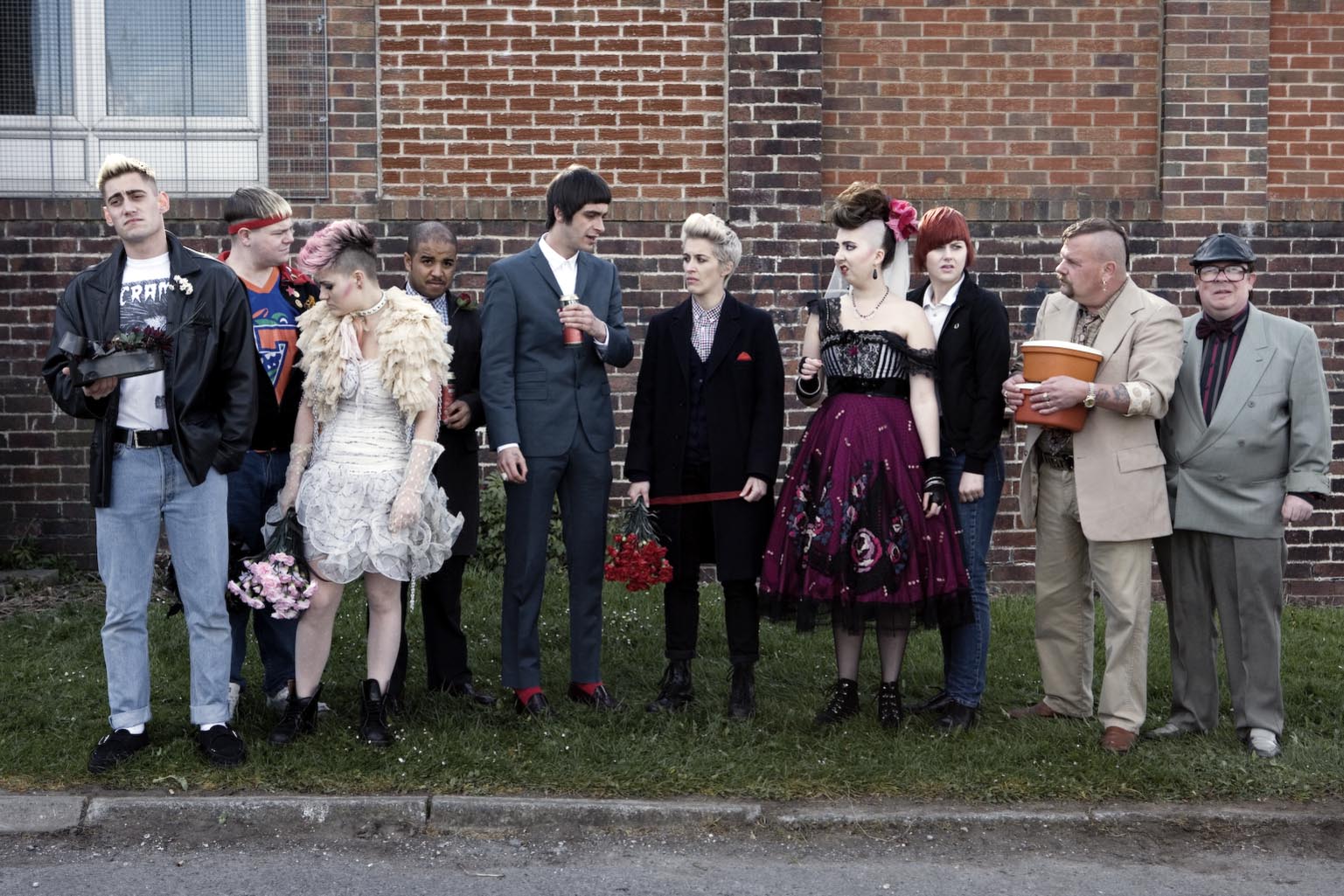
After a prolific decade working in the realms of British cinema, Shane Meadows\u2019s current retreat from feature filmmaking has seen the production of a much-hyped four-part televised sequel to the BAFTA-winning This is England<\/em> (2006). Commissioned by Meadows\u2019 long time affiliates, Channel Four, and co-written with Jack Thorne (Shameless<\/em>\/Skins<\/em>\/The Scouting Book for Boys<\/em>), Meadows shared directorial duties on This is England \u201986<\/em> with Tom Harper, best known for his work on Misfits<\/em> and The Scouting Book for Boys<\/em>. Like his earlier feature, the series presents the working-class youth of 1986 with a portrayal of regional life in Thatcher\u2019s Britain that is at once romantic yet sinister. Picking up 3 years after This is England<\/em> left off, the series combines typically carnivalesque humour with violent and disturbing scenes that echo the style of Alan Clarke. Despite the collaborative nature of the project, establishing shots of local authority housing and social dereliction visually set the series in the tradition of Meadows\u2019 oeuvre.<\/p>\n<\/p>\n
The sharing of direction in the series has been interesting, with Tom Harper directing the first two episodes and Meadows undertaking the latter. Harper’s direction fits beautifully; eliciting his own style, whilst at the same time maintaining a reverential sense of Meadows\u2019s flair. This underscores the idea that this is a \u2018Meadowsian\u2019 work; that Meadows\u2019 style is so recognisable that one can copy it. Harper draws on the reflexive nature of Meadows’s previous work; Shaun (Thomas Turgoose) spitting on his chips is a direct reference to Meadows\u2019s TwentyFourSeven<\/em> (1997). Additionally, the throwing of the St George\u2019s cross at the end of the final episode is another intertextual nod back to Meadows\u2019s earlier work. The inclusion of \u2018Harvey\u2019 (Michael Socha) is interesting. Having only had a very minor role in the film (a rude boy who provokes a fight with Shaun after making jokes about his late father), his transformation and amalgamation into Woody\u2019s gang draws upon the accepting nature of the \u2018skinheads\u2019, and, moreover, shows how youth still have the capacity to change. Additionally, Pukey (Jack O\u2019Connell) did not commit to the series, and the character of Harvey fills this void well. Harper\u2019s episodes draw parallels with the first half hour of This is England<\/em>. Like the film, Harper elicits humour beautifully, drawing out comedy through improvised moments. Flip (Perry Fitzpatrick), a new character, exemplifies the absurdist streak in Meadows\u2019s work: a brief scene shared with Higgy (Joe Dempsie) \u2013 \u201cWho sits in that chair?!\u201d \u2013 is priceless. When Meadows’s direction kicks in, however, the absurdity begins to dwindle as more troubling themes come to the fore.<\/p>\nThis is England 86<\/em>\u2019s focus on a female protagonist is a significant departure for Meadows, whose features invariably centre on male characters. Indeed, this pattern can be traced back to Where\u2019s the Money Ronnie?<\/em> (1996) and various other shorts prior to his cinematic feature film debut in 1997. Expanding on the film in terms of character development, This is England \u201886<\/em> is predominantly centred around Lol (Vicky McClure). Arguably a marginal – and almost maternal – figure in the film, the series catapults us into Lol\u2019s life, revealing a dark familial past that edges its disturbing way back into her present. The 2007 film introduced the principal characters in the series, but, with the exception of Shaun, individual gang characters were not fleshed out. Given the generous time scale of the series, Meadows has been able to single out certain characters and allow his audience to get to know them more intimately. A particular favourite is Trudy, played by Stephen Graham\u2019s wife, Hannah Walters. Sex obsessed, and with a hilarious fetish for Clark Gable, Trudy is also presented as a down-to-earth, working-class single mother with a yearning for a male she can dominate. Although Meadows veers away from male protagonists, the representation of women arguably remains problematic. Lol and Trudy both become victims; Lol has suffered at the hands of her violent, sexually abusive father and Trudy seemingly cannot hold down a relationship. Even though Lol serves her father his comeuppance, her victim status will remain unchanged. The series\u2019 most controversial scene – featuring the rape of Trev (Danielle Watson) – only seems to underscore the woman-as-victim thematic. Trev has a minor part within the film, and, incidentally, the first two episodes of the series. This is not to say that Meadows portrays women wholly as victims; Smell is strong and articulate and Kelly has grown into a sexy, funny character and does not become one of Mick\u2019s (Johnny Harris) victims. Moreover, Trudy remains a strong, comedic character; she only thinks she needs a man.<\/p>\nOne qualm that has arisen in online forums is the speed in which the series is \u2018wrapped up.\u2019 Viewers unfamiliar with the original film may well have found that the belated re-introduction of Combo (Stephen Graham) and his timely visit to Lol\u2019s house is elaborate and unexplained within the context of the series. This incoherence for some viewers that ran through the final episodes is a factor of the film\/TV sequel and commercial pressure. However, Combo does and has always loved Lol and at a time when he is in grief at the loss of his mother, going to see Lol makes narrative sense, particularly given that Combo is aware of what Mick has done to Lol as a child. There is a two-pronged approach as to why Combo takes the blame for Mick\u2019s death. On one hand there is a sense that he is granted redemption for his violent assault on Milky (Andrew Shim) in the earlier film; and on the other is his genuine love for Lol. Either is arguable, although the former appears more likely. Additionally, Lol\u2019s victim status need not have been revived through her father\u2019s attempted rape. Instead of Lol having to go through all the pain and fear again, her murder of her father would have maintained its resonance in her avenging the rape of Trev and reuniting herself from her alienation that succeeded her father\u2019s return. Meadows\u2019s insistence on violence as a way of \u2018conveniently\u2019 concluding narratives is intensely powerful. The sense of irresolution in the series echoed the film and the lack of a coherent happy ending made it all the more powerful. Furthermore, the proposed 1990 sequel may allow threads to be tied up; whether this is a good thing remains to be seen.<\/p>\n
Originally posted: 18 October 2010.<\/em><\/p>\n
\n