<h4>by OLIVER WAKE</h4>
<p><img loading="lazy" decoding="async" src="http://www.britishtelevisiondrama.org.uk/wp-content/uploads/2017/12/BTVD_Re-record_Armchair-clapperboard-e1514727191619.jpg" alt="" width="250" height="189" class="alignright size-full wp-image-7290" /></p>
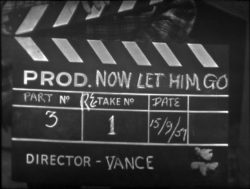
<p>Anyone researching live television drama will inevitably encounter the well-known obstacle that only a small percentage of live broadcasts were recorded from transmission and subsequently archived. A lesser-known obstacle for anyone trying to appreciate the quality and aesthetics of live drama is that those recordings which were made and archived are not necessarily an accurate representation of the programmes as broadcast.</p>{"id":7284,"date":"2018-01-01T06:00:03","date_gmt":"2018-01-01T06:00:03","guid":{"rendered":"http:\/\/www.britishtelevisiondrama.org.uk\/?p=7284"},"modified":"2024-08-30T11:34:39","modified_gmt":"2024-08-30T10:34:39","slug":"re-recording-live-drama-the-fallibility-of-the-television-drama-record","status":"publish","type":"post","link":"http:\/\/www.britishtelevisiondrama.org.uk\/?p=7284","title":{"rendered":"Re-recording live drama: the fallibility of the television drama record"},"content":{"rendered":"<h4>by OLIVER WAKE<\/h4>\n<p><img loading=\"lazy\" decoding=\"async\" src=\"http:\/\/www.britishtelevisiondrama.org.uk\/wp-content\/uploads\/2017\/12\/BTVD_Re-record_Armchair-clapperboard-e1514727191619.jpg\" alt=\"\" width=\"250\" height=\"189\" class=\"alignright size-full wp-image-7290\" \/><\/p>\n<p>Anyone researching live television drama will inevitably encounter the well-known obstacle that only a small percentage of live broadcasts were recorded from transmission and subsequently archived. A lesser-known obstacle for anyone trying to appreciate the quality and aesthetics of live drama is that those recordings which were made and archived are not necessarily an accurate representation of the programmes as broadcast.<\/p>\n<p><!--more--><\/p>\n<p>In the 1950s and 1960s, the recording of live transmissions was largely accomplished via the telerecording process, resulting in a continuous record of the broadcast on film. It has usually been assumed that this film recording was then left untouched, and only over recent years has it become clear that this was not necessarily the case. In some instances, once the live transmission of a drama had concluded, the cast and crew remained in the studio and re-performed sections of the programme that were considered to have been substandard on broadcast. These scenes were also telerecorded and could subsequently be edited into the master recording to create a more polished version of the whole programme.<\/p>\n<p>The earliest verified example of the practice (which I\u2019ll simply call \u2018re-recording\u2019 here for convenience) occurs in the mid-1950s and I suspect it is not coincidental that it was around this point that the technical quality of telerecordings reached a level that made them acceptable for broadcast, opening up opportunities for domestic repeats and foreign sales of programmes. Improving the quality of a programme for an anticipated repeat or overseas broadcast would seem to be the obvious reason for re-recording, although there is insufficient evidence to say whether this was the only, or indeed primary, reason that it was done. <\/p>\n<p>In the absence of any structured research in the area it is impossible to say how regularly re-recording occurred but the limited evidence currently available gives reason to suspect it was relatively frequent. In an interview about his career, television director Christopher Barry, who had worked in more junior roles in television in the second half of the 1950s, referred to the practice of re-recording in that period as if it were routine.<sup id=\"rf1-7284\"><a href=\"#fn1-7284\" title=\"I refer to the Christopher Barry interview, number 38 in the &lt;em&gt;Myth Makers&lt;\/em&gt; video interview series by Reeltime Pictures, which was released in 1997, coupled with an interview with director Paul Bernard.\" rel=\"footnote\">1<\/a><\/sup> <\/p>\n<p>The career of BBC producer\/director Rudolph Cartier is probably the most researched of any practitioner of live television drama and this research has brought at least two examples of re-recording to light. Cartier is famous for, amongst other things, the three <em>Quatermass<\/em> science-fiction thriller serials of the 1950s and he is known to have practised re-recording on the second and third of these.<sup id=\"rf2-7284\"><a href=\"#fn2-7284\" title=\"The three serials: &lt;em&gt;The Quatermass Experiment&lt;\/em&gt;, BBC tv, tx. 18 July to 22 August 1953; &lt;em&gt;Quatermass II&lt;\/em&gt;, BBC tv, tx. 22 October to 26 November 1956; &lt;em&gt;Quatermass and the Pit&lt;\/em&gt;, BBC tv, tx. 22 December 1958 to 26 January 1959.\" rel=\"footnote\">2<\/a><\/sup> According to Andrew Pixley\u2019s exhaustive booklet from the <em>Quatermass Collection<\/em> DVD, internal BBC correspondence confirms Cartier\u2019s intention to re-record sequences of <em>Quatermass II<\/em> after transmission and have these edited into the master recording in time for the scheduled weekly repeat the Monday after each Saturday\u2019s episode.<sup id=\"rf3-7284\"><a href=\"#fn3-7284\" title=\"&lt;em&gt;The Quatermass Collection&lt;\/em&gt;, BBC (2005), BBCDVD1478.\" rel=\"footnote\">3<\/a><\/sup> It\u2019s not clear how many sequences Cartier chose to re-record and he had been cautioned to keep these to a minimum by the BBC\u2019s Telerecording Manager as time constraints for the editing to meet the repeat slot were very tight. Indeed, Cartier was advised that if more than two sequences were to be re-recorded, it would be more cost-effective to re-perform the whole episode for a new recording.<\/p>\n<p>A document I uncovered in BBC files while undertaking unrelated research confirmed that Cartier practised re-recording on at least one episode of the next <em>Quatermass<\/em> serial, <em>Quatermass and the Pit<\/em>. A short letter confirms details of an extra payment due to actor Andr\u00e9 Morell for his participation in \u201cretakes for the telerecording\u201d of the fifth episode of the serial.<sup id=\"rf4-7284\"><a href=\"#fn4-7284\" title=\"Television Booking Department to Andr\u00e9 Morell\u2019s agent, 20 January 1959, from Morell\u2019s personal file at the BBC Written Archives Centre.\" rel=\"footnote\">4<\/a><\/sup>  In this case, there was no scheduled repeat of the production but in view of its prestigious status, following the success of the two previous <em>Quatermass<\/em> serials, there was a much greater chance of later repeats or of foreign sales than for most programmes, which would likely have been reason enough for re-recording to be practised. A repeat was eventually screened by the BBC a year later.<sup id=\"rf5-7284\"><a href=\"#fn5-7284\" title=\"For this repeat the serial was re-edited into a two-part compilation, tx. 26 December 1959 and 2 January 1960.\" rel=\"footnote\">5<\/a><\/sup> <\/p>\n<p>In the cases of the <em>Quatermass<\/em> serials the reason for the re-recording seems obviously related to repeats, planned or potential. However, a similar letter to the one mentioned above confirms that re-recording was also practised by producer\/director Tony Richardson on the 15-minute drama <em>The Birthday Present<\/em>, from July 1955, which, presumably, had much less potential for repeat or overseas sales.<sup id=\"rf6-7284\"><a href=\"#fn6-7284\" title=\"&lt;em&gt;Appointment with Drama&lt;\/em&gt;: \u2018The Birthday Present\u2019, BBC tv, tx. 22 July 1955. Television Booking Department to Yvonne Mitchell\u2019s agent, 2 August 1955, from Mitchell\u2019s personal file at the BBC Written Archives Centre.\" rel=\"footnote\">6<\/a><\/sup> The idea that re-recording was at least a fairly common occurrence is reinforced by the fact that the letters I refer to were both derived from a pro-forma template, indicating they were likely issued by the BBC in considerable numbers.<\/p>\n<p>Between these two <em>Quatermass<\/em> serials, ITV launched in 1955 and there is evidence that its companies also practised re-recording, though, again, details are limited. The best evidence of the practice can be found on the <em>Armchair Theatre<\/em> Volume Three DVD which, impressively, includes a complete unedited telerecording of the 1957 play <em>Now Let Him Go<\/em> plus a separate reel of re-recordings of scenes originally marred by obvious dialogue fluffs.<sup id=\"rf7-7284\"><a href=\"#fn7-7284\" title=\"&lt;em&gt;Armchair Theatre&lt;\/em&gt;: \u2018Now Let Him Go\u2019, ITV, tx. 15 September 1957. &lt;em&gt;Armchair Theatre&lt;\/em&gt; Volume Three, Network (2012), 7953738.\" rel=\"footnote\">7<\/a><\/sup> Somewhat unexpectedly, the new footage shows the use of a clapperboard on the studio floor, an object not normally seen in an electronic studio, although its use makes sense in view of the film editing that was to follow.<sup id=\"rf8-7284\"><a href=\"#fn8-7284\" title=\"For more on film practices in the electronic studio, see &lt;a href=&quot;http:\/\/www.britishtelevisiondrama.org.uk\/?p=6434&quot; target=&quot;_self&quot; rel=&quot;noopener&quot;&gt;this piece on the site&lt;\/a&gt;.\" rel=\"footnote\">8<\/a><\/sup> <\/p>\n<p>It is also surprising to see that the whole original recording was retained, fluffed dialogue and all, with the re-recorded scenes being retained separately. Perhaps the new footage was never edited into the recording if a planned repeat or foreign sale fell through. Equally, another print may have existed which did include this new footage. This evidence begs the questions of how common re-recording was on <em>Armchair Theatre<\/em> \u2013 a significant programme in the development of television drama, making its surviving recordings of particular interest \u2013 and whether any of the other surviving telerecordings of its live instalments include re-recorded sequences.<\/p>\n<p>Live transmission for drama was largely phased out during the early 1960s but some examples did continue late into the decade, notably on the BBC\u2019s <em>Z Cars<\/em> as a result of producer David E Rose\u2019s advocacy of the method. David Brunt, who has researched the series extensively while compiling <em>The Z Cars Casebook<\/em>, advises that re-recording was practised at least semi-regularly.<sup id=\"rf9-7284\"><a href=\"#fn9-7284\" title=\"David Brunt is the author of two volumes of &lt;em&gt;The Z Cars Casebook&lt;\/em&gt;, available via Lulu: &lt;a href=&quot;http:\/\/www.lulu.com\/gb\/en\/shop\/david-brunt\/bd-to-z-victor-1-the-z-cars-casebook-season-1\/paperback\/product-21895250.html&quot; target=&quot;_self&quot; rel=&quot;noopener&quot;&gt;here&lt;\/a&gt; and &lt;a href=&quot;http:\/\/www.lulu.com\/shop\/david-brunt\/bd-to-z-victor-1-the-z-cars-casebook-season-2\/paperback\/product-22403121.html&quot; target=&quot;_self&quot; rel=&quot;noopener&quot;&gt;here&lt;\/a&gt;.\" rel=\"footnote\">9<\/a><\/sup> Brunt reports that some intriguing evidence of the differences between transmissions and final master recordings can be seen thanks to \u2018tele-snaps\u2019 (off-air stills taken from a television screen during transmission by photographer John Cura). During the series\u2019 100th episode, Rose, directing, concealed cameras behind doors on a corridor set.<sup id=\"rf10-7284\"><a href=\"#fn10-7284\" title=\"&lt;em&gt;Z Cars&lt;\/em&gt;: \u2018A Man\u2026 Like Yourself\u2019, BBC tv, tx. 4 March 1964.\" rel=\"footnote\">10<\/a><\/sup> His direction proved somewhat over-ambitious, with the apparently hidden cameras being visible on screen, as shown by the tele-snaps. However, the master telerecording which has been retained by the BBC features the same scene without showing the offending cameras, clearly indicating it had subsequently been re-recorded.<sup id=\"rf11-7284\"><a href=\"#fn11-7284\" title=\"Private correspondence with David Brunt, January 2016.\" rel=\"footnote\">11<\/a><\/sup> Without such tell-tale evidence as this it is impossible to know for sure how regularly re-recording was practised and how many sequences in any programme may have been re-recorded and replaced. I would welcome any more examples or evidence of the practice that anyone may be able to share.<\/p>\n<p>It should also be noted that when it comes to the question of the fidelity of archive recordings to original transmissions, it is not only live dramas which are affected. Any programme, whether live or pre-recorded on videotape, which has been retained as a telerecording will display reduced picture definition and motion from the original and may also feature numerous other defects, such as geometric picture distortion and sound distortion, plus all the various blemishes (dirt, scratches, etc) that may befall film prints. The process of telerecording may also change shot framing as a result of the zooming-in on the picture required to ensure the edges of the telerecording monitor remain out of shot, causing varying degrees of peripheral picture loss. Amongst viewers without a specialist interest in the area, archive television (particularly when monochrome) is widely thought to be of poor technical quality, which is an erroneous assumption based on surviving telerecordings which commonly suffer from all or some of these defects, resulting in a notably inferior picture and (often) sound quality than on the programmes\u2019 original broadcasts.<\/p>\n<p>Some recordings will also have been deliberately edited after transmission, leaving no exact record of a programme as originally screened. There may be many reasons for this but deliberate censorship is one: a notable example is the eighth episode of <em>I Claudius<\/em>, which had a brief gory sequence removed from its master tape shortly after the first transmission.<sup id=\"rf12-7284\"><a href=\"#fn12-7284\" title=\"&lt;em&gt;I, Claudius&lt;\/em&gt;: \u2018Zeus, By Jove!\u2019, BBC2, tx. 8 November 1976.\" rel=\"footnote\">12<\/a><\/sup> Another is the practice of preparing a re-edited version of a programme for a repeat broadcast or overseas sale which is then retained in place of the original master recording. An example of this is <em>Where the Buffalo Roam<\/em>, an instalment of <em>The Wednesday Play<\/em> by Dennis Potter, which survives only in a version reduced by three minutes for a BBC repeat in 1967.<sup id=\"rf13-7284\"><a href=\"#fn13-7284\" title=\"&lt;em&gt;The Wednesday Play&lt;\/em&gt;: &#8216;Where the Buffalo Roam&#8217;, BBC1, tx. 2 November 1966. The repeat referred to was: BBC1, tx. 2 August 1967. See for instance Ian Greaves, David Rolinson and John Williams (editors), Dennis Potter, &lt;em&gt;The Art of Invective: Selected Non-Fiction 1953-94&lt;\/em&gt; (London: Oberon, 2015), n. 63 and n. 66, pp. 338-339.\" rel=\"footnote\">13<\/a><\/sup> More drastically, the first <em>Play for Today<\/em>, &#8216;The Long Distance Piano Player&#8217;, survives only as a monochrome 60-minute telerecording, whereas the original transmission was of a colour programme of approximately 80 minutes\u2019 duration.<sup id=\"rf14-7284\"><a href=\"#fn14-7284\" title=\"&lt;em&gt;Play for Today&lt;\/em&gt;: \u2018The Long Distance Piano Player\u2019, BBC1, tx. 15 October 1970.\" rel=\"footnote\">14<\/a><\/sup> The reduction in duration was again for a BBC repeat but that would have been a colour broadcast from videotape; we can infer that the surviving monochrome film print was subsequently prepared for an overseas broadcaster which was not yet operating a colour service.<sup id=\"rf15-7284\"><a href=\"#fn15-7284\" title=\"The BBC repeat was: BBC1, tx. 13 April 1972. Details of the overseas broadcast are unknown. Read more about the reasons for the reduction in duration in Simon Farquhar, \u2018The Long Distance Piano Player\u2019, &lt;em&gt;Forgotten Television Drama&lt;\/em&gt;, 15 October 2020, available &lt;a href=&quot;https:\/\/forgottentelevisiondrama.wordpress.com\/2020\/10\/15\/play-for-today-the-long-distance-piano-player\/#_edn13&quot; target=&quot;_self&quot; rel=&quot;noopener&quot;&gt;here&lt;\/a&gt;.\" rel=\"footnote\">15<\/a><\/sup> <\/p>\n<p>On rare occasions, outside action may force a re-edit on the broadcaster. This happened to the BBC in relation to an episode of the popular series <em>Dr Finlay&#8217;s Casebook<\/em> called <em>Charity, Dr Finlay<\/em>, in 1965.<sup id=\"rf16-7284\"><a href=\"#fn16-7284\" title=\"&lt;em&gt;Dr Finlay&#8217;s Casebook&lt;\/em&gt;: \u2018Charity, Dr Finlay\u2019, BBC1, tx. 14 February 1965.\" rel=\"footnote\">16<\/a><\/sup> Shortly after the initial broadcast, somebody sharing the name and title of a fictional person referred to within the episode&#8217;s dialogue threatened to sue the BBC for libel, to avoid which the Corporation redubbed the offending dialogue.<sup id=\"rf17-7284\"><a href=\"#fn17-7284\" title=\"This incident is detailed in Richard Molesworth, &lt;em&gt;Robert Holmes: A Life in Words&lt;\/em&gt; (Telos Publishing, 2013), electronic edition, chapter 4.\" rel=\"footnote\">17<\/a><\/sup> It is this adjusted version which was subsequently repeated domestically, sold overseas and retained in the archive.<sup id=\"rf18-7284\"><a href=\"#fn18-7284\" title=\"The episode can currently be viewed online &lt;a href=&quot;https:\/\/www.youtube.com\/watch?v=J9cKW49qzb4&quot; target=&quot;_self&quot; rel=&quot;noopener&quot;&gt;on YouTube here&lt;\/a&gt;.\" rel=\"footnote\">18<\/a><\/sup><\/p>\n<p>Although the problems of re-recording, inferior preservation media and post-transmission editing that I\u2019ve described are primarily of concern when considering programmes from the 1950s, 1960s and 1970s, they aren\u2019t entirely limited to those decades. More recent live dramas have also been subject of re-recording, although in these cases the original transmissions will have been archived (and recorded domestically) also. Perhaps fittingly, when BBC4\u2019s 2005 live re-make of <em>The Quatermass Experiment<\/em> was subsequently repeated and released on DVD, scenes that were marred on broadcast by on-air blunders had been replaced with alternative footage (in this case recorded before the live broadcast rather than afterwards), giving the impression of a smoother original transmission than was truly the case.<sup id=\"rf19-7284\"><a href=\"#fn19-7284\" title=\"&lt;em&gt;The Quatermass Experiment&lt;\/em&gt;, BBC4, tx. 2 April 2005.\" rel=\"footnote\">19<\/a><\/sup> Indeed, John Hoare, <a href=\"http:\/\/www.dirtyfeed.org\/2015\/12\/the-quatermass-experiment-experiment\/\" target=\"_self\" rel=\"noopener\">on the website <em>Dirty Feed<\/em><\/a>, has listed a surprising number of changes.<sup id=\"rf20-7284\"><a href=\"#fn20-7284\" title=\"John Hoare, &#8216;&lt;em&gt;The Quatermass Experiment&lt;\/em&gt; Experiment&#8217;, &lt;em&gt;Dirty Feed&lt;\/em&gt;, 20 December 2015, &lt;a href=&quot;http:\/\/www.dirtyfeed.org\/2015\/12\/the-quatermass-experiment-experiment\/&quot; target=&quot;_self&quot; rel=&quot;noopener&quot;&gt;available here&lt;\/a&gt;.\" rel=\"footnote\">20<\/a><\/sup> According to the <em>Kaleidoscope<\/em> archive television research organisation, the BBC retrospectively edited the master copies of two 2007 episodes of drama series <em>Waterloo Road<\/em> to remove (presumably contentious) references to the Outward Bound Trust, although off-air recordings of the original broadcasts will still exist.<sup id=\"rf21-7284\"><a href=\"#fn21-7284\" title=\"&lt;em&gt;Waterloo Road&lt;\/em&gt;, BBC1, tx. 22 and 29 November 2007. Simon Coward, Richard Down and Chris Perry (editors), &lt;em&gt;The Kaleidoscope BBC Television Drama Research Guide&lt;\/em&gt;, 1936-2011 (Dudley: Kaleidoscope Publishing, 2011), first digital edition, p. 2712. Almost certainly the BBC will also hold a \u2018programme as broadcast\u2019 copy of these episodes to reflect the actual transmission content. The British Film Institute will also have archived an off-air recording as it has been recording all terrestrial television output for several decades.\" rel=\"footnote\">21<\/a><\/sup><\/p>\n<p>I can\u2019t draw any satisfying conclusions from my brief survey of the evidence of re-recording, but it does show that we cannot be confident when watching a recording of a live drama that what we are seeing is what the original audience saw on that live transmission, meaning we may need to be more open-minded when considering the aesthetics and technical quality of live television drama. Equally, without some background knowledge of the processes involved in the preservation of both live and non-live drama from the earlier decades of television, it is equally hard to be certain of the level of fidelity to the original broadcast of any given recording.<\/p>\n<p>(C) Oliver Wake<\/p>\n<p><em>With thanks to David Brunt and the BBC Written Archive Centre.<\/em><\/p>\n<p><em>Originally posted: 1 January 2018.<br \/>\nUpdates:<br \/>\n31 May 2024: added discussion of Barry interview, dividing one paragraph into two to accommodate it, and added accompanying endnote; deleted speculative half-sentence at end of paragraph discussing Quatermass II; clarified ITV structure by replacing &#8220;it too&#8221; with &#8220;its companies also&#8221;; added discussion of Where the Buffalo Roam and accompanying endnotes; added to discussion of The Long Distance Piano Player, including adding Farquhar reference to endnotes; added discussion of Dr Finlay and accompanying endnotes. <\/em><\/p>\n<p><!-- Start of StatCounter Code --><\/p>\n<p><script type=\"text\/javascript\">\nvar sc_project=5750652; \nvar sc_invisible=1; \nvar sc_partition=68; \nvar sc_click_stat=1; \nvar sc_security=\"6dd1aa39\"; \n<\/script><\/p>\n<p><script type=\"text\/javascript\" src=\"http:\/\/www.statcounter.com\/counter\/counter.js\"><\/script><noscript>&lt;br \/&gt;<br \/>\n&lt;div&lt;br &gt;&lt;\/div&gt;<br \/>\nclass=&#8221;statcounter&#8221;&gt;&lt;a title=&#8221;wordpress stats &#8220;&lt;br &gt;&lt;\/a&gt;&lt;br \/&gt;<br \/>\nhref=&#8221;http:\/\/www.statcounter.com\/wordpress.org\/&#8221;&lt;br \/&gt;&lt;br \/&gt;<br \/>\ntarget=&#8221;_blank&#8221;&gt;&lt;img class=&#8221;statcounter&#8221;&lt;br \/&gt;&lt;br \/&gt;<br \/>\nsrc=&#8221;http:\/\/c.statcounter.com\/5750652\/0\/6dd1aa39\/1\/&#8221;&lt;br \/&gt;&lt;br \/&gt;<br \/>\nalt=&#8221;wordpress stats &#8221; &gt;&lt;\/a&gt;&lt;\/div&gt;<br \/>\n&lt;p&gt;<\/noscript><\/p>\n<p><!-- End of StatCounter Code --><\/p>\n<hr class=\"footnotes\"><ol class=\"footnotes\" style=\"list-style-type:decimal\"><li id=\"fn1-7284\"><p >I refer to the Christopher Barry interview, number 38 in the <em>Myth Makers<\/em> video interview series by Reeltime Pictures, which was released in 1997, coupled with an interview with director Paul Bernard.&nbsp;<a href=\"#rf1-7284\" class=\"backlink\" title=\"Return to footnote 1.\">&#8617;<\/a><\/p><\/li><li id=\"fn2-7284\"><p >The three serials: <em>The Quatermass Experiment<\/em>, BBC tv, tx. 18 July to 22 August 1953; <em>Quatermass II<\/em>, BBC tv, tx. 22 October to 26 November 1956; <em>Quatermass and the Pit<\/em>, BBC tv, tx. 22 December 1958 to 26 January 1959.&nbsp;<a href=\"#rf2-7284\" class=\"backlink\" title=\"Return to footnote 2.\">&#8617;<\/a><\/p><\/li><li id=\"fn3-7284\"><p ><em>The Quatermass Collection<\/em>, BBC (2005), BBCDVD1478.&nbsp;<a href=\"#rf3-7284\" class=\"backlink\" title=\"Return to footnote 3.\">&#8617;<\/a><\/p><\/li><li id=\"fn4-7284\"><p >Television Booking Department to Andr\u00e9 Morell\u2019s agent, 20 January 1959, from Morell\u2019s personal file at the BBC Written Archives Centre.&nbsp;<a href=\"#rf4-7284\" class=\"backlink\" title=\"Return to footnote 4.\">&#8617;<\/a><\/p><\/li><li id=\"fn5-7284\"><p >For this repeat the serial was re-edited into a two-part compilation, tx. 26 December 1959 and 2 January 1960.&nbsp;<a href=\"#rf5-7284\" class=\"backlink\" title=\"Return to footnote 5.\">&#8617;<\/a><\/p><\/li><li id=\"fn6-7284\"><p ><em>Appointment with Drama<\/em>: \u2018The Birthday Present\u2019, BBC tv, tx. 22 July 1955. Television Booking Department to Yvonne Mitchell\u2019s agent, 2 August 1955, from Mitchell\u2019s personal file at the BBC Written Archives Centre.&nbsp;<a href=\"#rf6-7284\" class=\"backlink\" title=\"Return to footnote 6.\">&#8617;<\/a><\/p><\/li><li id=\"fn7-7284\"><p ><em>Armchair Theatre<\/em>: \u2018Now Let Him Go\u2019, ITV, tx. 15 September 1957. <em>Armchair Theatre<\/em> Volume Three, Network (2012), 7953738.&nbsp;<a href=\"#rf7-7284\" class=\"backlink\" title=\"Return to footnote 7.\">&#8617;<\/a><\/p><\/li><li id=\"fn8-7284\"><p >For more on film practices in the electronic studio, see <a href=\"http:\/\/www.britishtelevisiondrama.org.uk\/?p=6434\" target=\"_self\" rel=\"noopener\">this piece on the site<\/a>.&nbsp;<a href=\"#rf8-7284\" class=\"backlink\" title=\"Return to footnote 8.\">&#8617;<\/a><\/p><\/li><li id=\"fn9-7284\"><p >David Brunt is the author of two volumes of <em>The Z Cars Casebook<\/em>, available via Lulu: <a href=\"http:\/\/www.lulu.com\/gb\/en\/shop\/david-brunt\/bd-to-z-victor-1-the-z-cars-casebook-season-1\/paperback\/product-21895250.html\" target=\"_self\" rel=\"noopener\">here<\/a> and <a href=\"http:\/\/www.lulu.com\/shop\/david-brunt\/bd-to-z-victor-1-the-z-cars-casebook-season-2\/paperback\/product-22403121.html\" target=\"_self\" rel=\"noopener\">here<\/a>.&nbsp;<a href=\"#rf9-7284\" class=\"backlink\" title=\"Return to footnote 9.\">&#8617;<\/a><\/p><\/li><li id=\"fn10-7284\"><p ><em>Z Cars<\/em>: \u2018A Man\u2026 Like Yourself\u2019, BBC tv, tx. 4 March 1964.&nbsp;<a href=\"#rf10-7284\" class=\"backlink\" title=\"Return to footnote 10.\">&#8617;<\/a><\/p><\/li><li id=\"fn11-7284\"><p >Private correspondence with David Brunt, January 2016.&nbsp;<a href=\"#rf11-7284\" class=\"backlink\" title=\"Return to footnote 11.\">&#8617;<\/a><\/p><\/li><li id=\"fn12-7284\"><p ><em>I, Claudius<\/em>: \u2018Zeus, By Jove!\u2019, BBC2, tx. 8 November 1976.&nbsp;<a href=\"#rf12-7284\" class=\"backlink\" title=\"Return to footnote 12.\">&#8617;<\/a><\/p><\/li><li id=\"fn13-7284\"><p ><em>The Wednesday Play<\/em>: &#8216;Where the Buffalo Roam&#8217;, BBC1, tx. 2 November 1966. The repeat referred to was: BBC1, tx. 2 August 1967. See for instance Ian Greaves, David Rolinson and John Williams (editors), Dennis Potter, <em>The Art of Invective: Selected Non-Fiction 1953-94<\/em> (London: Oberon, 2015), n. 63 and n. 66, pp. 338-339.&nbsp;<a href=\"#rf13-7284\" class=\"backlink\" title=\"Return to footnote 13.\">&#8617;<\/a><\/p><\/li><li id=\"fn14-7284\"><p ><em>Play for Today<\/em>: \u2018The Long Distance Piano Player\u2019, BBC1, tx. 15 October 1970.&nbsp;<a href=\"#rf14-7284\" class=\"backlink\" title=\"Return to footnote 14.\">&#8617;<\/a><\/p><\/li><li id=\"fn15-7284\"><p >The BBC repeat was: BBC1, tx. 13 April 1972. Details of the overseas broadcast are unknown. Read more about the reasons for the reduction in duration in Simon Farquhar, \u2018The Long Distance Piano Player\u2019, <em>Forgotten Television Drama<\/em>, 15 October 2020, available <a href=\"https:\/\/forgottentelevisiondrama.wordpress.com\/2020\/10\/15\/play-for-today-the-long-distance-piano-player\/#_edn13\" target=\"_self\" rel=\"noopener\">here<\/a>.&nbsp;<a href=\"#rf15-7284\" class=\"backlink\" title=\"Return to footnote 15.\">&#8617;<\/a><\/p><\/li><li id=\"fn16-7284\"><p ><em>Dr Finlay&#8217;s Casebook<\/em>: \u2018Charity, Dr Finlay\u2019, BBC1, tx. 14 February 1965.&nbsp;<a href=\"#rf16-7284\" class=\"backlink\" title=\"Return to footnote 16.\">&#8617;<\/a><\/p><\/li><li id=\"fn17-7284\"><p >This incident is detailed in Richard Molesworth, <em>Robert Holmes: A Life in Words<\/em> (Telos Publishing, 2013), electronic edition, chapter 4.&nbsp;<a href=\"#rf17-7284\" class=\"backlink\" title=\"Return to footnote 17.\">&#8617;<\/a><\/p><\/li><li id=\"fn18-7284\"><p >The episode can currently be viewed online <a href=\"https:\/\/www.youtube.com\/watch?v=J9cKW49qzb4\" target=\"_self\" rel=\"noopener\">on YouTube here<\/a>.&nbsp;<a href=\"#rf18-7284\" class=\"backlink\" title=\"Return to footnote 18.\">&#8617;<\/a><\/p><\/li><li id=\"fn19-7284\"><p ><em>The Quatermass Experiment<\/em>, BBC4, tx. 2 April 2005.&nbsp;<a href=\"#rf19-7284\" class=\"backlink\" title=\"Return to footnote 19.\">&#8617;<\/a><\/p><\/li><li id=\"fn20-7284\"><p >John Hoare, &#8216;<em>The Quatermass Experiment<\/em> Experiment&#8217;, <em>Dirty Feed<\/em>, 20 December 2015, <a href=\"http:\/\/www.dirtyfeed.org\/2015\/12\/the-quatermass-experiment-experiment\/\" target=\"_self\" rel=\"noopener\">available here<\/a>.&nbsp;<a href=\"#rf20-7284\" class=\"backlink\" title=\"Return to footnote 20.\">&#8617;<\/a><\/p><\/li><li id=\"fn21-7284\"><p ><em>Waterloo Road<\/em>, BBC1, tx. 22 and 29 November 2007. Simon Coward, Richard Down and Chris Perry (editors), <em>The Kaleidoscope BBC Television Drama Research Guide<\/em>, 1936-2011 (Dudley: Kaleidoscope Publishing, 2011), first digital edition, p. 2712. Almost certainly the BBC will also hold a \u2018programme as broadcast\u2019 copy of these episodes to reflect the actual transmission content. The British Film Institute will also have archived an off-air recording as it has been recording all terrestrial television output for several decades.&nbsp;<a href=\"#rf21-7284\" class=\"backlink\" title=\"Return to footnote 21.\">&#8617;<\/a><\/p><\/li><\/ol><\/hr>","protected":false},"excerpt":{"rendered":null,"protected":false},"author":1,"featured_media":0,"comment_status":"open","ping_status":"open","sticky":false,"template":"","format":"standard","meta":{"footnotes":""},"categories":[137,139],"tags":[29,30,37,115,497,78,494,401,16,496,38,495,153],"class_list":["post-7284","post","type-post","status-publish","format-standard","hentry","category-essays","category-oliver-wake","tag-1950s","tag-1960s","tag-1970s","tag-2000s","tag-appointment-with-drama","tag-armchair-theatre","tag-i-claudius","tag-live-drama","tag-play-for-today","tag-quatermass","tag-rudolph-cartier","tag-waterloo-road","tag-z-cars"],"_links":{"self":[{"href":"http:\/\/www.britishtelevisiondrama.org.uk\/index.php?rest_route=\/wp\/v2\/posts\/7284","targetHints":{"allow":["GET"]}}],"collection":[{"href":"http:\/\/www.britishtelevisiondrama.org.uk\/index.php?rest_route=\/wp\/v2\/posts"}],"about":[{"href":"http:\/\/www.britishtelevisiondrama.org.uk\/index.php?rest_route=\/wp\/v2\/types\/post"}],"author":[{"embeddable":true,"href":"http:\/\/www.britishtelevisiondrama.org.uk\/index.php?rest_route=\/wp\/v2\/users\/1"}],"replies":[{"embeddable":true,"href":"http:\/\/www.britishtelevisiondrama.org.uk\/index.php?rest_route=%2Fwp%2Fv2%2Fcomments&post=7284"}],"version-history":[{"count":17,"href":"http:\/\/www.britishtelevisiondrama.org.uk\/index.php?rest_route=\/wp\/v2\/posts\/7284\/revisions"}],"predecessor-version":[{"id":8253,"href":"http:\/\/www.britishtelevisiondrama.org.uk\/index.php?rest_route=\/wp\/v2\/posts\/7284\/revisions\/8253"}],"wp:attachment":[{"href":"http:\/\/www.britishtelevisiondrama.org.uk\/index.php?rest_route=%2Fwp%2Fv2%2Fmedia&parent=7284"}],"wp:term":[{"taxonomy":"category","embeddable":true,"href":"http:\/\/www.britishtelevisiondrama.org.uk\/index.php?rest_route=%2Fwp%2Fv2%2Fcategories&post=7284"},{"taxonomy":"post_tag","embeddable":true,"href":"http:\/\/www.britishtelevisiondrama.org.uk\/index.php?rest_route=%2Fwp%2Fv2%2Ftags&post=7284"}],"curies":[{"name":"wp","href":"https:\/\/api.w.org\/{rel}","templated":true}]}}