<h4>by JOHN WHEATCROFT</h4>
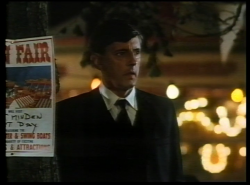
<p><img loading="lazy" decoding="async" class="alignleft size-full wp-image-7327" src="http://www.britishtelevisiondrama.org.uk/wp-content/uploads/2018/02/BTVD_Summer_02-e1519231779126.png" alt="" width="250" height="185" />There is a lot of dark stuff going on in <em>A Day in Summer</em>, the first novel by J.L. (James Lloyd) Carr. Literary critic D.J. Taylor described the novel as one that “defied classification [&#8230;] a comic tragedy, if you like, by a gifted amateur still learning his trade.”<sup id="rf1-7313"><a href="#fn1-7313" title="D.J. Taylor, Introduction, J.L. Carr, &lt;em&gt;A Day in Summer&lt;/em&gt; (London: Hogarth Press, 1989). Originally published by Barrie and Rockliff, 1963." rel="footnote">1</a></sup> It is a testament to Alan Plater’s skill that his adaptation of <em>A Day in Summer</em> (1989) handles so seamlessly the comic and tragic elements. This essay examines this Yorkshire Television production, drawing from an interview that I conducted with Carr in 1993 and new archival research into the production.<sup id="rf2-7313"><a href="#fn2-7313" title="&lt;em&gt;A Day in Summer&lt;/em&gt;, Yorkshire for ITV, tx. 1 February 1989. Screenplay by Alan Plater, based on a book by J.L. Carr, produced by Keith Richardson, directed by Bob Mahoney." rel="footnote">2</a></sup></p>

<hr class="footnotes"><ol class="footnotes" style="list-style-type:decimal"><li id="fn1-7313"><p >D.J. Taylor, Introduction, J.L. Carr, <em>A Day in Summer</em> (London: Hogarth Press, 1989). Originally published by Barrie and Rockliff, 1963.&nbsp;<a href="#rf1-7313" class="backlink" title="Return to footnote 1.">&#8617;</a></p></li><li id="fn2-7313"><p ><em>A Day in Summer</em>, Yorkshire for ITV, tx. 1 February 1989. Screenplay by Alan Plater, based on a book by J.L. Carr, produced by Keith Richardson, directed by Bob Mahoney.&nbsp;<a href="#rf2-7313" class="backlink" title="Return to footnote 2.">&#8617;</a></p></li></ol></hr>{"id":7313,"date":"2018-02-28T06:00:59","date_gmt":"2018-02-28T06:00:59","guid":{"rendered":"http:\/\/www.britishtelevisiondrama.org.uk\/?p=7313"},"modified":"2024-08-30T11:34:26","modified_gmt":"2024-08-30T10:34:26","slug":"a-day-in-summer-1989","status":"publish","type":"post","link":"http:\/\/www.britishtelevisiondrama.org.uk\/?p=7313","title":{"rendered":"<em>A Day in Summer<\/em> (1989)"},"content":{"rendered":"<h4>by JOHN WHEATCROFT<\/h4>\n<p><img loading=\"lazy\" decoding=\"async\" class=\"alignleft size-full wp-image-7327\" src=\"http:\/\/www.britishtelevisiondrama.org.uk\/wp-content\/uploads\/2018\/02\/BTVD_Summer_02-e1519231779126.png\" alt=\"\" width=\"250\" height=\"185\" \/>There is a lot of dark stuff going on in <em>A Day in Summer<\/em>, the first novel by J.L. (James Lloyd) Carr. Literary critic D.J. Taylor described the novel as one that \u201cdefied classification [&#8230;] a comic tragedy, if you like, by a gifted amateur still learning his trade.\u201d<sup id=\"rf1-7313\"><a href=\"#fn1-7313\" title=\"D.J. Taylor, Introduction, J.L. Carr, &lt;em&gt;A Day in Summer&lt;\/em&gt; (London: Hogarth Press, 1989). Originally published by Barrie and Rockliff, 1963.\" rel=\"footnote\">1<\/a><\/sup> It is a testament to Alan Plater\u2019s skill that his adaptation of <em>A Day in Summer<\/em> (1989) handles so seamlessly the comic and tragic elements. This essay examines this Yorkshire Television production, drawing from an interview that I conducted with Carr in 1993 and new archival research into the production.<sup id=\"rf2-7313\"><a href=\"#fn2-7313\" title=\"&lt;em&gt;A Day in Summer&lt;\/em&gt;, Yorkshire for ITV, tx. 1 February 1989. Screenplay by Alan Plater, based on a book by J.L. Carr, produced by Keith Richardson, directed by Bob Mahoney.\" rel=\"footnote\">2<\/a><\/sup><\/p>\n<p><!--more--><\/p>\n<p><img loading=\"lazy\" decoding=\"async\" class=\"alignright size-full wp-image-7334\" src=\"http:\/\/www.britishtelevisiondrama.org.uk\/wp-content\/uploads\/2018\/02\/BTVD_Summer_08-e1519232086714.png\" alt=\"\" width=\"250\" height=\"185\" \/>Jack Shepherd plays a mild-mannered bank clerk, Peplow, who goes to Great Minden on the day of its annual fair. (The adaptation was filmed in Masham, North Yorkshire.) Peplow is seeking revenge for the death of his son at the hands of a drunken lorry driver. By a coincidence that should not perhaps be examined too closely, Peplow\u2019s former RAF colleagues both live in Great Minden. One of them, Bellenger (Ian Carmichael), is dying, the other, Ruskin (Peter Egan), is confined to a wheelchair. The fate of his former colleagues shows how the novel\u2019s comic and tragic elements rub up against each other simultaneously.<\/p>\n<p><img loading=\"lazy\" decoding=\"async\" class=\"alignleft size-full wp-image-7328\" src=\"http:\/\/www.britishtelevisiondrama.org.uk\/wp-content\/uploads\/2018\/02\/BTVD_Summer_03-e1519231802503.png\" alt=\"\" width=\"250\" height=\"185\" \/><img loading=\"lazy\" decoding=\"async\" class=\"alignright size-full wp-image-7336\" src=\"http:\/\/www.britishtelevisiondrama.org.uk\/wp-content\/uploads\/2018\/02\/BTVD_Summer_03b-e1519232160208.png\" alt=\"\" width=\"250\" height=\"185\" \/>During the day, we meet a group of people whose interwoven stories will be resolved for good or ill by the time the last train departs from the town that evening. Great Minden is the sort of small town that might look superficially appealing to the outsider (from a modern perspective the small shops and lack of high street names are attractively retro) but the secrets and lies of its residents make for a poisonous place to live. As hairdresser Effie says when told that she is being watched, \u201cThat\u2019s all people do here.\u201d Effie is the girlfriend of probationary teacher Croser (John Sessions), as inept a man who ever stood in front of a class of small schoolchildren, but a catch as far as Effie is concerned. Effie, who refers to the folk who have breezed into town for the fair as \u201criff raff\u201d, is in some ways a coarser version of Ingrid who ensnares Vic in Stan Barstow\u2019s novel <em>A Kind of Loving<\/em>. Effie likes tittle-tattle and is both watcher and watched. Before the day is out, Croser will have to choose between her and the vicar\u2019s unhappy and uninhibited wife. We somehow know that when the time comes Croser will jump the wrong way.<\/p>\n<p><img loading=\"lazy\" decoding=\"async\" class=\"alignleft size-full wp-image-7330\" src=\"http:\/\/www.britishtelevisiondrama.org.uk\/wp-content\/uploads\/2018\/02\/BTVD_Summer_05-e1519231821581.png\" alt=\"\" width=\"250\" height=\"185\" \/>Ruskin is one of the observers Effie speaks of; as Ruskin sits by his window, nothing eludes his cynical, waspish gaze. Taking up and quoting producer Keith Richardson\u2019s neat observation that the drama is \u201cpart-Western and part <em>Under Milk Wood<\/em>\u201d, <em>Times<\/em> critic Peter Waymark observed that the revenge-seeking Peplow is \u201cdoing what a man\u2019s gotta do\u201d. However, he adds, <em>Under Milk Wood<\/em> \u201ctakes over\u201d via Ruskin as he \u201csurveys the town voyeuristically from a wheelchair, rather like James Stewart in <em>Rear Window<\/em>\u201d.<sup id=\"rf3-7313\"><a href=\"#fn3-7313\" title=\"Peter Waymark, \u2018What a man\u2019s gotta do\u2019, &lt;em&gt;The Times&lt;\/em&gt;, 1 February 1989.\" rel=\"footnote\">3<\/a><\/sup> It\u2019s a reference which Plater, a keen cinephile, might well have expected the film-literate viewer to pick up. The drama is full of small, telling details; most chillingly perhaps the sign at the fair saying: \u2018All children must be paid for\u2019. Initially, Plater was not certain about the casting of Egan as Ruskin, finding him \u201ctoo nice to be cuddling all that bitterness and rage\u201d. The screenwriter was won over: \u201cOn second viewing I\u2019ve shifted my ground \u2013 he becomes the sane centre of all this creeping corruption\u201d.<sup id=\"rf4-7313\"><a href=\"#fn4-7313\" title=\"Alan Plater archive, Hull History Centre, DPR\/4\/78.\" rel=\"footnote\">4<\/a><\/sup><\/p>\n<p><img loading=\"lazy\" decoding=\"async\" class=\"alignleft size-full wp-image-7332\" src=\"http:\/\/www.britishtelevisiondrama.org.uk\/wp-content\/uploads\/2018\/02\/BTVD_Summer_06-e1519232048894.png\" alt=\"\" width=\"250\" height=\"185\" \/>There\u2019s an excellent performance from Jack Shepherd as Peplow. His is a very buttoned-up kind of torment; he\u2019s a man who isn\u2019t going to give away much about himself. As a war-time adjutant (this is something Bellenger and Ruskin have good reason to recall), he always knew what was going on and how to deal quietly with problems. Ruskin describes him as a man \u201cwith a filing cabinet of a head\u201d. Not a leader of men, then, but doubtless a good bank clerk, discreet and competent, and not short of self-knowledge. As his train arrives in Great Minden he examines himself in the carriage mirror and, reflecting on the contrast between his mild exterior and the gruesome nature of the task in hand says to himself: \u201cMr Blot, the bank clerk. Snap!\u201d He can be droll, too. When Ruskin asks what brings him to town (\u201cChecking up on a bloke before you forestall on his mortgage?\u201d) Peplow responds, deadpan, \u201cThat sort of thing.\u201d It\u2019s a performance that impressed Plater, who observed: \u201cTruth is, Jack gives such a marvellous, haunted performance, we don\u2019t need to see what it is that haunts him. We know we\u2019ll find out in time.\u201d<sup id=\"rf5-7313\"><a href=\"#fn5-7313\" title=\"Alan Plater archive, Hull History Centre, DPR\/4\/78\" rel=\"footnote\">5<\/a><\/sup><\/p>\n<p><img loading=\"lazy\" decoding=\"async\" class=\"alignleft size-full wp-image-7337\" src=\"http:\/\/www.britishtelevisiondrama.org.uk\/wp-content\/uploads\/2018\/02\/BTVD_Summer_09-e1519232169505.png\" alt=\"\" width=\"250\" height=\"185\" \/><img loading=\"lazy\" decoding=\"async\" class=\"alignright size-full wp-image-7339\" src=\"http:\/\/www.britishtelevisiondrama.org.uk\/wp-content\/uploads\/2018\/02\/BTVD_Summer_10-e1519232404259.png\" alt=\"\" width=\"250\" height=\"185\" \/><em>A Day in Summer<\/em> was made a couple of years after director Pat O\u2019Connor\u2019s cinema version of J.L. Carr\u2019s later and best-known novel, <em>A Month in the Country<\/em>.<sup id=\"rf6-7313\"><a href=\"#fn6-7313\" title=\"J.L. Carr, &lt;em&gt;A Month in the Country&lt;\/em&gt; (London: Harvester Press, 1980). &lt;em&gt;A Month in the Country&lt;\/em&gt; (1987), adapted by Simon Gray, produced by Kenith Trodd, directed by Pat O&#8217; Connor.\" rel=\"footnote\">6<\/a><\/sup> Although published 16 years apart, there are enough parallels between the two stories to suggest that Carr\u2019s use of similar titles was a way of encouraging readers to look for overlaps. <em>A Month in the Country<\/em> (screenplay by Simon Gray) also begins with the arrival of a major character, carrying serious emotional baggage, by train. The biggest conflicts of the twentieth century loom large over both stories, with men troubled by what they did during their war or what it did to them. The dying Bellenger has a young son, the result of a war-time liaison, and who will soon be an orphan with an uncertain future. Ruskin lost both his legs. In <em>A Month in the Country<\/em>, Tom Birkin (Colin Firth) and James Moon (Kenneth Branagh) have been traumatised a generation earlier by their experiences in the trenches. For Birkin (more than 20 years before Firth was George VI in <em>The King\u2019s Speech<\/em>) one consequence is a dreadful stammer which becomes less marked as he works on uncovering the fresco in the village church.<\/p>\n<p><img loading=\"lazy\" decoding=\"async\" class=\"alignleft size-full wp-image-7335\" src=\"http:\/\/www.britishtelevisiondrama.org.uk\/wp-content\/uploads\/2018\/02\/BTVD_Summer_07b-e1519232095669.png\" alt=\"\" width=\"250\" height=\"185\" \/><img loading=\"lazy\" decoding=\"async\" class=\"alignright size-full wp-image-7333\" src=\"http:\/\/www.britishtelevisiondrama.org.uk\/wp-content\/uploads\/2018\/02\/BTVD_Summer_07-e1519232058498.png\" alt=\"\" width=\"250\" height=\"185\" \/>J.L. Carr was a Methodist and the established church never gets much of a write-up. Both <em>Day<\/em> and <em>Month<\/em> feature cold-fish, mean-spirited vicars. By contrast, the warm-hearted non-comformist preacher in <em>A Month in the Country<\/em> (played by Jim Carter) is a putting-on-an-act hell fire preacher; the kind who offers his healthy-sized congregation a good-natured chastisement which they are happy to submit to.<\/p>\n<p>I met Carr at his home in Kettering in 1993, the year before he died. He used a musical term to describe his approach to <em>A Day in Summer<\/em>. \u201cI was going for a contrapuntal style, something I never tried again.\u201d<sup id=\"rf7-7313\"><a href=\"#fn7-7313\" title=\"J. L. Carr, interview with the author, February 1993.\" rel=\"footnote\">7<\/a><\/sup> That provides some challenges for a screen writer and Carr was impressed by Plater\u2019s script. \u201cAlan has got it right,\u201d he wrote in an undated note. \u201cVery impressed! With at least seven stories going on, it cannot have been easy for him. The right direction will make it into a memorable film\u201d.<sup id=\"rf8-7313\"><a href=\"#fn8-7313\" title=\"Plater archive, DPR\/4\/79.\" rel=\"footnote\">8<\/a><\/sup> The admiration was mutual: when Plater complimented the \u201c<strong>terrific<\/strong> performances\u201d &#8211; including those of Peplow, Croser, Miss Prosser, the Rector, Georgina and Mrs Loatley &#8211; he felt this \u201cmust prove something about Jim Carr &#8211; sure as Hell, it&#8217;s nothing to do with me\u201d.<sup id=\"rf9-7313\"><a href=\"#fn9-7313\" title=\"Alan Plater, Screenwriter&#8217;s Thoughts, Alan Plater archive DPR\/4\/78, Hull History Centre. Emphasis in original: &#8216;terrific&#8217; is underlined.\" rel=\"footnote\">9<\/a><\/sup><\/p>\n<p><img loading=\"lazy\" decoding=\"async\" class=\"alignleft size-full wp-image-7325\" src=\"http:\/\/www.britishtelevisiondrama.org.uk\/wp-content\/uploads\/2018\/02\/BTVD_Summer_01-e1519231645976.png\" alt=\"\" width=\"250\" height=\"185\" \/>In attempting to convey Carr&#8217;s work on screen, Alan Plater has some built-in advantages. The novel is just over 200 pages in length, so has few compression issues. One or two minor characters are omitted but it is a faithful adaptation. A novel of modest length with old-fashioned virtues of well-developed characters and strong storylines is a good starting point for a two-hour television or cinema adaptation. It\u2019s often said that great literature makes for bad films and that mediocre books work better on the screen. There\u2019s an occasional truth in the observation although plenty of literary masterpieces are treated reverentially and effectively, while lousy novels often make for lousy cinema. Any number of reasons apply for the difficulties in the transition from page to screen; the languages of film and literature are not always complementary. How, for example, to find a visual equivalent of fine descriptive writing or (other than via long, non-cinematic voiceovers) interior monologues? How to recreate the tone of the original? Even the greater length allowed by television can lead to problems. ITV\u2019s <em>Brideshead Revisited<\/em>, adapted by John Mortimer, ran for a whopping 11 hours.<sup id=\"rf10-7313\"><a href=\"#fn10-7313\" title=\"&lt;em&gt;Brideshead Revisited&lt;\/em&gt;, Granada for ITV, tx. 12 October-22 December 1981. Eleven episodes. Adapted by John Mortimer, based on the book by Evelyn Waugh, produced by Derek Granger, directors Charles Sturridge, Michael Lindsay-Hogg.\" rel=\"footnote\">10<\/a><\/sup> While everything in the book was included, nothing was excluded. In the novel, the weary Lord Marchmain returns after many years away. Stepping inside Brideshead, he immediately goes to a \u201clittle heraldic chair [\u2026] on which no one, not even a weary footman, had sat since it was made; there Lord Marchman sat and wiped his eyes\u201d.<sup id=\"rf11-7313\"><a href=\"#fn11-7313\" title=\"Evelyn Waugh, &lt;em&gt;Brideshead Revisited&lt;\/em&gt; (Penguin, 1981), p 300. Originally published by Chapman and Hall, 1945.\" rel=\"footnote\">11<\/a><\/sup> Having just read <em>Brideshead<\/em>, I found myself shouting at the screen: \u201cHe\u2019ll sit in that little chair\u201d; and so he did.<\/p>\n<p>Yorkshire Television\u2019s adaptation of <em>A Day in Summer<\/em> is a more spartan affair than O\u2019Connor\u2019s <em>A Month in the Country<\/em>, made two years earlier with much higher production values. <em>Month<\/em> looks beautiful and the film\u2019s gentle pace reflects that of the novel, which Carr considered to be the moment when his commercial instinct served him best. He said: \u201cMost people like reading about the past, life seemed more leisurely before the motor car age. They like a love story without too much sex \u2013 in any case people of my generation are very reticent about sex.\u201d<sup id=\"rf12-7313\"><a href=\"#fn12-7313\" title=\"J. L. Carr, interview with the author, February 1993.\" rel=\"footnote\">12<\/a><\/sup> <em>A Month in the Country<\/em> is also the book that Carr felt most likely to survive (\u201cafter all, it\u2019s an examination book now, people are having to read it\u201d) but felt that otherwise his desire to please counted against him.<sup id=\"rf13-7313\"><a href=\"#fn13-7313\" title=\"Ibid.\" rel=\"footnote\">13<\/a><\/sup><\/p>\n<p>Perhaps posterity will prove him to be wrong. In <em>The Ordeal of Gilbert Pinfold<\/em>, Evelyn Waugh offers a summary of his protagonist\u2019s literary credentials, while of course describing himself. Pinfold\u2019s writing, he says, might be seen in 100 years\u2019 time as typical of a generation of novelists \u201cnotable for elegance and variety of contrivance\u201d.<sup id=\"rf14-7313\"><a href=\"#fn14-7313\" title=\"Evelyn Waugh, &lt;em&gt;The Ordeal of Gilbert Pinfold&lt;\/em&gt; (London: Chapman and Hall, 1957), p 1.\" rel=\"footnote\">14<\/a><\/sup> That could well serve as a summary of Carr\u2019s eight novels. He told me that he saw writing as a craft; the novelist had to take account of what publisher and public want. And he felt that this, together with his publication of several books which were quite different from one another, had affected his reputation: \u201cIf you really want to make a big reputation as a writer you need to keep on working in the same genre. If you chop and change, as I\u2019ve done, you\u2019ll lose readers as well as gain them,\u201d he said.<sup id=\"rf15-7313\"><a href=\"#fn15-7313\" title=\"J. L. Carr, interview with the author, February 1993.\" rel=\"footnote\">15<\/a><\/sup> However, in a couple of generations\u2019 time, when we\u2019ve tired of some of the more meretricious contemporary heavyweights, Carr\u2019s <em>A Day in Summer<\/em>, might still be with us, alongside <em>A Month in the Country<\/em>. And Alan Plater certainly did him justice in this television film.<\/p>\n<p>It\u2019s interesting to note, incidentally, reading the Peter Waymark review, that there is nothing new about concerns over the decline of single-episode television dramas. He argued that <em>A Day in Summer<\/em> \u201cis an affirmation that one-off drama is alive and well on the ITV network and can still be made without the compromises imposed by co-production\u201d.<sup id=\"rf16-7313\"><a href=\"#fn16-7313\" title=\"Waymark, \u2018What a man\u2019s gotta do\u2019.\" rel=\"footnote\">16<\/a><\/sup><\/p>\n<p><em>With thanks to Hull History Centre (in particular Simon Wilson) and Simon Coward.<\/em><\/p>\n<p><em>Originally posted: 28 February 2018.<\/em><\/p>\n<p>John Wheatcroft is the author of <em>Here in the Cull Valley<\/em>, which is available from Stairwell Books <a href=\"http:\/\/www.stairwellbooks.co.uk\/html\/novels.html#HereintheCullValley\" target=\"_self\" rel=\"noopener\">here<\/a><\/p>\n<p><!-- Start of StatCounter Code --><\/p>\n<p><script type=\"text\/javascript\">\nvar sc_project=5750652; \nvar sc_invisible=1; \nvar sc_partition=68; \nvar sc_click_stat=1; \nvar sc_security=\"6dd1aa39\"; \n<\/script><\/p>\n<p><script type=\"text\/javascript\" src=\"http:\/\/www.statcounter.com\/counter\/counter.js\"><\/script><noscript>&lt;br \/&gt;<br \/>\n&lt;div&lt;br &gt;&lt;\/div&gt;<br \/>\nclass=&#8221;statcounter&#8221;&gt;&lt;a title=&#8221;wordpress stats &#8220;&lt;br &gt;&lt;\/a&gt;&lt;br \/&gt;<br \/>\nhref=&#8221;http:\/\/www.statcounter.com\/wordpress.org\/&#8221;&lt;br \/&gt;&lt;br \/&gt;<br \/>\ntarget=&#8221;_blank&#8221;&gt;&lt;img class=&#8221;statcounter&#8221;&lt;br \/&gt;&lt;br \/&gt;<br \/>\nsrc=&#8221;http:\/\/c.statcounter.com\/5750652\/0\/6dd1aa39\/1\/&#8221;&lt;br \/&gt;&lt;br \/&gt;<br \/>\nalt=&#8221;wordpress stats &#8221; &gt;&lt;\/a&gt;&lt;\/div&gt;<br \/>\n&lt;p&gt;<\/noscript><\/p>\n<p><!-- End of StatCounter Code --><\/p>\n<hr class=\"footnotes\"><ol class=\"footnotes\" style=\"list-style-type:decimal\"><li id=\"fn1-7313\"><p >D.J. Taylor, Introduction, J.L. Carr, <em>A Day in Summer<\/em> (London: Hogarth Press, 1989). Originally published by Barrie and Rockliff, 1963.&nbsp;<a href=\"#rf1-7313\" class=\"backlink\" title=\"Return to footnote 1.\">&#8617;<\/a><\/p><\/li><li id=\"fn2-7313\"><p ><em>A Day in Summer<\/em>, Yorkshire for ITV, tx. 1 February 1989. Screenplay by Alan Plater, based on a book by J.L. Carr, produced by Keith Richardson, directed by Bob Mahoney.&nbsp;<a href=\"#rf2-7313\" class=\"backlink\" title=\"Return to footnote 2.\">&#8617;<\/a><\/p><\/li><li id=\"fn3-7313\"><p >Peter Waymark, \u2018What a man\u2019s gotta do\u2019, <em>The Times<\/em>, 1 February 1989.&nbsp;<a href=\"#rf3-7313\" class=\"backlink\" title=\"Return to footnote 3.\">&#8617;<\/a><\/p><\/li><li id=\"fn4-7313\"><p >Alan Plater archive, Hull History Centre, DPR\/4\/78.&nbsp;<a href=\"#rf4-7313\" class=\"backlink\" title=\"Return to footnote 4.\">&#8617;<\/a><\/p><\/li><li id=\"fn5-7313\"><p >Alan Plater archive, Hull History Centre, DPR\/4\/78&nbsp;<a href=\"#rf5-7313\" class=\"backlink\" title=\"Return to footnote 5.\">&#8617;<\/a><\/p><\/li><li id=\"fn6-7313\"><p >J.L. Carr, <em>A Month in the Country<\/em> (London: Harvester Press, 1980). <em>A Month in the Country<\/em> (1987), adapted by Simon Gray, produced by Kenith Trodd, directed by Pat O&#8217; Connor.&nbsp;<a href=\"#rf6-7313\" class=\"backlink\" title=\"Return to footnote 6.\">&#8617;<\/a><\/p><\/li><li id=\"fn7-7313\"><p >J. L. Carr, interview with the author, February 1993.&nbsp;<a href=\"#rf7-7313\" class=\"backlink\" title=\"Return to footnote 7.\">&#8617;<\/a><\/p><\/li><li id=\"fn8-7313\"><p >Plater archive, DPR\/4\/79.&nbsp;<a href=\"#rf8-7313\" class=\"backlink\" title=\"Return to footnote 8.\">&#8617;<\/a><\/p><\/li><li id=\"fn9-7313\"><p >Alan Plater, Screenwriter&#8217;s Thoughts, Alan Plater archive DPR\/4\/78, Hull History Centre. Emphasis in original: &#8216;terrific&#8217; is underlined.&nbsp;<a href=\"#rf9-7313\" class=\"backlink\" title=\"Return to footnote 9.\">&#8617;<\/a><\/p><\/li><li id=\"fn10-7313\"><p ><em>Brideshead Revisited<\/em>, Granada for ITV, tx. 12 October-22 December 1981. Eleven episodes. Adapted by John Mortimer, based on the book by Evelyn Waugh, produced by Derek Granger, directors Charles Sturridge, Michael Lindsay-Hogg.&nbsp;<a href=\"#rf10-7313\" class=\"backlink\" title=\"Return to footnote 10.\">&#8617;<\/a><\/p><\/li><li id=\"fn11-7313\"><p >Evelyn Waugh, <em>Brideshead Revisited<\/em> (Penguin, 1981), p 300. Originally published by Chapman and Hall, 1945.&nbsp;<a href=\"#rf11-7313\" class=\"backlink\" title=\"Return to footnote 11.\">&#8617;<\/a><\/p><\/li><li id=\"fn12-7313\"><p >J. L. Carr, interview with the author, February 1993.&nbsp;<a href=\"#rf12-7313\" class=\"backlink\" title=\"Return to footnote 12.\">&#8617;<\/a><\/p><\/li><li id=\"fn13-7313\"><p >Ibid.&nbsp;<a href=\"#rf13-7313\" class=\"backlink\" title=\"Return to footnote 13.\">&#8617;<\/a><\/p><\/li><li id=\"fn14-7313\"><p >Evelyn Waugh, <em>The Ordeal of Gilbert Pinfold<\/em> (London: Chapman and Hall, 1957), p 1.&nbsp;<a href=\"#rf14-7313\" class=\"backlink\" title=\"Return to footnote 14.\">&#8617;<\/a><\/p><\/li><li id=\"fn15-7313\"><p >J. L. Carr, interview with the author, February 1993.&nbsp;<a href=\"#rf15-7313\" class=\"backlink\" title=\"Return to footnote 15.\">&#8617;<\/a><\/p><\/li><li id=\"fn16-7313\"><p >Waymark, \u2018What a man\u2019s gotta do\u2019.&nbsp;<a href=\"#rf16-7313\" class=\"backlink\" title=\"Return to footnote 16.\">&#8617;<\/a><\/p><\/li><\/ol><\/hr>","protected":false},"excerpt":{"rendered":null,"protected":false},"author":1,"featured_media":0,"comment_status":"open","ping_status":"open","sticky":false,"template":"","format":"standard","meta":{"footnotes":""},"categories":[137,145],"tags":[31,501,33,500,503,499,502,359],"class_list":["post-7313","post","type-post","status-publish","format-standard","hentry","category-essays","category-john-wheatcroft","tag-1980s","tag-a-day-in-summer","tag-alan-plater","tag-brideshead-revisited","tag-evelyn-waugh","tag-j-l-carr","tag-simon-gray","tag-yorkshire-television"],"_links":{"self":[{"href":"http:\/\/www.britishtelevisiondrama.org.uk\/index.php?rest_route=\/wp\/v2\/posts\/7313","targetHints":{"allow":["GET"]}}],"collection":[{"href":"http:\/\/www.britishtelevisiondrama.org.uk\/index.php?rest_route=\/wp\/v2\/posts"}],"about":[{"href":"http:\/\/www.britishtelevisiondrama.org.uk\/index.php?rest_route=\/wp\/v2\/types\/post"}],"author":[{"embeddable":true,"href":"http:\/\/www.britishtelevisiondrama.org.uk\/index.php?rest_route=\/wp\/v2\/users\/1"}],"replies":[{"embeddable":true,"href":"http:\/\/www.britishtelevisiondrama.org.uk\/index.php?rest_route=%2Fwp%2Fv2%2Fcomments&post=7313"}],"version-history":[{"count":29,"href":"http:\/\/www.britishtelevisiondrama.org.uk\/index.php?rest_route=\/wp\/v2\/posts\/7313\/revisions"}],"predecessor-version":[{"id":8252,"href":"http:\/\/www.britishtelevisiondrama.org.uk\/index.php?rest_route=\/wp\/v2\/posts\/7313\/revisions\/8252"}],"wp:attachment":[{"href":"http:\/\/www.britishtelevisiondrama.org.uk\/index.php?rest_route=%2Fwp%2Fv2%2Fmedia&parent=7313"}],"wp:term":[{"taxonomy":"category","embeddable":true,"href":"http:\/\/www.britishtelevisiondrama.org.uk\/index.php?rest_route=%2Fwp%2Fv2%2Fcategories&post=7313"},{"taxonomy":"post_tag","embeddable":true,"href":"http:\/\/www.britishtelevisiondrama.org.uk\/index.php?rest_route=%2Fwp%2Fv2%2Ftags&post=7313"}],"curies":[{"name":"wp","href":"https:\/\/api.w.org\/{rel}","templated":true}]}}