<h4>by JOHN WHEATCROFT</h4>
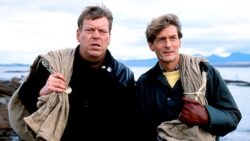
<p><img loading="lazy" decoding="async" src="http://www.britishtelevisiondrama.org.uk/wp-content/uploads/2020/11/BTVD_Sleepers_promo-e1606758385632.jpg" alt="" width="250" height="141" class="alignleft size-full wp-image-7785" /><em>Sleepers</em> arrived on our screens with perfect timing. Or at least that&#8217;s how it must have appeared to many viewers. When the first episode aired on BBC2 in April 1991, the Cold War was almost over.<sup id="rf1-7772"><a href="#fn1-7772" title="&lt;em&gt;Sleepers&lt;/em&gt;, four episodes, tx. BBC2, 10 April to 1 May 1991. Written by John Flanagan and Andrew McCulloch, executive producers Verity Lambert and Michael Wearing, directed by Geoffrey Sax. A Cinema Verity production for the BBC." rel="footnote">1</a></sup> Two years earlier the Soviet-satellite communist regimes across Central and Eastern Europe had folded, for the most part peacefully. In December 1991, the USSR itself would be dissolved officially. The world was beginning to look like a much safer place, one in which we could laugh at the absurdities, futility and madness of an ideological battle waged by the two great super-powers, the USA and the USSR, since the end of World War Two. What better moment for a light-hearted look at a conflict which had once brought mankind close to its greatest ever catastrophe?</p>

<hr class="footnotes"><ol class="footnotes" style="list-style-type:decimal"><li id="fn1-7772"><p ><em>Sleepers</em>, four episodes, tx. BBC2, 10 April to 1 May 1991. Written by John Flanagan and Andrew McCulloch, executive producers Verity Lambert and Michael Wearing, directed by Geoffrey Sax. A Cinema Verity production for the BBC.&nbsp;<a href="#rf1-7772" class="backlink" title="Return to footnote 1.">&#8617;</a></p></li></ol></hr>{"id":7772,"date":"2020-12-01T06:00:00","date_gmt":"2020-12-01T06:00:00","guid":{"rendered":"http:\/\/www.britishtelevisiondrama.org.uk\/?p=7772"},"modified":"2024-08-30T11:34:08","modified_gmt":"2024-08-30T10:34:08","slug":"sleepers-1991","status":"publish","type":"post","link":"http:\/\/www.britishtelevisiondrama.org.uk\/?p=7772","title":{"rendered":"<em>Sleepers<\/em> (1991)"},"content":{"rendered":"<h4>by JOHN WHEATCROFT<\/h4>\n<p><img loading=\"lazy\" decoding=\"async\" src=\"http:\/\/www.britishtelevisiondrama.org.uk\/wp-content\/uploads\/2020\/11\/BTVD_Sleepers_promo-e1606758385632.jpg\" alt=\"\" width=\"250\" height=\"141\" class=\"alignleft size-full wp-image-7785\" \/><em>Sleepers<\/em> arrived on our screens with perfect timing. Or at least that&#8217;s how it must have appeared to many viewers. When the first episode aired on BBC2 in April 1991, the Cold War was almost over.<sup id=\"rf1-7772\"><a href=\"#fn1-7772\" title=\"&lt;em&gt;Sleepers&lt;\/em&gt;, four episodes, tx. BBC2, 10 April to 1 May 1991. Written by John Flanagan and Andrew McCulloch, executive producers Verity Lambert and Michael Wearing, directed by Geoffrey Sax. A Cinema Verity production for the BBC.\" rel=\"footnote\">1<\/a><\/sup> Two years earlier the Soviet-satellite communist regimes across Central and Eastern Europe had folded, for the most part peacefully. In December 1991, the USSR itself would be dissolved officially. The world was beginning to look like a much safer place, one in which we could laugh at the absurdities, futility and madness of an ideological battle waged by the two great super-powers, the USA and the USSR, since the end of World War Two. What better moment for a light-hearted look at a conflict which had once brought mankind close to its greatest ever catastrophe?<\/p>\n<p><!--more--><\/p>\n<p>However, co-writers John Flanagan and Andrew McCulloch had come up with the idea a few years earlier, back in the late Brezhnev\/Andropov era when there wasn&#8217;t the faintest suggestion that change could be in the air. It arose out of their similar views about the way the world works, how it can unfold in random and unexpected ways, simply because that&#8217;s the way things pan out. Flanagan says: \u201cWe are not political writers, we both subscribe to the cock-up, rather than conspiracy, theory of history, where there&#8217;s no great design attached to events. How could a country that can&#8217;t deal with leaves on the railway lines arrange the death of Diana in another country?\u201d<sup id=\"rf2-7772\"><a href=\"#fn2-7772\" title=\"John Flanagan, telephone interview with John Wheatcroft, 2 November 2020. All quotations from Flanagan in this article come from this interview.\" rel=\"footnote\">2<\/a><\/sup> In fact, both writers worried incorrectly that events might might the spell the end for the series. Mikhail Gorbachev became the USSR General Secretary in 1985 and UK prime minister Margaret Thatcher described him as a man with whom she could do business. \u201cThings were changing rapidly and we thought that might kill our idea. But in the end it made it,\u201d said Flanagan.<\/p>\n<p>A four-part serial produced by Verity Lambert&#8217;s company Cinema Verity, <em>Sleepers<\/em> tells the story of Vladimir Zelenski (Warren Clarke) and Sergei Rublev (Nigel Havers), two KGB operatives who were sent to Britain in the 1960s. Their Soviet masters have forgotten them entirely until a cellar is discovered in the bowels of the Kremlin, containing a mock-up of Carnaby Street-era London. Vladimir and Sergei have merged seamlessly into English life, their uncomplicated commitment to the new country illustrated with neat, ironical touches. Sergei, now Jeremy Coward, is a big shot in the City who plays silly paintball-soldier games at weekends. \u201cHis capitalism,\u201d says Flanagan, \u201cis purely financial, not political.\u201d Vladimir is now Albert Robinson, a moderate trade union official in a brewery near Manchester. He sees off the union militants smartly, by pointing out to the company boss that a minor time-keeping concession will prevent a strike.<\/p>\n<p>This first episode is a master-class in scene setting and exposition, as the dots are joined and we learn of the links between the impeccably and apparently sterotypical &#8216;Englishmen&#8217; and the panicking Soviets who want their agents back at all costs. The drama&#8217;s opening scene, featuring an apparently deranged Soviet prisoner, is now explained. The disgraced and jailed Andrei Zorin (Michael Gough) was the man responsible for sending Sergei and Vladimir on their mission. He is now locked, in his mind, in the world to which he sent his charges: the 1960s England of TV host and journalist David Frost, band leader Billy Cotton with his \u201cwakey, wakey\u201d calling card and \u201cSome people are on the pitch, they think it&#8217;s all over\u201d, the 1966 World Cup. English football&#8217;s finest hour has a key role. The KGB finds old footage that shows Sergei and Vladimir among fans behind one of the goals at the World Cup final, their banner revealing where their new loyalities now lie unequivocally. <\/p>\n<p>It&#8217;s another irony, one picked up by Nina Grishina (Joanna Kanska), the ideologically pure and icily attractive KGB major sent to England in pursuit of their lost men.<sup id=\"rf3-7772\"><a href=\"#fn3-7772\" title=\"In the USSR-West Germany semi final, the Soviets had one man injured (no substitutes allowed) and another sent off. Without those setbacks, the final might well have been England v USSR, which would have put the two sleepers&#8217; &#8216;treachery&#8217; in an even starker light in the eyes of the KGB.\" rel=\"footnote\">3<\/a><\/sup> McCulloch says that they wanted originally to make a situation comedy out of the idea, with the two spies living together, but that it was considered too far-fetched.<sup id=\"rf4-7772\"><a href=\"#fn4-7772\" title=\"Andrew McCulloch, telephone interview with John Wheatcroft, 2 November 2020. All quotations from McCulloch in this article come from this interview.\" rel=\"footnote\">4<\/a><\/sup> TV executives who told them this were probably right, but for the wrong reason. An idea doesn&#8217;t become less far fetched because it is presented as drama (albeit comedy drama), rather than out and out comedy. Incredulity would have been stretched more by the idea of Jeremy and Albert, every bit as odd a couple as Oscar and Felix (Walter Matthau and Jack Lemmon),<sup id=\"rf5-7772\"><a href=\"#fn5-7772\" title=\"&lt;em&gt;The Odd Couple&lt;\/em&gt; (1968).\" rel=\"footnote\">5<\/a><\/sup> sticking it out together rather than going their own way. Perhaps rejection of the &#8216;sit-com&#8217; concept reveals something about attitudes towards comedy, the idea that it has less to say than drama which plays things straight. McCulloch says: \u201cThat way of thinking was widespread then, though people have got over it a bit more now, that comedy can&#8217;t say serious things. In the recent Jeremy Thorpe drama,<sup id=\"rf6-7772\"><a href=\"#fn6-7772\" title=\"&lt;em&gt;A Very English Scandal&lt;\/em&gt;, three episodes, tx. BBC1, 20 May to 6 June 2018. Written by Russell T. Davies, based on the book by John Preston, dr. Stephen Frears.\" rel=\"footnote\">6<\/a><\/sup> there was a lot of humour but it was also making serious points.\u201d This is something that BBC2 controller Alan Yentob failed to grasp, he says. \u201cHe never liked it, seeing the comic elements as a trivialisation of the Cold War story.\u201d<\/p>\n<p>The opening credits prepare us for <em>Sleepers<\/em>&#8216; upbeat tone: over a jaunty, Russian-flavoured  theme tune featuring balalaika and accordion, we see heroic black and white images of the Soviet Union in its most self-congratulatory mode (Red Army parades, a Stakhanovite worker wielding a hammer). By contrast, &#8216;decadent&#8217; Britain is represented by The Beatles, Mick Jagger and Marianne Faithfull, models displaying some ephemeral new fashion trend, and Bobby Moore. Admittedly, Prime Minister Harold Wilson is seen outside No. 10, though that is a nod perhaps to the (long-discredited) rumours that he was in the pay of the Russians. There&#8217;s a rich vein of comedy as MI5 and the CIA enter the chase for the two lost spooks, everyone hopelessly at sea. At one point, when Albert and Jeremy are behaving particularly ludicrously, evading everyone by luck rather than design, the KGB&#8217;s Victor Chekhov (David Calder) remarks that these men are \u201cstill razor sharp\u201d 25 years on. For junior operative Kostov (Richard Huw), they must be \u201cmen of iron\u201d.<\/p>\n<p>McCulloch says that he and Flanagan identified England&#8217;s North-South divide as a potential source of merriment, seen most memorably when Albert\/Vladimir and Jeremy\/Sergei meet for the first time in more than 20 years. \u201cGet them [the drinks] in then, you overpaid southern smart-arse,\u201d says Albert when he learns that Jeremy earns \u00a3300k a year in the City. It&#8217;s one of those lines that makes you smile then, a second or two later, laugh out loud as you are hit by its absurdity.<\/p>\n<p>Both writers have small parts in <em>Sleepers<\/em>. Flanagan is a private investigator, called in by Sandra Robinson (Annie Hulley) to find out what&#8217;s happened to her husband. McCulloch is a boatman in Scotland who cheats the two runaways and delivers them into the hands of Major Grishina. \u201cWe persuaded the producers to give us a small part,\u201d says Flanagan. \u201cIt was a chance to get to know the locations. Some directors don&#8217;t like having writers around and it kept us close to the project, something which was important to us.\u201d In fact, Geoffrey Sax was always supportive and not short of humorous, directorial flourishes that added to the fun, and sometimes took the viewer by surprise.  <\/p>\n<p>Calder&#8217;s Victor Chekhov is a huge fan of American football. What might have started as a cover for covert operations has developed into genuine love of the sport. In Highgate cemetery, he appears to be addressing Marx, via his memorial stone (\u201cHe was a lousy quarter-back, Karl\u201d). But Chekhov is oblivious to the left&#8217;s most revered figure. He is actually talking about the inadequacies of a gridiron player to CIA man Karl (Ricco Ross). In another of Sax&#8217;s comic touches, he plays with the old clich\u00e9 of people knocking on a door, \u201cwhere one person knocks, then another does so as though it could possibly bring a different response inside,\u201d as McCulloch puts it. \u201cAnd we see it, as viewed from inside the house, three pairs of eyes in turn looking through the letter box, first the vicar (Richard Durden), then Chekhov, then Grishina, all of them agreeing that there appears to be no one there.\u201d <\/p>\n<p>As actors on the set, the writers were also able to maintain close contact with Warren Clarke who gets a &#8216;special thanks&#8217; credit at the end of the final episode. It&#8217;s an acknowledgment of his importance in getting the show made, as well as the way in which it was made. Flanagan had known Clarke since they worked together on <a href=\"http:\/\/www.britishtelevisiondrama.org.uk\/?p=3250\" target=\"_self\" rel=\"noopener noreferrer\">Parkin&#8217;s Patch<\/a>, a late 1960s Yorkshire TV drama and forerunner of <em>Heartbeat<\/em>.<sup id=\"rf7-7772\"><a href=\"#fn7-7772\" title=\"John Flanagan also starred in Alan Plater&#8217;s &lt;em&gt;Land of Green Ginger&lt;\/em&gt;, which is discussed elsewhere on this site in an &lt;a href=&quot;http:\/\/www.britishtelevisiondrama.org.uk\/?p=921&quot; target=&quot;_self&quot; rel=&quot;noopener noreferrer&quot;&gt;interview with Alan Plater&lt;\/a&gt;.\" rel=\"footnote\">7<\/a><\/sup> \u201cWarren had for a while been taken by the idea of <em>Sleepers<\/em>, even stumping up some cash for Andy and me to spend a month dedicated entirely to working on it.\u201d But Clarke also had made another important intervention, McCulloch says: \u201cHe shifted our focus, by pushing us to make <em>Sleepers<\/em> as a film, at a time when [though things were changing] most stuff went out on videotape. It helped us to get away from the idea of studio-bound TV, and contributed a lot to the look of the drama.\u201d<\/p>\n<p>Impressive camera work by Remi Adefarasin played its part. As in <em>An Englishman Abroad<\/em>, there&#8217;s an authentic grainy Soviet look about many scenes, giving rise to Chekhov&#8217;s in-joke that Dundee, the Scottish city which stood in for the Soviet capital in Bennett&#8217;s play about Cambridge spy Guy Burgess, \u201clooks like Moscow\u201d. When Dave, the CND-supporting vicar, produces Dundee cake, it seems to confirm to the CIA &#8211; this perhaps the most ludicrous wrong end of the stick of them all &#8211; that the harmless cricket-loving cleric is the Mr Big at the centre of everything.<\/p>\n<p>The humour becomes more tart when Jeremy explains to Albert why he has remained single. The English class system is the one hurdle he cannot get over; his lack of proper breeding and background made him unsuitable husband material for a woman he really loved. McCulloch says: \u201cThe English aristocracy would smell a rat, when Jeremy was unable to produce any &#8216;proper&#8217; family history. There is a humanity in Jeremy which we see, in the scene in a croft overlooking Ullapool, when he explains this to Albert\u201d. As Jeremy says, a mother who drove a tractor in the Ukraine would not cut the mustard. Albert, by contrast, as a fully paid-up member of the northern English proletariat can simply explain things away by saying he was an orphan. Only his ghastly mother-in-law (Barbara Young), who resents her daughter&#8217;s happy marriage and Albert&#8217;s failure to conform to her negative stereotype of men, makes an issue of it. Jeremy&#8217;s comments about class consciousness hint at a better side to him, his true and less selfish nature coming more into focus as the story unfolds. We see it in the way he acknowledges the importance of Maurice, the pet monkey belonging to Albert&#8217;s daughter.  In another wrong end of the stick, however, his girlfriend Alison (Candida Gubbins) now thinks he has started collecting  cuddly toys. For all his womanising and love of material things, Jeremy has come a long way in our eyes by the final, fourth, episode. It&#8217;s hard to imagine now that, in the opener, he planned to kill Albert, before the sight of Maurice, and what it told him about Albert, made him realise that he couldn&#8217;t do it. McCulloch says that both spies owe a lot to their old KGB mentor Zorin. He says: \u201cZorin is our idea of a civilised human being, he is the story&#8217;s moral centre. He has installed that morality through how he has trained Sergei and Vladimir, they are his children almost.\u201d <\/p>\n<p>There is no great revelation, or call for spoiler alerts, in pointing out here that <em>Sleepers<\/em> ends happily enough for most parties; anything else would go against the tone of the show. And in the final analysis, there are no individual out-and-out villains. Even Major Grishina melts a little, appalled that her actions are going to lead to two pointless deaths, including that of  family man and  true proletarian Albert. For Grishina, this sacrifice to political expediency, and Zorin&#8217;s hand in it, is the ultimate betrayal of the cause. Grishina vents her spleen on Zorin before the confirmation of something the attentive viewer will have been expecting: Zorin is hero, not villain; his cunning intervention saves Albert and Jeremy from a firing squad, so that they can return to their lives in England.<\/p>\n<p>In the final episode, we also learn that the Soviets&#8217; reasons for sending Sergei and Vladimir to England back in the 1960s, were (after a fashion) quite benign. And that the two men have (also after a fashion, and on a small scale) fulfilled their brief. However, this isn&#8217;t a soft-soap conclusion, one which exonerates the USSR. Zorin has been forced to look like a hardliner, for the benefit of his masters in Moscow who want the two &#8216;Englishmen&#8217; disposed of. Collectively (to use a term beloved of the left), then, the USSR is the villain of the piece. We are not being allowed to forget the regime&#8217;s brutality and lack of humanity.<\/p>\n<p><em>Sleepers<\/em> remains as fun to watch as on its first screening almost 30 years ago. When I was writing this piece several people told me that they recall it fondly. The creators have had a similar experience. McCulloch says that when asked that favourite question, \u201cwhat have you done that we might know?\u201d  he will respond with <em>Sleepers<\/em>, and they will say, \u201cYes, I remember that one.\u201d That&#8217;s not a bad tribute.<\/p>\n<p><em>With thanks to John Flanagan and Andrew McCulloch.<\/em><\/p>\n<p><em>Originally posted: 1 December 2020.<br \/>\nUpdates:<br \/>\n2 December 2020: two very minor typographical corrections<\/em><\/p>\n<p>John Wheatcroft is the author of <em>Here in the Cull Valley<\/em>, which is available <a href=\"http:\/\/www.stairwellbooks.co.uk\/product\/here-in-the-cull-valley\/\" target=\"_self\" rel=\"noopener noreferrer\">here<\/a>, and <em>Rocket Boy<\/em>, which is available <a href=\"http:\/\/www.stairwellbooks.co.uk\/product\/rocket-boy\/\" target=\"_self\" rel=\"noopener noreferrer\">here<\/a>.<\/p>\n<p><!-- Start of StatCounter Code --><\/p>\n<p><script type=\"text\/javascript\">\nvar sc_project=5750652; \nvar sc_invisible=1; \nvar sc_partition=68; \nvar sc_click_stat=1; \nvar sc_security=\"6dd1aa39\"; \n<\/script><\/p>\n<p><script type=\"text\/javascript\" src=\"http:\/\/www.statcounter.com\/counter\/counter.js\"><\/script><noscript>&lt;br \/&gt;<br \/>\n&lt;div&lt;br &gt;&lt;\/div&gt;<br \/>\nclass=&#8221;statcounter&#8221;&gt;&lt;a title=&#8221;wordpress stats &#8220;&lt;br &gt;&lt;\/a&gt;&lt;br \/&gt;<br \/>\nhref=&#8221;http:\/\/www.statcounter.com\/wordpress.org\/&#8221;&lt;br \/&gt;&lt;br \/&gt;<br \/>\ntarget=&#8221;_blank&#8221;&gt;&lt;img class=&#8221;statcounter&#8221;&lt;br \/&gt;&lt;br \/&gt;<br \/>\nsrc=&#8221;http:\/\/c.statcounter.com\/5750652\/0\/6dd1aa39\/1\/&#8221;&lt;br \/&gt;&lt;br \/&gt;<br \/>\nalt=&#8221;wordpress stats &#8221; &gt;&lt;\/a&gt;&lt;\/div&gt;<br \/>\n&lt;p&gt;<\/noscript><\/p>\n<p><!-- End of StatCounter Code --><\/p>\n<hr class=\"footnotes\"><ol class=\"footnotes\" style=\"list-style-type:decimal\"><li id=\"fn1-7772\"><p ><em>Sleepers<\/em>, four episodes, tx. BBC2, 10 April to 1 May 1991. Written by John Flanagan and Andrew McCulloch, executive producers Verity Lambert and Michael Wearing, directed by Geoffrey Sax. A Cinema Verity production for the BBC.&nbsp;<a href=\"#rf1-7772\" class=\"backlink\" title=\"Return to footnote 1.\">&#8617;<\/a><\/p><\/li><li id=\"fn2-7772\"><p >John Flanagan, telephone interview with John Wheatcroft, 2 November 2020. All quotations from Flanagan in this article come from this interview.&nbsp;<a href=\"#rf2-7772\" class=\"backlink\" title=\"Return to footnote 2.\">&#8617;<\/a><\/p><\/li><li id=\"fn3-7772\"><p >In the USSR-West Germany semi final, the Soviets had one man injured (no substitutes allowed) and another sent off. Without those setbacks, the final might well have been England v USSR, which would have put the two sleepers&#8217; &#8216;treachery&#8217; in an even starker light in the eyes of the KGB.&nbsp;<a href=\"#rf3-7772\" class=\"backlink\" title=\"Return to footnote 3.\">&#8617;<\/a><\/p><\/li><li id=\"fn4-7772\"><p >Andrew McCulloch, telephone interview with John Wheatcroft, 2 November 2020. All quotations from McCulloch in this article come from this interview.&nbsp;<a href=\"#rf4-7772\" class=\"backlink\" title=\"Return to footnote 4.\">&#8617;<\/a><\/p><\/li><li id=\"fn5-7772\"><p ><em>The Odd Couple<\/em> (1968).&nbsp;<a href=\"#rf5-7772\" class=\"backlink\" title=\"Return to footnote 5.\">&#8617;<\/a><\/p><\/li><li id=\"fn6-7772\"><p ><em>A Very English Scandal<\/em>, three episodes, tx. BBC1, 20 May to 6 June 2018. Written by Russell T. Davies, based on the book by John Preston, dr. Stephen Frears.&nbsp;<a href=\"#rf6-7772\" class=\"backlink\" title=\"Return to footnote 6.\">&#8617;<\/a><\/p><\/li><li id=\"fn7-7772\"><p >John Flanagan also starred in Alan Plater&#8217;s <em>Land of Green Ginger<\/em>, which is discussed elsewhere on this site in an <a href=\"http:\/\/www.britishtelevisiondrama.org.uk\/?p=921\" target=\"_self\" rel=\"noopener noreferrer\">interview with Alan Plater<\/a>.&nbsp;<a href=\"#rf7-7772\" class=\"backlink\" title=\"Return to footnote 7.\">&#8617;<\/a><\/p><\/li><\/ol><\/hr>","protected":false},"excerpt":{"rendered":null,"protected":false},"author":1,"featured_media":0,"comment_status":"open","ping_status":"open","sticky":false,"template":"","format":"standard","meta":{"footnotes":""},"categories":[137,145],"tags":[504,508],"class_list":["post-7772","post","type-post","status-publish","format-standard","hentry","category-essays","category-john-wheatcroft","tag-1990s","tag-sleepers"],"_links":{"self":[{"href":"http:\/\/www.britishtelevisiondrama.org.uk\/index.php?rest_route=\/wp\/v2\/posts\/7772","targetHints":{"allow":["GET"]}}],"collection":[{"href":"http:\/\/www.britishtelevisiondrama.org.uk\/index.php?rest_route=\/wp\/v2\/posts"}],"about":[{"href":"http:\/\/www.britishtelevisiondrama.org.uk\/index.php?rest_route=\/wp\/v2\/types\/post"}],"author":[{"embeddable":true,"href":"http:\/\/www.britishtelevisiondrama.org.uk\/index.php?rest_route=\/wp\/v2\/users\/1"}],"replies":[{"embeddable":true,"href":"http:\/\/www.britishtelevisiondrama.org.uk\/index.php?rest_route=%2Fwp%2Fv2%2Fcomments&post=7772"}],"version-history":[{"count":24,"href":"http:\/\/www.britishtelevisiondrama.org.uk\/index.php?rest_route=\/wp\/v2\/posts\/7772\/revisions"}],"predecessor-version":[{"id":8250,"href":"http:\/\/www.britishtelevisiondrama.org.uk\/index.php?rest_route=\/wp\/v2\/posts\/7772\/revisions\/8250"}],"wp:attachment":[{"href":"http:\/\/www.britishtelevisiondrama.org.uk\/index.php?rest_route=%2Fwp%2Fv2%2Fmedia&parent=7772"}],"wp:term":[{"taxonomy":"category","embeddable":true,"href":"http:\/\/www.britishtelevisiondrama.org.uk\/index.php?rest_route=%2Fwp%2Fv2%2Fcategories&post=7772"},{"taxonomy":"post_tag","embeddable":true,"href":"http:\/\/www.britishtelevisiondrama.org.uk\/index.php?rest_route=%2Fwp%2Fv2%2Ftags&post=7772"}],"curies":[{"name":"wp","href":"https:\/\/api.w.org\/{rel}","templated":true}]}}