by DAVID ROLINSON
Half Hour Story Writer: Alun Owen; Producer: Stella Richman; Director: Alan Clarke
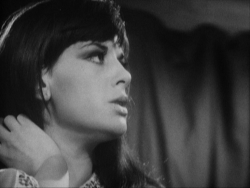 The BFI’s superb new Alan Clarke box sets contain many treats – they at last make most of the director’s surviving BBC work available to everyone and do so with such loving remastering and restoration that even those of us who have seen these pieces many times have never seen or heard them like this – but I’m particularly pleased with the bonus DVD on the main blu ray set Dissent and Disruption: The Complete Alan Clarke at the BBC.1 This collects several of Clarke’s early plays for the ITV strand Half Hour Story (1967-68), including pieces that were thought lost from the archive.2 I say more about Half Hour Story in my new essays for the blu ray booklet, and more about this and Clarke’s other early ITV work in my book Alan Clarke (2005);3 however, this website essay revisits Stella (1968), one of my favourite Half Hour Story plays, to study it in more detail.4 Clarke is rightly being celebrated by film critics for his filmed drama, but we should not forget that he was also a master of the electronic multi-camera studio. This results in such impressive studio experiments as Danton’s Death (1978), Psy-Warriors (1981) and Baal (1982), but there are signs of his qualities in Stella and the other plays that he made at Wembley Studios in his early days at Rediffusion.
The only BBC piece that is not included in the set despite surviving in the archive is Horatio Bottomley, a 1972 play in the series The Edwardians, but this is already available in the DVD release of The Edwardians. The Half Hour Story plays are a bonus item and the set does not claim to be complete in terms of his ITV work. Although Fast Hands (1976) was released by Network in the Plays for Britain set and Made in Britain has been released several times, most effectively alongside the rest of its original play strand Tales Out of School (1983), there are several surviving Clarke ITV productions – drama and documentary, broadcast and non-broadcast – that still await release. Achilles Heel is currently available online on the BFI Player [information correct as of July 2016], where some Half Hour Story pieces – including Stella – can be found, as well as films and his episode of The Edwardians. ↩
The Gentleman Caller (1967), Thief (1968) and the second half of George’s Room (1967); some are also available to watch online at BFI Player. Even more impressively, elsewhere in the DVD/blu ray sets can be found a complete version of Clarke’s documentary Bukovsky. In other words, ‘new’ Alan Clarke that even those of us who’ve been studying him for decades have never seen! ↩
Dave Rolinson, Alan Clarke (Manchester: Manchester University Press, 2005 [paperback reprint 2011]; David Rolinson, ‘Stella‘, Dissent and Disruption: The Complete Alan Clarke at the BBC (British Film Institute, 2016). ↩
Half Hour Story: ‘Stella’, tx. ITV, 19 June 1968, 9.00pm. This was the slot for broadcast in the Associated Rediffusion region but there were regional variations, as was often the case in the regional structure that at this stage comprised ITV. The following information comes from listings magazines, though is as-yet unverified. Channel Isles showed the play first, on 8 June 1968; the 19 June broadcast was shared with Border, Grampian, Midlands, Tyne Tees and Ulster; the play was also shown on the same day but in a 10.30pm slot by Granada. Scotland and Southern broadcast the play at 10.30pm on 20 June. It appears that Anglia, Harlech and Teledu Cymru did not broadcast the play, but this has yet to be confirmed. Thanks to Ian Greaves for listings magazine research for the 2005 book. ↩
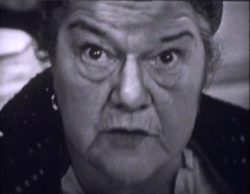 Back in 2013, I did a small piece of research on visual style in Coronation Street. This was for a couple of different reasons. For a few years, I had been using Christine Geraghty’s very helpful distinction between the ‘realist’ tendencies of British soap operas in their earlier days and the shift towards melodrama that has occurred more recently, and I wanted to investigate whether this evolution might affect things like scene duration, shot scale, and so on. I have also been interested for a long time in David Bordwell’s work on visual style, particularly visual style in Hollywood cinema. Bordwell’s article ‘Intensified Continuity’ in Film Quarterly argues, convincingly, that there have been four major, interlocking changes in the visual style of contemporary American film as compared with what we might call ‘the classic era’: ‘More rapid editing’, ‘Bipolar extremes of lens lengths’, ‘More close framing in dialogue scenes’, and ‘A free-ranging camera’. I wondered if I might find similar changes at work if I compared old and new episodes of soap opera (and I decided to focus my attention on the first and third of the features Bordwell mentions).