Funny Farm (1975)

by David Rolinson

Play for Today Writer: Roy Minton; Producer: Mark Shivas; Director: Alan Clarke

‘This place gets more like a bleeding madhouse every day…’

BTVD_FunnyFarm_8
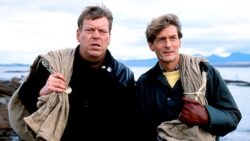
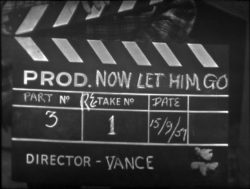
Funny Farm depicts a night shift by nurse Alan Welbeck (Tim Preece) on a psychiatric ward. As reviewer James Scott put it, the play comments on ‘conditions in our mental hospitals – understaffing, overwork, bad pay, old inadequate buildings’ and unsatisfactory ‘patient treatment and cure’, points which are heightened by the play’s ‘understatement’ and rejection of ‘sensationalism and sentimentality’.1 Dennis Potter praised this ‘gentle and observant drama’ as ‘Beautifully acted, compassionately written and intelligently directed’.2 The play also dramatises writer Roy Minton’s contention that ‘Psychiatric therapy is fundamentally an agent for the state’,3 and provides an example of Minton’s productive collaboration with director Alan Clarke. My book Alan Clarke didn’t have a chapter on Funny Farm in its own right – I discussed it only in relation to other collaborations and tendencies across Clarke’s work. This essay aims to correct that omission, and features some new research findings.

The Lie (1970) by Ingmar Bergman

by John Wheatcroft

Play for Today / The Largest Theatre in the World Writer: Ingmar Bergman; Translated by Paul Britten Austin; Producer: Graeme McDonald; Director: Alan Bridges

‘The truth will tear us apart’

BTVD_TheLie_promopic1

There has been much talk recently about contemporary television producing drama superior to anything that the cinema currently has to offer. Any vestiges of snobbery about the supposed inferiority of the small screen have been snuffed out with directors such as Martin Scorsese and David Fincher choosing to work in television. Jane Campion, the New Zealander who directed An Angel at my Table and The Piano, said in an interview for The Times that TV is now producing the more pioneering work. Campion, who has directed a six-part crime thriller for television which was launched at Sundance and received its European premiere at the Berlin Film Festival, said after seeing HBO’s Deadwood: ‘Who is commissioning this stuff? This is a revolution, something is really happening in television.’1 It does not follow of course that revolutionary film directors will have a big impact (Scorsese’s Boardwalk Empire had mixed reviews) when they transfer their attentions to TV.

Hitching Your Wagon To A Star: some random and rambling reflections on Alfred Hitchcock and The Girl (2012)

by Neil Sinyard

BTVD_TheGirl_01
There is a compelling moment in Strindberg’s The Father when a doctor is recalling a production of Ibsen’s Ghosts and being dismayed by Mrs Alving’s vilification of her late husband. ‘I thought to myself,’ says the Doctor, ‘What a damned shame the fellow’s dead and can’t defend himself!’

I felt a bit like that whilst watching the BBC/HBO production The Girl,1 Julian Jarrold’s film about the deteriorating relationship between Alfred Hitchcock and his new discovery Tippi Hedren during the making of The Birds (1963) and Marnie (1964). Dramatic characterisation comes perilously close to character assassination. Jarrold’s previous TV piece, the award-winning Appropriate Adult, was also rooted in reality and had certainly confirmed his aptitude for exploring the dark side of human personality; and The Girl is a powerful and progressively harrowing film about sexual harassment, psychological cruelty, and the abuse of power.2 I think the two leading performances are superb. Toby Jones’s mimicry of Hitchcock is masterly, but he also probes to the melancholy behind the façade; and Sienna Miller likewise conveys a tough and courageous resilience beneath the actress’s surface elegance. At the outset, however, the film claims to be based on extensive research (though there is no mention of Tony Lee Moral’s richly detailed book on the making of Marnie3 ) and thus is purporting to be an accurate account of events. On the level of veracity rather than drama, the film becomes more problematic.

The ‘Appening: Parkin’s Patch (1969-70)

by David Rolinson

Parkin'sPatch_Parkin
As a festive, er, ‘treat’, here’s a much more facetious piece than this site usually runs, a DVD review (of Parkin’s Patch: The Complete Series), which apart from some revisions is reproduced from the excellent (but at this moment on hiatus) Tachyon TV website… There’s a moment in the episode ‘Lock, Stock and…’ when a character starts an alibi with “I took the whippet out”. This made me think two things: “until it has a Yorkshire edition, the CSI franchise is merely treading water” and “Parkin’s Patch is pretty much what I expected.” So, should you expect 26 half-hours of charming yet undemanding early evening telly with a local bobby investigating quirky and/or spiky Yorkshire folk? ‘Appen. And ‘appen not. There are some predictable, even ramshackle, moments, but there are also some lovely surprises that make Parkin’s Patch a bit of a treat.

Making Contact with Contact: from AFN Clarke to Alan Clarke

by David Rolinson

Screen Two; Writer: AFN Clarke; Director: Alan Clarke; Producer: Terry Coles

The first production to be shown in the Screen Two strand, Contact was broadcast on BBC2 at 10.10pm on Sunday 6 January 1985.1 An account of British Army patrols around the border in South Armagh, Contact was an appropriate start for Screen Two given its contemporary concerns, politically sensitive subject matter and distinctive style. Filmed between 6 and 29 August 1984, Contact was directed by Alan Clarke.2 It is one of the highlights of Clarke’s astonishing body of work. Jim Naughton’s review of Contact is largely characteristic of the critical acclaim that it received: “a crisp, tight, elegant piece of work, wonderfully shot […] by Philip Bonham Carter and making brilliant use of sound”, the film “found a new angle on Northern Ireland, which is more than can be said for most programmes about that […] province”.3 Typically for his work, it achieved more formal acclaim abroad, winning First Prize at the Locarno Film Festival, which Clarke described as a “high spot” of his career, “absolutely great”.4 However, there was another Clarke at work on Contact whose own contribution has been underexplored: its writer, AFN Clarke…

Level Seven (1966)

by Oliver Wake

Set within a survival bunker and missile control base deep underground, Polish writer Mordecai Roshwald’s 1959 novel Level Seven was a grim depiction of the spiralling cold war leading to nuclear apocalypse. The story made no reference to specific nations engaged in the conflict but was cheekily dedicated “To Dwight and Nikita” in reference to Eisenhower and Khrushchev, then the premiers of the USA and USSR respectively.1 On publication, the novel was highly lauded by the likes of Bertrand Russell and Fred Hoyle, and J B Priestley called it “the most powerful attack on the whole nuclear madness that any creative writer has made so far” and began work on a film adaptation.2

Making enquiries in 1962, Irene Shubik, the story editor on ABC Television’s science fiction anthology Out of this World, found that the film option on the novel precluded any television version. The film version was announced in 1963, to be made by Eliot Martin and Philip Langner in association with the Theatre Guild of New York.3 It’s not clear if this was to use Priestley’s script or an alternative, but either way the project came to nothing. A few years later, Shubik was producing Out of this World’s BBC successor Out of the Unknown, when she was reminded of the novel. The film option had expired and Shubik wrote to Roshwald to express her interest in staging a television adaptation. Having re-read the novel, she told the author that she was “moved practically to tears by it. I do think it is an absolutely marvellous piece of work”.4

The Good Companions (1980-81)

by David Rolinson

Nine parts. Writer: Alan Plater; Adapted from (novel): J.B. Priestley; Music by: David Fanshawe; Producer: Leonard Lewis; Directors: Bill Hays, Leonard Lewis


A “tuneful tonic of merriment and mirth”, The Good Companions is a nine-part Yorkshire Television serial about a touring concert party adapted from J. B. Priestley’s famous 1929 novel.1 It was adapted by Alan Plater, who described the serial as one of his happiest working experiences, but added that it was “interesting but flawed, and didn’t really catch on”.2 That’s a fair assessment, but the serial is certainly more interesting than flawed. Like the two previous film adaptations, the serial risked being written off as undemanding, suffering in part because of the reputation of the source novel. Writing about the 1933 film version, Charles Barr observed that the novel “never had much currency in academic circles”, with supportive opinions outweighed by the impact of “the vinegary attacks on the book and the novelists by the two Leavises”.3 Priestley himself argued that “[s]ome severe critics dislike” stories in the picaresque tradition of “huge wandering tales” as these are “too rambling and easy for them”.4 However, the serial’s ability to parallel the book’s feel-good, episodic qualities is also one of its main strengths. With composer David Fanshawe setting Plater’s lyrics to a variety of song styles, and a lively ensemble cast relishing on-stage music hall scenes and off-stage full production numbers, this is a witty and unashamedly fun serial. The Network DVD release also comes with the 1980 tie-in documentary On the Road, in which Plater interviews Priestley, compares the serial with previous film versions and provides behind-the-scenes footage.5

Dixon of Dock Green in the 1970s

by David Rolinson

The opinion that Dixon of Dock Green (BBC, 1955-76) was a cosy anachronism throughout its existence, and in particular in the 1970s, remains pervasive. Lez Cooke’s excellent study of British television drama fairly summarises the common view that Dixon “gained a reputation as a ‘cosy’ representation of the police and their relationship with the public in the mid-late 1950s”, a representation which was “superseded” in the 1960s and 1970s “by more hard-hitting and up-to-date representations of both the police and the criminal underworld”.1 Dylan Cave goes further in Ealing Revisited, arguing that Dixon‘s long run “wasn’t due to innovation, but to its dogged refusal to acknowledge the pace of a changing Britain, as depicted in the far tougher police series Z Cars and The Sweeney. It was cherished as a reassuring reminder of apparently simpler, gentler times”.2 There is room to question the pervasive generalisation that 1970s Dixon was a cosy anachronism that was smashed up by the arrival of The Sweeney (ITV, 1974-78). As I’ve argued in my previous writing on police drama,3 this generalisation needs to be put under more scrutiny, either by putting The Sweeney in the context of the detailed study of other police and action series of the period (Cooke wisely uses the plural “representations”), or looking into the apparent anomaly that Dixon survived – indeed, was still hugely successful – well into the 1970s. Dixon makes its own use of the changing language of police drama – with its “shooters”, “birds” and “blags” and the prioritisation of the CID while former beat copper Dixon takes a back seat – and reflects the changing practices of, and attitudes towards, the police. Acorn Media’s welcome DVD release of six colour episodes gives me a chance to look more closely at 1970s Dixon to add this article as a supplement to this much longer and more detailed piece on Dixon’s place in the history of police drama.

Peter Luke

by Oliver Wake

Peter Luke was a writer, story editor and producer on several of British television’s most influential drama anthology series, working at both ITV and the BBC, during a period of particular creative development for the medium. His television work was, however, only one part of a varied life.

Peter Ambrose Cyprian Luke was born on 12 August 1919, the son of British diplomatic Sir Harry Luke. The Luke family was originally of Hungarian descent (the name Lukach being Anglicised to Luke) and Luke’s upbringing was cosmopolitan. In his younger years he accompanied his parents on his father’s postings around the world, during which he learned about language, culture, art and literature, before returning to England to be enrolled at Eton. On completing his schooling with the minimum of academic rigour, Luke decided he wanted to become a painter and went to art school in London and then studied at the atelier of André Lhote in Paris. He enlisted in the British army shortly after the Second World War began, leading him to Egypt and combat on the first day of the second battle of El Alamein, in which he was wounded. After recovering he was deployed in the European theatre of war, serving in Italy, France and Germany. He was awarded the Military Cross for his actions in Normandy following D-Day. He ended the war a Major, acting Lieutenant-Colonel.

Children’s Ward series 1

by David Rolinson


These days, teatime ITV means repeats of Midsomer Murders or reality formats so recycled that their pitches were delivered in a green caddy. But Children’s Ward is a reminder that this slot used to house children’s programmes, including three great drama series that started in 1989: Press Gang (on 6 January), Children’s Ward (on 15 March, after a 1988 one-off) and Byker (Byker!) Grove (on 8 November). Given that the 1990 Broadcasting Act entrenched deregulation, it’s tempting to see these shows clinging to pre-1990 public service values, and aiming to give children the same range of programming that was available to adults.

What would ITV do now to have shows in the same week written by Paul Abbott, Kay Mellor and Steven Moffat? That happened for the first few weeks of Children’s Ward’s run (Press Gang Mondays, Children’s Ward Wednesdays). Welcoming an Ofcom review of children’s programming, Mark Wright at Television Today argued that, despite there being numerous digital channels for children, there aren’t many “original, home grown shows that nurture not only young and upcoming talent, but bring new audiences” to television rather than encouraging kids to “sod off to the Internet”.1 As Wright notes, many of Children’s Ward’s alumni are now “among the premier drama writers in the country”: Abbott, Mellor and (from later seasons) Russell T. Davies, Matt Jones, and Sally Wainwright.