Ian Curteis

by OLIVER WAKE

Television career overview

BTVD_Curteis_Row docu 1
This piece was revised and updated in 2014 and 2015.

Ian Curteis is an fascinating figure in the world of British television drama. He achieved great success in the 1970s as a writer of plays exploring real events and historical figures but thereafter found his work sometimes frustrated, with cancelled projects and related controversies. Accounts differ as to whether these frustrations were the result of political censorship or the more mundane reasons common in broadcasting. This essay presents an overview of Curteis’s television career, incorporating material from a variety of contrasting sources, including Curteis himself, which illustrates why his work is so interesting and, sometimes, divisive.

Disputed Territory: Drama and the Falklands

by OLIVER WAKE

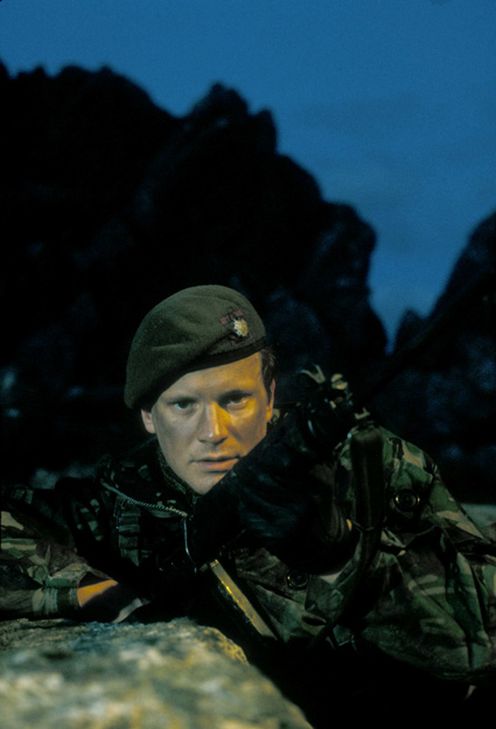
Every major conflict in living memory has become the subject of drama almost the moment it was over. The Falklands war, which this month reached its thirtieth anniversary and is again in the news due to renewed tensions between Britain and Argentina over the islands, is no exception. Numerous plays about the conflict reached the stage and radio in its aftermath, but none caught the attention of the public at large. However, when television tackled the subject for the mass audience, the results were frequently politically charged and contentious.

This is England ’88 (2011)

by EMMA SUTTON

Writers: Shane Meadows, Jack Thorne; Producer: Rebekah Wray-Rogers; Director: Shane Meadows
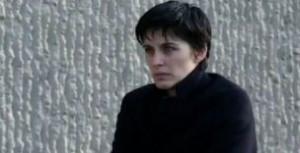
After the transmission of This is England ’86 a mere 14 months ago, Shane Meadows returned to our television screens with the three-part series This is England ’88.1 Produced by Warp and broadcast by Channel Four over three consecutive evenings, the series brings us up to date with the lives of Lol and Woody and the rest of the ’83 gang before the final outing with the forthcoming This is England ’90.

Collaborating once again with Jack Thorne, Meadows sets the series amongst the backdrop of Christmas 1988. Lol (Vicky McClure) is unemployed, a single mother struggling to cope with psychological illness and sleep deprivation; Woody (Joe Gilgun) has a secure job, new girlfriend and a supportive family; Shaun (Thomas Turgoose) has found his calling studying drama, but destroys his relationship with Smell (Rosamund Hanson) after a moment of childish infidelity; Milky (Andrew Shim) is practically an absent father to Lisa (his child with Lol), only returning with money and the odd gift every once in a while. The gang is all present, with the notable exception of Meggy (Perry Benson), with Woody and Lol going their separate ways. The gang seems to have gone through yet another phase of subcultural mobility, but there is no hint of development or progression. With Lol and Woody previously supervising the clique almost as parental guardians, the split in their relationship, and in turn, their distance from the gang has stagnating effects on their individual development. The dynamic of the gang prompts a strong feeling of inertia, rendering the characters as progressively stale and caricatured.

  1. This is England ‘88, Channel Four, tx. 13, 14, 15 December 2011. 

Wear a Very Big Hat (1965)

by OLIVER WAKE

The Wednesday Play; Writer: Eric Coltart; Producer: James MacTaggart; Director: Ken Loach

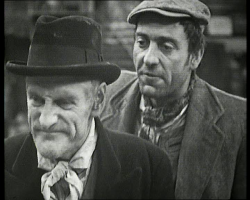
The Wednesday Play (1964-70) is often cited in discussions of 1960s television drama, but normally with reference to only a handful of its most well-known plays. This misrepresents the series as a whole, which comprised over 160 plays. Even some of the dramas from the series’ most acclaimed practitioners, such as Ken Loach and Dennis Potter, are overlooked in favour of their bolder, more controversial plays, with preference given to those that still exist. The neglect of plays erased from the archive is understandable, but a lack of primary evidence is no reason to disregard them entirely. Their particular attributes and secondary evidence demonstrate that many of them are well worth our attention. For example, 1965’s Wear a Very Big Hat is fascinating both as an example of The Wednesday Play’s early attempts at youthful contemporaneity and as director Ken Loach’s first entry in the series.

‘You Dirty Old Man!’: Masculinity and Class in Steptoe and Son (1962-74)

by DAVID ROLINSON

BTVD_Steptoe_The Offer 1

Today marks the fiftieth anniversary of Ray Galton and Alan Simpson’s Steptoe and Son (1962-74): on 5 January 1962, the BBC broadcast ‘The Offer’, the Comedy Playhouse one-off that led to the series that started later the same year.1 It’s a landmark series, and it’s a shame that, like Z Cars earlier this week (2 January), its fiftieth anniversary hasn’t seen an official BBC commemoration, especially since repeats continue to do decent business for BBC Two.2 It’s not that the BBC entirely resist anniversary celebrations – it’s just that those usually commemorate, and play a part in branding, currently ongoing programmes – and they have shown awareness that Galton and Simpson are among the greats of British television writing, including a profile by Arena.3 However, the anniversary does provide a welcome prod to revisit the series. In that spirit, this site presents an essay celebrating some of the series’ ideas and themes, trying to do some justice to the quality and depth of the writing.


  1. Transmission date verified at BFI database. 

  2. ‘The Desperate Hours’ was repeated on BBC Two on 7 January as part of a tribute to John Howard Davies. 

  3. Arena: ‘Galton and Simpson’, tx. BBC2, 25 December 2005.