Dixon of Dock Green in the 1970s

by DAVID ROLINSON

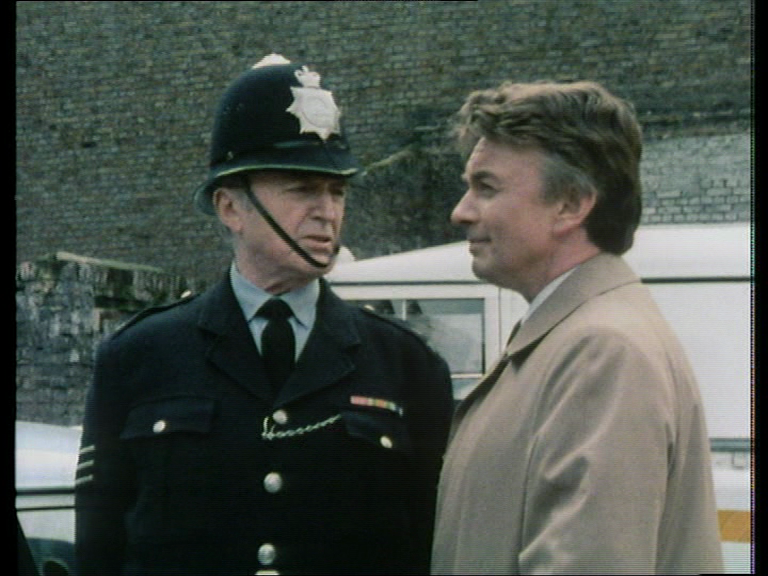
The opinion that Dixon of Dock Green (BBC, 1955-76) was a cosy anachronism throughout its existence, and in particular in the 1970s, remains pervasive. Lez Cooke’s excellent study of British television drama fairly summarises the common view that Dixon “gained a reputation as a ‘cosy’ representation of the police and their relationship with the public in the mid-late 1950s”, a representation which was “superseded” in the 1960s and 1970s “by more hard-hitting and up-to-date representations of both the police and the criminal underworld”.1 Dylan Cave goes further in Ealing Revisited, arguing that Dixon‘s long run “wasn’t due to innovation, but to its dogged refusal to acknowledge the pace of a changing Britain, as depicted in the far tougher police series Z Cars and The Sweeney. It was cherished as a reassuring reminder of apparently simpler, gentler times”.2 There is room to question the pervasive generalisation that 1970s Dixon was a cosy anachronism that was smashed up by the arrival of The Sweeney (ITV, 1974-78). As I’ve argued in my previous writing on police drama,3 this generalisation needs to be put under more scrutiny, either by putting The Sweeney in the context of the detailed study of other police and action series of the period (Cooke wisely uses the plural “representations”), or looking into the apparent anomaly that Dixon survived – indeed, was still hugely successful – well into the 1970s. Dixon makes its own use of the changing language of police drama – with its “shooters”, “birds” and “blags” and the prioritisation of the CID while former beat copper Dixon takes a back seat – and reflects the changing practices of, and attitudes towards, the police. Acorn Media’s welcome DVD release of six colour episodes gives me a chance to look more closely at 1970s Dixon to add this article as a supplement to this much longer and more detailed piece on Dixon’s place in the history of police drama.


  1. Lez Cooke, British Television Drama: A History (London: British Film Institute, 2003), p. 49. 

  2. Dylan Cave, ‘The Legacy of Ealing’, in Mark Duguid, Lee Freeman, Keith M. Johnston and Melanie Williams (editors), Ealing Revisited (London: British Film Institute/Palgrave Macmillan, 2012), p. 222. The directness of this statement is slightly surprising since Ealing Revisited is derived from a 2006 conference of the same name at which I presented a paper which problematised this opinion. An extended version of that paper, on Dixon‘s revisiting of Ealing’s The Blue Lamp and its own revisiting by The Black and Blue Lamp, is available on this site, with a link elsewhere on this page. 

  3. David Rolinson, ‘From The Blue Lamp to The Black and Blue Lamp: the police in TV drama’. Posted on this site in February 2011, but drawing from previous talks and publications since 2002. 

Peter Luke

by OLIVER WAKE

Peter Luke was a writer, story editor and producer on several of British television’s most influential drama anthology series, working at both ITV and the BBC, during a period of particular creative development for the medium. His television work was, however, only one part of a varied life.

Peter Ambrose Cyprian Luke was born on 12 August 1919, the son of British diplomatic Sir Harry Luke. The Luke family was originally of Hungarian descent (the name Lukach being Anglicised to Luke) and Luke’s upbringing was cosmopolitan. In his younger years he accompanied his parents on his father’s postings around the world, during which he learned about language, culture, art and literature, before returning to England to be enrolled at Eton. On completing his schooling with the minimum of academic rigour, Luke decided he wanted to become a painter and went to art school in London and then studied at the atelier of André Lhote in Paris. He enlisted in the British army shortly after the Second World War began, leading him to Egypt and combat on the first day of the second battle of El Alamein, in which he was wounded. After recovering he was deployed in the European theatre of war, serving in Italy, France and Germany. He was awarded the Military Cross for his actions in Normandy following D-Day. He ended the war a Major, acting Lieutenant-Colonel.

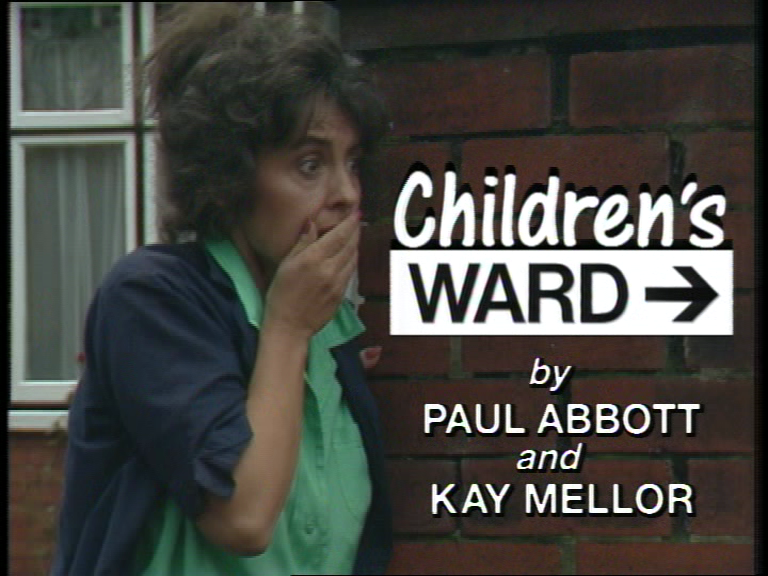
Children’s Ward Series 1

by DAVID ROLINSON


These days, teatime ITV means repeats of Midsomer Murders or reality formats so recycled that their pitches were delivered in a green caddy. But Children’s Ward is a reminder that this slot used to house children’s programmes, including three great drama series that started in 1989: Press Gang (on 6 January), Children’s Ward (on 15 March, after a 1988 one-off) and Byker (Byker!) Grove (on 8 November). Given that the 1990 Broadcasting Act entrenched deregulation, it’s tempting to see these shows clinging to pre-1990 public service values, and aiming to give children the same range of programming that was available to adults.

What would ITV do now to have shows in the same week written by Paul Abbott, Kay Mellor and Steven Moffat? That happened for the first few weeks of Children’s Ward’s run (Press Gang Mondays, Children’s Ward Wednesdays). Welcoming an Ofcom review of children’s programming, Mark Wright at Television Today argued that, despite there being numerous digital channels for children, there aren’t many “original, home grown shows that nurture not only young and upcoming talent, but bring new audiences” to television rather than encouraging kids to “sod off to the Internet”.1 As Wright notes, many of Children’s Ward’s alumni are now “among the premier drama writers in the country”: Abbott, Mellor and (from later seasons) Russell T. Davies, Matt Jones, and Sally Wainwright.


  1. Mark Wright, ‘ITV denies the talent of the future…’, The Stage and Television Today, 14 February 2007, accessed here

Cedric Messina

by OLIVER WAKE

Cedric Messina must be one of British television’s most prolific producers and directors of dramatic programmes, with at least 250 drama and opera productions to his name. He worked extensively in television for 25 years, always for the BBC as he was committed to the principle of public service broadcasting.