Live from Pebble Mill (1983)

by OLIVER WAKE

Five plays. Writers: Keith Dewhurst, Fay Weldon, Bernard Kops, Stephen Davis, Michael Wall; Producer: Robin Midgley; Directors: Robin Midgley, James Cellan Jones, Robert Walker, Donald McWhinnie

During the 1960s, live television drama on British screens was slowly phased out in favour of the convenience and control afforded by pre-recording on videotape. Ever since, there were murmurs that some unique, special quality inherent in live performance had been lost and occasional attempts have been made to revive the form. One of the most interesting of these attempts was Live from Pebble Mill, produced from BBC Birmingham in 1983.

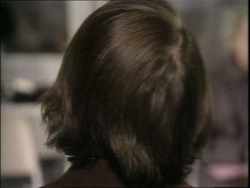
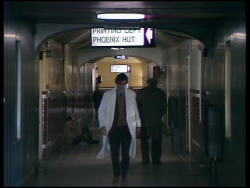
Live from Pebble Mill was conceived and produced by Robin Midgley, the head of drama for BBC Birmingham, who had a background in the theatre and had worked on live television drama in the 1960s. He insisted the project wasn’t simply a nostalgic exercise in retro television production, but an attempt at forcing a more imaginative form of staging through the use of the live method: “We’re not trying to turn the clock back. Quite the reverse, in fact. Instead of going for the usual kind of ‘reality-effect’ in the studio, we’ll be using the space more imaginatively – in a sense, exploiting the live context to break with some of the conventions of naturalism.”1 Not all were impressed by his experiment, with the Radio Times reporting that one “distinguished script editor” had informed Midgeley that “you’re setting back television 20 years. Progress lies with more film, more technical sophistication, more refinement.”2
  1. Quoted in Michael Poole, ‘TV Drama Goes Live’, The Listener, 10 February 1983, p. 31. 

  2. Jim Crace, ‘Action Stations’, Radio Times, 12-18 February 1983, p. 3. 

The Fishing Party (1972)

by JOHN WHEATCROFT

Play for Today Writer: Peter Terson; Producer: David Rose; Director: Michael Simpson

“Contact with the lavatory on all floors”

Peter Terson’s best known plays, Zigger Zagger and The Apprentices, present a tough and unsentimental view of the world and of the occasional cruelties that people, more often than not working-class men, can heap on one another. His 1972 television comedy The Fishing Party is a gentler affair, although not without its acerbic moments.1

Three miners, Art (Brian Glover), Ern (Ray Mort) and Abe (Douglas Livingstone) head for Whitby where they have arranged a trip out to sea for some cod fishing. First they need accommodation and they find a truly grotty bed and breakfast. A snooty landlady, Audrey (Jane Freeman) and her hen-pecked husband Brian (Frank Moorey) agree after some shenanigans to give them a room for the night, at an exorbitant price. These early scenes run dangerously close to pure silliness in their depiction of unsophisticated working-class behaviour on the one hand and petty-bourgeois pretentiousness on the other. The Fishing Party is not a piece of work that has worn well. However, some gems of comic dialogue do a little to rescue the situation.


  1. Play for Today: The Fishing Party, tx. BBC1, 1 June 1972. 

Beyond the reach of the cartographer: Dennis Potter the reviewing writer and writing reviewer

by DAVID ROLINSON

BTVD_Potter_FTYBR_1

Dennis Potter’s non-fiction writing is a tremendous body of work – reviews, radio talks and newspaper features on television, radio, books, society, politics and more.1 I was going to just run through some of his television reviews, but Potter wouldn’t let me get off that lightly. His non-fiction work interweaves with his fiction work in characteristically multi-layered, provocative and entertaining ways. He never lets us forget that words matter. So the word “reviewing” becomes unreliable, which is annoying if you’ve put it in your title. He’s not just a writer who wrote some reviews – his writing reviews, and re-views, his own plays and much more besides. There are lots of traps to fall into, as we can tell from the start of Follow the Yellow Brick Road


  1. This essay is an earlier – longer – draft version of a talk I gave at the Dennis Potter Day held at Dean Heritage Centre, Soudley, Forest of Dean on 29 June 2013. The full schedule of the day’s events can be found here. Some of this essay has been rewritten for reading rather than speaking, but most of the new or unused material is restricted to these endnotes. Detailed coverage of the event will appear on the Potter Matters blog, which we will link to when the event’s coverage is uploaded. 

Funny Farm (1975)

by DAVID ROLINSON

Play for Today Writer: Roy Minton; Producer: Mark Shivas; Director: Alan Clarke

“This place gets more like a bleeding madhouse every day…”

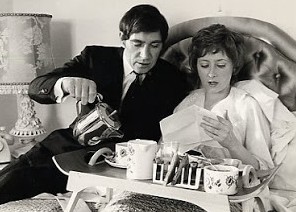
BTVD_Funny Farm_1 2016Funny Farm depicts a night shift by nurse Alan Welbeck (Tim Preece) on a psychiatric ward. As reviewer James Scott put it, the play comments on “conditions in our mental hospitals – understaffing, overwork, bad pay, old inadequate buildings” and unsatisfactory “patient treatment and cure”, points which are heightened by the play’s “understatement” and rejection of “sensationalism and sentimentality”.1 Dennis Potter praised this “gentle and observant drama” as “Beautifully acted, compassionately written and intelligently directed”.2 The play also dramatises writer Roy Minton’s contention that “Psychiatric therapy is fundamentally an agent for the state”,3 and provides an example of Minton’s productive collaboration with director Alan Clarke. My book Alan Clarke didn’t have a chapter on Funny Farm in its own right – I discussed it only in relation to other collaborations and tendencies across Clarke’s work. This essay aims to correct that omission, and features some new research findings.

  1. James Scott, ‘Writer swipes hard at our crazy values’, The Stage and Television Today, 6 March 1975, p. 19. 

  2. Dennis Potter, ‘Switch Back’, New Statesman, 7 March 1975, p. 319. 

  3. Minton, quoted in Shiva Naipaul, ‘Madness and their methods’, Radio Times, 20 February 1975, p. 14. 

Ingmar Bergman’s The Lie (1970)

by JOHN WHEATCROFT

Play for Today / The Largest Theatre in the World Writer: Ingmar Bergman; Translated by Paul Britten Austin; Producer: Graeme McDonald; Director: Alan Bridges

‘The truth will tear us apart’

BTVD_TheLie_promopic1

There has been much talk recently about contemporary television producing drama superior to anything that the cinema currently has to offer. Any vestiges of snobbery about the supposed inferiority of the small screen have been snuffed out with directors such as Martin Scorsese and David Fincher choosing to work in television. Jane Campion, the New Zealander who directed An Angel at my Table and The Piano, said in an interview for The Times that TV is now producing the more pioneering work. Campion, who has directed a six-part crime thriller for television which was launched at Sundance and received its European premiere at the Berlin Film Festival, said after seeing HBO’s Deadwood: ‘Who is commissioning this stuff? This is a revolution, something is really happening in television.’1 It does not follow of course that revolutionary film directors will have a big impact (Scorsese’s Boardwalk Empire had mixed reviews) when they transfer their attentions to TV.

Ingmar Bergman’s first British television play The Lie is a historically interesting but modest piece of work. Historically interesting because of the play’s genesis: it was commissioned by the Swedish Broadcasting Corporation on behalf of European members participating in ‘The Largest Theatre in the World’. This, the Radio Times explained, was ‘a project which enabled a play to be broadcast simultaneously in several languages across Europe.’2 The UK Play For Today version was directed by Alan Bridges; an American version was put out on CBS, directed by Alex Segal.3


  1. Kate Muir, The Times, 12 February 2013, Times2 supplement, p. 9. 

  2. ‘Bergman’s British debut on TV’, Uncredited, Radio Times, 25-31 October, 1970. 

  3. Paul Duncan and Bengt Wanselius, The Ingmar Bergman Archives (Taschen, 2008), p. 441.