Hitching Your Wagon to a Star: Some random and rambling reflections on Alfred Hitchcock and The Girl (2012)

by NEIL SINYARD

Writer: Gwyneth Hughes; Based on (book): Donald Spoto, Spellbound by Beauty; Producer: Amanda Jenks; Director:Julian Jarrold
BTVD_TheGirl_01
There is a compelling moment in Strindberg’s The Father when a doctor is recalling a production of Ibsen’s Ghosts and being dismayed by Mrs Alving’s vilification of her late husband. ‘I thought to myself,’ says the Doctor, ‘What a damned shame the fellow’s dead and can’t defend himself!’

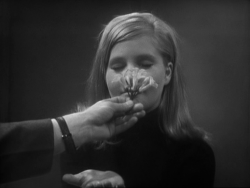
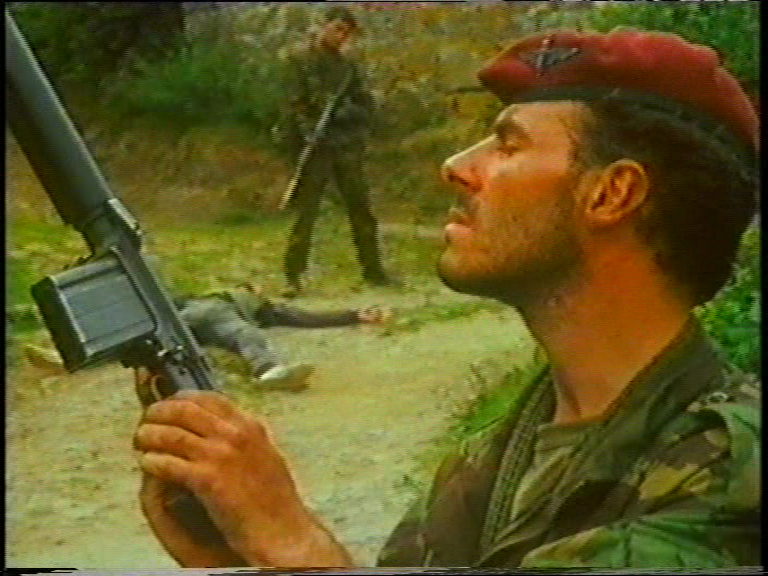
I felt a bit like that whilst watching the BBC/HBO production The Girl,1 Julian Jarrold’s film about the deteriorating relationship between Alfred Hitchcock and his new discovery Tippi Hedren during the making of The Birds (1963) and Marnie (1964). Dramatic characterisation comes perilously close to character assassination. Jarrold’s previous TV piece, the award-winning Appropriate Adult, was also rooted in reality and had certainly confirmed his aptitude for exploring the dark side of human personality; and The Girl is a powerful and progressively harrowing film about sexual harassment, psychological cruelty, and the abuse of power.2 I think the two leading performances are superb. Toby Jones’s mimicry of Hitchcock is masterly, but he also probes to the melancholy behind the façade; and Sienna Miller likewise conveys a tough and courageous resilience beneath the actress’s surface elegance. At the outset, however, the film claims to be based on extensive research (though there is no mention of Tony Lee Moral’s richly detailed book on the making of Marnie3 ) and thus is purporting to be an accurate account of events. On the level of veracity rather than drama, the film becomes more problematic.
  1. The Girl, tx. BBC2, 26 December 2012. 

  2. Appropriate Adult, tx. ITV, 4 and 11 September 2011. 

  3. Tony Lee Moral, Hitchcock and the Making of Marnie (Scarecrow Press, 2005). 

The ‘Appening: Parkin’s Patch (1969-70)

by DAVID ROLINSON

Parkin'sPatch_Parkin
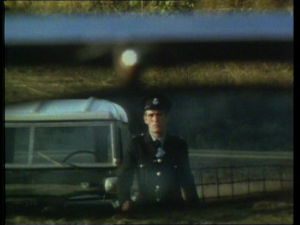
As a festive, er, ‘treat’, here’s a much more facetious piece than this site usually runs, a DVD review (of Parkin’s Patch: The Complete Series), which apart from some revisions is reproduced from the excellent (but at this moment on hiatus) Tachyon TV website… There’s a moment in the episode ‘Lock, Stock and…’ when a character starts an alibi with “I took the whippet out”. This made me think two things: “until it has a Yorkshire edition, the CSI franchise is merely treading water” and “Parkin’s Patch is pretty much what I expected.” So, should you expect 26 half-hours of charming yet undemanding early evening telly with a local bobby investigating quirky and/or spiky Yorkshire folk? ‘Appen. And ‘appen not. There are some predictable, even ramshackle, moments, but there are also some lovely surprises that make Parkin’s Patch a bit of a treat.

Making Contact with Contact: From AFN Clarke to Alan Clarke

by DAVID ROLINSON

Screen Two; Writer: AFN Clarke; Director: Alan Clarke; Producer: Terry Coles

The first production to be shown in the Screen Two strand, Contact was broadcast on BBC2 at 10.10pm on Sunday 6 January 1985.1 An account of British Army patrols around the border in South Armagh, Contact was an appropriate start for Screen Two given its contemporary concerns, politically sensitive subject matter and distinctive style. Filmed between 6 and 29 August 1984, Contact was directed by Alan Clarke.2 It is one of the highlights of Clarke’s astonishing body of work. Jim Naughton’s review of Contact is largely characteristic of the critical acclaim that it received: “a crisp, tight, elegant piece of work, wonderfully shot […] by Philip Bonham Carter and making brilliant use of sound”, the film “found a new angle on Northern Ireland, which is more than can be said for most programmes about that […] province”.3 Typically for a Clarke piece it achieved more acclaim abroad, winning the Golden Leopard’s Eye at the Locarno International Film Festival, where the jury praised the “intelligence and precision with which the camera describes the story of a British patrol in Northern Ireland while leaving the spectator free to judge”.4 Clarke described the win as a “high spot” of his career, “absolutely great”.5 However, there was another Clarke at work on Contact whose own contribution has been underexplored: its writer, AFN Clarke…


  1. This article builds upon one sub-section of Chapter 3 of Dave Rolinson, Alan Clarke (Manchester: Manchester University Press, 2005), which was reissued in paperback in 2011. It was a shame that the paperback was just a straight reprint because most of it was written in the restrictive logistical circumstances of my Ph.D. (October 2000-Summer 2004) and I think the Contact chapter in particular would benefit from updating and revising with the facilities and information that I now have. This article marks the start of that process of revision. 

  2. Filming dates taken from Contact’s BBC Programme-as-Broadcast file, viewed at the BBC Written Archives Centre. 

  3. Jim Naughton, ‘The good spies come back’, The Listener, 10 January 1985, p. 33. 

  4. Jury quoted in Paul Johnson, ‘BBC says film on informers was not delayed’, The Guardian, 15 August 1985. Interestingly given some of the reviewer comments quoted later in this essay, the Guardian piece describes Contact as “A BBC documentary on Northern Ireland”. The Contact news is at the bottom of a piece about the BBC denying alleged censorship of a programme about informers in Northern Ireland, On the Word of a Supergrass

  5. Billy the Kid and the Green Baize Vampire publicity material, viewed at British Film Institute library. 

Level Seven (1966)

by OLIVER WAKE

Out of the Unknown Writer: J.B. Priestley; Adapted from (novel): Mordecai Roshwald; Producer: Irene Shubik; Director: Rudolph Cartier

BTVD_Level Seven_1
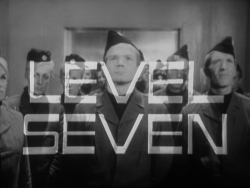
Set within a survival bunker and missile control base deep underground, Polish writer Mordecai Roshwald’s 1959 novel Level Seven was a grim depiction of the spiralling cold war leading to nuclear apocalypse. The story made no reference to specific nations engaged in the conflict but was cheekily dedicated “To Dwight and Nikita” in reference to Eisenhower and Khrushchev, then the premiers of the USA and USSR respectively.1 On publication, the novel was highly lauded by the likes of Bertrand Russell and Fred Hoyle, and J.B. Priestley called it “the most powerful attack on the whole nuclear madness that any creative writer has made so far” and began work on a film adaptation.2

BTVD_Level Seven_2
Making enquiries in 1962, Irene Shubik, the story editor on ABC Television’s science fiction anthology Out of this World, found that the film option on the novel precluded any television version. The film version was announced in 1963, to be made by Eliot Martin and Philip Langner in association with the Theatre Guild of New York.3 It’s not clear if this was to use Priestley’s script or an alternative, but either way the project came to nothing. A few years later, Shubik was producing Out of this World’s BBC successor Out of the Unknown, when she was reminded of the novel. The film option had expired and Shubik wrote to Roshwald to express her interest in staging a television adaptation. Having re-read the novel, she told the author that she was “moved practically to tears by it. I do think it is an absolutely marvellous piece of work”.4


  1. Mordecai Roshwald, Level Seven (London and Redhill: Ace Books, 1962), p. 2. 

  2. Quoted on rear cover of Roshwald, Level Seven

  3. John Montgomery, ‘Studio News’, The Stage and Television Today, 9 May 1963, p. 14. 

  4. Quoted in Mark Ward, Out of the Unknown: A Guide to the Legendary BBC series (Birmingham: Kaleidoscope Publishing, 2004), p. 197. 

The Good Companions (1980-81)

by DAVID ROLINSON

Nine parts. Writer: Alan Plater; Adapted from (novel): J.B. Priestley; Music by: David Fanshawe; Producer: Leonard Lewis; Directors: Bill Hays, Leonard Lewis


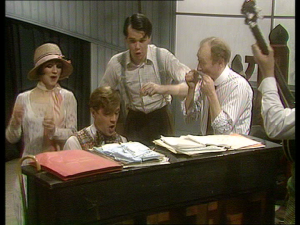
A “tuneful tonic of merriment and mirth”, The Good Companions is a nine-part Yorkshire Television serial about a touring concert party adapted from J. B. Priestley’s famous 1929 novel.1 It was adapted by Alan Plater, who described the serial as one of his happiest working experiences, but added that it was “interesting but flawed, and didn’t really catch on”.2 That’s a fair assessment, but the serial is certainly more interesting than flawed. Like the two previous film adaptations, the serial risked being written off as undemanding, suffering in part because of the reputation of the source novel. Writing about the 1933 film version, Charles Barr observed that the novel “never had much currency in academic circles”, with supportive opinions outweighed by the impact of “the vinegary attacks on the book and the novelists by the two Leavises”.3 Priestley himself argued that “[s]ome severe critics dislike” stories in the picaresque tradition of “huge wandering tales” as these are “too rambling and easy for them”.4 However, the serial’s ability to parallel the book’s feel-good, episodic qualities is also one of its main strengths. With composer David Fanshawe setting Plater’s lyrics to a variety of song styles, and a lively ensemble cast relishing on-stage music hall scenes and off-stage full production numbers, this is a witty and unashamedly fun serial. The Network DVD release also comes with the 1980 tie-in documentary On the Road, in which Plater interviews Priestley, compares the serial with previous film versions and provides behind-the-scenes footage.5


  1. The Good Companions, tx. ITV, 14 November 1980-16 January 1981. Now available on DVD from Network DVD

  2. Alan Plater, Doggin’ Around (Northway, 2006), p. 99. 

  3. Charles Barr, ‘The Good Companions’, in Brian McFarlane (editor), The Cinema of Britain and Ireland (London: Wallflower Press, 2005), p. 31. 

  4. J.B. Priestley, in Priestley and O.B. Davis, Four English Novels (Harcourt Brace, 1960), p. 262. 

  5. According to production files relating to On the Road, which are available in the Alan Plater archive in the Hull History Centre, the documentary’s location visits happened in the last week of July 1979.