
by DAVID ROLINSON
Call the Midwife (BBC One, 2012-present) is the best drama series of the decade: one of contemporary television’s toughest, most consistently socially-concerned programmes. It is often misunderstood: despite a few perceptive pieces such as Emily Nussbaum’s description of the devastating fifth series as ‘sneaky radicalism’ in the New Yorker, many critics have passed over it as twee or nostalgic or have omitted it from drama-of-the-year polls.1 These critical tendencies say less about the programme than about perceptions of the timeslot: Sunday night, 8.00pm, on BBC One.2 Therefore, my post, the first of an occasional series on one of my favourite dramas, looks at the current status of the series, taking as a starting point critical responses to its Sunday night slot.
Emily Nussbaum, ‘Crowning glory: The sneaky radicalism of Call the Midwife‘, The New Yorker, 20 June 2016, available at http://www.newyorker.com/magazine/2016/06/20/call-the-midwife-a-primal-procedural. The series has been called ‘twee’ in many reviews, though one that sticks in the mind is an Independent review on 17 January 2016 which was responding to an episode which featured an unflinchingly graphic, angry response to the Thalidomide scandal. The television coverage in The Guardian is unsurprisingly a regular offender but this line was contested as early as 2012 by Sarah Dempster, who wrote that, despite it being ‘couched in the heritage footwear/cableknit bloodshed garb of Sunday evening tradition’, it had ‘a tenderness and sincerity’ and was ‘dedicated to social realism’. The review still described the Christmas special as serving a function as ‘a comforting pool of lamplit nostalgia’, but then the Christmas specials do often operate differently. Sarah Dempster, ‘Call the Midwife Christmas special: A refreshingly sincere treat’, The Guardian, TV OD, 21 December 2012. Even this praise dismisses the form. ↩
Indeed, BBC One’s own continuity announcer used the words “gentle” and “nostalgia” to introduce Call the Midwife on 4 February 2018. It is surprising that one wing of the BBC should misunderstand its own programme seven series in, and be so unaware of the episode that followed the announcement, but the announcement was an attempt to segue from promotion for Hard Sun and McMafia, which echoes the gendered value judgements discussed elsewhere in this article. ↩
 Giles Cooper is widely recognised as having been Britain’s greatest radio dramatist. He was highly prolific, writing dozens of original plays and adaptations for radio across a period of around 13 years. He was responsible for many of the medium’s masterpieces during the 1950s and his accomplishments were acknowledged posthumously with the BBC’s radio playwriting award being named in his honour. He also wrote for the stage, having particular success with his 1962 play Everything in the Garden, a dark comedy of middle-class suburban hypocrisy and greed.
 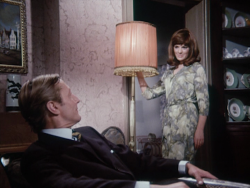 How and why is George’s Room in colour? Anyone coming to George’s Room knowing the rest of director Alan Clarke’s plays for Rediffusion’s Half-Hour Story strand thanks to the BFI’s Alan Clarke at the BBC set might wonder why this is the only one in colour and why it looks so different from the others.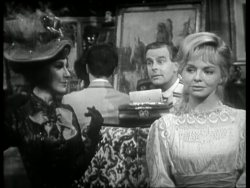
 The BFI’s superb new Alan Clarke box sets contain many treats – they at last make most of the director’s surviving BBC work available to everyone and do so with such loving remastering and restoration that even those of us who have seen these pieces many times have never seen or heard them like this – but I’m particularly pleased with the bonus DVD on the main blu ray set