Sunset Across the Bay (1975)

by DAVID ROLINSON

Play for Today Writer: Alan Bennett; Director: Stephen Frears; Producer: Innes Lloyd

‘Knocking-off time…’

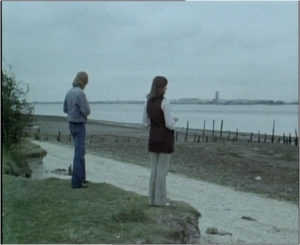
Sunset Across the Bay follows a retired couple who move from Leeds to the seaside resort of Morecambe. Their struggle to adapt to retirement produces humour through the observation of Northern dialogue and idiosyncrasies, but moves towards tragedy.1 One of many impressive collaborations between writer Alan Bennett and director Stephen Frears, the play combines understated emotional power and a sense of the social impact of urban planning with a skilful deployment of technique that builds mood, character and theme.


  1. This essay owes a debt of gratitude to the Arts and Humanities Research Council, who provided me with vital research leave in 2008 to research the films of Stephen Frears. 

Interview with Alan Plater about Land of Green Ginger (1973)

by DAVID ROLINSON

Interview recorded in London on 3 July 2006

Play for Today Writer: Alan Plater; Director: Brian Parker; Producer: David Rose
This piece assumes background knowledge of the play.1 For a short essay and synopsis, see my piece for Screenonline. For detailed analysis and mention of other Plater sources, see my article ‘The Surprise of a Large Town: Regional Landscape in Alan Plater’s Land of Green Ginger’, Journal of British Cinema and Television, 4:2, November 2007, pp. 285-306, available in print or online. Plater also wrote the lovely memoir Doggin’ Around. If you want to research Plater’s work, I can provide a full interview transcript; I strongly recommend the University of Hull’s Alan Plater archive at the Hull History Centre. I am eternally grateful to Alan Plater (who sadly passed away in 2010) and Shirley Rubenstein for their time, warmth and generosity.

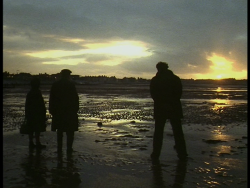
[ATV] had a project to do a 6-part series called A Tale of Six Cities […] and I wrote a play, and it was actually called The Surprise of a Large Town, from Philip Larkin’s poem.2 The project came to nothing […] they never made this series, and I just put it on a shelf. Cut to early ‘70s: David Rose is Head of Drama for BBC in Birmingham at Pebble Mill and he called me up […] – he would often do this – he said, “I need a 60-minute play or a half-hour piece, have you got anything on the shelf that we could look at?” I said, well, I’ve got this thing about Hull but you’d have to go to Hull. By this time of course it was now accepted you could actually go out on location and make plays on location. Because when I first wrote it, it was going to be studio-based with some little inserts. And that, I think, scared them a bit, because they would’ve had to send a camera to Hull and some actors and so on. So there’d been a cultural change by the time David approached me.

  1. I have selected only a few quotations from a detailed interview, and have left out my questions which sometimes prompted points – for instance, a ‘house style’ at BBC Birmingham – but every word here was spoken by Alan Plater and has not been twisted out of context. Where comments have been moved from a different stage of the interview, this is indicated in footnotes. Italicised text in [brackets] offers further guidance and ellipses are indicated by […])  

  2. Larkin’s poem, titled Here, is discussed in my article. 

Tony Parker: Play for Today Biography

by DAVID ROLINSON

Tony Parker’s (25 June 1923-3 October 1996) work for Play for Today fulfils two of its central aims: to reflect contemporary society (as its title implied) and to give a hearing to otherwise neglected voices. Working in a similar manner to Jeremy Sandford, but developing his techniques even further, Parker’s dramas employed journalistic research and meticulous observation to give a voice to society’s most marginalised figures. Although the writer of a handful of superb plays, Parker was primarily a hugely respected oral historian (his ears were once described as a ‘national treasure’). His published studies and television drama were underpinned by a selfless desire to act as a witness, and to resist imposing editorial devices or contrived narratives, as he sought to ‘record without comment or judgement’ the stories he was told1. Though his work was wide-ranging – he moved between unmarried mothers in No Man’s Land (1972) and lighthouse keepers in Lighthouse (1975) – he was most associated with studies of convicted criminals, both in and out of prison. Anthony Storr described him in 1970 as ‘Britain’s most expert interviewer, mouthpiece of the inarticulate and counsel for the defence of those whom society has shunned and abandoned’2.


  1. Times obituary, 11 October 1996. 

  2. Sunday Times, 15 February 1970. 

Alan Clarke: Play for Today Biography

by DAVID ROLINSON

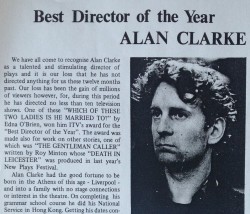
1967_Clarke_Questopics_DirectorofYear_CROPPED
Alan Clarke was neglected for a long time by television scholars and, because all but three of his approximately sixteen screen credits between 1967 and 1989 were for television, film scholars. This has changed in recent years: see Richard Kelly’s 1998 book of interviews1 and my book from 2005, the first (and, I hope, not last) critical study of Clarke’s work.2 Best of all, in May 2016, the vast majority of Clarke’s surviving work will be made available – much of it for the first time and some of it after previously being thought lost – in the BFI DVD and blu ray releases Dissent & Disruption: Alan Clarke at the BBC. Now everyone can find out what people have been so excited about. However, Clarke was first and foremost a television director, and as wonderful as it is that film fans are discovering Clarke, his work must be seen in the context of British television drama rather than as an aberration from it. Discussions of Clarke understandably prioritise his mid-to-late 1980s work, but this particular biography is designed to accompany the essays on this site about the dozen productions he made for Play for Today, which form around one-fifth of his total output.


  1. Richard Kelly (editor), Alan Clarke (London: Faber, 1998 

  2. Dave Rolinson, Alan Clarke (Manchester: Manchester University Press, 2005). 

Sherlock: A Study in Pink (2010) and Holmes on TV

by DAVID ROLINSON

Writer: Steven Moffat; Director: Paul McGuigan

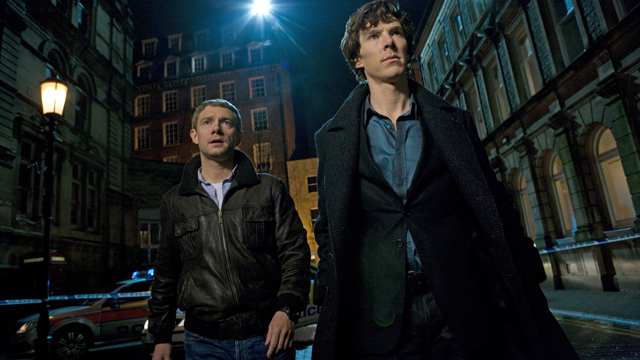
The most impressive thing about A Study in Pink, the brilliant first episode of new series Sherlock, is that, for all the modern-day rebooting and visual invention, its spirit and detail are so faithful to the source work by Sir Arthur Conan Doyle. As in his Doctor Who work, writer Steven Moffat brings a fan’s eye to the strengths and weaknesses of his beloved source material, developing the series format with fellow executive producers Sue Vertue and fellow Holmes and Who expert (and writer of episode 3) Mark Gatiss. A Study in Pink captures the essence of Holmes’s 19th century debut – reworking A Study in Scarlet (1887) and elements of Holmes’s second story, The Sign of Four (1890) – in a package that, with the impressive pace and technique of director Paul McGuigan, makes for one of the 21st century’s sharpest 90 minutes of popular drama to date.