Doctor Who: The Eleventh Hour (2010)

by DAVID ROLINSON

Writer: Steven Moffat; Director: Adam Smith

For me, Doctor Who literally is a fairy tale. It’s not really science fiction. It’s not set in space, it’s set under your bed. – Steven Moffat1

If you look at the stories I’ve written so far I suppose I might be slightly more at the fairy-tale and Tim Burton end of Doctor Who, whereas Russell is probably more at the blockbuster and Superman end of the show. – Steven Moffat2

Here are a few thoughts on the ideas at work in The Eleventh Hour, the first episode of the 2010 season of Doctor Who. It’s not a straight ‘review’, because there are enough of those on the internet already. But it’s also not the type of researched essay you expect from this site, because I’m interested in the episode’s ambiguities and the thoughts circulating in my head after seeing it, and don’t want to re-watch the episode to death or wait until the end of the season when some of those ideas will have been resolved. This piece will discuss the ideas relating to the ‘storybook quality’ that new lead writer Steven Moffat has talked about3, think about how style and imagery support characterisation and theme, and work out why my mind has made associations with the classic Michael Powell and Emeric Pressburger film A Matter of Life and Death (1946). This piece contains spoilers, and, unlike other essays on this site, you will need to have seen the episode to know what I’m talking about.


  1. Steven Moffat, quoted in Gareth McLean, ‘The man with a monster of a job’, The Guardian, Media Guardian, 22 March 2010, p. 5. 

  2. Steven Moffat, quoted in BBC press release, available at http://www.bbc.co.uk/pressoffice/pressreleases/stories/2010/03_march/19/doctor_who2.shtml. 

  3. McLean, ‘The man with a monster of a job’, p. 5. 

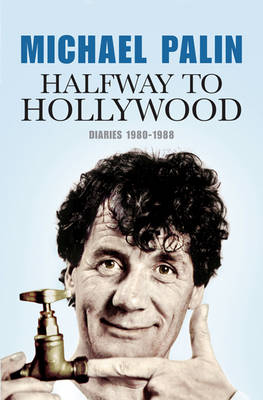
Michael Palin, Halfway to Hollywood: Diaries 1980-1988 (2009)

by DAVID ROLINSON

For anyone interested in British television drama or cinema, this second volume of Michael Palin’s diaries is just as engrossing as the first. Although some reviewers wonder if this book will be about ‘the less exciting stuff that happened in between’ the peak period of Monty Python covered in the first volume and the travel programmes that Palin embarks upon as this volume closes, it is all the more enjoyable and rewarding for its grounding in the reality of solo writing and the production process.1

For visitors to this site, I recommend Palin’s detailed coverage of East of Ipswich (1987)2, from gestation and writing through castinPalinHalfwayCoverpicg, production, post-production, critical reception and awards nominations (plus Palin’s unusually scathing comment that the London Film Festival were ‘Snobs’ to pass on it).3 I’ve adored East of Ipswich for many years, so I’m delighted to see Palin assert that ‘Nothing I’ve done gives me as much unqualified pleasure’ and that ‘I’ve never felt something done as close to the way I wanted it done as this’.4 Other material relevant to British television drama includes Palin’s script for Number 27 (1988)5 which starred the legendary Joyce Carey, working relationships with Tristram Powell, Charles Sturridge, Innes Lloyd and others, and television’s importance in British filmmaking: with fifteen films made a year and directors like Gavin Millar and Alan Clarke involved, ‘this shabbily-appointed fifth floor at TV Centre is where the British Film Industry exists’.6 Palin details the postponement of Sturridge’s Troubles (1988) after a week of filming with Palin in a major role, after which it was remounted without him.7

  1. Alfred Hickling, The Guardian, 17 October 2009. 

  2. Screen Two:‘East of Ipswich’, tx. BBC2, 1 February 1987. 

  3. Palin, p. 435. 

  4. Palin, pp. 447, 425 

  5. BBC, 23 October 1988 

  6. Palin, p. 416 

  7. Adaptation of the novel by J.G. Farrell. A dispute over the cinematography escalated. The remounted version was ultimately transmitted on ITV in two parts, 1 and 8 May 1988. 

The War Game (1965)

by DAVID ROLINSON

Writer and Director: Peter Watkins

The probability of total destruction increases with time and, in the course of the months and years throughout which we are told to expect the Cold War to continue, it becomes almost a certainty’1.

WatkinsGameBlastgrab

The War Game is one of television’s most notorious banned programmes. A harrowing dramatised documentary portraying the after-effects of nuclear holocaust and calling for public education in nuclear deterrent policy, it was made by the BBC for 1965 broadcast but was not transmitted for twenty years. Among the reasons given for the ban were its brutally graphic scenes, its apparent left-wing bias and its controversial fusion of journalistic fact and hugely alarmist fiction, although there is now evidence that it fell victim to the political suppression of nuclear discussion that was happening at the time across all media. Its director, Peter Watkins, quit the BBC and fought to get it a cinema release abroad, resulting in critical acclaim and a Best Documentary Oscar. After its eventual transmission in 1985, critics agreed that the BBC had suppressed one of the greatest dramas ever made.


  1. Bertrand Russell, Has Man A Future?, 1961.