The Lad and the Loser: Budgie (1971-72)

by NIGEL SARRASSA-DYER

Twenty-six episodes. Writers: Keith Waterhouse, Willis Hall, Douglas Livingstone, Jack Trevor Story; Producer: Verity Lambert; Directors: Moira Armstrong, Alan Gibson, Michael Lindsay-Hogg, Mike Newell, Herbert Wise
BTVD_Budgie_0
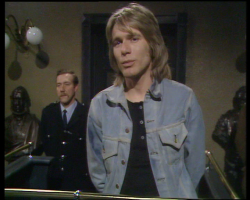
Budgie, the story of small time Soho criminal Ronald ‘Budgie’ Bird, was produced by London Weekend Television and ran over two series, each of thirteen episodes, between 1971 and 1972.1 Both series explored the liminal world of pornography, police corruption, criminal scams, violence and petty crime, and Budgie’s place within it. While Budgie has come to be affectionately remembered as a cockney comedy-drama with a charming, irrepressible lead character set in 1970s Soho, and as a series which launched an ‘entire fashion craze’, and is indeed all of these things, it would do the series a huge disservice to ignore its other dimensions, in particular those concerned with gender and masculinity identity.2
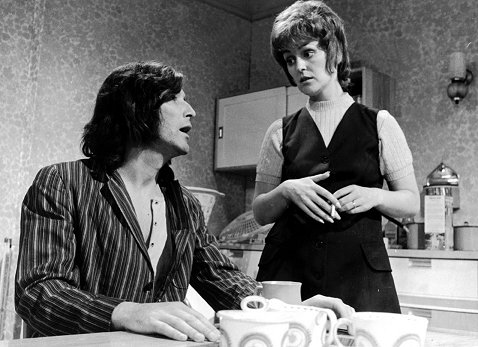
  1. Budgie, LWT for ITV, 1971-72. 

  2. See for example the Adam Faith Appreciation Society facebook site; Robert Elms, The Way We Wore: A Life in Threads (London: Picador, 2005), p. 81. 

Rumpole of the Bailey (1975)

by JOHN WHEATCROFT

Play for Today; Writer: John Mortimer; Producer: Irene Shubik; Director: John Gorrie

“There is a golden thread running through British justice…”1

Rumpole_image

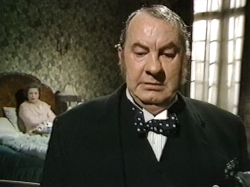
Horace Rumpole is one of those great fictional characters who emerged fully formed, with the potential to run and run. Like Sherlock Holmes, William Brown and Bertie Wooster, he burst on the scene with virtually all his key character traits established. The barrister whom we meet in the first Rumpole of the Bailey is fundamentally the same man readers and viewers were to follow through numerous television series and radio plays, many volumes of short stores, and a handful of novels. You can even read Rumpole in posh Folio Society editions.

Within a few minutes of the original Play for Today, first broadcast on 16 December 1975, we were introduced to some trademark Rumpole quirks and foibles. He quotes at length his favourite poet, Wordsworth, from Quiller-Couch’s Book of English Verse, refers to his wife, Hilda (Joyce Heron), as “She Who Must Be Obeyed” and wistfully recalls, as he will do so often in the years to come, his triumph as a young barrister in the Penge Bungalow Murders case.

Rumpole, unlike John Mortimer who was a QC, never took silk. He never prosecutes and often takes on (and wins) apparently lost causes, when everything is against him from overwhelming evidence favouring the prosecution to quixotic judges who take a dim view of the barrister’s irreverent and down-at-heel charm.


  1. Horace Rumpole. 

The Long Distance Piano Player (1970)

by JOHN WHEATCROFT

Play for Today Writer: Alan Sharp; Director: Philip Saville; Producer: Irene Shubik

‘Everybody’s in showbiz, everybody’s a star…’1

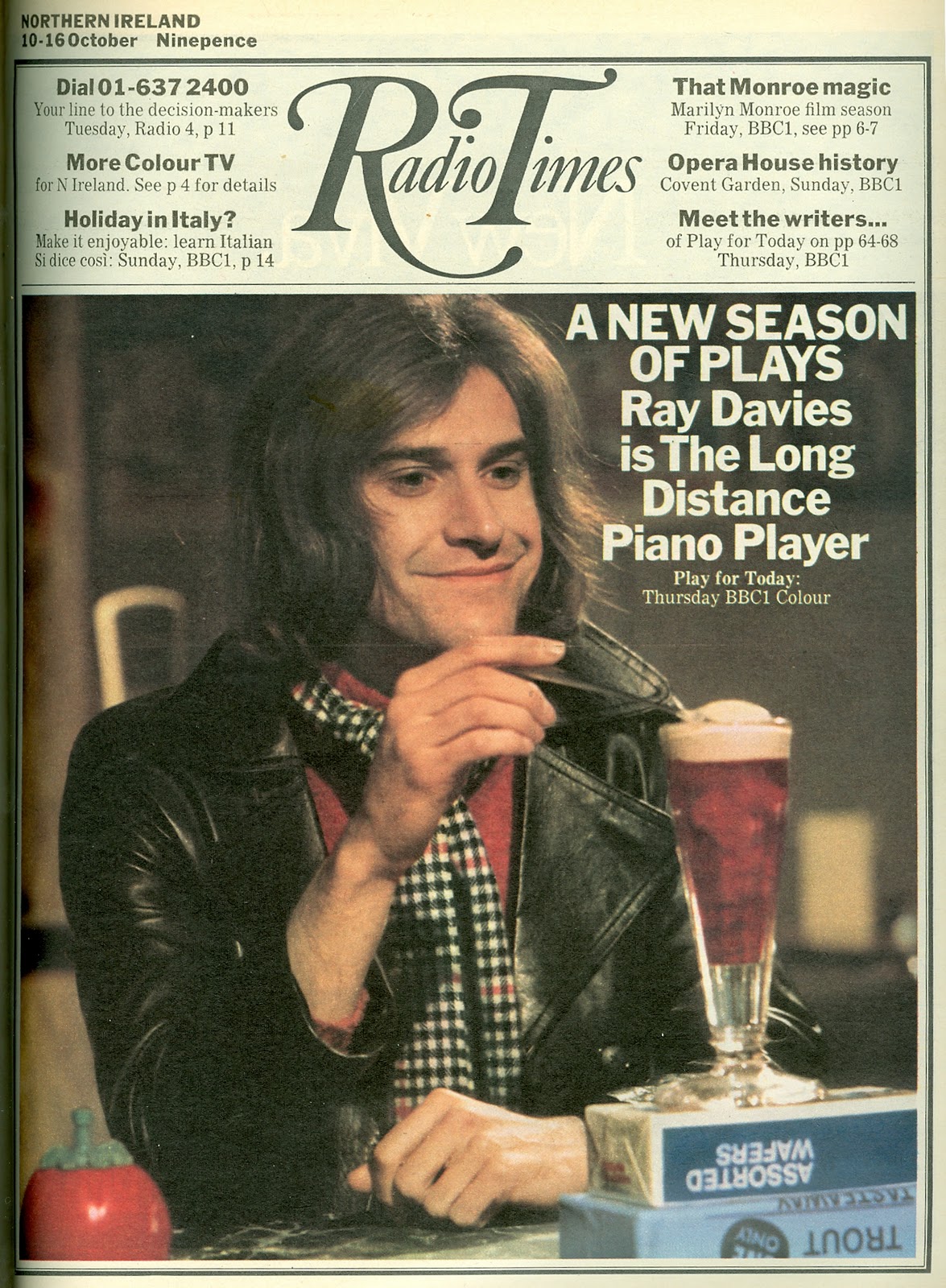
This lyric, from the Kinks song ‘Celluloid Heroes’ written by Ray Davies, conjures up a world far removed from the gloomy hall inhabited by Pete, the long distance piano player he portrays in Alan Sharp’s Play for Today. However, the play and the song (written two years later) are closer in theme than you might think. While ‘Celluloid Heroes’ celebrates the enduring screen image of Hollywood stars, it’s also about the way the film industry exploits and sometimes destroys these icons.

Pianist Pete is a man ripe for exploitation and destruction by his predatory manager, Jack (Norman Rossington). He plays a young man trying to create a world record for non-stop piano playing, of four days and four nights. Success, Jack constantly reassures Pete in his bogus American accent, will bring fame and fortune on an epic, Hollywood scale. However, one image of the film industry which is likely to spring to the viewer’s mind is They Shoot Horses, Don’t They? (1969), Sidney Pollack’s recent film about a six-day dance marathon in Depression-era America. Alan Sharp acknowledged his debt: ‘I read the book years ago, and was fascinated,’ he admitted in the week the play was aired on BBC12.


  1. The Kinks, ‘Celluloid Heroes’, from Everybody’s in Show-Biz (1972 album). 

  2. Alan Sharp, ‘TV is better than films from a professional point of view’, Radio Times, 8 October 1970. 

Angels are So Few (1970)

by IAN GREAVES

Play for Today Writer: Dennis Potter; Director: Gareth Davies; Producer: Graeme McDonald

‘If Jesus came today… we would want to shut the door’1

Angels Are So Few represents not only the first Dennis Potter production to appear under the Play For Today banner but the cementing of a new strand in the writer’s career. In fact, the play itself is equally rooted in beginnings and endings, dealing as it does with leaps of faith, death and rebirth.

Angels Are So Few (publicity photo)

Producer Graeme McDonald had not expected this potent exploration of sexual and religious game playing when its first draft was submitted to the BBC Drama department on 15 December 1969. A covering note apologised for Potter’s radical departure from the commissioned play, initially scheduled for the then Wednesday Play slot. Condescension, apparently absent from Potter’s surviving papers, was set to be an exploration of middle-aged attitudes to the young and old. Prostitute Reformer (detailing Gladstone’s fascination with ‘fallen women’) and The Last Nazi (a play about Rudolf Hess, commissioned by Mark Shivas for BBC2) were similar proposals which never materialised from this period.

Potter’s attentions had been diverted to a continuation of the ‘visitor’ device first used in A Beast With Two Backs and The Bonegrinder ((The Wednesday Play: A Beast With Two Backs, tx BBC1, 20 November 1968. Playhouse: The Bonegrinder, tx Associated Rediffusion, 13 May


  1. Richard Tydeman, ‘Son of Man: Improbable Attempt At The Impossible’, Church of England Newsletter, 25 April 1969, p. 13. 

Robin Redbreast (1970)

by JOHN WILLIAMS

Play for Today Writer: John Bowen; Director: James MacTaggart; Producer: Graeme McDonald

“They should have known that they had a way out, but being mere birds, didn’t.”

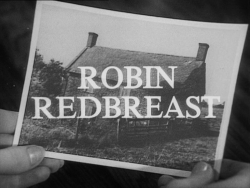
BTVD_Robin_2

Robin Redbreast has not been repeated since 1971, and yet is often recalled by viewers of the time, probably because of its eerie atmosphere, and particularly for its horrifying and surreal finale. Indeed, the play has had such a strong impact on those who have seen it, that it is almost seen as an “event” play – a work that came out of the blue, singular in approach and subject matter, and mysterious in genesis. It is because of this, perhaps, that the very limited amount of critical writing on the play has tended to be of the “remember that…what was all that about?” school of criticism. In fact its writer, John Bowen, has well over 50 plays, screenplays and novels to his credit, and Robin Redbreast is just one of many pieces he created that draw from his thematic interest in ancient myths and the way they live on in modern culture. Although Robin Redbreast is a good example of the thriller genre, Bowen was a very (some would say overly) serious writer, and he stressed the importance of ideas in his work: “A play is ideas expressed in incident…a play works first on emotions, but emotion unanchored by thought simply washes about the place in a thoroughly self-indulgent way…”1 The ideas in Robin Redbreast are not obvious at first, but when the play is viewed in the context of Bowen’s other work it becomes less opaque. It is also significant that the play represents the best synthesis of Bowen’s predominant ideas, and seems to have had an impact on the development of his subsequent career.


  1. John Bowen, The Essay Prize (London: Faber, 1962), pp. 20-21.